Comments Off on State Fair Photography Controversy Highlights Growing Tensions Over AI Integration in Traditional Arts
LUTHERVILLE, Md. — The intersection of traditional creative arts and rapidly evolving artificial intelligence technology reached a contentious boiling point at the recent Maryland State Fair. A first-place victory in a photography competition awarded to an image heavily altered by AI tools has sparked a fierce public debate, fueled online outrage, and forced event organizers to overhaul their rulebooks for future exhibitions.
The incident underscores a broader, systemic challenge facing creative competitions worldwide: as generative AI and intelligent editing tools become deeply embedded in modern software, organizers of historic, community-centric events are struggling to define the boundaries between human artistry and machine generation.
Main Facts: The Winning Image and the Immediate Outrage
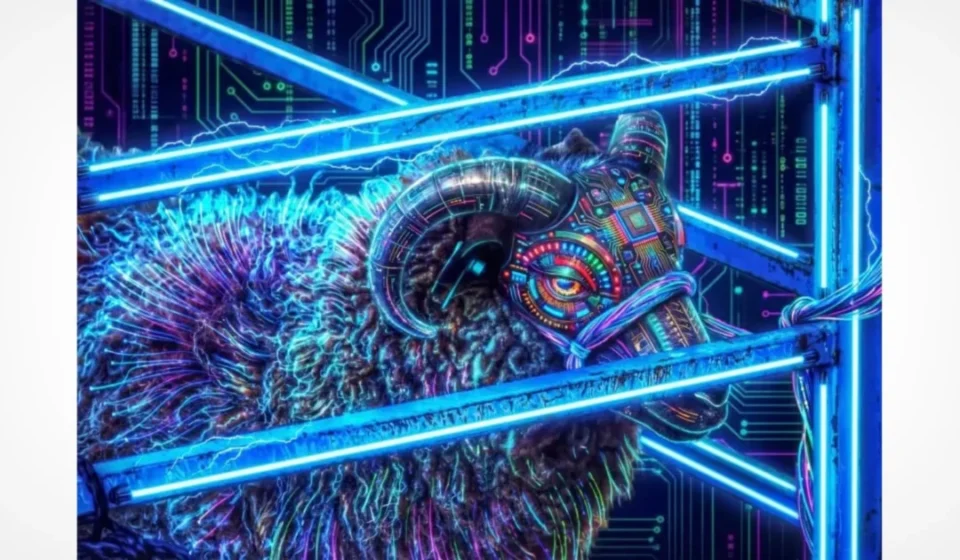
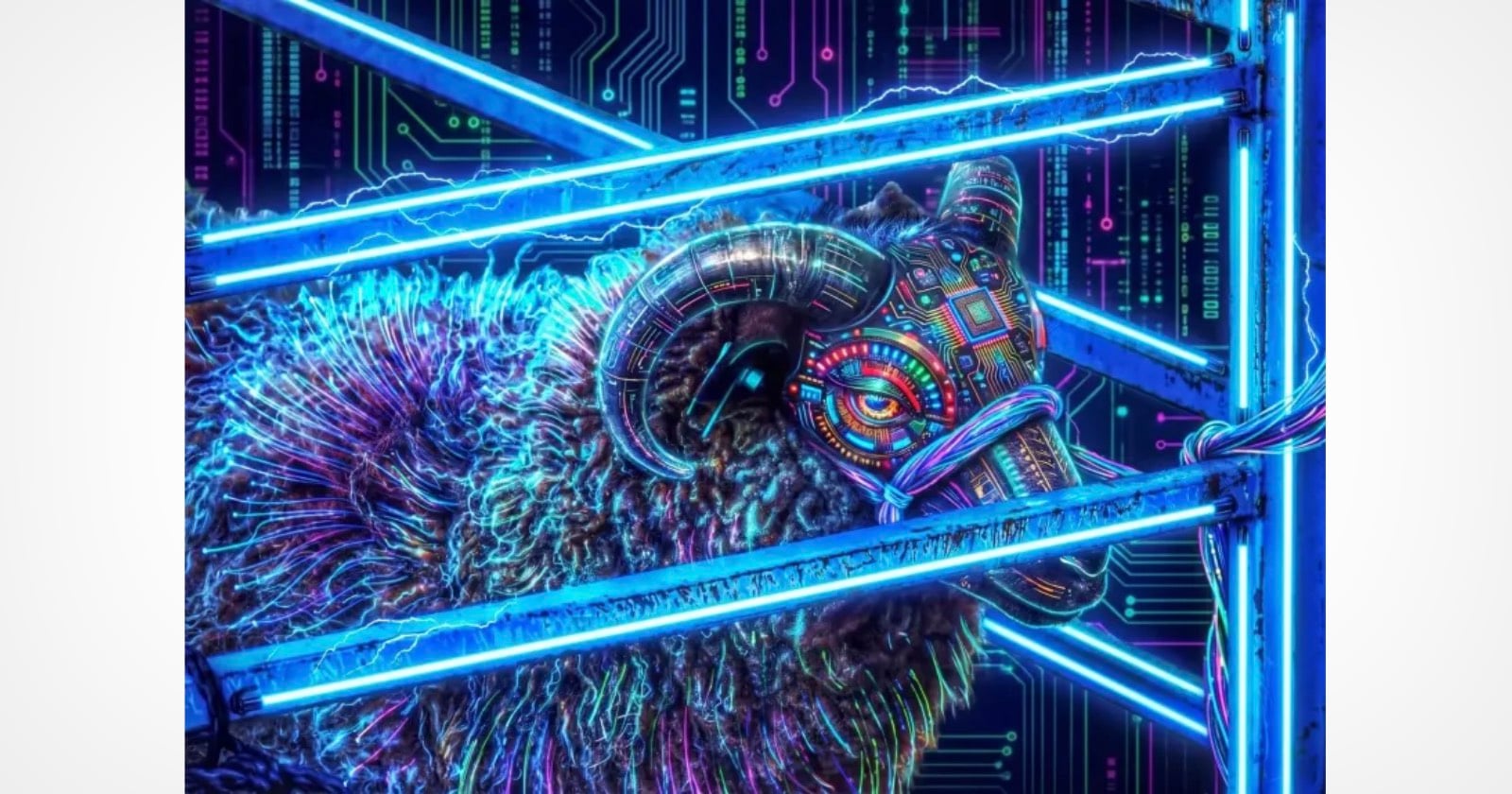
The controversy centers on an entry submitted by Randallstown-based photographer Guy Alston into the Open Class Home Arts photography competition at the 2026 Maryland State Fair. Alston’s striking piece—featuring a cybernetic ram adorned with glowing circuit-board patterns standing behind a neon-blue metal fence against a digital aesthetic background—secured the first-place ribbon in the specialized “Neon Lights” category.
While the artwork initially passed muster with judges, it quickly unraveled in the public eye. Word of the victory spread beyond the fairgrounds, landing on the popular social media platform Reddit within the r/maryland community. The post rapidly accumulated more than 3,400 upvotes and hundreds of polarized comments.
The reaction among local residents, traditional photographers, and digital artists was swift and predominantly critical. Many expressed deep frustration that an AI-modified image had triumphed over photographs captured entirely through traditional camera work and human-driven post-processing. The backlash highlighted a widespread public sensitivity regarding the perceived displacement of authentic human effort by synthetic media.
Chronology of Events
To understand how a heavily processed digital creation captured a top ribbon in a state-level photography contest, it is helpful to examine the sequence of events leading up to and following the exhibition:
Years Prior: Photographer Guy Alston captures an original photograph, which serves as the foundational base for a future digital project.
The Submission Window: Ahead of the 2026 Maryland State Fair, Alston submits his cybernetic ram composition into the Open Class Home Arts “Neon Lights” category, which historically permitted a broader range of digital manipulation and artistic embellishment compared to standard documentary classes.
Judging and Exhibition: Operating under the rules of the special category—and handling a massive influx of roughly 850 total photography entries—volunteer judges evaluate and award Alston’s piece first place. The image is displayed publicly and featured online, celebrated as a triumph in the thematic category.
The Digital Backlash: A photograph of the winning entry is shared on Reddit (r/maryland), where it goes viral. Commenters quickly identify the telltale signs of AI processing, triggering intense debate and criticism.
Media Scrutiny: Local news outlets, including the Baltimore Sun, pick up the story, interviewing both fair officials and the winning photographer to investigate the oversight and the state of competition rules.
Policy Revision: In response to mounting public pressure and the ambiguity of the current guidelines, fair organizers announce that AI modifications will be strictly prohibited in all photography categories starting next year.
Supporting Data and the Scale of the Contest
The administrative realities of managing a massive state fair competition help explain how the submission slipped through the cracks. According to Sam Chamelin, the superintendent of the Maryland State Fair’s photography competition, the event received approximately 850 photographs this year alone.
Managing an influx of nearly a thousand entries with a team largely composed of volunteers makes comprehensive verification of every image’s workflow practically impossible. Chamelin openly admitted to the press that he was unaware AI tools had been utilized to heavily modify Alston’s photograph at the time of judging.
Furthermore, the fair’s photography contest structure is remarkably vast, featuring 40 standard categories alongside two rotating special classes that change annually, such as this year’s "Neon Lights." While traditional categories enforce stringent limits on digital manipulation—permitting only moderate adjustments in software like Adobe Photoshop—specialized classes have historically relaxed these constraints. Chamelin noted that categories like "Neon Lights" have permitted various forms of digital embellishment for at least a decade to encourage experimental artistry.
Official Responses and Perspectives
The Photographer’s Defense: Evolution, Not Creation From Nothing
Defending his work, Guy Alston pushed back against critics who claimed he had simply prompted an AI model to generate an image from scratch. Speaking with the Baltimore Sun, Alston clarified that his workflow relied on an original photograph he had taken years prior.
Using Photoshop alongside Google-based AI software known as Nano Banana—along with other digital suites—Alston heavily modified the legacy photo to realize his artistic vision. Because the "Neon Lights" category explicitly allowed embellishment, Alston maintained that he operated well within the boundaries of the established guidelines.
"I don’t do an image from nothing, which is what I think a lot of people were saying," Alston remarked.
He also pointed out the ubiquity of artificial intelligence in modern creative workflows, noting that anyone utilizing contemporary iterations of standard editing suites is inherently benefiting from machine learning.
"If you think that photo is the only photo that was in the whole contest that had some AI in it, then you haven’t been paying attention over the past five years. Even if you use a little Photoshop or Lightroom, you’re benefiting from improved tools because they’re using AI engines."
The Organizer’s Stance: Balancing Digital Artistry With Human Labor
Faced with public outcry, competition superintendent Sam Chamelin attempted to strike a balance between encouraging modern digital creativity and preserving the integrity of human-captured photography.
Chamelin emphasized that fair organizers still value digital experimentation and creative expression. However, the line must be drawn to ensure that human skill remains the driving force behind the entries.
"We want to lean into a kind of digital artistry, be creative with it, emphasize different parts of the photographs — we still want that very much to occur; those are fun photographs," Chamelin told the Baltimore Sun. "We want to make sure that it’s humans and not machines that do it."
Consequently, fair leadership confirmed that any future entries utilizing artificial intelligence modifications will face immediate disqualification, signaling a definitive tightening of the reins for the 2027 exhibition.
Broader Implications: A Pattern of Culture Clashes
The Maryland State Fair incident is far from an isolated event. It mirrors a growing global trend where creative competitions across various mediums find themselves grappling with the rapid democratization and integration of artificial intelligence tools.
A strikingly similar controversy unfolded at the Colorado State Fair, where an artist secured first place in a fine-art competition using an image generated via a text-to-image AI prompt. That incident similarly enraged traditional painters and digital illustrators, sparking nationwide discussions regarding copyright, artistic merit, and the definition of authorship.
Similarly, major professional photography contests—such as the Sony World Photography Awards—have faced public trials when entrants submitted AI-generated works (or rejected awards in protest), forcing organizers to rapidly draft clear definitions distinguishing "photography" from "synthetic image generation."
Where Do Competitions Draw the Line?
The fundamental challenge highlighted by the Maryland State Fair controversy is the shifting definition of "editing." For decades, darkroom dodging and burning, digital healing brushes, noise reduction, and content-aware fill have been accepted parts of the photographic process. However, as software giants integrate generative fill, neural filters, and text-to-image capabilities directly into everyday editing tools, the traditional boundary separating a photographer from an AI operator has blurred significantly.
As competitions scramble to adapt, organizers are forced to choose between two difficult paths:
Total Restriction: Banning all modern AI-assisted editing tools, which risks alienating photographers who rely on standard software features for basic retouching and workflow optimization.
Segregation: Creating entirely separate categories for AI-assisted or AI-generated works, ensuring that human-shot photography competes exclusively against other human-shot photography.
For now, the Maryland State Fair has opted for a strict restriction on AI modifications moving forward. Yet, as editing software becomes increasingly intelligent, enforcing such rules promises to remain an uphill battle for administrators, judges, and volunteers alike.