The Architectural Legacy of an Icon: Preserving the Soul of the Johnson Publishing Company

For over half a century, Ebony and Jet served as the definitive chroniclers of Black American life. More than mere magazines, these publications were cultural architects, shaping the narrative of the Civil Rights Movement, fashion, politics, and the everyday joys of the African American experience. At the heart of this media empire stood the Johnson Publishing Company headquarters at 820 South Michigan Avenue in Chicago. Completed in 1972, the building was a bold physical manifestation of Black success, power, and aesthetic innovation.
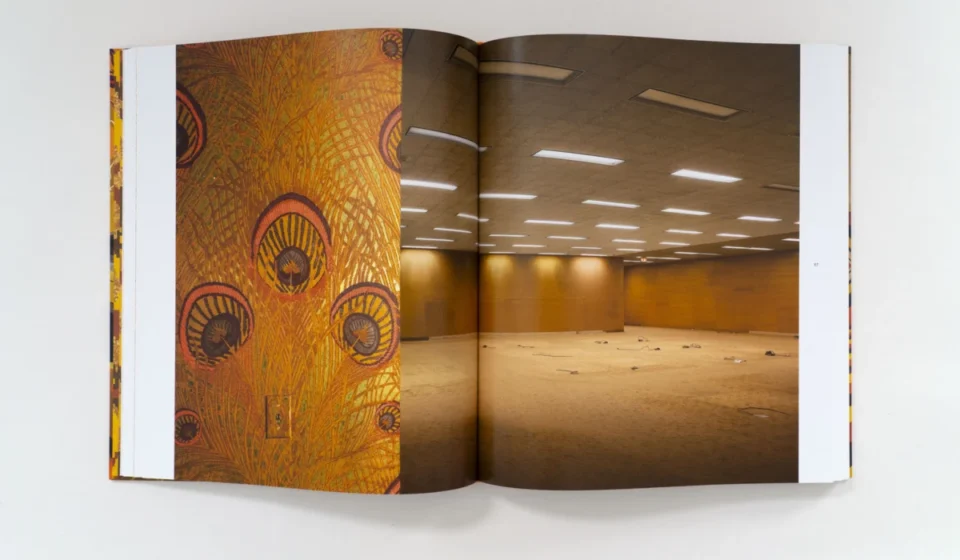
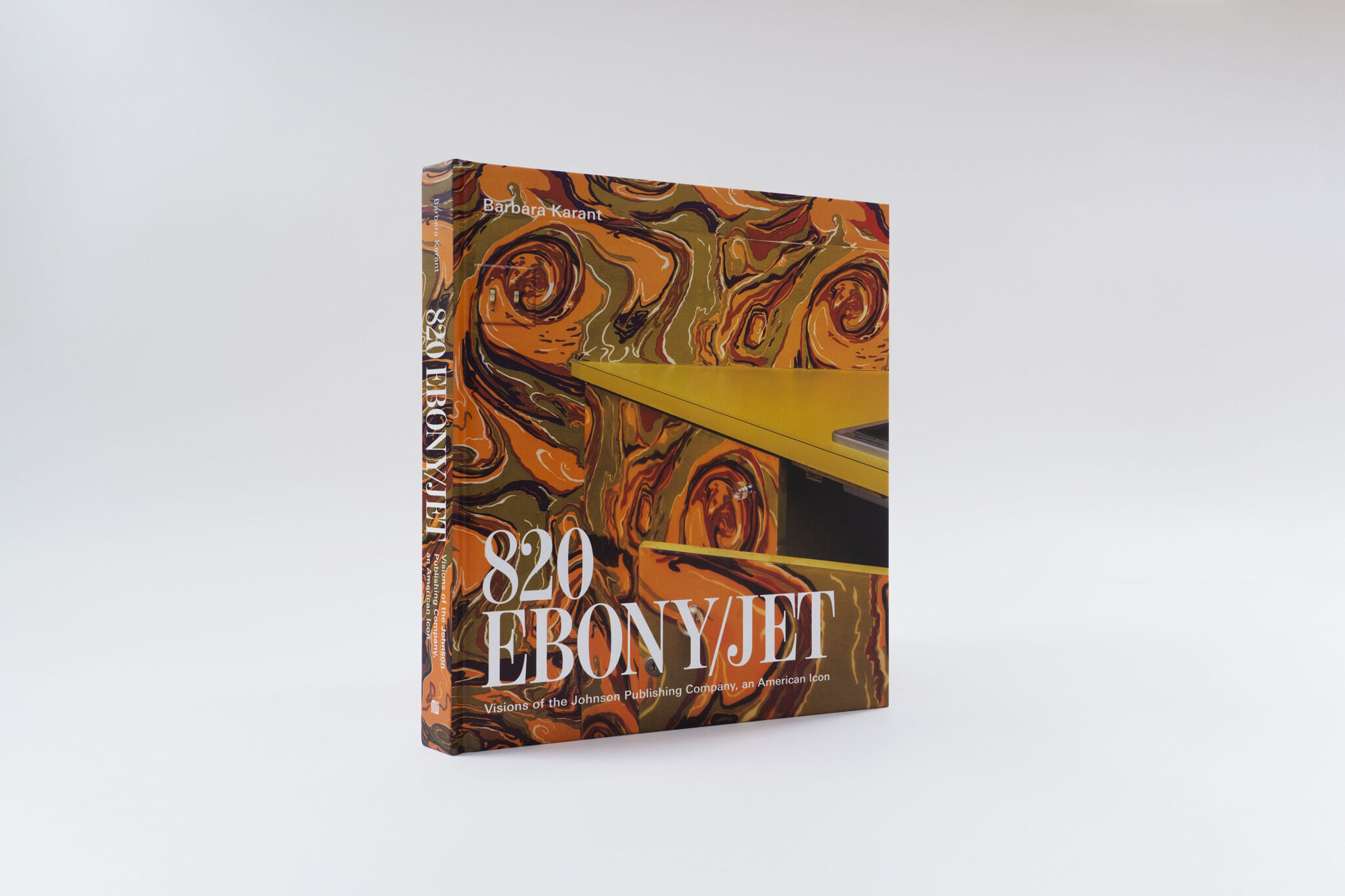
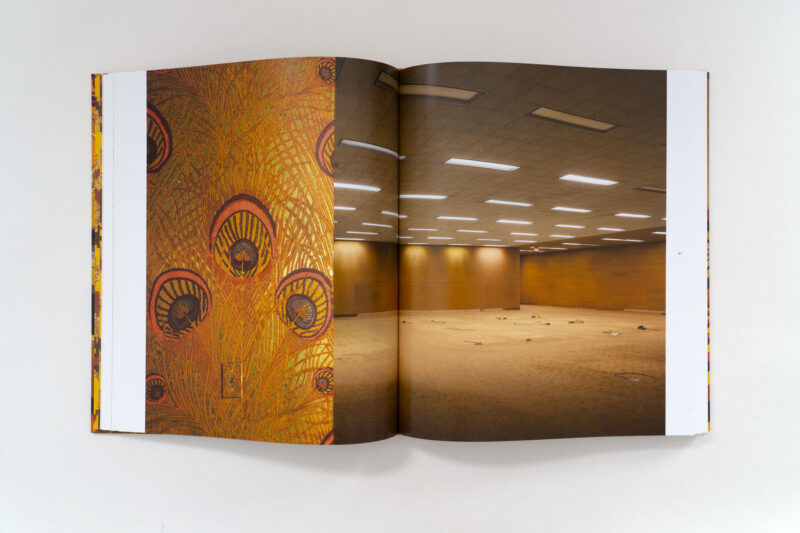
Today, that legacy is being immortalized through the lens of photographer Barbara Karant in the new monograph 820 Ebony/Jet: Visions of the Johnson Publishing Company, an American Icon, published by MW Editions. Through a hauntingly beautiful collection of images, the book captures the abandoned, mid-century modern sanctuary that once hummed with the pulse of Black media.
A Monument to Perseverance: The Genesis of 820 South Michigan
The construction of the Johnson Publishing headquarters was, in itself, an act of defiance. Publisher John H. Johnson, a titan of industry who built his empire from a $500 loan, faced systemic obstacles when attempting to secure financing for a flagship office in downtown Chicago. Bankers and real estate agents were notoriously reluctant to support a Black-owned venture in such a prestigious location.
Undeterred, Johnson commissioned John Moutoussamy to design the structure. Moutoussamy made history as the first Black architect to design a downtown Chicago high-rise. Rejecting the cold, ubiquitous glass-and-steel aesthetic that defined the city’s skyline at the time, Johnson demanded a building that exuded permanence and cultural pride. Moutoussamy delivered a design characterized by a restrained, elegant exterior clad in travertine marble—a choice that signified dignity and lasting institutional weight.
Chronology: From Corporate Nerve Center to Photographic Archive
- 1942: John H. Johnson launches Negro Digest, the precursor to the Johnson Publishing Company empire.
- 1945–1951: Ebony and Jet are launched, revolutionizing Black media by offering high-quality, positive representations of Black life.
- 1972: The 11-story headquarters at 820 South Michigan Avenue is completed, featuring interiors by Arthur Elrod and William Raiser.
- 2012: Johnson Publishing Company vacates the building after 40 years of operation, marking the end of an era.
- 2013–2018: Photographer Barbara Karant spends five years documenting the vacant, quieted interiors of the building.
- 2024: MW Editions prepares the release of 820 Ebony/Jet, a comprehensive monograph preserving the building’s design history.
The Aesthetic of Ambition: Inside the Design
If the exterior of 820 South Michigan was about the establishment of power, the interior was about the liberation of expression. Palm Springs designers Arthur Elrod and William Raiser were brought in to craft an environment that felt both futuristic and deeply personal.
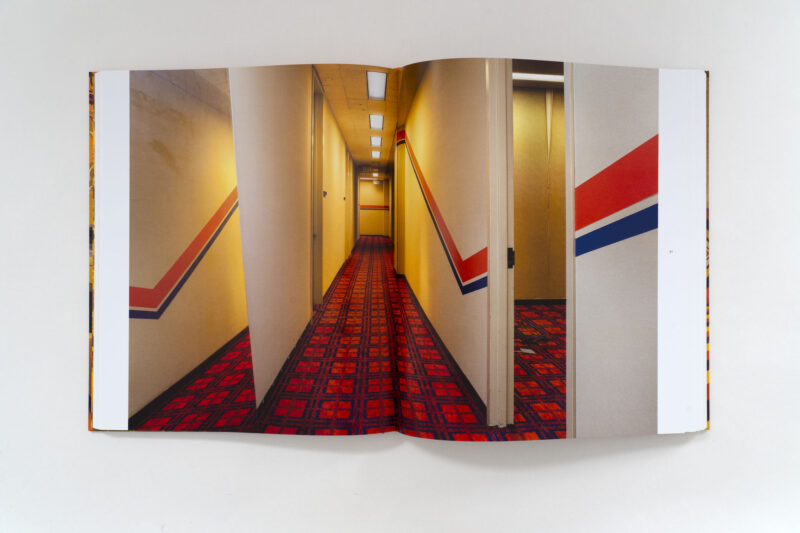
Each of the 11 floors was a distinct sensory experience. The building’s cafeteria was a vibrant study in contrast, featuring bold orange, purple, and gold chevrons. The office of co-founder Eunice Johnson was a masterclass in sophistication, blending cream-and-honey palettes with curated selections from the couple’s extensive art collection. Throughout the headquarters, geometric wallpapers, mirrored surfaces, and opulent, plush carpets created a corporate environment that felt less like a stiff office and more like a high-fashion editorial spread.

When Barbara Karant began her documentation in 2013, she found a building caught in a state of suspended animation. With the desks, files, and employees gone, she was able to focus on the raw bones of the architecture. Her photographs reveal the psychedelic swirls of the Test Kitchen’s laminate cabinetry, which mimics Italian marbled paper, and the way light from Lake Michigan and Grant Park plays across the mirrored surfaces of the executive floor. These images serve as a silent testament to a workplace that was once the site of immense cultural labor.
Supporting Data and Institutional Context
The monograph provides more than just aesthetic appreciation; it functions as a historical record. The 240-page volume contains 142 color and eight black-and-white images. Beyond Karant’s photography, the book integrates:
- Historical Documentation: Archival photos of the original, fully furnished interiors and the Ebony in-house photo studio.
- Public Art: Detailed views of Richard Hunt’s 1972 lobby sculpture, Expansive Construction, which remains a significant piece of Chicago’s public art heritage.
- Academic Insight: Essays by distinguished scholars and critics including Deborah Willis, Aaron Bryant, Cheryl Finley, Carla Williams, Jon Ott, Brenna Wynn Greer, and E. James West.
- Oral Histories: Firsthand accounts from former staff members who recount the daily realities of working within the halls of the most influential Black-owned media company in American history.
Implications: A Cultural Beacon for Future Generations
The significance of the 820 South Michigan building extends far beyond its architecture. It served as a professional home for generations of Black journalists, photographers, and editors who were often excluded from mainstream media organizations. The building’s influence on the artistic community is profound; the monograph explicitly traces how this space inspired luminaries such as Theaster Gates, Hank Willis Thomas, Kwame Brathwaite, Lorna Simpson, Martine Syms, and David Hartt.
For these artists, the building represents a "sacred site" of intellectual production. As Deborah Willis notes in the book’s foreword, the building was a laboratory for the Black imagination. By documenting it, Karant and the contributors to the monograph are not merely mourning a lost building; they are curating a legacy of agency.
Official Perspectives and Critical Reception
The publication of 820 Ebony/Jet arrives at a time of renewed interest in the preservation of Black historical sites. Critics have hailed the monograph as a vital contribution to both architectural history and media studies. "It is an essential document," writes one early reviewer. "It captures the intersection of corporate ambition and aesthetic radicalism, proving that Black media institutions were, and remain, central to the American design canon."
The project also highlights the precarious nature of such sites. In a rapidly gentrifying Chicago, the memory of 820 South Michigan serves as a reminder of the physical stakes of the Black experience. By preserving the visual language of the office—the patterns, the colors, and the spatial flow—MW Editions ensures that the "House That Photography Built" remains accessible to future architects, designers, and historians.
Conclusion: The Persistence of Memory
The emptiness captured in Karant’s photographs is not a sign of absence, but rather an invitation for the viewer to fill the void with the history of what occurred within those walls. The building was the stage for the stories that defined the 20th century for Black Americans.
820 Ebony/Jet: Visions of the Johnson Publishing Company, an American Icon is more than a coffee table book; it is a repository of a specific, vibrant moment in time. It honors the vision of John and Eunice Johnson, the architectural genius of John Moutoussamy, and the countless hours of creative work performed by the staff of Ebony and Jet. As the book hits shelves on October 13, it offers readers a rare opportunity to step inside a monument to excellence, ensuring that the legacy of 820 South Michigan Avenue continues to resonate, inspire, and educate for decades to come.
Published by MW Editions, 820 Ebony/Jet: Visions of the Johnson Publishing Company, an American Icon, will be available for purchase starting October 13 for $65.