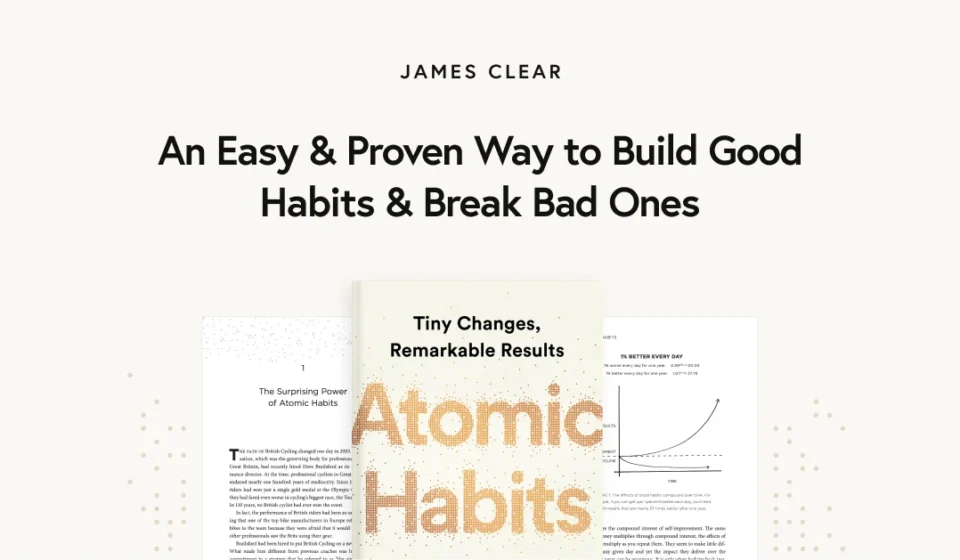
The Architecture of Change: Real-World Lessons in Mastering Atomic Habits

The pursuit of self-improvement is often characterized by grand, sweeping resolutions—vowing to overhaul one’s entire lifestyle overnight. However, the most effective transformations rarely stem from monumental shifts. Instead, they are the result of "atomic" changes: tiny, incremental adjustments that compound over time. Drawing from the principles popularized by James Clear in his seminal work, Atomic Habits, we explore how everyday individuals are applying behavioral science to dismantle destructive patterns and engineer healthier, more productive lives.
The Foundation of Identity-Based Habits
At the heart of behavioral change lies a paradigm shift: moving away from outcome-based goals—such as "I want to lose ten pounds"—toward identity-based habits. This philosophy suggests that true change is an internal realignment. When you shift your mindset to view yourself as a person who embodies healthy traits, the habits follow naturally.
From Desire to Identity
The efficacy of this approach is evidenced by the experience of readers who have moved beyond willpower to adopt new personas. For instance, a reader named Roland found that his attempts to improve his diet only succeeded when he stopped viewing it as a struggle against "bad food." By consciously adopting the identity of "someone who lives a healthy life," the decision-making process became intuitive rather than taxing.
Similarly, Robert, who successfully quit smoking, discovered that linguistic framing is a powerful brain-trainer. By replacing the restrictive "I can’t smoke" with the affirmative "I don’t smoke," he transformed his habit from a sacrifice into a proactive investment in his future wellbeing. This psychological reframing ensures that the individual is not "giving up" a pleasure, but rather affirming a standard of self-respect.
Financial Reinforcement
Identity-based habits can be further solidified through external incentives. One reader reported success in achieving six years of sobriety by treating the habit of not drinking as an identity—"I am no longer a drinker"—and pairing it with a micro-reward system. By redirecting the money once spent on alcohol toward tangible personal rewards, they provided their brain with a dopamine-positive feedback loop, effectively training themselves to value their new identity.
Strategic Cue Management
Habits are initiated by cues—the environmental or psychological triggers that prompt a behavior. By mastering the art of cue management, individuals can systematically manipulate their environment to encourage good behavior and obstruct bad habits.
Designing for Exposure
"Visual priming" is a key strategy for cultivating positive routines. Heather, for example, successfully increased her daily water intake by placing a brightly colored aqua bottle on her nightstand. The proximity and visual appeal acted as a constant, low-friction prompt. Conversely, reading habits can be scaled by reducing the search cost of finding a book. Lisa, a reader who manages a rotating queue of 20 to 30 books from her local library, ensures that the cue to "read" is always met with an immediate, accessible option, bypassing the "browsing" phase that often leads to procrastination.
Removing Negative Cues
On the defensive front, removing triggers is often more effective than relying on sheer willpower. Max, who struggled with a vaping habit, identified a specific environmental cluster: coffee and nicotine. By eliminating coffee—a key trigger for his morning smoke—he successfully broke the cycle. His experience highlights the importance of analyzing "habit clusters" and systematically pruning the elements that facilitate undesirable behaviors.
The Mechanics of Habit Stacking
Habit stacking, a concept refined by Stanford professor B.J. Fogg, involves anchoring a new, desired behavior onto an existing, established habit. By leveraging the neural pathways of a routine you already perform, you reduce the mental energy required to adopt a new one.
Anchoring New Behaviors
The effectiveness of this method is illustrated by a traveler in China who became fluent in Mandarin by stacking language practice onto his daily taxi rides. By committing to strike up a conversation with every driver, he transformed a mundane, frequent activity into a structured learning session. Similarly, David successfully implemented a meditation practice by anchoring it to the act of brushing his teeth. The "keystone habit" of dental hygiene provided a reliable temporal anchor, ensuring the meditation session became an inseparable part of his morning routine.
Environment Design: The Friction Principle
Our environment is a silent architect of our behavior. To foster better habits, one must manipulate the friction within their surroundings: increase it for bad habits and decrease it for good ones.
Introducing Necessary Friction
For those struggling with snacking, creating physical barriers can be life-changing. Cyd, for instance, stores high-calorie snacks in a cold, locked car. The "friction" of having to go outside to retrieve a snack is often enough to extinguish the impulsive craving.
The digital world requires similar architectural adjustments. Matthew found that simply logging out of his social media accounts after every session created enough of a barrier to curb mindless scrolling. Others, like Rahul, have taken more extreme measures, such as removing graphics cards from gaming computers or deleting browsers from mobile devices, proving that when the cost of a bad habit exceeds the reward, the behavior naturally dissipates.
Reducing Friction for Success
Conversely, for good habits, the goal is to make the desired action the path of least resistance. Natalie, who struggled with laundry clutter, placed a basket right by the door, drastically reducing the number of steps required to tidy up. In the fitness domain, many readers have found that "staging" their workout gear the night before allows them to bypass the decision-making paralysis that often occurs at 6:00 AM. In extreme cases, sleeping in one’s workout clothes can be the ultimate low-friction strategy, turning the transition from bed to movement into a seamless, automatic process.
Habit Substitution and Mental Reframing
When an established habit is deeply entrenched, total elimination can be daunting. Substitution—replacing a harmful habit with a healthier, similarly rewarding one—is often more sustainable.
The Stair-Step Approach
Marc’s transition from daily beer consumption to complete sobriety was a masterclass in stair-stepping. By systematically swapping beer for fruit juice, then iced tea, and finally seltzer water over a nine-month period, he managed the physical and psychological withdrawal gradually. This allowed him to decouple the "stress-drinking" trigger from the consumption of alcohol.
Others have found success in physical substitution. One reader installed a weight bench in their smoking area; by performing a few reps instead of lighting a cigarette, they satisfied the physical impulse to do something while simultaneously reinforcing a new, positive health identity.
Cognitive Mental Tricks
The mind is susceptible to clever framing. Caelan, who quit smoking by adopting a "cheat day" strategy, framed his abstinence as a temporary state rather than a permanent loss. By shifting the horizon of the commitment to a specific date in the future, he bypassed the panic of "never again," making the short-term delay manageable.
Similarly, Qiana addressed her soda addiction by visualizing the sugar content of her weekly consumption. By physically scooping the sugar into a bowl, she replaced a vague, abstract habit with a visceral, negative association that made the consumption of soda repulsive rather than refreshing.
Tracking: The Power of the "Chain"
The final, and perhaps most vital, component of lasting change is the habit tracker. The act of recording one’s progress transforms an intangible goal into a tangible, visual record.
Building Momentum
Cindy, who used a wall calendar to mark off days with red X’s, found that the simple desire to "not break the chain" was the primary driver of her success. Over six months, this ritual helped her lose 30 pounds and diversify her skills.
The key, according to experts, is to start small. Günter’s approach to fitness—abbreviating his workout on days when he felt unmotivated rather than skipping it entirely—allowed him to maintain the "habit chain" even on his worst days. By focusing on the consistency of the action rather than the intensity of the output, individuals can maintain momentum through life’s inevitable fluctuations.
Conclusion
The stories of these readers demonstrate that we are not victims of our habits, but rather the architects of our own routines. Whether through habit stacking, environmental design, or the deliberate cultivation of a new identity, the process of transformation is accessible to anyone willing to start small. As these examples illustrate, the journey toward a better life is not a single leap, but a series of atomic steps taken, one day at a time. By understanding the mechanics of our own behavior, we can design a future that aligns with our highest potential.