Comments Off on The "Bookless Bookstore": How Audible Built a Physical Sanctuary for Audio Storytelling in New York
Introduction
In an era dominated by screens and algorithmic recommendations, the physical book is experiencing an unexpected renaissance. Yet, as traditional brick-and-mortar bookstores reclaim their cultural footprint, a parallel revolution is taking place in the digital sphere: the explosive rise of audiobooks and spoken-word storytelling.
Seeking to bridge the gap between the intangible nature of digital audio and the deeply tactile desire for physical community, Audible launched a groundbreaking experiential activation in New York City. Titled the Audible Story House, this "bookless bookstore" reimagined how consumers discover, consume, and gather around oral narratives.
Spanning nearly a month in the heart of Manhattan, the initiative represents a significant evolution in experiential marketing, transitioning from fleeting festival pop-ups to a sustained, brand-owned community space.
Main Facts: Inside the "Bookless Bookstore"
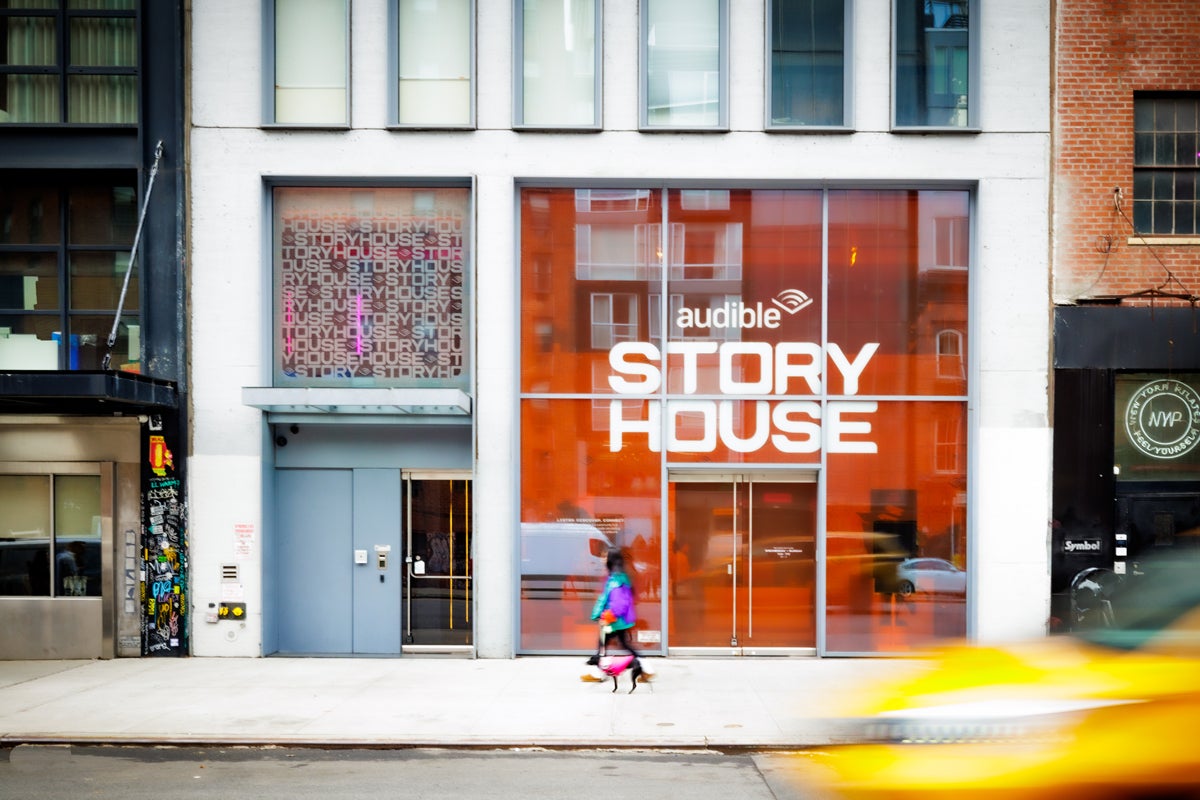
The Audible Story House was a month-long physical activation located at 260 Bowery in New York City, running from May 1 to May 29. Spanning 6,000 square feet across three distinct floors, the space was designed to materialize the digital catalog of the world’s leading audiobook service into tangible, interactive physical touchpoints.
+------------------------------------------------------------------------+
|                          AUDIBLE STORY HOUSE                           |
|                    260 Bowery, NYC | May 1–29                          |
+------------------------------------------------------------------------+
|  UPPER LEVEL:                                                          |
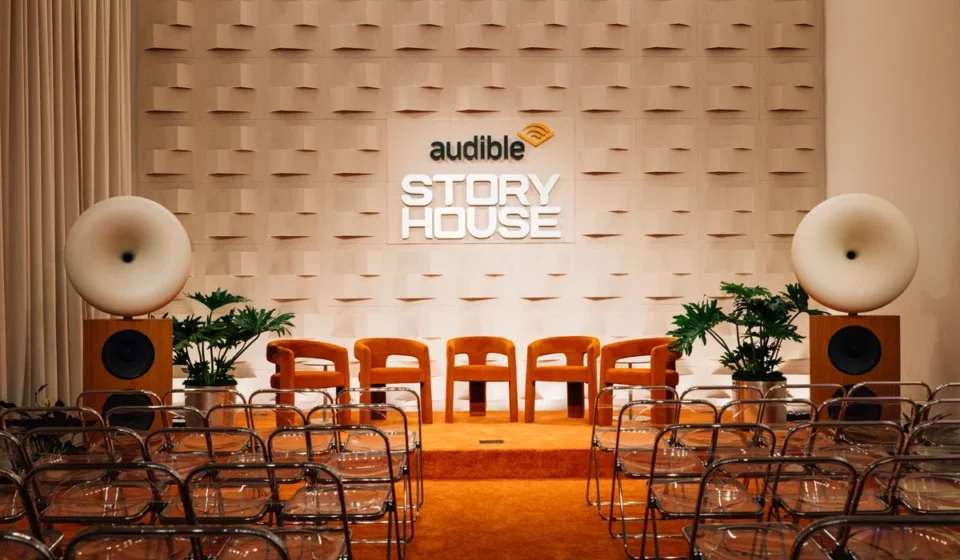
|  - The Gallery (Cozy space for live programming, panels, book clubs)   |
|  - The Studio (Hands-on interactive demos of Audible features)         |
+------------------------------------------------------------------------+
|  STREET LEVEL:                                                         |
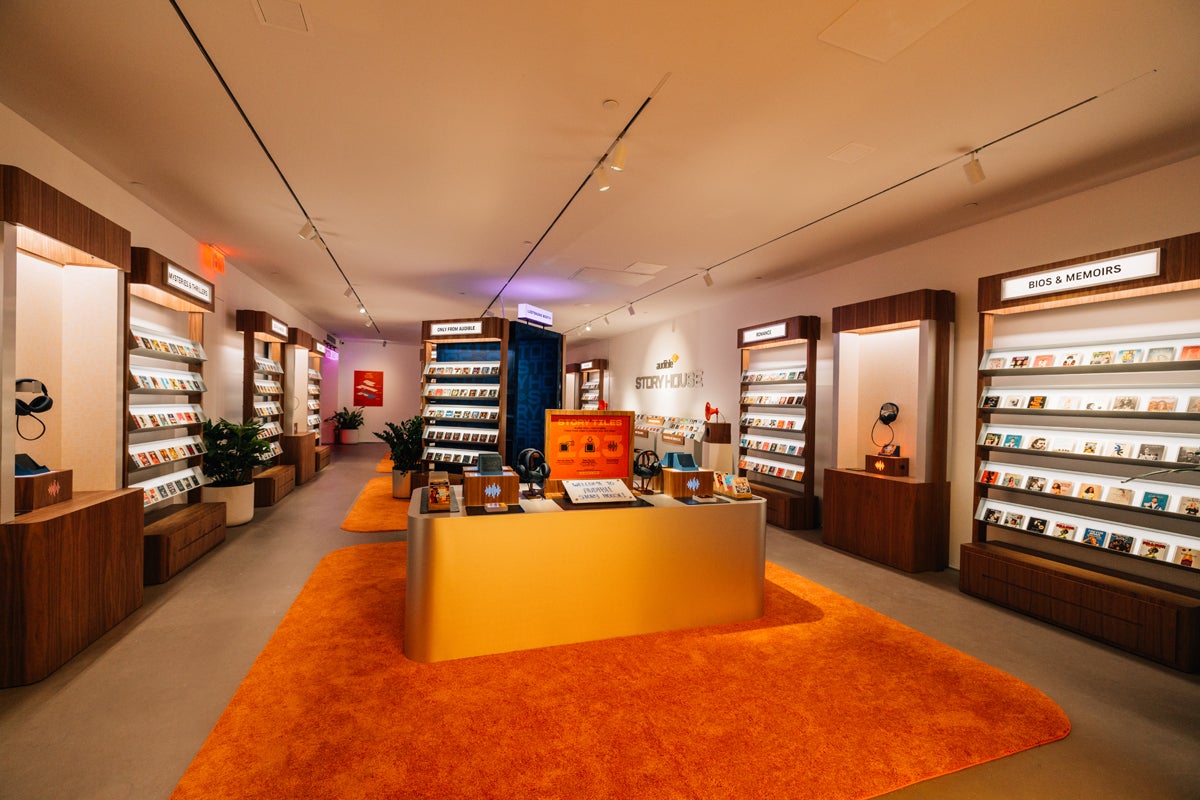
|  - The Library (8 genre bookshelves, 100s of titles, Story Tile slots) |
|  - The Listening Bar (Apple Genius-style customized recommendations)   |
|  - The Cafe & Merch Store (Partnered with Brooklyn's Land to Sea)      |
+------------------------------------------------------------------------+
|  LOWER LEVEL:                                                          |
|  - Dolby Atmos Lounge (Immersive 15-minute spatial audio theater)      |
+------------------------------------------------------------------------+
The core concept of the "bookless bookstore" relied on a retro-futuristic design language, blending the nostalgic aesthetic of a neighborhood library, a mid-2000s Blockbuster, and a sleek modern retail environment. The space featured several custom-designed zones:
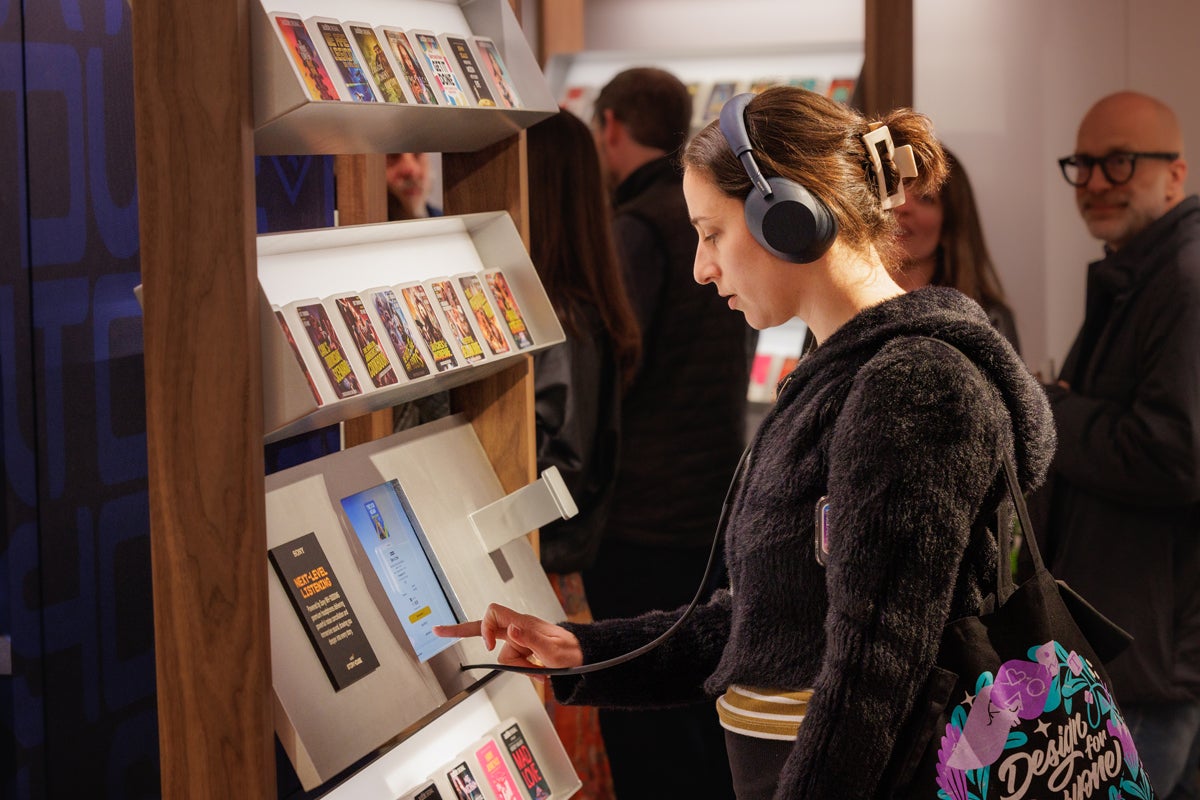
The Library: The main hall on the ground floor where visitors browsed bookshelves categorized into eight literary genres. Instead of paper volumes, the shelves were stocked with Story Tiles—tactile, square cartridges reminiscent of retro Nintendo Game Boy games. Visitors could insert these tiles into custom-built listening stations equipped with high-fidelity Sony headphones or gather in group booths featuring directional audio domes.
The Listening Bar: Modeled after the interactive, consultant-driven layout of an Apple Store Genius Bar. Instead of tech support, visitors interacted with a "Storyteller" who assessed their current mood, interests, and temporal availability before prescribing a custom title from a curated "listening menu."
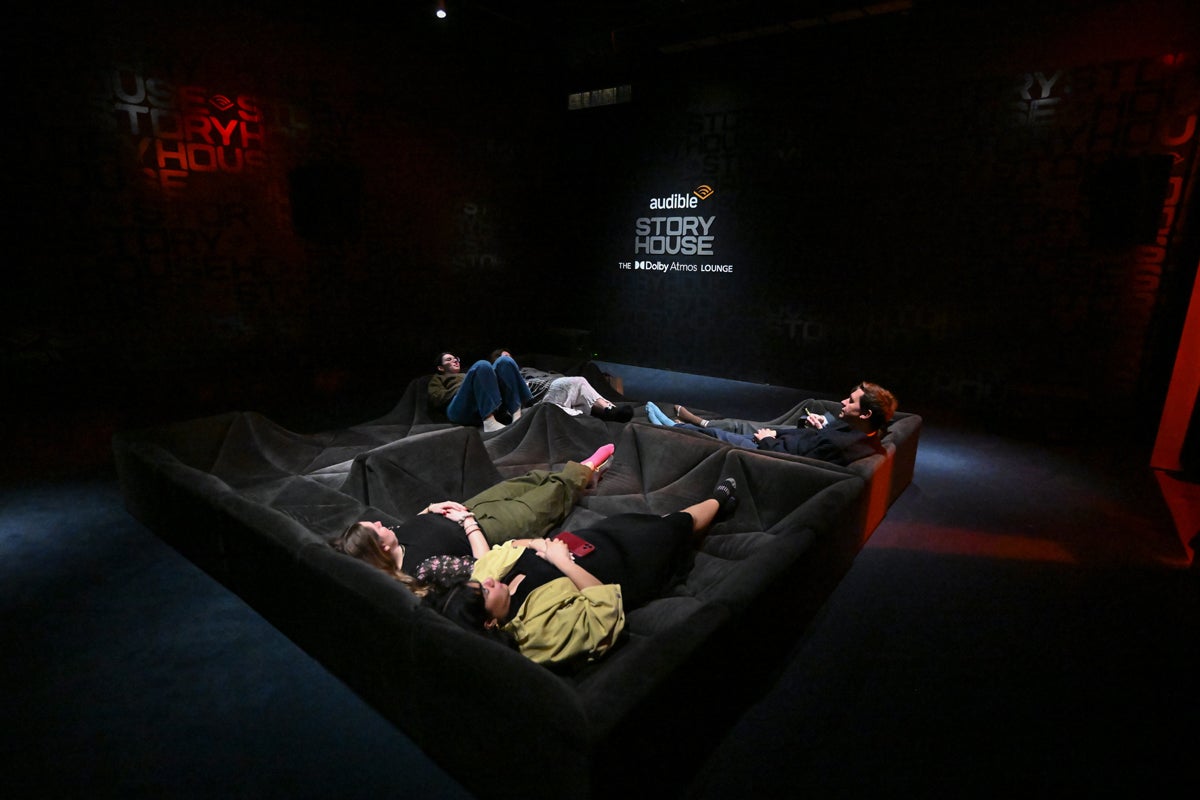
The Dolby Atmos Lounge: Situated in the lower level, this dark, acoustic-insulated sanctuary offered an immersive surround-sound experience. It was the only zone that bypassed the Story Tiles, opting instead to play curated 15-minute spatial audio clips designed to showcase the cinematic depth of Dolby Atmos-produced audiobooks.
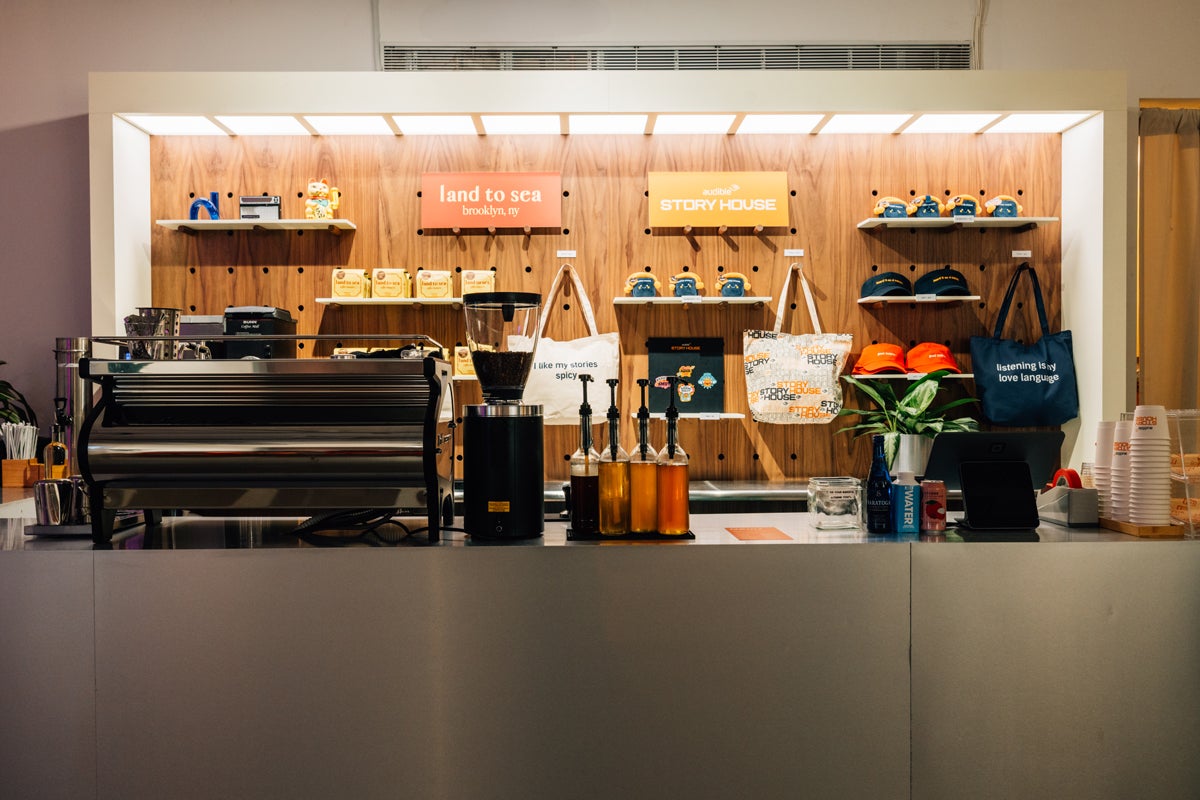
The Cafe and Merch Store: To anchor the space in the local community, Audible partnered with Land to Sea, a popular female-owned independent cafe based in Brooklyn. The cafe served custom-brewed beverages and sold exclusive, highly sought-after merchandise, including the "Audibuddy"—a plush character designed to hold wireless headphones.
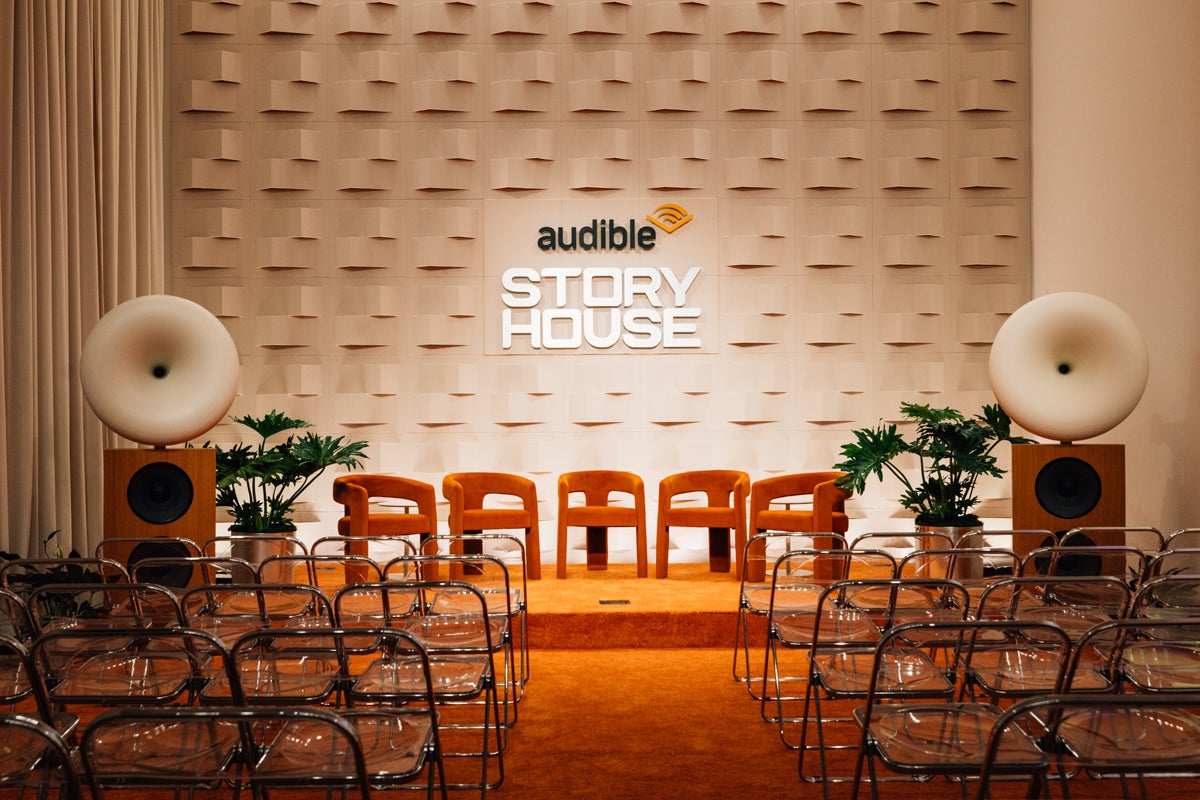
The Gallery and The Studio: Spaces dedicated to community engagement. The Gallery hosted live panel discussions, author signings, and interactive book clubs, while The Studio offered hands-on demonstrations of Audible’s platform features and production technologies.
Chronology: From Concept to Execution
The journey of the Audible Story House from a conceptual brief to a high-traffic Bowery installation was a multi-year strategic undertaking.
+------------------------------------------------------------------------+
|                           PROJECT TIMELINE                             |
+------------------------------------------------------------------------+
|  [ Spring 2024 ]                                                       |
|  Conceptualization begins; Audible shifts strategy from temporary      |
|  festival activations (SXSW, Comic-Con) to a dedicated flagship.       |
|                                                                        |
|  [ Fall 2025 ]                                                         |
|  Site selection finalized at 260 Bowery; architectural and sensory      |
|  design layouts engineered for three-floor integration.                |
|                                                                        |
|  [ Winter 2025-2026 ]                                                  |
|  Partnerships secured with Dolby, Cadillac, Land to Sea, and local     |
|  literary organizations; custom "Story Tiles" engineered.              |
|                                                                        |
|  [ May 1, 2026 ]                                                       |
|  Audible Story House officially opens to the public in Manhattan.      |
|                                                                        |
|  [ May 2–28, 2026 ]                                                    |
|  Execution of nearly 30 curated events, including panel discussions,   |
|  live podcast recordings, and community-driven workshops.              |
|                                                                        |
|  [ May 29, 2026 ]                                                      |
|  The pop-up concludes with a dedicated "Dungeon Crawler Carl" fan event.|
+------------------------------------------------------------------------+
The Experiential Shift (2024–2025)
For years, Audible’s experiential marketing relied on high-impact but short-lived activations at major cultural festivals such as Sundance, SXSW, and San Diego Comic-Con. While effective for generating immediate PR buzz, these installations were transient, often lasting only three to four days, and competed heavily with hundreds of other brands for attendee attention.
In early 2024, Audible’s marketing leadership decided to pivot toward a sustained, brand-owned model. The objective was to build a dedicated hub where the brand could nurture a local community over a month-long residency.
Design and Partnership Integration (Late 2025–Early 2026)
Developing a "bookless bookstore" presented unique design challenges. Because audiobooks are fundamentally invisible, the design team spent two years engineering physical representations of digital files. The result was the "Story Tile." Each tile had to feel premium, collectible, and instantly intuitive to use.
Concurrently, Audible negotiated partnerships with Dolby to build the lower-level lounge and coordinated a co-branded off-site experience with Cadillac, which allowed consumers to sample high-end in-car spatial audio systems.
The Month of Programming (May 1–29, 2026)
Upon opening on May 1, the Story House launched an ambitious calendar of nearly 30 curated events. The space functioned not just as a walk-in exhibit but as a dynamic community center.
Throughout the month, the programming schedule featured:
Literary & Educational Events: Author panels, narrator Q&As, and a Teacher Appreciation Day celebration hosted in conjunction with Teach for America, Crayola, and the social reading group Reading Rhythms.
Entertainment & Fandom Nights: A Harry Potter fan trivia night, live acoustic concerts in partnership with Sofar Sounds, a live podcast recording with iHeartRadio, and a highly anticipated closing event celebrating the cult-favorite audiobook series Dungeon Crawler Carl.
Lifestyle & Wellness Activations: Crafting workshops led by Happy Medium, a Mother’s Day flower-arranging course, a local running club that routed its weekly run to end at 260 Bowery, and traditional Mahjong games hosted by Land to Sea.
Supporting Data: The Cultural and Market Context
The launch of the Audible Story House aligns with several macroeconomic and cultural trends that highlight why a physical, audio-first space is highly relevant to today’s consumers.
1. The Audiobook Market Boom
According to data from the Audio Publishers Association (APA), the audiobook industry has experienced double-digit revenue growth for over a decade. This growth is largely driven by younger demographics—specifically Gen Z and Millennials—who consume audiobooks while commuting, exercising, multitasking, or practicing "screen-free" wellness routines.
2. The Physical Bookstore Renaissance and "BookTok"
Despite predictions of the physical book’s demise, independent bookstores have seen a major resurgence. Digital subcultures like "BookTok" (TikTok’s reading community) and "Bookstagram" have turned reading into a highly visual, social, and aesthetic lifestyle.
By creating a visually stunning, highly shareable space on the Bowery, Audible tapped directly into this aesthetic-driven demographic, giving digital audio consumers a physical backdrop to share their passion.
3. The "Phygital" Retail Trend
Modern retail data indicates that consumers—particularly younger cohorts—are experiencing digital fatigue. According to retail consultancy reports, brands that successfully integrate "phygital" experiences (physical spaces integrated with digital utility) see higher brand affinity, increased digital subscription retention, and stronger customer lifetime value.
The Story House served as a physical customer-acquisition funnel, converting casual foot traffic into digital subscribers through tactile interaction.
Official Responses: The Strategy Behind the Space
Audible executives emphasize that the Story House was built to serve as a physical manifestation of a digital community, designed to prioritize localized authenticity over corporate scale.
Katja Lindemann, Head of Brand Activations and Sponsorships at Audible, explained the long-term planning and deliberate community-first strategy that defined the project:
"It was really about how do we build a community and build this fandom and have a place where people can gather? So we spent a lot of time on what it would look like. And I think where we ended up really shows what you can build if you take some time and really strategize."
Lindemann also highlighted the importance of selecting the right local partners, emphasizing that local integration was vital to making the space feel like a genuine neighborhood hub rather than a sterile corporate showroom:
"With the cafe, [it was about] finding a good partner, and not a Starbucks or Dunkin’ Donuts or big corporation. It was bringing someone in that already has a community."
Addressing the intentional diversity of the programming, Lindemann added:
"We are very intentional on building programming that is inclusive—young, old, male, female, whatever ethnicity you come from. We’re not excluding anyone. There were all different kinds of ways to build community. And audio was always first when you were doing programming or came into that space."
Implications: The Future of Literary Experiential Marketing
The success of the Audible Story House offers several key takeaways for the publishing, retail, and experiential marketing industries.
+------------------------------------------------------------------------+
|                      FUTURE STRATEGIC IMPACTS                          |
+------------------------------------------------------------------------+
|  [ The Phygital Paradigm ]                                             |
|  Demonstrates how abstract digital products (audio files) can be       |
|  successfully translated into physical, tactile consumer goods.        |
|                                                                        |
|  [ Hyper-Local Partnership Model ]                                     |
|  Proves that national brands gain authentic cultural credibility by     |
|  co-branding with independent, community-rooted local businesses.       |
|                                                                        |
|  [ Sustained Experiential Footprints ]                                 |
|  Signals a shift away from short-lived, high-cost festival pop-ups     |
|  toward month-long residencies that build deep consumer loyalty.       |
+------------------------------------------------------------------------+
Redefining Digital Product Tangibility
The "Story Tile" concept provides a valuable blueprint for other purely digital brands. By translating invisible audio files into tangible, collectible objects that mimic retro cartridges, Audible successfully tapped into the consumer desire for tactile interaction.
This suggests that future digital-first brands—whether in music streaming, gaming, or software—may increasingly look to physical, tactile interfaces to deepen consumer connections.
The Power of Hyper-Local Partnerships
By bypassing global coffee chains in favor of a Brooklyn-born, female-owned brand like Land to Sea, Audible established immediate cultural credibility. This partnership model shows that modern experiential marketing is most effective when it does not attempt to manufacture community from scratch, but instead integrates with and elevates existing local networks.
The Shift from Festivals to Residencies
As the cost of participating in major festival ecosystems like SXSW or Sundance continues to rise, the Audible Story House demonstrates the strategic value of brand-owned, localized residencies. A month-long footprint allows a brand to test multiple programming verticals, gather deeper consumer data, and build authentic, long-term regional loyalty in a way that a three-day festival booth simply cannot match.
Ultimately, the Audible Story House proved that even in an audio-first world, there is no substitute for the physical spaces where stories are shared, discussed, and celebrated together.