Designing for the Next Generation: How Gen Z is Rewriting the Corporate Event Playbook

The corporate event landscape is undergoing a structural demographic shift. As older cohorts gradually transition out of the workforce, Generation Z—those born between 1997 and 2012—is rapidly taking their place. This emerging generation of young professionals and digital natives is bringing an entirely new set of expectations, values, and behaviors to the professional sphere.
For event marketers, planners, and corporate leaders, the traditional playbooks of static keynotes, passive networking sessions, and alcohol-centric mixers are no longer effective. Engaging this highly energetic, digitally integrated, and pragmatic demographic requires a fundamental rethinking of how B2B and corporate events are designed, marketed, and executed.
Main Facts: Understanding the Gen Z Attendee Profile
To successfully engage Generation Z, event planners must first understand the socio-cultural forces that have shaped their worldview. Gen Z is not merely a younger version of the Millennial generation; they possess a distinct psychological and behavioral profile forged by unique historical circumstances.
1. True Digital Natives
Unlike Millennials, who remember the transition from analog to digital, Gen Z has no memory of a world without smartphones, high-speed internet, and ubiquitous social media. They navigate physical and digital spaces simultaneously, expecting a seamless, frictionless integration of technology in every aspect of their lives, including live events.
2. The COVID-19 Cohort
A defining period of Gen Z’s formative years was the COVID-19 pandemic, which disrupted their high school, college, or early professional lives. This prolonged period of isolation has given them a deep appreciation for genuine, face-to-face human connection, while simultaneously cementing their reliance on virtual platforms. They demand high-quality in-person experiences but expect the flexibility of virtual access.
3. Hyper-Aware and Authenticity-Driven
Growing up in an era of "fake news," targeted advertising, and sponsored content, Gen Z has developed a highly sophisticated filter for corporate insincerity. They reject highly polished, transactional marketing in favor of authenticity, diversity, and social responsibility. If an event feels like a hollow sales pitch, Gen Z attendees will quickly disengage.
4. Pragmatic and Value-Conscious
Having witnessed economic instability, rising inflation, and the soaring cost of living, Gen Z is highly pragmatic regarding financial decisions. They view their time and money as finite, valuable resources. Consequently, they are less likely to invest in expensive event tickets or VIP upgrades unless there is a clear, tangible return on investment (ROI) or a highly compelling experiential value proposition.

Chronology: The Evolution of Corporate Event Design (1995–Present)
The evolution of corporate events over the last three decades reveals a clear trajectory away from passive consumption toward hyper-connected, active participation.
[1995–2005: The Traditional Era]
       │ (Lecture-heavy, physical collateral, static slide presentations)
       ▼
[2006–2015: The Digital Integration Era]
       │ (Introduction of event apps, social media hashtags, basic Wi-Fi)
       ▼
[2016–2019: The Experiential Era]
       │ (Focus on "Instagrammable" spaces, live-streaming, interactive workshops)
       ▼
[2020–2021: The Virtual Pivot]
       │ (Pandemic-driven total shift to digital platforms, Zoom fatigue)
       ▼
[2022–Present: The Hybrid & Gen Z Era]
         (Demand for seamless hybrid access, authenticity, and high-value connection)
The Traditional Era (1995–2005)
During this period, corporate events were highly formal, top-down affairs. Attendees sat passively in large auditoriums listening to hours of slide-heavy presentations. Networking was confined to structured coffee breaks and formal banquets. Communication was entirely physical, relying on printed brochures, physical business cards, and paper feedback forms.
The Digital Integration Era (2006–2015)
The rise of smartphones and early social media platforms forced events to adopt digital elements. Event planners introduced dedicated mobile apps, event-specific hashtags, and digital check-ins. However, technology was largely treated as an add-on rather than an organic component of the event design.
The Experiential Era (2016–2019)
Driven by Millennial preferences, corporate events shifted toward "experiential marketing." Planners began prioritizing aesthetic appeal, creating dedicated photo-activation booths, and incorporating live polling. The focus began shifting from purely educational content to creating shareable, visually appealing moments.
The Virtual Pivot (2020–2021)
The onset of the COVID-19 pandemic forced the global event industry to go entirely virtual overnight. While this period accelerated the adoption of advanced streaming, virtual reality, and online engagement tools, it also led to widespread "Zoom fatigue."
The Hybrid and Gen Z Era (2022–Present)
As live events returned, they did not simply revert to the pre-pandemic status quo. Instead, the industry entered a new phase defined by the entry of Gen Z into the professional sphere. Today’s events must be hybrid by design, offering equal value to both in-person and remote attendees, while emphasizing authentic, interactive, and highly customized experiences.
Supporting Data: The Metrics of Gen Z Engagement
Data from demographic and industry studies highlight the shifting preferences of the modern workforce, demonstrating why traditional event marketing fails to resonate with Gen Z.
- The Shifting Workforce Demographic: According to statistical projections, Gen Z will make up approximately 27% of the global workforce by 2025. This rapid influx is directly contributing to a steady decline in the average age of B2B event attendees globally.
- Platform Preferences: Research indicates that traditional search engines and static advertising channels are losing ground among younger demographics. A significant portion of Gen Z utilizes platforms like YouTube and TikTok as their primary search and discovery tools. For event marketers, this means that visual, short-form video content is far more effective at driving registrations than email newsletters or text-heavy landing pages.
- The Sober-Curious Movement: Industry beverage reports reveal a pronounced shift away from alcohol consumption among younger generations. Gen Z drinks significantly less alcohol than Millennials and Gen X at corresponding ages. Consequently, event formats that rely heavily on open bars and cocktail receptions as their primary networking vehicle are increasingly viewed as outdated or exclusionary.
- Value and ROI Sensitivity: Financial pragmatism dictates how Gen Z spends. Surveys show that Gen Z professionals are highly selective regarding premium experiences. To justify the cost of a VIP ticket or travel expenses, they require high-value deliverables, such as exclusive mentorship opportunities, high-end educational workshops, or unique cultural experiences.
Industry Responses: How Brands and Event Producers Are Adapting
In response to these shifting dynamics, leading event production agencies and forward-thinking brands are restructuring their event strategies. By focusing on technology, authenticity, and intentional design, they are successfully capturing the attention of the younger workforce.
1. Implementing Frictionless, Digitally-Connected Environments
To satisfy digital natives, event venues must feature robust technological infrastructures. This goes beyond offering free Wi-Fi; it requires creating a fully integrated digital ecosystem.
Event producers are increasingly designing hybrid events that allow remote attendees to interact seamlessly with physical participants. This approach not only broadens the event’s reach but also reduces the cost per attendee—a key metric for modern marketing budgets.
Furthermore, registration, schedule customization, live Q&As, and networking must be facilitated through intuitive, fast-loading mobile applications.
2. Leveraging Creator-Led Marketing and Social Proof
Because Gen Z is highly skeptical of traditional corporate advertising, event marketers are shifting their promotional strategies toward social media and influencer collaborations.
Partnering with niche industry creators and micro-influencers allows brands to communicate their event’s value proposition in a highly authentic, peer-to-peer format. Short-form video campaigns on TikTok, Instagram Reels, and YouTube Shorts are replacing standard banner ads, driving higher engagement and conversion rates among younger audiences.
3. Creating "Instagrammable" and Intentional Physical Spaces
The physical layout of modern events is shifting away from rigid, linear seating arrangements. Planners are designing spaces that foster organic interaction, featuring shared seating, collaborative workstations, and charging lounges.
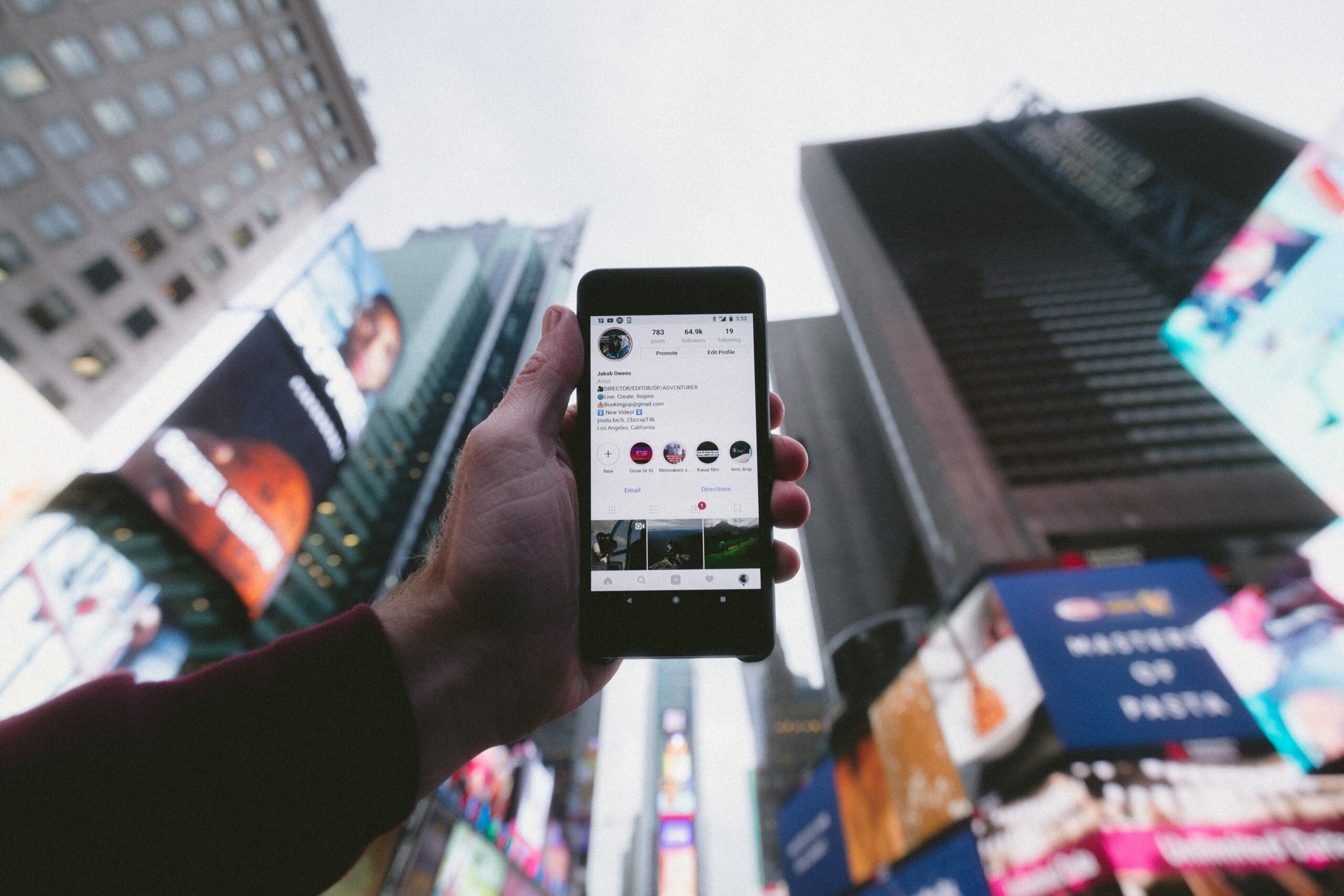
Furthermore, visual design has become paramount. Venues must feature highly aesthetic, share-worthy installations—such as interactive art displays, unique lighting setups, or dynamic photo backdrops—that encourage attendees to organically document and share their experiences on social media.
Traditional Event Space Layout vs. Gen Z-Optimized Space Layout

Traditional:
┌────────────────────────────────────────────────────────┐
│  [Stage / Keynote Speaker]                             │
│                                                        │
│  [Row 1 Seating] [Row 1 Seating] [Row 1 Seating]       │
│  [Row 2 Seating] [Row 2 Seating] [Row 2 Seating]       │
│  [Row 3 Seating] [Row 3 Seating] [Row 3 Seating]       │
│                                                        │
│  [Back of Room: Standard Coffee Station]               │
└────────────────────────────────────────────────────────┘

Gen Z-Optimized:
┌────────────────────────────────────────────────────────┐
│  [Low-Stage / Interactive Panel Area]                  │
│                                                        │
│  [Collaborative Roundtables]     [Modular Lounge Seats]│
│                                                        │
│  [Aesthetic Photo Backdrop]      [Charging Workspace]  │
│                                                        │
│  [Interactive Mocktail / Specialty Coffee Bar]         │
└────────────────────────────────────────────────────────┘
4. Transitioning from Passive Listening to Active Collaboration
To keep Gen Z engaged, event agendas are incorporating peer-to-peer learning, collaborative workshops, and gamified breakout sessions.
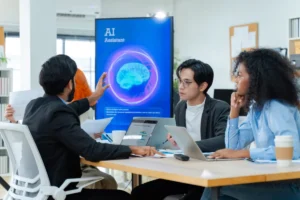
Rather than listening to a single speaker for an hour, attendees are grouped into teams to solve industry challenges, utilize AI tools in real-time, or participate in structured matchmaking sessions that pair young professionals with experienced mentors.
Importantly, event planners are also diversifying their food and beverage offerings, replacing standard alcohol-focused bars with premium mocktail bars, specialty coffee stations, and high-end culinary options.
Implications: The Future of the Corporate Event Landscape
The rise of Gen Z is not a temporary trend; it represents a permanent evolution in how professional communities gather, share knowledge, and conduct business. The long-term implications of this shift will reshape the event industry in several key ways:
- The Decline of the Monologue: The traditional, one-way keynote address is rapidly losing its efficacy. Future corporate events will favor panel discussions, fireside chats, and interactive workshops where the boundary between speaker and audience is highly fluid.
- The Rise of "Sober-Friendly" Professional Networking: As wellness and inclusivity become central to corporate culture, the standard "happy hour" will be replaced by wellness-oriented networking activities, such as morning fitness runs, structured coffee tastings, and creative non-alcoholic mixology events.
- Sustainability as a Core Metric: Gen Z’s commitment to environmental and social causes means that events must demonstrate a genuine commitment to sustainability. Minimizing single-use plastics, sourcing local organic catering, and offering carbon-offset options are becoming standard operational requirements rather than optional public relations gestures.
- The Integration of Advanced Tech Stacks: As technologies like augmented reality (AR), virtual reality (VR), and AI-driven networking algorithms mature, they will become standard components of the event experience. AI matchmaking tools will automatically connect attendees with shared professional interests, maximizing the value of their networking time.
Ultimately, event planners who fail to adapt to these shifting expectations risk obsolescence. To remain competitive, organizations must proactively partner with experienced event strategists—such as Endless Events—who possess the specialized expertise, technical resources, and cultural insights required to design and execute experiences that truly resonate with the next generation of business leaders.