The Coyote That Outsmarted the Studio: How ‘Coyote Vs. Acme’ Defied the Write-Down and Rewrote Hollywood’s Rules

In a landscape where streaming algorithms and corporate tax strategies often dictate the fate of art, the survival of Coyote Vs. Acme stands as a singular, triumphant anomaly. Three weeks into its theatrical run, the hybrid live-action and animation feature has surpassed the $100 million mark at the global box office. While that figure might not challenge the stratospheric heights of a Marvel blockbuster, it represents a resounding victory for a film that, until recently, was destined for a digital bonfire.
For Warner Bros. Discovery, the film was once nothing more than a ledger entry—a $30 million tax write-down waiting to happen. For the animation community and a vocal, mobilized fanbase, it became a rallying cry against the commodification of creativity. By grossing double its reported $50 million acquisition cost by Ketchup Entertainment, Coyote Vs. Acme has not only recouped its investment but has fundamentally altered the conversation regarding the power of audience advocacy in the streaming age.
A Chronology of a Corporate Quagmire
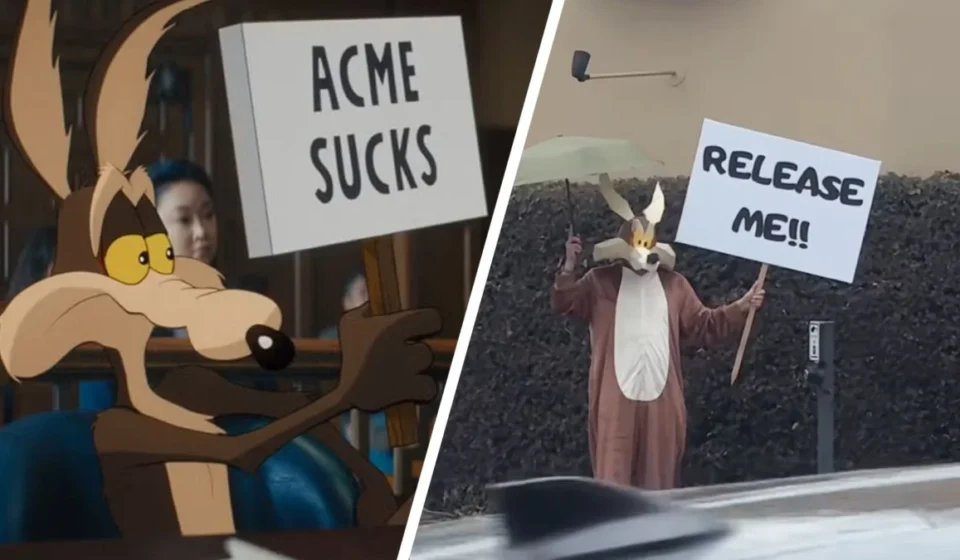
The saga of Coyote Vs. Acme is a case study in the tension between creative ambition and corporate coldness. Directed by Dave Green, the film was designed as a meta-textual romp, featuring Wile E. Coyote finally reaching his breaking point with the Acme Corporation, choosing to sue the company for its perpetual history of defective products.
By 2022, production had wrapped. The film was polished, tested, and firmly slated for a July 2023 release. It promised a nostalgic yet modern take on the Looney Tunes universe, blending the slapstick physical comedy of the classic shorts with a courtroom procedural drama. Then came the pivot.
In late 2023, following the controversial shelving of Batgirl and Scoob! Holiday Haunt, Warner Bros. Discovery announced its intention to cancel Coyote Vs. Acme. The reasoning was purely financial: by shelving the film, the studio aimed to claim a tax write-down, prioritizing immediate balance sheet relief over the potential long-term value of the intellectual property.
The backlash was instantaneous. Filmmakers, industry insiders, and animation enthusiasts viewed the move as an existential threat to the medium. If a completed, high-budget film could be erased for a tax break, the message to creators was clear: your work is disposable.
The Grassroots Rebellion
While the industry debated the ethics of "creative accounting," the public took to the streets—and the internet. The campaign to #SaveCoyoteVsAcme became a viral movement, but it gained its most poignant symbol in the form of a lone, persistent figure.
Marco Vaccaro, a dancer based between New York and Los Angeles, became the face of the protest. Donning a Wile E. Coyote costume, Vaccaro stood vigil outside the Warner Bros. lot in Burbank. His presence served as a constant, visual reminder to studio executives that there were real people invested in the film’s success.
Social media discourse surged, with creators highlighting the absurdity of destroying art that had already been paid for. The outcry forced a rare corporate retreat. In early 2025, Warner Bros. Discovery—perhaps recognizing that the PR damage was beginning to outweigh the tax benefit—agreed to sell the rights to Ketchup Entertainment.
The Ketchup Entertainment Gamble
For an independent distributor like Ketchup Entertainment, picking up a film that a major studio had discarded was a high-stakes gamble. The film was already branded by the industry as "damaged goods." However, Ketchup leaned into the narrative with brilliant, irreverent marketing.
By positioning the film as "The Movie ACME Didn’t Want You to See," Ketchup transformed the studio’s rejection into a badge of honor. The tagline tapped into the public’s inherent distrust of corporate conglomerates and created a "forbidden fruit" aura around the film.
The strategy paid off. Audiences didn’t just show up for the Looney Tunes characters; they showed up to cast a vote. Every ticket purchased became an act of defiance against the studio system that tried to bury the movie. This "protest viewing" phenomenon pushed the box office figures well past the break-even point, proving that when audiences feel like participants rather than passive consumers, they are willing to open their wallets to support their values.
The Economic Implications: Is the Write-Down Model Broken?
The success of Coyote Vs. Acme forces a re-evaluation of the "tax write-down" strategy. Historically, studios have viewed completed but unreleased films as sinking ships—liabilities that yield more value as tax credits than as distributed content.
However, the financial performance of Coyote Vs. Acme demonstrates that there is a dormant market for "lost" films. By ignoring the secondary market or the potential for boutique distribution, major studios may be leaving money on the table. The film’s $100 million performance suggests that the audience for these projects is not just "niche"—it is large, organized, and economically potent.
Moreover, the success of the film challenges the assumption that intellectual property is only valuable if it serves a massive, franchise-building agenda. Coyote Vs. Acme is a standalone, quirky, and self-contained story. Its success suggests that audiences are starving for original, distinct voices, even within the confines of established IP.
The Cultural Impact: Audiences as Stakeholders
Perhaps the most significant implication of this story is the evolution of the audience. For decades, Hollywood viewed its customer base as a predictable, passive demographic to be marketed to. The Coyote Vs. Acme movement signals a shift toward a more participatory model.
When audiences see a project they care about being threatened by corporate interests, they now have the tools to coordinate, protest, and demand accountability. This isn’t just about movies; it’s about the democratization of culture. When the "little guy" (in this case, Wile E. Coyote) is mistreated by the "big corporation" (Acme/Warner Bros.), the audience identifies with the underdog.
By turning the film’s cancellation into a narrative device, the audience became part of the story. Watching the film became an extension of the fight to release it. This creates a unique brand of loyalty that no amount of traditional advertising budget could buy.
Looking Forward: A Precedent for Future Filmmakers
As we look toward the future of the entertainment industry, the Coyote Vs. Acme case will likely be cited in boardroom meetings and film school lectures alike. It serves as a stark warning to studios that the "delete key" is no longer an invisible tool. In the age of social media, nothing is truly "gone" if the audience decides it is worth saving.
For filmmakers, this is a beacon of hope. It reinforces the idea that even if a studio loses faith in a project, the work itself holds an inherent value that the public can recognize and amplify. The film’s journey from a shelved tax write-down to a $100 million success story is a testament to the fact that art, when championed by its audience, is harder to kill than the bureaucrats anticipated.
Ultimately, the lesson of Coyote Vs. Acme is simple: the audience is no longer just watching the show; they are deciding which shows get to be watched. Wile E. Coyote spent decades failing to catch the Road Runner, constantly thwarted by his own gadgets and the incompetence of the Acme Corporation. In the real world, however, the Coyote has finally caught his win. And he didn’t need a rocket or a pair of jet-powered roller skates to do it—he just needed an audience that refused to let him fail.