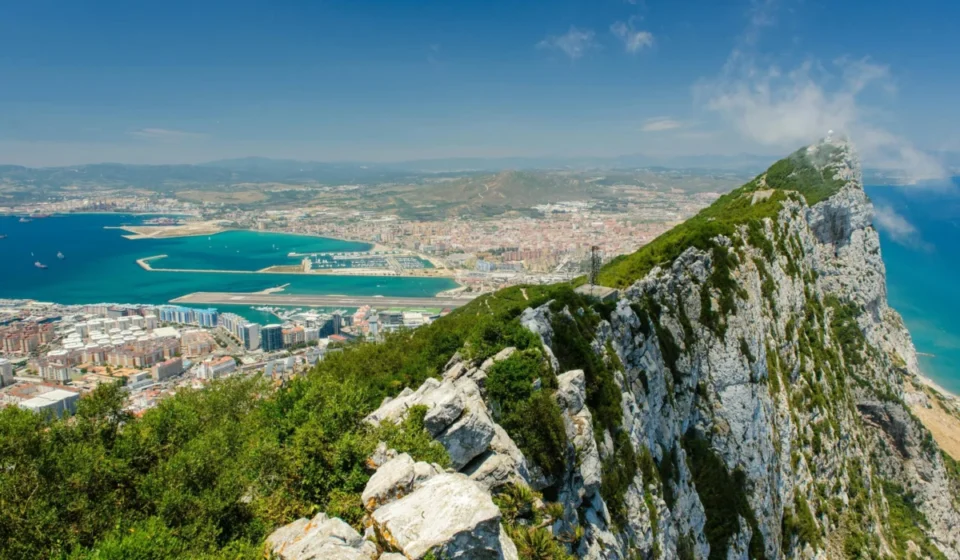

In a move that marks the most significant geopolitical shift for a British Overseas Territory in nearly three decades, the land border between Gibraltar and Spain has officially ceased to function as a controlled frontier. After more than 300 years of tension, fortification, and administrative friction, the gates that once defined the physical limits of British sovereignty on the Iberian Peninsula have been opened. This landmark agreement, forged in the wake of the United Kingdom’s departure from the European Union, promises to redefine the daily lives of thousands and reshape the future of the Mediterranean’s most strategic promontory.
Main Facts: A New Chapter for the Rock
The removal of border controls, which took effect this past Wednesday, represents a monumental compromise between the British and Gibraltarian governments, the Spanish state, and the European Union. For the nearly 40,000 residents of Gibraltar, the change means an end to the protracted queues and document checks that have long hampered the flow of people across the narrow isthmus.
While the territory remains firmly under British sovereignty, it now operates under a unique administrative arrangement. Control over the border at the port and airport is now shared between Gibraltarian and Spanish authorities. Crucially, while the U.K. retains its political hold, Spanish immigration officials have been granted significant oversight authority. This includes a veto power over residency permits in Gibraltar—a necessary concession, as residency in the territory now effectively grants unfettered access to the Spanish mainland and the broader Schengen Area.
A Chronology of Conflict and Cooperation
To understand the gravity of this change, one must look back to 1704, when the British Navy captured the peninsula during the War of the Spanish Succession. The subsequent 1713 Treaty of Utrecht formalized this cession, though Spain has maintained a simmering diplomatic dispute regarding the territory’s sovereignty ever since.
- 1704: The British Navy captures Gibraltar, initiating over three centuries of British presence.
- 1713: The Treaty of Utrecht confirms British control, though Spain continues to contest the legality of the handover, citing duress.
- 1969–1985: During the Franco era, the border was closed completely, isolating the territory and forcing the Gibraltarian population to look toward the sea for survival.
- 2016: The Brexit referendum throws the status of the border into uncertainty, as the U.K.’s exit from the EU threatened to turn the “soft” border into a “hard” external frontier of the European Union.
- 2023: A significant logistical milestone is achieved with the completion of a tunnel beneath the Gibraltar airport runway, streamlining local traffic.
- 2026: The implementation of the post-Brexit agreement officially ends routine land border controls, ushering in a new era of fluid movement.
Supporting Data and Demographics
The impact of this policy shift is best measured by the movement of people. Approximately 15,000 Spanish citizens commute daily into Gibraltar to support its robust economy, which is anchored by tourism, financial services, and its status as a vital cruise port.
The territory’s unique character—a blend of Mediterranean climate and British cultural markers—has long been a tourist magnet. Visitors are drawn not only to the historic military fortifications and the strategic significance of the Rock but also to the Barbary macaques, the only wild monkeys in Europe.
Economically, the border opening is expected to revitalize the cross-border labor market. Previously, the administrative burden of checking thousands of passports daily created bottlenecks that hampered trade and service delivery. With the new joint-control mechanism, authorities expect a drastic reduction in transit times, facilitating a more integrated regional economy that benefits both the Gibraltarian service sector and the surrounding Spanish province of Cádiz.
Official Responses and Diplomatic Balancing Acts
The negotiations were characterized by high-stakes diplomacy. The United Kingdom, committed to the principle of self-determination, has maintained that any change to Gibraltar’s status must be backed by its people. In multiple referendums, the Gibraltarians have overwhelmingly voted to remain a British Overseas Territory, rejecting Spanish sovereignty.
Spanish officials, meanwhile, have framed the agreement as a pragmatic solution to ensure the stability of the region. By securing a role in border management at the airport and port, Spain has addressed its long-standing security concerns regarding who enters its national territory.
International bodies, including the United Nations, continue to classify Gibraltar as a "Non-Self-Governing Territory." However, both the U.K. and Spain have signaled that this new arrangement serves as a template for cooperation rather than a concession of sovereignty. The rhetoric from both sides has shifted from "territorial dispute" to "regional integration," a pivot that diplomats hope will lower the temperature of a 300-year-old feud.
Cultural Preservation Amidst Integration
Despite the disappearance of the physical border, Gibraltar is making a concerted effort to preserve its distinct British identity. In anticipation of the border’s opening, the government has launched a campaign to emphasize its British heritage. Iconic red telephone booths have been installed throughout the city, and a new fleet of London-style black cabs has been introduced to the streets.
This preservation effort is a response to the "Europeanization" of the territory. By reinforcing symbols of Britishness, the local government aims to reassure residents that physical openness to Spain does not equate to a dilution of their cultural identity. It is a delicate balancing act: ensuring that the streets remain "British" while the economy becomes "European."
Implications for the Future
The removal of the border is more than a bureaucratic convenience; it is a profound symbolic shift. For decades, the border was the primary point of friction between two NATO allies. By effectively dissolving it, the U.K. and Spain have removed a major obstacle to regional cooperation.
Furthermore, this development provides a blueprint for other territories with complex status issues. It demonstrates that where political sovereignty remains contested, administrative cooperation can still deliver tangible benefits to citizens. For the residents of Gibraltar, the "Rock" is no longer an isolated outpost; it is a gateway.
As travelers continue to cross the runway—one of the few places in the world where pedestrians must dodge active air traffic—the sight of the British flag flying over the Mediterranean remains a permanent fixture. The gates are open, but the identity of the territory remains as solid as the limestone monolith that gives it its name. For the citizens who call this small peninsula home, the future is now a bridge, not a wall.
With the airport’s tunnel functioning, the new border controls in place, and the flow of commerce restored, Gibraltar enters the latter half of the 2020s as a model of 21st-century diplomacy. The centuries-old question of "Who owns the Rock?" may remain a topic for historians and politicians, but for the commuter, the tourist, and the local resident, the question is now simply: "Where shall we go today?"