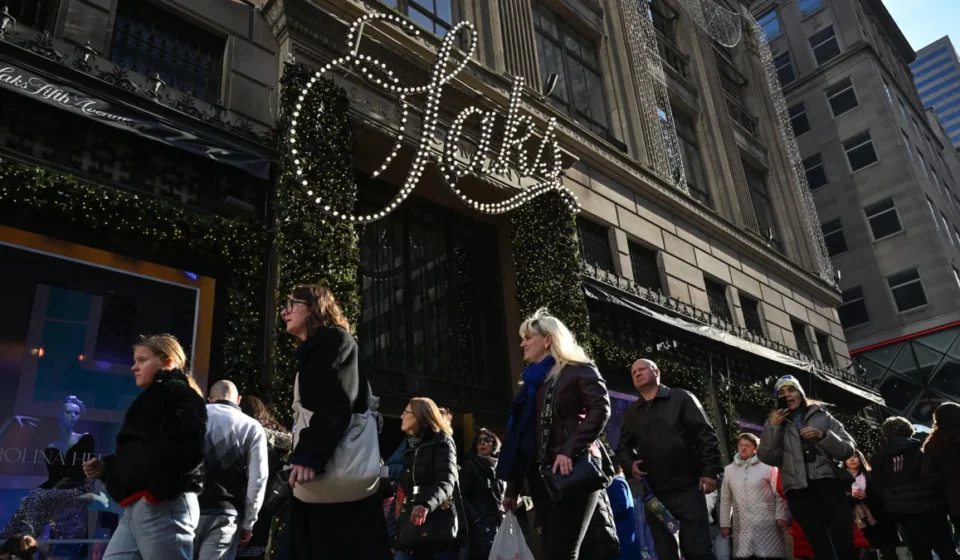
The Fall and Rise of Retail Royalty: Inside the Saks Fifth Avenue Crisis and the Birth of Exemplar Luxury Group

Main Facts: The Collapse of a Luxury Titan
For generations, long before retail algorithms dictated what consumers bought, Saks Fifth Avenue stood as the ultimate arbiter of elegance, glamour, and taste in America. From its iconic Midtown Manhattan flagship—home to a legendary shoe department so massive it famously secured its own zip code, 10022-SHOE—to its lavish outposts across the nation, Saks was the undisputed epicenter of high fashion.
However, the prestige of this crown jewel took a catastrophic hit. Financial missteps, compounding debts, and a controversial paradigm shift in management culminated in January when Saks Global filed for Chapter 11 bankruptcy protection under a crushing $3.4 billion debt load. Following an aggressive corporate restructuring and a subsequent injection of $1.75 billion in new capital, the battered enterprise emerged from bankruptcy proceedings under a new moniker: the Exemplar Luxury Group.

Operating with a significantly trimmed footprint—having shuttered dozens of underperforming Saks Fifth Avenue, Neiman Marcus, and Saks Off 5th locations—the newly minted group faces a monumental uphill battle. The core question dominating the fashion industry is whether Exemplar can successfully restore the luster of a storied American institution and win back the fractured trust of both elite designers and discerning luxury consumers.
Chronology: A Timeline of Trouble
The unraveling of Saks Fifth Avenue was not an overnight disaster; it was the result of a multi-decade accumulation of financial baggage, questionable corporate maneuvering, and a rapidly evolving retail landscape.

- 1670–2013 (The Foundation & The Hudson’s Bay Era): The roots of the modern crisis trace back through complex corporate successions, notably the 2013 acquisition of Saks by the venerable Canadian retailer Hudson’s Bay Company (HBC). Under HBC, heavy financial instruments were introduced, including the 2014 mortgage of the Fifth Avenue flagship for approximately $1.2 billion and the 2016 acquisition of off-price retailer Gilt Groupe for $250 million—an asset later sold at a heavy loss.
- December 2024 (The Neiman Marcus Merger): In a high-stakes play to consolidate American luxury department stores, Saks completed its high-profile acquisition of Neiman Marcus, forming Saks Global. Led by executive chairman Richard Baker, the deal combined top-tier retail with immense real estate assets but saddled the newly formed conglomerate with unsustainable debt.
- Late 2024–Early 2025 (The Inventory Crunch): Suppliers and vendors, growing increasingly uneasy over delayed payments and the shifting priorities of corporate leadership, began slowing or completely halting shipments. Sales floors at flagship stores nationwide grew startlingly sparse, prompting customer comparisons to discount outlets like Saks Off 5th.
- January 2026 (Chapter 11 Filing): Buckling under $3.4 billion in liabilities, Saks Global officially filed for bankruptcy protection. The fallout triggered widespread store closures—including historic locations in Chicago, St. Louis, and Las Vegas—and the departure of executive chairman Richard Baker.
- June 2026 (Emergence as Exemplar Luxury Group): Following a court-approved restructuring plan and an influx of $1.75 billion in fresh capital, the company emerged from bankruptcy as Exemplar Luxury Group, pivoting toward a stabilized, albeit smaller, physical and operational footprint.
Supporting Data: The Human and Financial Toll
The financial fallout of the bankruptcy exposed staggering liabilities to some of the most prominent luxury houses in the world, while devastating the cash flows of independent designers and small businesses.
According to court filings from January 2026, Saks Global’s debts to premier fashion houses and conglomerates included:

- Chanel: More than $136 million
- Kering (Gucci, Saint Laurent, Bottega Veneta): Approximately $60 million
- Richemont (Cartier, Montblanc, Chloé): About $30 million
- The Estée Lauder Companies: Nearly $16 million
While global conglomerates possessed the international reach and standalone boutiques to absorb these shocks, independent brands suffered devastating blows. Financing firms like Hilldun—which guaranteed payments for roughly 180 fashion and beauty brands—reported that designers they represented were collectively owed over $66 million.
For smaller, critically acclaimed brands, the missing payouts meant frozen growth trajectories. Executives reported canceling runway shows, losing event space deposits, laying off up to 20 percent of their staff, and gutting marketing and public relations budgets to survive the "cash vacuum." Compounding the frustration, vendor inquiries were frequently routed to administrative offices in Bengaluru, India, where communication breakdowns and delayed resolutions led many independent creators to abandon the platform entirely.

Official Responses: Silence and Restructuring
As the crisis deepened, accountability became a heavily contested subject among stakeholders, creditors, and former executives.
Richard Baker, the real estate-focused executive chairman whose tenure at the helm of HBC and Saks Global drew sharp criticism from industry insiders, faced intense scrutiny. Critics argued that his leadership prioritized financial engineering and real estate asset management over the foundational elements of luxury retail: pristine inventory, attentive customer service, and strong vendor relationships. Following the bankruptcy filing, Baker stepped down from Saks Global in January. When approached for comment by journalists regarding his tenure and the company’s collapse, Baker offered a succinct: "No comment on Saks at this time."

Similarly, representatives for the newly formed Exemplar Luxury Group declined multiple requests to make current executive leadership available for interviews. However, in corporate press statements following the company’s emergence from Chapter 11, Exemplar management struck an optimistic tone. The company announced that nearly 600 brands had resumed shipping inventory by March, and internal metrics cited by the group claimed that sales associates across remaining Bergdorf Goodman, Neiman Marcus, and Saks Fifth Avenue doors were seeing higher overall revenues compared to the same period in the previous year.
Implications: The Future of Luxury Department Stores
The near-collapse and subsequent restructuring of Saks Fifth Avenue mark a critical turning point for the traditional American department store model. Industry analysts point to a broader paradigm shift driven by digital commerce, changing post-pandemic consumer habits, and a general aversion among modern shoppers to cavernous, multi-floor retail formats.

Aaron Cheris, a partner at Bain & Company and head of its global retail practice, noted the psychological hurdle facing the reorganized company: "It’s hard to come out of that with both your brand partners and with your consumers… [It] creates a bit of a doom loop that you really have to get out of. Can you convince both suppliers and customers that there’s a new day one?"
For long-standing patrons like Julia Stedman, a New York-based brand-strategy consultant, the damage to consumer trust will take considerable time to repair. "Going there during that funky period, there was no stock, everything was on sale—it was madness," Stedman reflects. "I’m going to take a wait-and-see approach and see what happens with them."

Ultimately, Exemplar Luxury Group’s missteps may alter the competitive landscape of high-end retail permanently. As skeptical independent designers divert their collections elsewhere, competitors such as Bloomingdale’s and Nordstrom stand poised to capture market share, potentially filling the cultural void left by the decline of traditional retail giants. Whether Saks can reclaim its historical throne or remain a cautionary tale of corporate overreach remains one of the defining questions of modern luxury retail.
Related posts: