The Frontier’s Final Frontier: Inside the Controversial Bulleit 20-Year-Old Rye Release

Welcome to Taste Test, where every week our critic Jonah Flicker explores the most buzzworthy and interesting whiskeys in the world. Check back each Sunday for his latest whiskey review.
In the world of American spirits, few variables hold as much sway over the enthusiast’s imagination as "age" and "proof." For decades, the industry has operated under the unwritten rule that older is generally better, and higher proof—specifically cask strength—is the gold standard for purity. Bulleit, a brand synonymous with the modern American rye revival, has now attempted to push both metrics to their absolute limit.
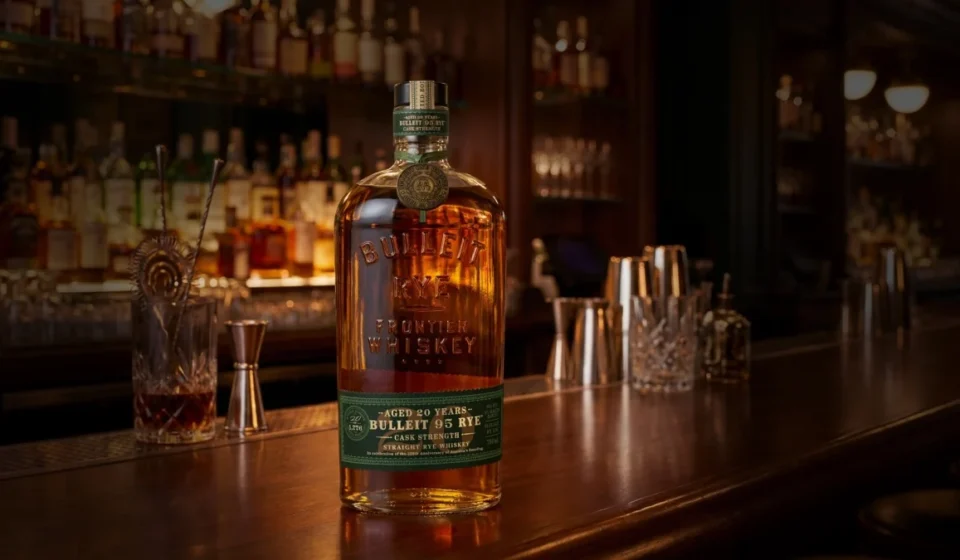
The result is the Bulleit 20-Year-Old Rye Whiskey, a limited-edition release that feels less like a traditional product launch and more like a high-stakes experiment. Sourced from the legendary MGP distillery in Indiana—the epicenter of the 95-percent rye, 5-percent malted barley mashbill—and aged for two decades, this bottle represents the oldest and strongest expression to ever wear the Bulleit label. But as we peel back the layers of this 137-proof behemoth, we are forced to ask a provocative question: Is there a point where "more" simply becomes "too much"?
The Main Facts: A Titan of the Rye Category
The Bulleit 20-Year-Old Rye is an anomaly in the current landscape of American spirits. With a retail price of $300 and a strictly limited run of only 1,776 bottles—a nod to the upcoming 250th anniversary of the United States—it is designed for the collector, not the casual sipper.
The whiskey is, by its very nature, a paradox. It utilizes the "classic" MGP recipe, a mashbill that has defined the flavor profile of American rye for over a decade. However, where most MGP-sourced rye is bottled at a approachable 90 or 100 proof, this expression clocks in at a staggering 68.5% ABV. For context, in the industry, anything north of 140 proof is colloquially known as "hazmat" whiskey—meaning it is technically classified as a hazardous material for air travel. At 137 proof, the Bulleit 20-Year-Old is breathing down the neck of that threshold.
This is not a cocktail mixer; it is a high-intensity, ultra-aged spirit that demands total attention.
Chronology: The Evolution of the "Frontier"
To understand the weight of this release, one must look at the trajectory of the Bulleit brand. Owned by Diageo, Bulleit was instrumental in the early 2000s renaissance of rye whiskey, bringing a consistent, high-quality product to bars that were previously barren of the category.
- The Early Years: Bulleit initially gained notoriety for its high-rye bourbon, a staple of the "Old West" aesthetic that helped the brand dominate the back-bar of every trendy saloon from Brooklyn to Los Angeles.
- The MGP Partnership: As the brand grew, it leaned heavily on its partnership with MGP, utilizing their masterfully consistent 95/5 rye recipe. This established the brand as a leader in rye, even as they moved toward opening their own distillery.
- The Diversification: Over the last five years, Bulleit has aggressively moved away from being a "one-trick pony." We have seen the introduction of cask-strength expressions, an American single malt, and the experimental Mesquite Smoked Malt.
- The 20-Year Milestone: The current release represents the culmination of this expansion. By reaching into the "vaults" for 20-year-old barrels, Bulleit is signaling that it wants to play in the ultra-premium space typically occupied by brands like Orphan Barrel or high-end single-barrel bottlings.
Supporting Data: The Science of Aging and Proofing
The decision to bottle a 20-year-old whiskey at 137 proof is an aesthetic choice that defies conventional wisdom. In the American climate, particularly in the warehouses of Kentucky or Indiana, 20 years is an eternity. The "angel’s share"—the amount of whiskey lost to evaporation—is significant, but more importantly, the interaction between the spirit and the wood becomes extreme.
After two decades, the tannic influence of the oak often threatens to overwhelm the delicate notes of the grain. If you look at Canadian rye, which is also famous for long-aged expressions, you often find a softer, more integrated profile. American rye, however, remains volatile.

In our testing, the spirit held up remarkably well. It retained a complex core of dried fruit, fig, and baked apple, underpinned by a distinct, aggressive black pepper spice that is the hallmark of the 95/5 mashbill. Yet, the tannic "grip" is undeniable. The oak has become a co-star rather than a supporting actor.
Furthermore, the choice to leave the whiskey at 137 proof is a double-edged sword. While it preserves the "raw" character of the barrel, it also forces the consumer to perform the work of a master blender. Most professional distillers believe that proofing—the controlled addition of water—is an art form. It opens up the aromatics and softens the ethanol burn, allowing the nuances of the palate to bloom. By omitting this step, Bulleit has provided a "pure" product, but one that many drinkers will find physically uncomfortable to consume without significant dilution.
Official Perspectives: The Intent Behind the Bottle
Bulleit has not commented extensively on the "hazmat" proximity of the spirit, but marketing materials for the release emphasize "purity" and "heritage." The brand maintains that for a 20-year-old expression, the intent was to provide the enthusiast with a "frontier" experience—an unfiltered, unadulterated glimpse into what two decades of maturation looks like in a high-proof rye.
Industry analysts suggest this is a "halo product." It is not meant to be a volume mover; it is a signal to the market that Bulleit has the inventory and the prestige to compete with the most expensive bottles on the shelf. By limiting the release to 1,776 bottles, the brand creates a scarcity that generates buzz, effectively keeping the brand name in the news cycle regardless of whether the average drinker ever tastes a drop.
Implications: The Future of the High-Proof Market
What does the Bulleit 20-Year-Old Rye mean for the future of the industry?
- The Ceiling of Age: We may be reaching the peak of what is considered "palatable" for American rye. As more brands release 20-year-plus expressions, we will likely see a split in the market: those who appreciate the intense, woody, tannic profiles of "dusty" style whiskey, and those who prefer the vibrant, grain-forward profile of younger, 6-to-10-year-old ryes.
- The Proof Wars: The race to the highest ABV continues. However, as consumers become more educated, we may see a backlash against "hazmat" bottles. The art of the "ideal proof"—that sweet spot where alcohol and flavor harmonize—may eventually be valued more than the raw shock-and-awe of 130-plus proof spirits.
- The Collectability Trap: This bottle is a prime example of the "collectible" era of whiskey. With a $300 price tag, it is effectively priced out of the reach of the common drinker. This creates a secondary market dynamic where the bottle is more likely to be displayed in a locked cabinet than enjoyed in a glass.
Final Verdict: A Complex Sip
Bulleit 20-Year-Old Rye is a fascinating, if flawed, achievement. It is a masterclass in what happens when you combine an iconic mashbill with extreme environmental exposure.
Score: 86/100
While I admire the boldness of the release, I cannot help but feel that a slightly lower proof—perhaps closer to 120 or 125—would have allowed the beautiful notes of vanilla, baked apple, and spice to shine without the overwhelming interference of high-octane ethanol. If you are a devotee of high-proof rye and you have the budget to secure one of the 1,776 bottles, it is an essential experience. For everyone else, the classic 90-proof Bulleit Rye remains one of the best value propositions in the industry. Sometimes, the "frontier" is better left explored with a little less fire and a little more nuance.
Related posts: