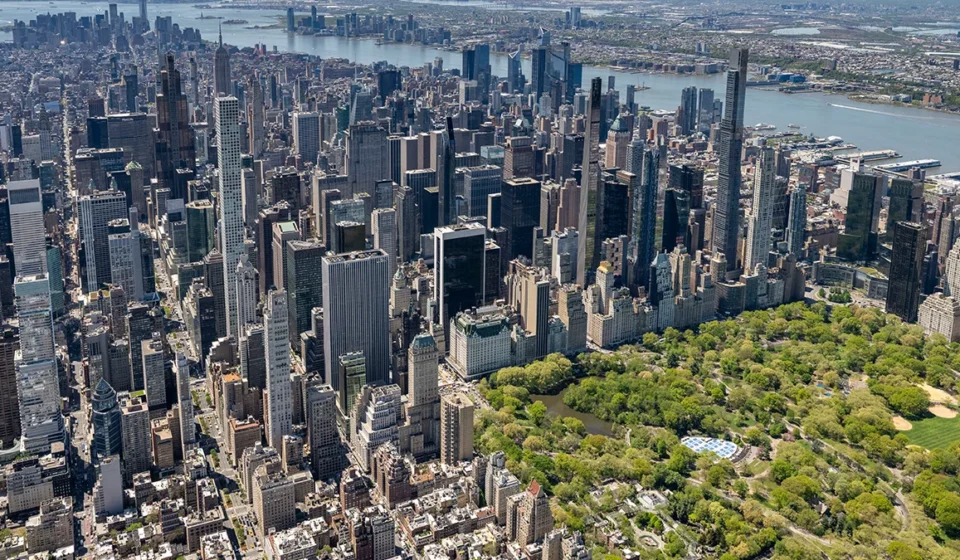
The Great Migration Paradox: How Miami Surpassed New York as America’s Costliest Urban Frontier

For decades, the narrative of the American professional class was defined by a simple, arithmetic trade-off: if you wanted the career prestige of New York City, you accepted the exorbitant cost of living. If you wanted the sunshine and tax-friendly landscape of South Florida, you accepted a different pace of life—and a significantly lower overhead.
That long-standing equation has been permanently upended. A seismic shift in wealth migration, accelerated by the global events of the early 2020s, has transformed Miami from a regional playground for the wealthy into a global metropolis that now claims the dubious title of being more expensive than the greater New York City area. According to a landmark report from Bloomberg utilizing data from the U.S. Bureau of Economic Analysis, the Miami metropolitan area has officially eclipsed the Big Apple in cost of living, marking a historic inflection point in American demographics and economics.

The Anatomy of an Economic Shift
The transformation of Miami has been impossible to miss, but it was often masked by the allure of its burgeoning tech scene, its tax-advantaged status, and its vibrant, luxury-drenched lifestyle. However, the veneer of a "cheaper alternative" to the Northeast corridor has dissolved. Since 2019, the Consumer Price Index (CPI) for South Florida has skyrocketed by 36 percent—a staggering figure that stands as one of the most aggressive inflationary spikes in the nation, trailing only the Tampa metropolitan area.
This is not merely a story of real estate speculation; it is a fundamental shift in the cost of existence. From the price of a gallon of milk to the monthly premiums of homeowners insurance, the "Sunshine State premium" has quietly become one of the most formidable financial barriers in the United States.

A Chronology of the Transformation
To understand how Miami reached this point, one must look back at the convergence of three distinct waves of change:
- 2020–2021: The Pandemic Exodus: As global lockdowns rendered office geography irrelevant, a massive influx of remote workers and high-net-worth individuals from the Northeast and California descended upon South Florida. They brought with them deep pockets and a demand for luxury infrastructure that local supply could not match.
- 2022–2023: The Inflationary Surge: As the population exploded, the cost of services followed. Local businesses, facing rising labor and supply costs, began passing those expenses on to consumers. Meanwhile, the real estate market reached a fever pitch, with residential inventory hitting historic lows.
- 2024–2026: The "Total Cost of Ownership" Realization: The current period marks a psychological shift. Buyers who moved to Florida expecting a financial windfall are now confronting the reality of insurance, taxes, and maintenance. The "savings" that once justified the move have been neutralized by the very costs that once made New York famous for its expense.
Supporting Data: By the Numbers
The data provided by the U.S. Bureau of Economic Analysis and real estate analysts at Realtor.com and Attom paints a stark picture of the disparity between perceived affordability and actual financial burden.

The Real Estate Illusion
While it is technically true that a buyer in Miami still acquires more square footage for their dollar than a buyer in Manhattan or Brooklyn, the raw price per square foot is becoming a deceptive metric. In June, the median home price in Miami stood at $357 per square foot, compared to $537 in the New York metro area.
However, as Corcoran agent Michael Buttacavoli noted, "It’s no longer just about the purchase price. It’s about the total cost to own." When factoring in the state’s unique vulnerability to climate events, the math shifts. Florida homeowners currently grapple with the highest insurance premiums in the country. Data from Insurify confirms that the average annual premium reached $8,292 last year—nearly four times the burden carried by the average New York homeowner.

The Tax Burden
Property taxes have surged in tandem with home valuations. Attom reports that property taxes in the Miami area have leaped 62 percent since 2019, more than double the national average. This creates a "pincer effect" for the middle class: their home equity may have risen, but the tax and insurance burden to remain in those homes has become increasingly unsustainable.
The Wage Gap
Perhaps most alarming is the mismatch between the cost of living and local compensation. U.S. Census Bureau data indicates that the typical household income in the Miami metro area is approximately $1,000 below the national median. Furthermore, professional salary scales in Miami continue to lag significantly behind those in New York. For example, a lawyer in the New York metro area earned roughly $51,000 more per year than a peer in Miami. When one earns significantly less while paying more for insurance, taxes, and daily staples, the result is a rapid erosion of purchasing power.

Implications: A Tale of Two Cities
The socioeconomic implications of this data are profound. We are witnessing the birth of a "bifurcated market," a phenomenon where the ultra-wealthy continue to operate in an entirely different economic reality than the local workforce.
The Billionaire Effect
The ultra-luxury market remains insulated from these inflationary pressures. The region continues to attract the global elite, including figures such as Ken Griffin, Mark Zuckerberg, Larry Page, and Sergey Brin. These individuals are not shopping in the same market as the average resident; they are engaging in the consolidation of trophy assets, often purchasing contiguous properties for hundreds of millions of dollars. For this demographic, the rising cost of living is a rounding error, not a barrier.

The Professional Squeeze
For the professional class—lawyers, doctors, tech workers, and entrepreneurs who moved to Florida seeking a better "quality of life"—the current economic climate is forcing a period of painful introspection. Is the tropical lifestyle worth the premium if it requires an income level that the local economy cannot support?
Real estate agents are reporting an uptick in interest from residents who are beginning to question whether the "Miami Dream" has reached its saturation point. The city is evolving into a bastion of extreme wealth, leaving behind the very middle-class infrastructure—the teachers, service workers, and mid-level professionals—that a thriving city requires to function.

Conclusion: The New Frontier
Miami’s ascent to the top of the cost-of-living index is a cautionary tale of rapid, unchecked growth. While the city’s transformation from a vacation destination into a global financial and tech hub is a testament to its resilience and appeal, it has come at a steep price.
As South Florida moves forward, it faces a critical challenge: can it maintain its status as a vibrant, diverse, and attractive place to live for the people who actually power its economy? Or will it continue to drift toward an exclusive enclave for the global ultra-wealthy, effectively pricing out the very residents who built the city into the powerhouse it is today? For now, the numbers are clear: the "Sunshine State" is no longer the bargain it once was, and the financial reality of living in Miami has become the new gold standard for high-cost urban environments in America.