
In the eternal contest between human ambition and the untamed force of nature, the Panama Canal stands as the ultimate arena. It is a triumph of engineering that bridged two oceans and revolutionized global trade, yet it is a monument forged in sorrow, sweat, and blood. While modern travelers flock to Panama for the turquoise waters of Bocas del Toro or the vibrant culinary scene of Panama City, there remains a persistent, haunting curiosity surrounding the "Great Divide"—a project that many contemporary laborers described not as a feat of construction, but as a battle against a vengeful landscape.
The Engineering Marvel and the Human Cost
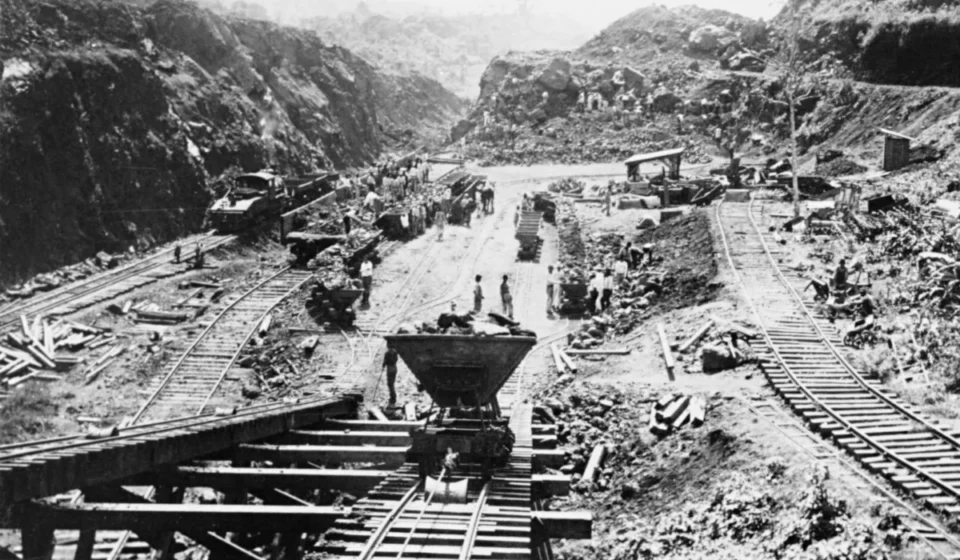
The Panama Canal is often celebrated as the "Path Between the Seas," an artificial waterway that cuts across the Isthmus of Panama. Its construction, spanning decades of failed French attempts and a successful American intervention, required the movement of millions of cubic yards of earth. At the heart of this endeavor was the Culebra Cut, an eight-mile-long trench carved through the Continental Divide.

However, the reality of the construction was far from the sterile blueprints of the engineers. The tropical environment, characterized by suffocating humidity and torrential rains, turned the soil into a dynamic, unstable force. As engineers attempted to slice through the mountains, the earth fought back. Landslides were frequent and catastrophic; the shale, saturated by rain, would liquify, reclaiming the work of months in a matter of hours. The workers dubbed the land "the hill that walks," a testament to the unpredictable, almost sentient nature of the terrain.
Chronology of a Cursed Construction
To understand the weight of the Canal’s history, one must look at the timeline of the struggle:

- 1881–1889 (The French Era): Under Ferdinand de Lesseps, the French attempt to create a sea-level canal ended in financial ruin and tragedy. An estimated 22,000 workers perished due to yellow fever, malaria, and industrial accidents.
- 1904–1914 (The American Era): Following the takeover of the project, the United States focused on sanitation and engineering. However, the physical toll remained immense. The excavation of the Culebra Cut became the most dangerous site, earning the moniker "Hell’s Gorge."
- 1914: The Canal officially opens, yet the landslides continue, intermittently closing the waterway and forcing a perpetual cycle of maintenance that persists to this day.
Supporting Data: The Science of Failure
The construction of the Canal was a crucible for modern soil mechanics. Before the project, engineers largely viewed earth as a static, immovable solid. The constant failure of the Culebra Cut slopes forced a radical rethinking of geology. Scientists began to understand that soil could behave as a fluid under pressure, a phenomenon that engineers were forced to learn through the loss of life and equipment.
The scale of the "reclamation" by nature was staggering. In many instances, an entire day’s worth of excavation would be undone overnight as the mountainsides slumped into the trench. Equipment—including steam shovels, locomotives, and railcars—was frequently swallowed by the mud, only to be rediscovered years later by crews struggling to stabilize the gorge.

The Folklore of "Hell’s Gorge"
Beyond the hard data of engineering failures lies a persistent, spectral narrative. The laborers, many of whom were Afro-Caribbean migrants from Barbados and Jamaica, brought with them a syncretic blend of spiritual traditions. In their view, the land was not merely shifting; it was consuming them.
The concept of the "hungry canal" became a central tenet of the workers’ experience. They reported hearing rumbling beneath the earth—voices, drums, or the sound of heavy machinery moving when no living soul was present. These reports were not limited to the construction site. The Gorgas Hospital, established to treat the rampant tropical diseases, became the epicenter of urban legends. Patients in the throes of fever-induced delirium spoke of hearing the dead calling out from the surrounding jungle. Even today, local lore speaks of the "Crying Child," a spectral figure in a white gown said to wander the halls of the old hospital, and ghostly nurses still tending to patients long since buried.

Official Perspectives and Historical Reflection
Historians and engineers alike acknowledge that the "ghosts" of the Canal are rooted in a very tangible reality. The sheer volume of death—tens of thousands of laborers buried in unmarked graves, some simply covered by the very debris they were tasked with moving—creates a historical gravity that cannot be ignored.
While official documentation from the era focuses on the triumphs of the Gatun Dam and the lock systems, modern museums, such as the Museo del Canal, have begun to shift the narrative. Exhibits now highlight the human sacrifice behind the engineering. Visitors are encouraged to move beyond the technical appreciation of the IMAX films and the sight of massive cargo ships transiting the locks, and instead consider the cost of the "midwifery" of this modern wonder.

Implications: A Landscape That Resists
The enduring nature of the "hauntings" suggests that the human psyche struggles to reconcile such immense loss with the cold utility of global trade. When a project is built upon the literal bodies of those who died, the line between historical tragedy and supernatural folklore blurs.
In the eyes of many, the Canal remains a site of unfinished business. Every time a landslide occurs in the Culebra Cut, or a ship is delayed by the unpredictable movements of the earth, the old stories resurface. It serves as a reminder that regardless of how much we manipulate the geography of our planet, we do so at the mercy of forces that do not recognize human borders or economic timelines.

Conclusion: Rooting for the Underdog
In the age-old game of man versus nature, we are often conditioned to cheer for the engineer, the innovator, and the conqueror. Yet, when standing on the observation deck of the Miraflores Locks, watching a tiny tugboat drag a leviathan of steel through a mountain range, one cannot help but feel a twinge of unease.
The Panama Canal is a marvel of human ingenuity, yes. But it is also a somber testament to the fact that some histories are too heavy to remain buried. The land may have been conquered in the name of global commerce, but it has never truly been tamed. As we look out over the locks, we are not just witnessing the flow of water; we are witnessing a precarious truce between a species that refuses to be stopped and a planet that continues to remind us who was here first.

For those planning to visit, the Canal is an essential stop—not just for the spectacle of the locks, but for the profound, often uncomfortable questions it raises. It is a place where you are forced to confront the reality that for every great achievement, there is a price paid by those who walked before us. Whether you believe in the spectral voices of the laborers or simply the echoes of a violent history, the Panama Canal remains one of the most hauntingly beautiful and terrifyingly impressive feats in human history.
The Panama Canal is open daily from 8 a.m. to 6 p.m. Admission is approximately $17. Visit the official Panama Canal website for updated transit schedules and museum hours.