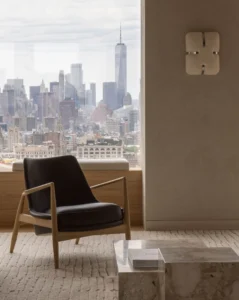

Toronto’s Financial District is often characterized by a stark dichotomy. From Monday to Friday, the streets are a high-octane theater of commerce, dominated by the rhythmic clicking of heels and the sharp, focused energy of professionals navigating the city’s economic engine. By the weekend, however, the neighborhood undergoes a metamorphosis, shedding its corporate skin to embrace a quieter, more contemplative pace.
Nestled at 333 Bay Street, Shinji—the latest culinary venture from the powerhouse team at Harlo Entertainment—has emerged not merely as a restaurant, but as a bridge between these two distinct states of being. It is a Japanese steakhouse that manages to marry the high-stakes intensity of the city with the profound, hushed serenity of a sanctuary.
The Architecture of Indigo: A Design Narrative
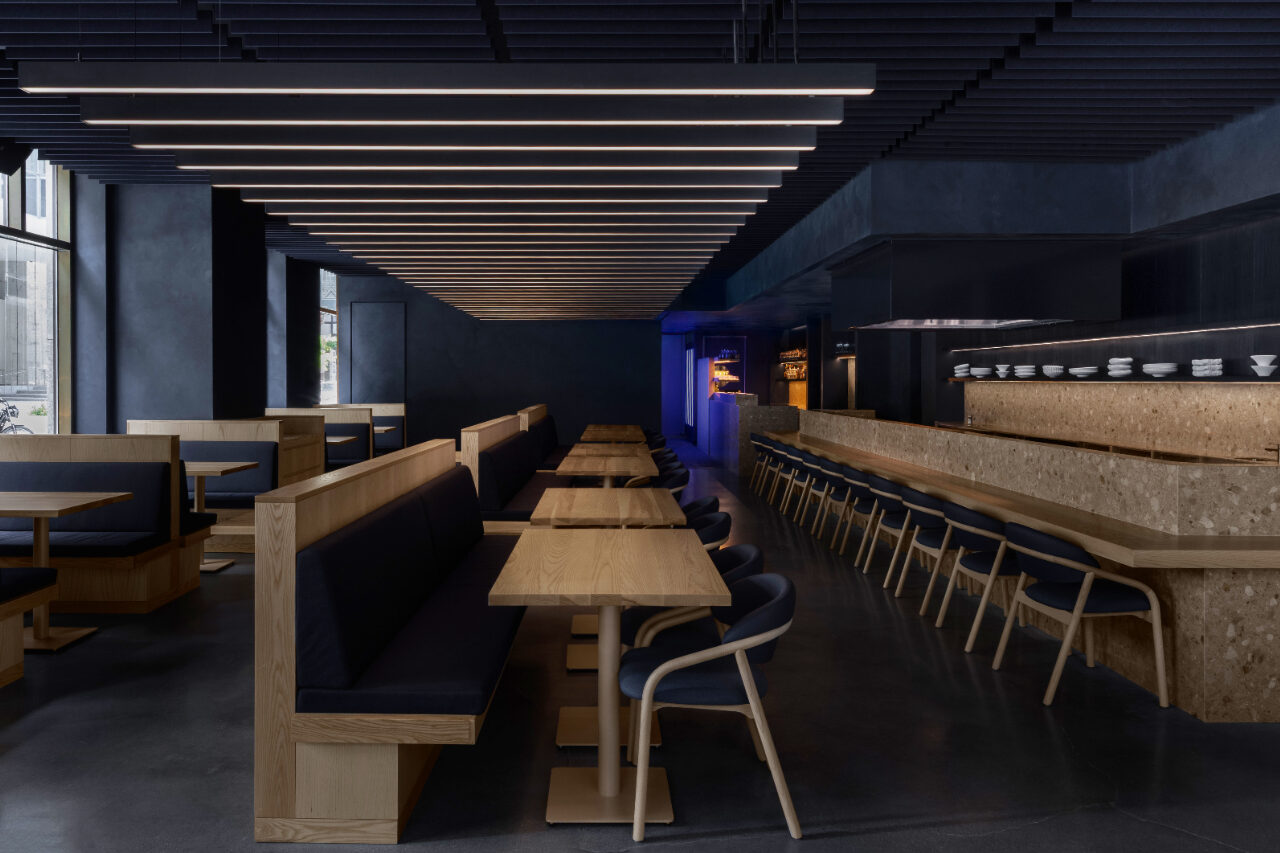
Designed by the acclaimed Toronto-based architecture and design firm Odami, the space is a masterclass in atmospheric restraint. Upon entering, guests are immediately enveloped in a palette of deep, resonant blues. While many luxury establishments opt for gold or marble to signal opulence, Shinji takes a more conceptual route, drawing inspiration from Japan’s storied denim industry.
For Odami, the concept of denim served as the project’s guiding light. Denim is a unique material: it is both a luxury fashion staple and a utilitarian workwear basic. It bridges the gap between high-brow aesthetics and the humility of craftsmanship. Much like a well-worn pair of indigo jeans, the interior of Shinji is designed to feel grounded in real, tactile materials that gain character over time.

The space is punctuated by mesmerizing linear lighting pendants that stretch across the ceiling, casting a soft, rhythmic glow. Yet, despite these dramatic elements, the room feels remarkably understated. This is achieved through the use of natural textures: walls draped in deep blue limewash, ceilings fitted with acoustic baffles to maintain a quiet, intimate volume, and furniture crafted from locally sourced ash wood. The contrast between these dark, moody hues and the pale stone surfaces creates an environment that feels both sophisticated and inherently comfortable.
Chronology of a Culinary Vision
The path to creating Shinji was far from accidental. It began with an extensive period of research and development led by Executive Chef and partner Jia Zou. Before a single blueprint was drawn or a piece of furniture commissioned, the team embarked on a journey across Japan, immersing themselves in the country’s culinary landscape.

- The Scouting Phase: Zou and his team traveled extensively, from Tokyo’s bustling culinary hubs to the quieter, more traditional prefectures of Himeji and Kobe. The goal was to move beyond the superficial aspects of Japanese dining and understand the philosophy behind the food.
- The Relationship Building: In Kobe and Himeji, the team met with local producers to source the highest quality ingredients. This was not merely a procurement trip; it was an educational one, focusing on the precise techniques required to handle A5 wagyu and other premium imports.
- The Design Integration: As the menu began to take shape, the interior design team at Odami worked in tandem with the culinary team. This ensured that the physical environment—from the custom Japanese tableware to the staff uniforms—reflected the same standards of "genuine care" that defined the food.
- The Launch: Following months of preparation, Shinji opened its doors at 333 Bay Street, bringing a new level of curated, high-end hospitality to the heart of Toronto’s business district.
Supporting Data: A Commitment to Authenticity
The quality of Shinji is not just a marketing claim; it is supported by a rigorous adherence to Japanese standards of hospitality (omotenashi). The restaurant’s commitment to authenticity is visible in every corner:
- Direct Sourcing: By meeting directly with producers in Japan, the restaurant ensures a supply chain that respects the provenance of its ingredients. The A5 striploin, a standout on the menu, serves as a testament to this, offering a depth of flavor that is difficult to replicate with mass-market products.
- Acoustic and Sensory Engineering: The design isn’t just aesthetic; it’s functional. The use of acoustic baffles and specific material choices (such as the blue-stained wood and fabric-covered banquettes) allows for a dining experience where conversation is effortless, even in a full room.
- The "Bathroom Journey": Perhaps the most surprising design element is the transition from the dining room to the restrooms. As guests move through the hallway, the dark, moody blue atmosphere shifts into a vibrant, magenta-tinted space. This is a deliberate nod to the neon-saturated energy of Japan’s nightlife and karaoke culture. It is a moment of playfulness that breaks the "seriousness" of the steakhouse experience, demonstrating the design team’s ability to balance tradition with modernity.
Official Perspectives: The Philosophy of Care
For Executive Chef Jia Zou, the motivation behind Shinji was never about following trends. Instead, it was about capturing a feeling—a specific, pervasive sense of care that he encountered during his travels.

"We spent a lot of time traveling through Japan, eating everywhere we could, from neighborhood spots to some of the country’s best restaurants," Zou explains. "What stayed with us wasn’t just the food, but the care that went into every meal. Great ingredients, good technique, and genuine hospitality became the benchmark for everything we wanted to create at Shinji."
This perspective is shared by the team at Harlo Entertainment, who have established a reputation for elevating the Toronto dining scene through projects like Linny’s and Sunny’s Chinese. By integrating custom tableware and uniforms directly from Japan, the restaurant creates a holistic experience that feels like a deliberate, thoughtful import rather than a facsimile.

Implications for the Financial District
The arrival of Shinji signals a shift in what the Financial District demands from its hospitality sector. As hybrid work models become the norm, professionals are looking for spaces that offer more than just a quick business lunch. They are looking for experiences that provide an escape—a place where the transition from the office to the evening feels intentional.
The Impact of "Quiet Luxury"
Shinji represents the rise of "quiet luxury" in restaurant design. By focusing on deep, monochromatic color palettes and high-quality natural materials, the restaurant avoids the "glitz" that often plagues steakhouse interiors. This design choice implies that the quality of the meal and the service is the true star, with the architecture serving as a supporting character rather than an overwhelming spectacle.

A New Benchmark for Hospitality
By emphasizing the "art of the journey"—from the entry ramp to the unexpected neon of the restrooms—Shinji sets a higher bar for how urban restaurants should engage their guests. It suggests that fine dining in a corporate hub doesn’t have to be sterile. Instead, it can be a deeply personal, sensory-rich experience that celebrates both the product (the steak) and the culture (the Japanese influence).
In conclusion, Shinji succeeds because it respects its surroundings while simultaneously creating its own internal world. It is a place where the frenetic energy of Bay Street is left at the door, replaced by the quiet confidence of indigo walls, the scent of charcoal, and the undeniable quality of a perfectly prepared meal. For those navigating the duality of life in Toronto, Shinji offers the perfect middle ground: a place to work, a place to eat, and, most importantly, a place to pause.