The Modern Standard: A Comprehensive Guide to Onsite Badge Label Printing for Conferences

If you have ever spent the eve of a major conference hunched over a table, frantically sorting hundreds of printed name tags into alphabetical stacks, you are already intimately familiar with the "pre-print panic." This manual, labor-intensive process is not just a headache—it is a significant operational liability. In the modern era of professional events, onsite badge label printing has emerged as the definitive solution, replacing archaic sorting methods with a streamlined, real-time workflow.
By producing each attendee’s name tag at the exact moment of check-in, event organizers can eliminate the risks associated with static printing while simultaneously improving the attendee experience. This guide explores the evolution, implementation, and strategic advantages of transitioning to an onsite, on-demand printing model.
The Core Philosophy: What Is Onsite Label Printing?
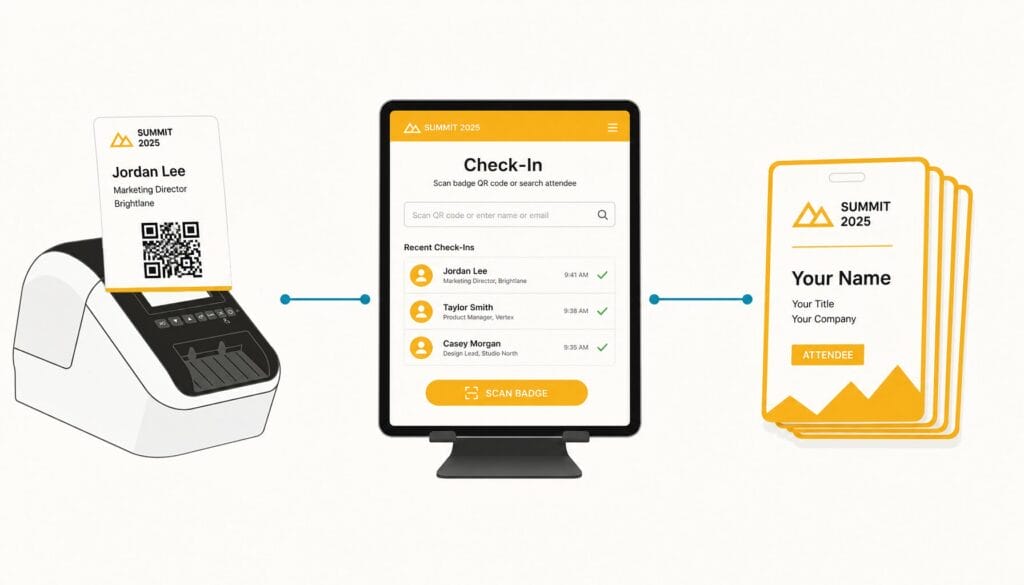
At its simplest, onsite badge label printing is a hybrid approach. It combines high-quality, pre-branded badge stock—which features your event’s logo, color scheme, and aesthetic branding—with a compact, high-speed thermal label printer linked to a digital check-in interface.

When an attendee approaches the desk, the system retrieves their live registration record. A label containing their specific credentials—name, title, company, and a unique QR code for session tracking—is generated in seconds. This label is then applied to the pre-branded stock. This separation of "static" branding and "dynamic" attendee data is the secret to a professional, cost-effective, and flexible check-in experience.
The Critical Distinction: Label Printing vs. Direct Thermal
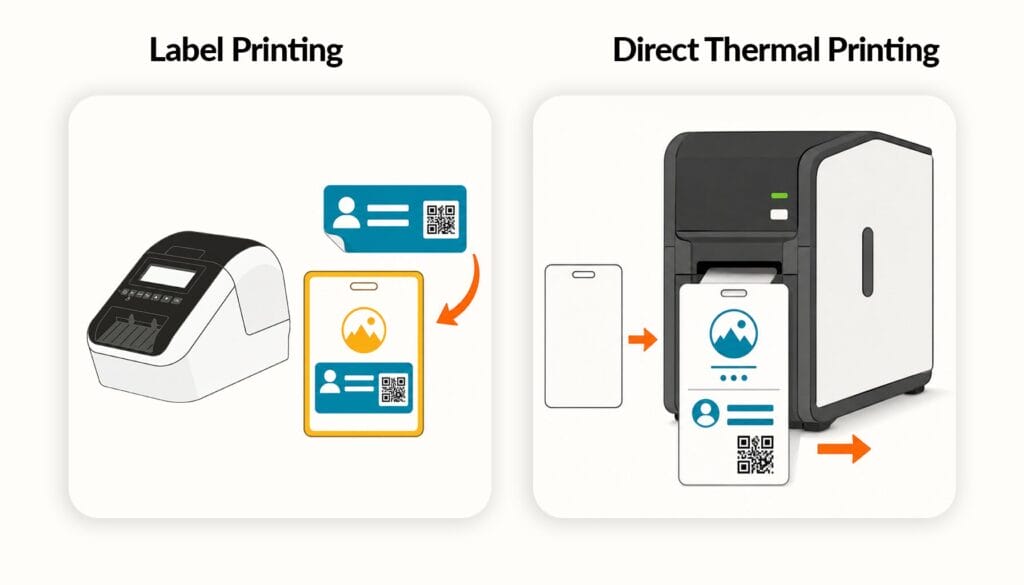
Planners often conflate label printing with "direct thermal" printing. While both are digital, the distinction is significant:
- Direct Thermal Badge Printing: This method prints the entire badge—branding, logos, and attendee details—onto blank, heavy-duty stock. It requires specialized, expensive industrial hardware and often necessitates hiring a dedicated technician to manage the machinery.
- Label Printing: This method uses pre-designed, professional-grade stock and a smaller, more accessible thermal label printer. It is far more cost-effective for conferences under 2,000 attendees and drastically lowers the barrier to entry for event teams.
Chronology of the Modern Check-In Workflow
The transition from pre-printing to on-demand printing has fundamentally changed the "day-of" experience. Here is the standard chronological workflow for a modern, tech-enabled check-in station:
- Arrival and Identification: The attendee approaches the registration desk and presents their QR code (often delivered via email) or provides their name.
- Database Retrieval: The staff member uses a tablet or laptop to query the registration database. Because the system is live, this data is 100% current, reflecting any last-minute registration updates or status changes.
- On-Demand Generation: Once confirmed, the command is sent to the thermal printer. The personalized label—containing the attendee’s specific event access level and custom data—is generated in two to five seconds.
- Final Assembly: The staff member peels the label, applies it to the pre-branded badge stock, and attaches the lanyard.
- Engagement: The attendee is handed their badge and welcomed to the event, with the entire interaction typically lasting less than 45 seconds.
Supporting Data: Why Efficiency Matters
The operational shift toward on-demand printing is driven by hard data regarding throughput and error rates.
Throughput Metrics
Industry benchmarks suggest that an efficient check-in station can process approximately 150 attendees per hour. For a 600-person conference with a standard 90-minute morning rush, an organizer needs at least four active stations. By moving away from alphabetized stacks, you eliminate the "bottleneck effect" where one attendee with a difficult name or a registration error causes a backup in the entire queue.
The Cost of "Static" Planning
Pre-printed badges are inherently fragile. Even with the best planning, a 500-person event typically sees between 15 and 25 changes—spelling corrections, title updates, last-minute cancellations, or walk-in registrations. Hand-correcting these on-site is unprofessional and time-consuming. On-demand printing reduces these issues to near zero, as the printer always pulls the most recent data available.
Managing the Unexpected: Walk-ins and VIPs
One of the most significant implications of this technology is how it handles the "exceptions" that plague every event.
Walk-in Registrations
In the past, walk-ins were a logistical nightmare, requiring a separate, slower queue and manual badge preparation. With on-demand printing, a walk-in is treated exactly like a pre-registered guest. Staff simply enter the attendee’s details into the registration platform, and the printer produces a badge that is indistinguishable from the ones printed for guests who registered months ago.
The "Same Quality" Standard
For VIPs, speakers, or sponsors added at the eleventh hour, there is no longer a concern about having a "second-class" badge. Because the badge is generated on-site, the visual quality remains consistent, ensuring that every participant—regardless of when they registered—receives a polished, professional credential.

Troubleshooting: Common Failures and Prevention
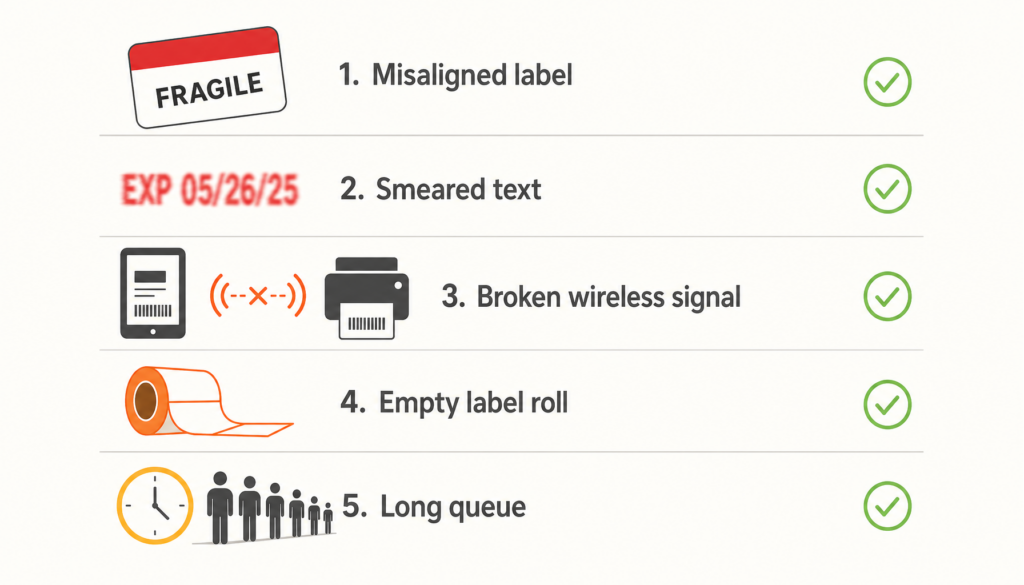
Even the most sophisticated systems can encounter issues if not properly managed. Based on common failure points in the field, here is how to safeguard your check-in:
- Label Misalignment: This is the most common user error. If text is printing off-center, it is usually a template mismatch in the driver settings. Prevention: Always perform a test print of at least five badges before doors open.
- Smearing or Faded Text: This occurs when the wrong type of label stock is used. Thermal printers require chemically treated paper to react to heat. Prevention: Ensure your stock is compatible with your specific printer model.
- Connectivity Drops: Bluetooth can be unstable in high-traffic RF environments (like a crowded convention center). Prevention: Use a hard-wired USB connection as your primary link between the tablet and the printer.
- Supply Shortages: Running out of labels is a preventable crisis. Prevention: Order at least 15% more label stock than your expected attendance. For 500 attendees, you should have 575 labels ready.
Implications for Event Strategy
The integration of badge printing with your broader registration platform creates a "source of truth" for your event. When your printer is connected to your registration database, every print command effectively serves as a check-in trigger.
Real-Time Data Insights
As badges are printed, the system logs the attendance in real-time. This provides organizers with an immediate, accurate count of how many people have arrived, who has not yet checked in, and which segments of the audience are on-site. This data can be shared with session leads or stakeholders instantly, without the need for an end-of-day spreadsheet reconciliation.

Scalability and Flexibility
Purpose-built solutions, such as EventMobi’s BadgeON™, have refined this process further by providing "all-in-one" kits. These kits include the tablet, printer, battery stands, and necessary software, removing the need for organizers to source and configure individual components. This modularity means that whether you are hosting an intimate board meeting or a large-scale corporate summit, your badge printing strategy can scale effortlessly.
Conclusion: A New Standard for Professionalism
The era of manual badge sorting and static pre-printing is effectively over. By adopting an onsite, on-demand label printing strategy, event planners can reclaim hours of preparation time, reduce the incidence of registration errors, and provide a seamless, high-tech experience for their attendees.
The math is simple: the time required to set up a professional, integrated printing station is a fraction of the time required to sort and alphabetize hundreds of physical badges. For any organization looking to modernize their event operations, shifting to on-demand badge printing is not just a convenience—it is an operational imperative.
As you plan your next event, consider not only the hardware but the ecosystem of your registration data. When your technology works in harmony, the result is a smoother, more efficient, and ultimately more successful event for everyone involved. To learn more about optimizing your specific event needs, reach out to industry experts for a demo of the latest integrated check-in solutions.
Related posts: