The New Counterculture: Why the Suit Has Become Modern Menswear’s Most Rebellious Garment

By Staff Reporters
Published: Style & Culture Desk
Main Facts
In an era defined by perpetual casualness, remote work uniforms, and the dominance of stretch-athleisure, a surprising sartorial shift is underway. Men are rediscovering the suit—not as an obligatory corporate uniform, but as a deliberate, expressive choice. Once viewed as stifling office furniture, tailoring has undergone a complete psychological and aesthetic rebrand.
This renaissance is particularly visible in the United States, where a new vanguard of domestic tailors is rejecting homogenization in favor of distinct, regional perspectives. From the architectural lines of New York to the cinematic bravado of Los Angeles and the eclectic melting pot of San Francisco, American menswear designers are crafting a diverse, boundary-pushing bespoke culture.
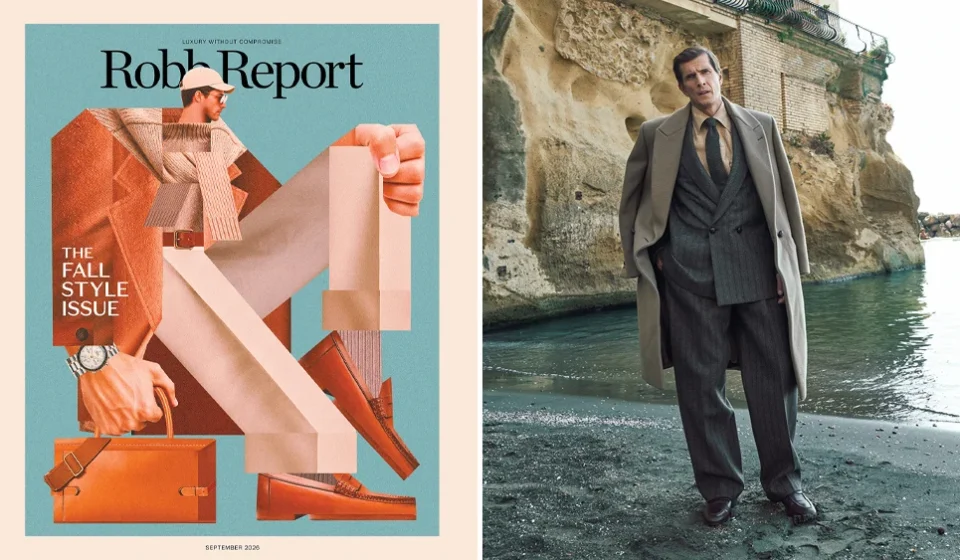
At the same time, international pillars—such as the effortless, featherlight draping of Neapolitan tailoring—continue to influence global wardrobes, while luxury knitwear steps out from under the blazer to claim center stage. The modern suit is no longer about blending into the boardroom; it is about standing out on a Tuesday.
Chronology: The Evolution from Corporate Armor to Casual Uniformity
To understand why wearing a suit has become a radical act, one must look at how men’s wardrobes devolved over the past half-century.
- The Mid-20th Century Golden Age: The suit was the undisputed baseline of adult male life. Whether stepping into a factory, a courtroom, or a grocery store, men wore tailored jackets and trousers by default. Tailoring denoted status, maturity, and societal integration.
- The Casual Creep (1980s–2000s): The rise of Silicon Valley, "Casual Fridays," and the dot-com boom initiated a slow erosion of formal dress codes. Fleece vests, khakis, and branded tech hoodies slowly squeezed traditional suiting out of the daily routine.
- The Pandemic Pivot (2020–2022): Global lockdowns accelerated the death of office-wear altogether. Sweatpants, elastic waistbands, and pajama bottoms became acceptable professional attire, driving the casualization pendulum to its absolute limit.
- The Counter-Reformation (2023–Present): Having spent years drowning in hyper-casual loungewear and the "middle-aged skater" aesthetic of graphic tees, relaxed trousers, and sneakers, style-conscious men experienced fatigue. The pendulum began to swing back. Tailoring returned—not because companies demanded it, but because men craved the structure, discipline, and sheer fun of getting dressed up.
Supporting Data & The New American Tailoring Landscape
The resurgence of the suit is backed by a booming market for independent domestic tailoring. According to recent lifestyle and retail analyses, spending on bespoke and made-to-measure menswear has shifted away from stagnant, legacy department store brands toward independent artisans who offer personalized experiences and distinct house styles.
Crucially, American tailoring today refuses to be pigeonholed into a single "national look." Instead, it thrives on a multiplicity of philosophies. As featured in recent industry deep dives like Eric Twardzik’s Measure of a Nation, contemporary American designers are borrowing global techniques while infusing local attitudes:
1. J. Mueser (New York City)
Operating out of downtown New York, J. Mueser bridges the gap between classic Neapolitan softness and gritty metropolitan sensibilities. Their garments carry a relaxed, downtown cool that feels equally at home in an art gallery or a neighborhood bistro.
2. Haitch (United States)
Haitch takes a starkly architectural approach to design. Characterized by longer jacket cuts and strong, assertive, square shoulders, their pieces offer a commanding silhouette that stands in direct opposition to the soft-shouldered trends of recent years.
3. Angel Ramos (New York / Global Influence)
Channeling the sun-drenched ease of Southern Italy fused with Golden Age Hollywood bravado, Angel Ramos designs for the man who wants his tailoring to tell a cinematic story.

4. Richfresh (Los Angeles)
Proving that the tailoring mindset extends far beyond traditional wools, Richfresh applies the rigorous, exact language of bespoke craftsmanship to unexpected materials, famously utilizing color-blocked tracksuits crafted from high-tech scuba fabric.
Ryan Devens, founder of San Francisco’s acclaimed Tailors’ Keep, succinctly captured this sentiment in a recent industry feature, labeling the modern suit “a rebellious garment.”
In a cultural landscape dominated by Silicon Valley hoodies and uniform athleisure, wearing a tailored three-piece or an unlined blazer on a random Tuesday isn’t conformity—it’s subversion.
Official Responses and Industry Perspectives
Designers, tailors, and cultural commentators agree that the motivations behind wearing a suit have fundamentally inverted.
- On the Psychology of the "Uniform": For many men, the appeal of a suit lies in its paradox. While it feels like a rebellious statement against casual culture, practically, it functions as a simplification. By eliminating the guesswork of pairing disparate separates (such as graphic tees and skater overshirts), a suit offers a streamlined, ready-made identity. You put it on, and the decision fatigue of morning dressing vanishes.
- On Anti-Preciousness: A defining hallmark of the current tailoring wave is its lack of reverence for rigid rules. American designers, in particular, have never been precious about where their inspiration comes from. Whether mixing British cloths with Italian construction or blending streetwear silhouettes with bespoke luxury, modern tailors reject the idea that a suit must adhere to conservative, stuffy traditions.
- Global Cross-Pollination: While American makers forge a new path, international traditions remain vital. The Neapolitan school of tailoring—known for its featherlight construction, absence of heavy padding, and romantic drape—continues to shape wardrobes worldwide. Naples proved that tailoring could be impeccably elegant without looking rigid or corporate, a lesson that global designers have eagerly internalized.
Implications: The Future of Menswear and the "Solo Star" Garment
What does this renaissance mean for the future of how men present themselves?
1. The Death of the Monolithic Office Dress Code
The return of the suit does not mean a return to 1950s corporate conformity. Men are wearing suits on their own terms. A jacket might be paired with a pristine white t-shirt and vintage sneakers; a tailored trouser might be worn with a rugged workwear jacket. The suit has been democratized and deconstructed.
2. The Rise of "Show-Stopping" Knitwear
As tailoring reclaims territory in the closet, adjacent categories are also evolving. Designers are reimagining items that traditionally played a supporting role. High-end houses—including Louis Vuitton, Kiton, and Canali—are leaning heavily into statement knitwear. Traditional Fair Isle and Nordic patterns are being blown up with oversized graphics, aggressive color-blocking, and heavy textures. The sweater is no longer just a layer to keep warm under a blazer; it is a standalone focal point built to steal the show.
3. A Return to Intentionality
Ultimately, the resurgence of tailoring points to a deeper cultural craving for intentionality. In a digital world of fast fashion, algorithmic trend cycles, and disposable clothing, putting on a well-constructed suit or a carefully crafted knit is a tactile act of self-definition.
Whether it is a nod to California roots, an experiment in architectural shoulders, or simply an excuse to feel sharp on an ordinary afternoon, the modern suit has successfully transformed from a corporate uniform into the ultimate tool of personal expression.