
Welcome to Taste Test, where every week our critic Jonah Flicker explores the most buzzworthy and interesting whiskeys in the world. Check back each Sunday for his latest whiskey review.
The whiskey industry is currently navigating a period of profound recalibration. While industry optimists attempt to characterize the current landscape as a simple “market correction,” the reality for those on the ground is decidedly more complex. Consumption rates are softening, and several major distillers have hit the proverbial brakes, pausing production to mitigate the risks of oversupply. Contract distillers—the workhorses of the industry, such as MGP Ingredients—have been particularly impacted by this shift, as warehouses across the country overflow with an inventory glut of aged spirits.
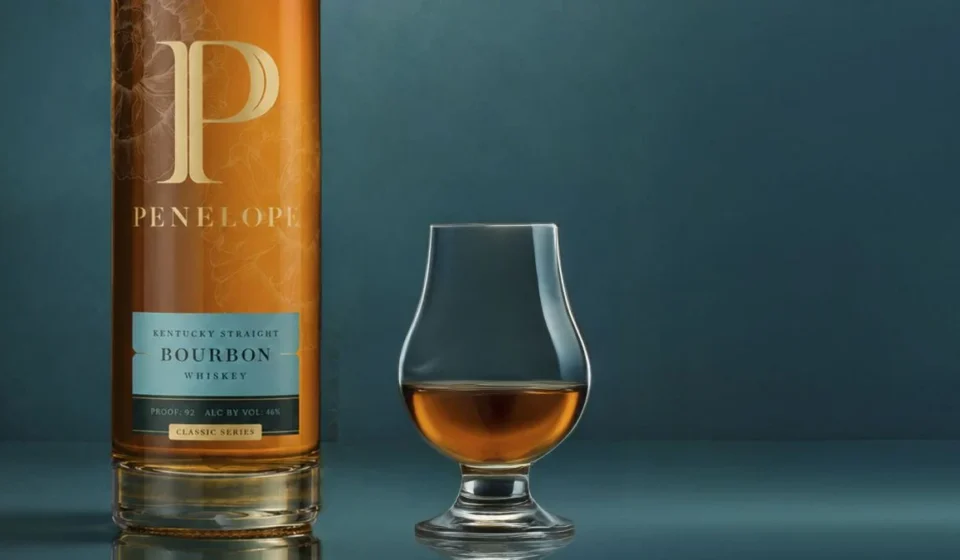
Yet, amid this environment of caution and retrenchment, Penelope Bourbon—a brand now operating under the MGP umbrella—is moving in the opposite direction. Rather than scaling back, Penelope is aggressively expanding its footprint with a new series that signals a strategic departure from its roots. Their latest offering, the Penelope Classic Series Straight Kentucky Bourbon, is not just another bottle on the shelf; it is a direct challenge to the legacy titans of Kentucky.
Main Facts: A Shift to the Bluegrass State
Founded in 2018 by New Jersey natives Mike Paladini and Danny Polise, Penelope Bourbon quickly built a reputation for its creative blending and sourcing acumen. Named in honor of Paladini’s daughter, the brand spent its first half-decade sourcing high-quality juice from MGP in Indiana and refining it through secondary finishing processes.
The release of the Classic Series marks a significant milestone: it is the brand’s first wide-release, large-scale straight Kentucky Bourbon. This is a departure from their signature MGP-sourced, four-grain mashbill. Instead, this expression utilizes a traditional three-grain recipe—78 percent corn, 10 percent rye, and 12 percent malted barley—distilled within the borders of Kentucky. While the brand has remained coy regarding the specific distillery source, industry speculation points toward the MGP-owned Lux Row facility in Bardstown. Bottled at a sturdy 92 proof and retailing at a competitive $45, this bottle is positioned to compete directly with entry-level offerings from legendary houses such as Jim Beam, Four Roses, Wild Turkey, and Heaven Hill.
A Chronology of Growth and Integration
To understand why this launch is so significant, one must look at the brand’s meteoric rise and subsequent integration into the global spirits market.
- 2018: Mike Paladini and Danny Polise launch Penelope Bourbon in New Jersey, focusing on transparency in sourcing and high-quality blending.
- 2020–2022: The brand gains a cult following for its "Toasted Series" and various cask-finished expressions, moving beyond their original, more traditional releases.
- 2023: In a watershed moment for the independent whiskey scene, MGP Ingredients acquires Penelope Bourbon in a deal valued at over $100 million. The move effectively brought a high-growth customer into the MGP family, allowing the parent company to capture the full margin of the brand’s success.
- 2024: Faced with broader market cooling, MGP begins scaling back production at its various facilities to manage inventory. However, the Penelope brand receives the green light to launch its "Classic Series," signaling a move toward regional diversification away from their Indiana-only reliance.
Supporting Data: The Current Industry Landscape
The American whiskey sector is currently in a state of "correctional turbulence." According to recent industry reports, the rapid growth experienced during the pandemic—which saw an unprecedented surge in premium whiskey sales—has leveled off.
Inventory Glut
The industry is currently grappling with a surplus of aging barrels. For independent brands that do not own their own massive rickhouses, the cost of storing and insuring this inventory has become a significant overhead burden. By launching a new Kentucky-sourced line, Penelope is effectively diversifying its production profile, perhaps as a hedge against the volatility of the Indiana-based MGP production schedules.
The Value Proposition
At $45, the Penelope Classic Series is priced for the "everyday drinker" rather than the "collector." In a market where ultra-premium, limited-edition releases often fetch hundreds of dollars, there is a visible gap in the $40–$50 tier. Penelope’s entry into this segment is a calculated effort to gain market share among consumers who are becoming more price-conscious but remain unwilling to sacrifice quality.

Official Responses and Brand Strategy
In official communications, the Penelope team emphasizes that this new series is the result of long-term planning rather than a reactive measure to market conditions. The brand frames the Classic Series as a return to the foundational principles of bourbon making—a "back to basics" approach that highlights the craftsmanship of Kentucky distillation.
While the brand has not confirmed the specific distillery source, the shift to a Kentucky label is an implicit nod to the "Kentucky Bourbon" designation’s enduring prestige. By partnering with MGP’s extensive network of resources, the brand has effectively leveraged the acquisition to gain access to production capacity that smaller, independent distillers are currently struggling to secure.
Implications: What This Means for the Consumer
For the whiskey enthusiast, the arrival of this bottle brings several positive implications. First, it democratizes the Penelope experience. For years, the brand was synonymous with higher-priced, limited-run bottles. By offering a high-quality, 92-proof Kentucky bourbon at a sub-$50 price point, they are inviting a broader demographic into their ecosystem.
Tasting Notes
The bourbon itself is a masterclass in balance. Upon pouring, one is greeted with the quintessential hallmarks of a well-aged Kentucky pour: vanilla bean, warm maple syrup, and a delicate touch of clover honey. On the palate, the influence of the 78 percent corn mashbill provides a creamy, sweet foundation that transitions into a mid-palate of stone fruit—specifically peach and apricot—followed by a finish of toasted oak, black pepper, and a lingering caramel sweetness.
Versatility in the Glass
Unlike some of Penelope’s more experimental, cask-finished releases, which can sometimes dominate the flavor profile of a cocktail, the Classic Series is a workhorse. It is an ideal base for an Old Fashioned, where the 92 proof provides enough structure to stand up to bitters and ice without being diluted. For those who prefer a Manhattan, the brand has also introduced a Classic Series Straight Rye Whiskey, made with a 93 percent rye mashbill, providing a sharp, spicy contrast to the sweetness of the bourbon.
Conclusion: A Welcome Addition
Penelope certainly did not need to launch another series. With their extensive portfolio of golf-themed bottles, Founder’s Reserve expressions, and various stave-finished innovations, they already occupied significant shelf space. Yet, in an industry currently marked by hesitation, this move feels like a bold assertion of confidence.
Whether this expansion was driven by the favorable economics of the current market or a long-standing desire to claim a stake in Kentucky soil, the result is undeniable. The Penelope Classic Series Kentucky Bourbon is a tasty, fairly priced, and exceptionally versatile whiskey. In an era where the industry is looking for stability and reliability, Penelope has delivered a classic pour that is well worth your attention.
Score: 87/100