
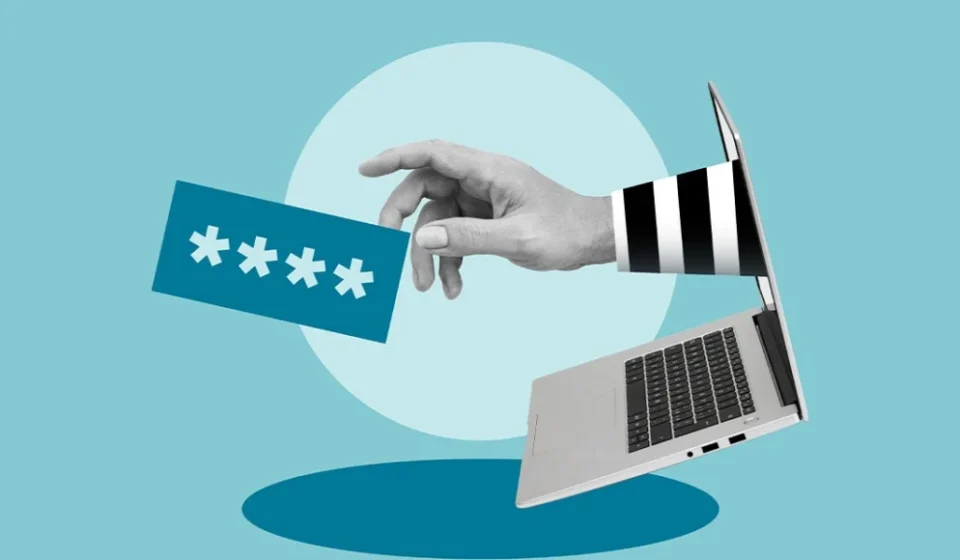

Business travel has long been a complex balancing act. Between managing flight itineraries, ensuring presentation decks are polished, and navigating time-zone shifts, the professional traveler has historically viewed their laptop and smartphone as mere tools of convenience. However, as the digital landscape evolves, those very tools have become the primary entry points for sophisticated cyberattacks.
For the modern professional—particularly those in high-stakes fields like finance, law, or corporate strategy—the traditional "checklist" for a business trip is no longer sufficient. Today, cybersecurity is not an optional add-on; it is the fundamental prerequisite for safe, productive, and secure travel.
The Shifting Threat Landscape: A New Reality for Business Travelers
The era of trusting public infrastructure is effectively over. In recent years, cybercriminals have shifted their focus from static, office-bound networks to the highly mobile and vulnerable ecosystems of hotels, airports, and convention centers. This evolution stems from a simple reality: when people are traveling, they are often stressed, distracted, and prone to taking shortcuts to maintain connectivity.
The CaptiveCrunch Campaign: A Wake-Up Call
The urgency of this issue was brought into sharp relief in late July, when Microsoft detailed an aggressive cyberattack campaign dubbed "CaptiveCrunch." Attributed to the threat actor group known as Midnight Blizzard, the campaign specifically targeted the Wi-Fi infrastructure within high-traffic hubs, including hotels and conference centers.
The strategy was chillingly effective: by compromising the captive portals—the web pages that appear when you first connect to public Wi-Fi—attackers presented travelers with realistic-looking verification prompts. Once the user "verified" their identity, they were inadvertently delivering credentials or malware directly into the hands of the attackers. This campaign underscored a critical shift in tactics: criminals are no longer just "listening" to traffic; they are actively engineering the environment to deceive the traveler.
Chronology of Modern Travel-Based Cyber Threats
To understand the current risks, one must look at how threat vectors have matured over the last decade.
- 2015–2018: The Rise of "Man-in-the-Middle" Attacks. During this period, the primary threat was the creation of "Evil Twin" hotspots—fake Wi-Fi networks with names like "Airport_Free_WiFi" designed to intercept unencrypted traffic.
- 2019–2021: The Remote Work Expansion. As the pandemic forced a shift to hybrid work, VPNs became the standard defense. However, attackers responded by targeting the vulnerabilities of VPN software itself and focusing on phishing campaigns that mimicked corporate login portals.
- 2022–2023: The Juice-Jacking Warnings. Law enforcement agencies, including the FBI, began issuing formal warnings regarding the risks of using public USB charging stations. The concern: that attackers could use compromised hardware to facilitate "juice-jacking"—the extraction of data from a device via its charging port.
- 2024–Present: The Sophistication of Captive Portals. The CaptiveCrunch campaign represents the current state of the art. Attackers are now targeting the infrastructure layer of public Wi-Fi to create a seamless, high-trust environment for credential theft.
Supporting Data: Why Your Device is a Target
The data is clear: the threat to mobile devices is not merely theoretical. According to various cybersecurity research firms, mobile-targeted malware has seen a 40% year-over-year increase in sophisticated distribution methods.
Furthermore, a significant portion of corporate data breaches originate from "endpoint" devices—laptops and smartphones that leave the corporate perimeter. When a device enters a hotel network, it leaves behind the safety of corporate firewalls and Intrusion Detection Systems (IDS). In this "unmanaged" state, a single click on a malicious software update or a fake "Terms of Service" agreement can grant an attacker administrative access to the entire company network.
Official Responses and Industry Standards
Government bodies and international security organizations have responded to these threats by formalizing recommendations for mobile workforces. The Cybersecurity and Infrastructure Security Agency (CISA) and various international data protection authorities consistently emphasize the "Zero Trust" model for travelers.
Zero Trust operates on the principle of "never trust, always verify." In the context of business travel, this means that even if a network appears to be provided by a reputable hotel brand, it should be treated as inherently insecure. Official advisories now strongly recommend that corporations mandate the use of encrypted tunneling (VPNs) and prohibit the use of public charging ports in favor of wall-based AC outlets.
Implications for the Global Business Community
The implications of failing to secure mobile endpoints are profound. A successful breach of a business traveler’s device can lead to:
- Corporate Espionage: The theft of proprietary strategies, upcoming merger details, or sensitive client lists.
- Ransomware Deployment: Using the traveler’s device as a "beachhead" to move laterally into the company’s main servers, resulting in encrypted data and massive recovery costs.
- Regulatory Non-Compliance: Violations of GDPR, CCPA, or other data protection laws, which carry heavy fines and reputational damage.
Best Practices: A Modern Defense Strategy
While the threats are formidable, the defense is manageable through a combination of technical controls and behavioral changes.
1. Hardening the Network Connection
Never connect to public Wi-Fi without a robust, company-approved VPN. Even then, cellular data is inherently safer than public Wi-Fi. For international travelers, the adoption of eSIM technology has been a game-changer, allowing for secure, encrypted mobile data without the risks associated with local network providers or physical SIM swapping.
2. The "Never Download" Rule
If a Wi-Fi portal asks you to update your browser, install a "security certificate," or download a "connectivity tool," walk away. Official software updates should only ever be initiated through your device’s internal settings menu or an official corporate deployment tool. If a prompt feels "off," it almost certainly is.
3. Preparation: The Pre-Departure Protocol
Cybersecurity preparation begins at home. Before departing:
- Update Everything: Ensure your OS, browser, and all critical apps are fully patched.
- Back Up Data: Use encrypted cloud services to back up sensitive files so that a lost device is a physical inconvenience, not a data catastrophe.
- Enable Remote Capabilities: Ensure "Find My Device" and remote-wipe features are active.
- Use a Password Manager: Moving away from reused, simple passwords to complex, unique credentials is the single most effective way to limit the damage of a potential credential theft.
4. Authentication: Beyond the Password
Multi-factor authentication (MFA) is the baseline, but "phishing-resistant" methods—such as hardware security keys or passkeys—are the new gold standard. These methods ensure that even if an attacker gains your username and password, they cannot bypass the authentication hurdle. Before you leave, check that your MFA methods are not reliant on an SMS message to a phone number that might not have coverage or that you might change while abroad.
5. Physical Hygiene and Data Minimalism
Finally, practice data minimalism. Ask yourself: "Do I need this confidential document on my laptop for this trip?" If the answer is no, leave it on a secure, encrypted server at the office. In the event of physical theft or unauthorized access, the impact is minimized by what isn’t there to be stolen.
Conclusion: A Culture of Skepticism
Ultimately, the most effective tool in any traveler’s cybersecurity kit is a healthy sense of skepticism. As cybercriminals become more adept at blending in with the background noise of our digital lives, the responsibility falls on the traveler to question the unexpected.
Business travel is about connection, but in the modern digital age, it requires a careful, guarded approach to how those connections are made. By treating your mobile device as a high-value asset and adopting a "zero trust" mindset, you can navigate the world’s conference halls and airport lounges with the confidence that your data—and your company’s reputation—remain secure. Cybersecurity, after all, is not just a technical requirement; it is the modern traveler’s most essential travel document.