The Pivot: Dave & Buster’s Launches Multi-Faceted Strategy to Reclaim Cultural Relevance

Dave & Buster’s, the titan of the “eatertainment” sector, finds itself at a pivotal crossroads. With 184 units and high brand awareness, the company occupies a unique position in the American dining and leisure landscape. Yet, the brand is currently grappling with a sobering reality: despite its footprint, the average customer visits fewer than two times per year.
As the company navigates a period of tepid financial performance and shifting consumer habits, newly appointed CEO Darin Harper—who ascended from the CFO role last month following the sudden departure of Tarun Lal—has unveiled a comprehensive turnaround strategy. The goal is clear: transition Dave & Buster’s from a sporadic destination into an “obvious answer” for consumers planning their leisure time.
Main Facts: A Brand in Transition
The core of the challenge lies in the nature of the business. Dave & Buster’s is not a casual, high-frequency walk-in spot; it is an occasion-based business. Guests plan their trips in advance, often weeks or months ahead of time. Because these visits are infrequent, the margin for error is razor-thin. If a customer has a mediocre experience, the brand risks losing them for another six to twelve months, or worse, permanently.
Harper’s strategy to revitalize the brand is built upon four primary pillars:
- Capturing Existing Demand: Aligning the brand with personal, seasonal, and cultural calendars.
- Relevance: Ensuring F&B and entertainment offerings are “unmistakably appealing” to target demographics.
- Value and Execution: Simplifying messaging so that customers know exactly what value to expect before they walk through the door.
- Operational Excellence: Raising the bar for service through new leadership and store-level accountability.
Chronology: Navigating the Q2 Storm
The urgency for this pivot was underscored by a challenging second quarter. The company reported a double-digit decline in stock price following a miss on both top- and bottom-line estimates. Adjusted EBITDA hit $98.9 million—an 18 percent shortfall against consensus expectations—while same-store sales dropped 2.9 percent.
However, the chronology of the quarter provides a glimmer of hope. June saw same-store sales down 5 percent, but that figure improved significantly to negative 1.6 percent in July, with positive momentum carrying into the third quarter.
The underlying performance metrics suggest a tale of two businesses:
- F&B Success: Food and beverage comps ran positive for the fifth consecutive quarter, up 7.6 percent.
- Special Events: This segment saw growth for the seventh straight period.
- The Entertainment Gap: The core gaming business, however, continued to struggle, down in the high-single-digits. While this is an improvement from the low-double-digit losses of the previous two quarters, it remains the primary drag on the company’s overall performance.
Supporting Data: The Strategic Shift
To understand why the company is struggling, one must look at its recent history of leadership instability. The brand functioned for over a year without a Chief Marketing Officer, leading to a fragmented promotional calendar and inconsistent media messaging.
The Marketing Overhaul
The arrival of Jeremy Tucker as CMO—bringing experience from high-profile roles at AutoNation, Planet Fitness, and Disney—is the first step toward correcting these systemic failures. Under Tucker, the company is moving away from “big, disconnected tent-pole campaigns” in favor of middle-to-lower-funnel strategies.
The focus is now on “cultural need moments.” By leveraging data to understand exactly what motivates a guest to visit, Dave & Buster’s aims to increase the average visit frequency from two to four times per year.
The Midway Revamp
Research indicates that over 70 percent of guests are incentivized to visit more frequently when they encounter fresh games. In response, Dave & Buster’s has launched 10 new games and attractions this year, including properties based on The Mandalorian, John Wick, and Stranger Things.
Perhaps more importantly, the brand is finally addressing its pricing architecture. Years of “taking too much price” had blurred the value proposition. By simplifying the rate card and adjusting game pricing to encourage longer dwell times—which have already increased by 16–20 percent—the brand is successfully driving higher attachment rates for food and alcohol.
Official Responses: CEO Darin Harper’s Vision
During his first earnings call as CEO, Harper was remarkably candid about the company’s past missteps. “When we’re the obvious answer, we win decisively,” Harper stated. “But we haven’t consistently been the obvious answer.”
Harper’s commitment to “promptness” is the capstone of his leadership style. He emphasized that the company will utilize a “test and learn” approach, allowing them to pivot quickly rather than betting the farm on long-term, unproven strategies.
Regarding the guest experience, Harper has empowered newly hired COO Amanda Busby to overhaul field operations. Bringing 19 years of experience from Red Robin and extensive logistics expertise from SSP America, Busby is currently focused on speed of service. “The guest experience cannot exceed the team member experience,” Harper noted, highlighting that the company is investing in training and clear role definitions to ensure that when a guest finally chooses to visit, the execution is flawless.
Implications: The Road Ahead
The implications of these changes are profound. By shifting capital deployment from aggressive outbound growth toward core business initiatives, Dave & Buster’s is signaling a return to basics.
Modernizing the Fleet
The company is currently executing a remodel program that has already touched cities like Cincinnati, Nashville, and San Diego. These new store designs are more cost-effective, offer a modern aesthetic, and, most importantly, are outperforming legacy units. The company plans to keep capital expenditure for these initiatives around $200 million for the year, with an expectation to stabilize around $150 million in 2027.
Cost Efficiencies
The appointment of a dedicated resource to identify cost savings has already yielded $15 million in realized efficiencies, with the goal of doubling that figure in the near term. This financial discipline is intended to provide the “dry powder” necessary to fund the marketing and game-refresh initiatives required to stay culturally relevant.
The Sports Strategy
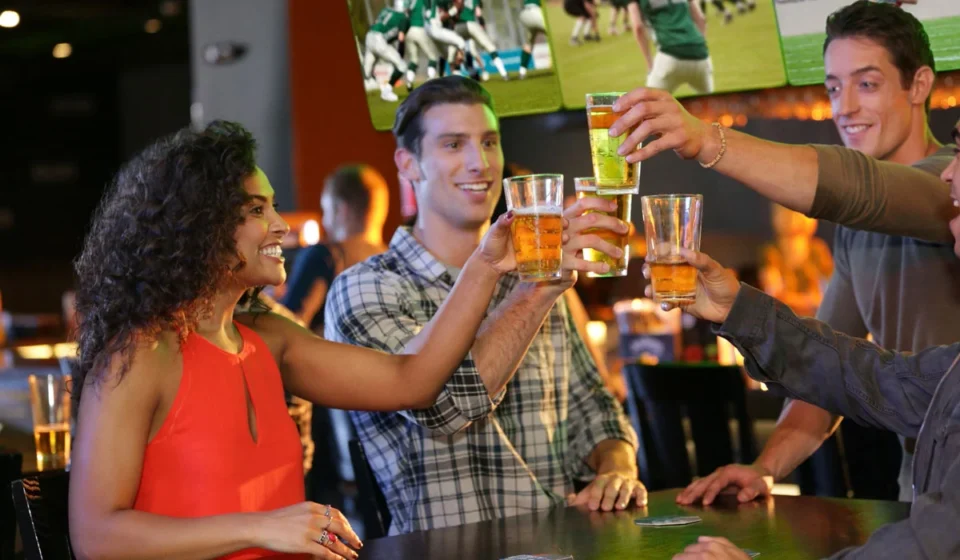
One of the most significant opportunities lies in sports viewership. With over 90 percent of sports-watching guests ordering food and over 80 percent consuming alcohol, the potential for growth is immense. The company’s success with World Cup activations—which featured full-scale, four-wall thematic takeovers—proves that when Dave & Buster’s commits to an event, the customer responds. The challenge now is to translate that sporadic success into a repeatable, year-round strategy that captures the local sports market.
Conclusion
Dave & Buster’s is currently performing a delicate balancing act. It must shed the clutter of its past, embrace a more agile, data-driven marketing machine, and fundamentally improve the daily execution of its staff.
The path forward is clearly defined by Harper’s four pillars: capturing existing demand through cultural relevance, streamlining the value proposition, optimizing the midway experience, and relentless operational focus. If the company can successfully bridge the gap between its current performance and its potential, it won’t just be a place to play games—it will reclaim its status as a foundational pillar of the American entertainment experience. For now, the leadership team is moving with speed, focusing on the “test and learn” cycle that they hope will eventually turn the tide on years of tepid performance.