The Psychology of Awareness: How a Simple Japanese Railway Safety Ritual Can Transform Your Personal Habits

TOKYO/NEW YORK — In the high-speed, hyper-punctual world of Japanese railways, passengers rarely give a second thought to the intricate choreography unfolding inside the driver’s cab. To the casual observer, the operators of Tokyo’s legendary train network might appear to be performing an eccentric form of performance art. As a train hurtles down the track, the operator repeatedly points a gloved finger at trackside signals, calls out their color, checks the speedometer, verifies the timetable, and yells out the exact metrics of operation. On the platform, station staff members sweep their arms along the train’s perimeter and declare, "All clear!"
This curious ritual, known formally as Shisa Kanko or "Pointing-and-Calling," is far from mere theatre. It is one of the most successful cognitive safety interventions in modern industrial history. According to transportation safety studies, this multi-sensory method reduces operational errors by an astonishing 85 percent and cuts overall accidents by roughly 30 percent.
Now, productivity experts, behavioral psychologists, and everyday people are discovering that the core mechanism driving this railway safety protocol—forcing conscious awareness onto automatic actions—holds the key to unlocking personal transformation. Adapted for daily life through tools like the "Habits Scorecard," this methodology provides a blueprint for rewriting personal behavior by shifting our routines out of autopilot.
Main Facts: The Anatomy of Pointing-and-Calling
To understand why Pointing-and-Calling is so potent, one must examine how the human brain processes routine tasks. When an action is repeated thousands of times—whether it is operating a locomotive, typing a routine email, or reaching for a midnight snack—it transitions from conscious execution to nonconscious muscle memory.
While automation allows humans to conserve mental bandwidth, it introduces a dangerous vulnerability: complacency. When we stop paying attention, we stop questioning whether our actions align with our intentions. We assume the next moment will unfold precisely like the last, overlooking critical details that can lead to catastrophic failure.
Pointing-and-Calling disrupts this dangerous loop by forcing the brain to engage multiple sensory pathways simultaneously. By utilizing the eyes to look, the hand and arm to point, the mouth to speak, and the ears to hear, the operator cannot rely on autopilot. The physical act of naming aloud what is happening bridges the gap between passive observation and active cognition.
The success of the Japanese railway system has not gone unnoticed abroad. The Metropolitan Transportation Authority (MTA) in New York City implemented a modified, "point-only" version of the protocol for its subway operators. Within two years of the policy’s rollout, incidents of incorrectly berthed subways—trains failing to align properly with station platforms—dropped by an impressive 57 percent.
Chronology: From Industrial Engineering to Personal Development
The origins of Pointing-and-Calling trace back to the early days of Japan’s railway development in the early 20th century.
- Early 1900s: As the Japanese rail network expanded rapidly following the Meiji Restoration, railway authorities sought ways to minimize human error amid increasing train frequencies and line congestion. Early iterations of verbal verification began appearing organically among locomotive crews.
- 1913: The practice was officially codified and integrated into standard railway operating procedures, specifically targeting visual and auditory confirmation of signals. Over subsequent decades, the physical "pointing" gesture was formally added to amplify the cognitive engagement required of the operator.
- Late 20th Century: Japanese industrial sectors—ranging from heavy manufacturing to construction—adopted variants of Shisa Kanko to curb workplace injuries, cementing its status as a cornerstone of Japanese ergonomic safety culture.
- 2010s: Transportation authorities worldwide began studying the methodology, leading to localized trials in North American and European transit networks, including the MTA’s successful New York pilot program.
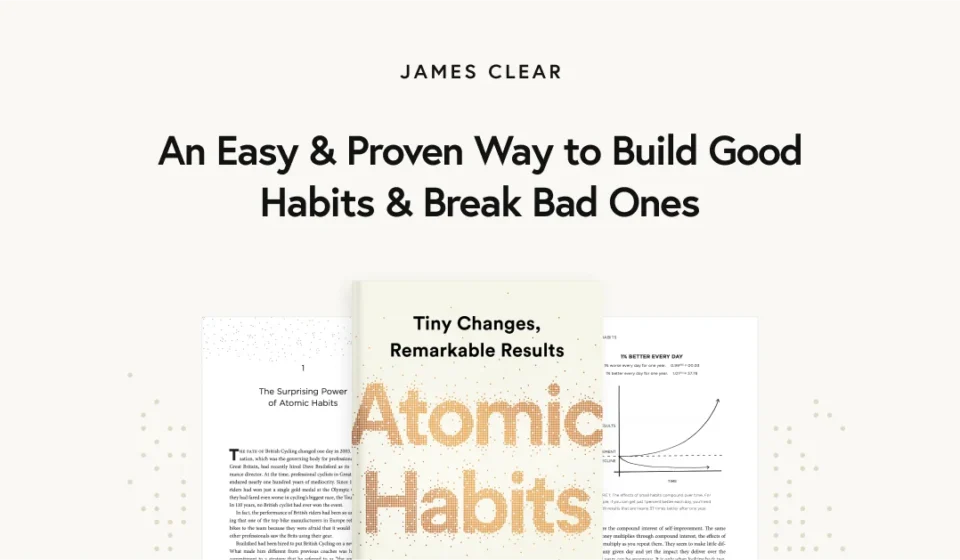
- 2018–Present: The underlying cognitive principles of Pointing-and-Calling crossed over into mainstream behavioral science, popularized notably through bestselling literature such as James Clear’s Atomic Habits. Authors and productivity researchers began championing the translation of industrial safety protocols into everyday personal routines, giving rise to systems like the Habits Scorecard.
Supporting Data: The Metrics of Mindfulness
The empirical data supporting multi-sensory awareness practices highlights a stark reality about human error: we fail not because we lack capability, but because we lack attention.
| Industry / Application | Intervention Method | Measured Outcome |
|---|---|---|
| Japanese Railway System | Full Pointing-and-Calling (Visual, Physical, Auditory) | 85% reduction in operational errors; 30% reduction in overall accidents. |
| New York City MTA Subway | Modified "Point-Only" Protocol for Train Operators | 57% decrease in incorrectly berthed subway incidents within two years. |
| Personal Packing Verification | Verbal Checklist (e.g., Keys, Wallet, Essentials) | Eliminates common oversight errors during transitional phases (leaving the home). |
| Habits Scorecard (Behavioral) | Categorization of Daily Routines (+, -, =) | Establishes baseline behavioral awareness, serving as the foundational step for intentional habit modification. |
These metrics demonstrate that even the most rudimentary interventions—such as a passenger verbally listing out critical items before leaving a house ("I’ve got my keys, my wallet, my glasses")—fundamentally alter human reliability by anchoring abstract intentions in physical reality.
Official Responses and Expert Perspectives
Behavioral scientists and productivity experts have long grappled with the "implementation gap"—the wide chasm between knowing what one should do and actually doing it. Traditional self-help advice often focuses on motivation or willpower, but modern psychological consensus increasingly points toward environmental design and radical self-awareness as the true drivers of change.
"One of our greatest challenges in changing habits is maintaining awareness of what we are actually doing," explains behavioral researcher and author James Clear. "This helps explain why the consequences of bad habits can sneak up on us. We need a ‘point-and-call’ system for our personal lives."
Psychologists emphasize that self-judgment is the primary enemy of behavioral awareness. When individuals realize they have engaged in an undesirable habit—such as mindless snacking or excessive screen time—their immediate reaction is typically self-criticism or guilt. According to clinical experts, this emotional backlash triggers a stress response that often drives the individual right back into the comforting arms of the very habit they are trying to break.
To counteract this, experts advocate for a clinical, dispassionate approach to self-observation. When logging daily habits on a scorecard, the objective is not to moralize, but to map.
Implications: Building Your Personal Habits Scorecard
Translating the lessons of Tokyo’s railways into daily life requires systematic tracking without the burden of premature judgment. This has led to the widespread adoption of the Habits Scorecard, a foundational exercise designed to drag unconscious routines into the light of day.
Step 1: Mapping the Baseline
The process begins by drafting an exhaustive inventory of a typical day’s activities, starting from the moment of awakening. A sample log might look remarkably mundane:
- Wake up
- Turn off alarm
- Check smartphone messages
- Take a shower
- Brush teeth
- Brew coffee
- Eat breakfast (e.g., bagel with peanut butter)
- Check social media feed
- Commute to work
Step 2: Categorizing the Behavior
Once the list is complete, the individual evaluates each behavior through the lens of long-term utility, assigning a marker:
- Plus (+): A positive, identity-reinforcing habit.
- Minus (-): A negative, identity-conflicting habit.
- Neutral (=): A necessary baseline activity with net-neutral outcomes.
Crucially, the designation of "good" or "bad" is entirely context-dependent. For instance, eating a calorie-dense bagel every morning may receive a minus (-) for someone attempting to lose weight, but a plus (+) for an athlete undergoing rigorous caloric bulking.
Furthermore, behavioral psychologists argue that labels like "good" or "bad" are ultimately misnomers. All habits serve a biological or psychological function—otherwise, they would not be repeated. Smoking a cigarette or doom-scrolling on a phone provides an immediate, albeit temporary, reduction in stress or boredom. The challenge lies in distinguishing between short-term relief and long-term net outcomes.
Step 3: Practicing Non-Judgmental Observation
When constructing a Habits Scorecard, experts stress that no behavioral adjustments should be made during the initial observation phase. The goal is pure, clinical data collection.
If an individual catches themselves eating a chocolate bar every morning or wasting hours browsing the internet, the prescribed mental stance is one of curious detachment. Instead of thinking, “I have no discipline; I’m ruining my health,” the observer is encouraged to think, “Oh, how interesting that they would do such a thing. Notice how that cue triggered this response.”
Conclusion: The Path Forward
The enduring lesson of Tokyo’s railway operators is that perfection is rarely achieved through raw willpower alone. Instead, it is engineered through systems that make critical realities impossible to ignore.
By integrating the principles of Pointing-and-Calling and the Habits Scorecard into personal routines, individuals can dismantle the invisibility of their daily actions. True behavioral change does not begin with an ambitious goal or a sudden surge of motivation; it begins with the simple, courageous act of paying attention to what we are actually doing—and calling it out into the open.