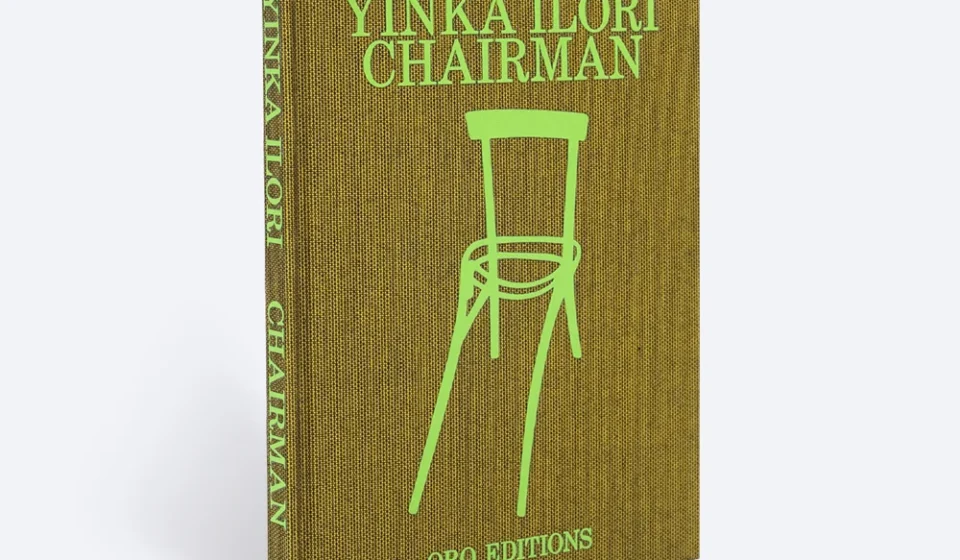

In a world often constrained by the rigid lines of minimalism and the muted palettes of contemporary urban living, British-Nigerian designer Yinka Ilori stands as a vibrant counter-narrative. Known globally as the “architect of joy,” Ilori has spent over a decade dismantling the boundaries between functional furniture and high-art storytelling. His latest endeavor, Chairman—a comprehensive new monograph published by ORO Editions—serves as a retrospective of his profound relationship with one of the most ubiquitous objects in human history: the chair.
Main Facts: The Philosophy of the Chair
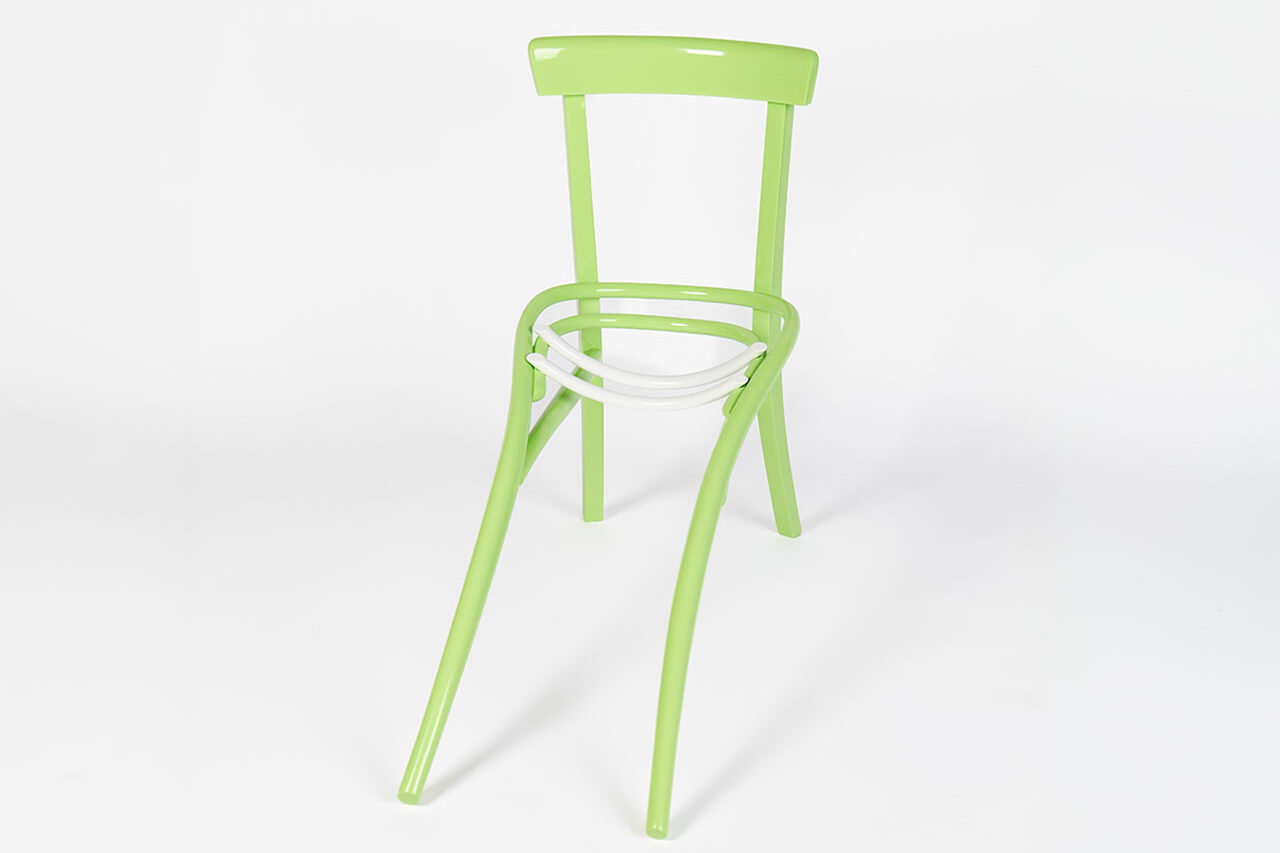
Chairman is more than a portfolio; it is a manifesto for the power of play. The book catalogs Ilori’s extensive furniture practice, documenting his transformation of vintage, discarded chairs into kaleidoscopic vessels of cultural narrative. By utilizing color-blocking, clashing patterns, and sculptural interventions, Ilori challenges the notion that furniture must be “serious” to be significant.
The publication arrives at a time when the design community is experiencing a pivot toward maximalism and expressive interiors. Ilori’s work serves as the vanguard of this movement. Rather than viewing a chair as a mere utilitarian tool—a place to rest one’s body—Ilori views it as a surrogate for the human experience. Each piece in the book is a testament to the idea that our surroundings should not just be functional, but should actively participate in our emotional well-being.
Chronology: A Decade of Transformation
The trajectory of Ilori’s work, as chronicled in Chairman, reveals a consistent evolution from localized experimentation to global acclaim.
The Foundational Years (Early 2010s):
Ilori’s career began in the charity shops of London. His early work was deeply personal, driven by a desire to honor the history of objects. He saw these discarded chairs not as waste, but as relics of lives lived. He began by sourcing worn-out wooden frames, stripping away their anonymity, and applying layers of paint and fabric that echoed his Nigerian heritage.
The Middle Period: Scaling the Vision (2015–2020):
As his reputation grew, Ilori began to scale his approach, applying his “architect of joy” philosophy to larger spatial interventions. He moved from individual chairs to public art installations, playgrounds, and interior architecture. During this time, the chair remained his central motif, a consistent baseline against which he could test new textures, lacquers, and geometric complexities.

The Current Era: The Monograph (2026):
The release of Chairman marks the maturation of his practice. The book encapsulates over ten years of inquiry, providing a curated look at the specific design language Ilori has developed. It documents not just the finished products, but the conceptual rigors that lead to the final aesthetic—the sketches, the sourcing, and the intense labor of craft that defines his London studio today.
Supporting Data: The Anatomy of Maximalism
To understand the significance of Ilori’s work, one must examine the technical defiance inherent in his process. While modern interiors often favor “negative space,” Ilori’s work occupies space with an aggressive, joyful presence.
- Color Theory: Ilori frequently employs high-contrast palettes, often pairing primary colors with saturated secondary hues. This creates a visual “thrum” that forces the viewer to engage with the object actively.
- Materiality: His use of unexpected details—such as attaching a household candle to a chair’s frame, or integrating an artificial succulent into a headrest—serves to disrupt the viewer’s expectations of domestic stability.
- The “Minimalist’s Nightmare”: Critics often characterize Ilori’s work as the antithesis of the Scandinavian minimalist aesthetic. Where a minimalist seeks to remove to achieve clarity, Ilori adds to achieve resonance. His reliance on detailed patterning and high-gloss lacquer creates surfaces that reflect light and movement, making the furniture feel kinetic even when stationary.
The data provided by ORO Editions highlights the reach of these works: the pieces featured in Chairman have been exhibited in institutions ranging from the Design Museum in London to international galleries in Paris and Lagos. This cross-continental appeal underscores the universality of his message: that joy is a language understood regardless of geography.

Official Responses: The Designer’s Perspective
In discussions surrounding the release of Chairman, Ilori has been vocal about the emotional weight of his materials. For him, the chair is a vessel for history.
“For me, those chairs felt like people with stories,” Ilori explains. “I became genuinely attached to them because it was so personal and so meaningful.”
This sentiment is the core of the book. Ilori’s design process is an act of preservation. He is not merely “upcycling” in the traditional sense of the word; he is excavating the personality of an object. By choosing chairs that have already lived, he ensures that his final pieces carry the weight of two lifetimes: the history of the object’s original owner, and the vibrant, reimagined future he provides for it.

His colleagues and industry critics have lauded this approach, noting that Ilori succeeds where many designers fail: he makes art accessible. By keeping the humble chair as his anchor, he ensures that the public never feels alienated by his designs. Everyone knows how to use a chair, which lowers the barrier to entry for his more avant-garde conceptual ideas.
Implications: The Future of Playful Design
The publication of Chairman carries significant implications for the future of interior design and architecture. We are witnessing a societal fatigue with the “grayness” of modern, sterile spaces. As urbanization increases and living spaces become more condensed, there is an urgent human need for objects that spark dopamine and encourage a sense of wonder.
1. Re-evaluating the Mundane:
Ilori’s work suggests that we have become too fearful of “silliness” in our professional and domestic environments. By elevating the chair—a piece of furniture we often take for granted—he is encouraging consumers and architects alike to find joy in the mundane.

2. The Sustainability of Storytelling:
Ilori’s practice provides a roadmap for sustainable design that isn’t just about resource management, but about emotional durability. If we view our objects as having long, storied lives, we are less likely to discard them. His work argues that the most sustainable object is one we love enough to keep.
3. Challenging Convention:
The industry is currently grappling with how to merge mass production with individuality. Ilori’s success proves that there is a hunger for the idiosyncratic. His “architect of joy” label is not just a marketing moniker; it is a professional position. It suggests that architects and designers have a social responsibility to create environments that lift the spirit.
Conclusion
Chairman is more than a book; it is a catalyst. In its pages, Yinka Ilori invites us to stop treating our homes and our furniture as mere background noise. He asks us to see the potential for color, for pattern, and for the kind of irrational, beautiful, and necessary silliness that makes us human.

As the world continues to navigate complex global challenges, the work of Yinka Ilori offers a much-needed respite. It is a reminder that while the world may be bleak at times, our environments don’t have to be. By reclaiming the chair—the seat of our daily lives—Ilori has given us a seat at the table of imagination, proving that even the most ordinary objects can become extraordinary if we only dare to play.
Chairman is currently available through ORO Editions, and for those seeking to transform their own spaces, it offers not just inspiration, but a permission slip to finally embrace the color and joy that has been hiding in plain sight.