The Shifting Digital Landscape: Global Social Media Bans and the New Era of Brand Strategy

The modern internet is a harrowing terrain. From the inescapable pull of doom-scrolling—absorbing the intense weight of global political, humanitarian, and climate crises with the flick of a thumb—to the psychological toll of comparing real lives to influencers’ glossy content and acquaintances’ curated highlight reels, the digital environment frequently tests human resilience. Unhealthy comparisons rear their ugly heads daily, transforming spaces meant for connection into sources of systemic anxiety.
In response to these pervasive dark sides of social media, lawmakers worldwide are asking a fundamental question: Do governments and technology companies bear a responsibility to enact sweeping bans and rigorous protections to safeguard children? Consumers resoundingly answer in the affirmative. According to Sprout Social’s Q1 2026 Pulse Survey, an overwhelming 68% of consumers support social media bans for minors, with parents of young children forming the most vocal contingent rallying behind legislative intervention.
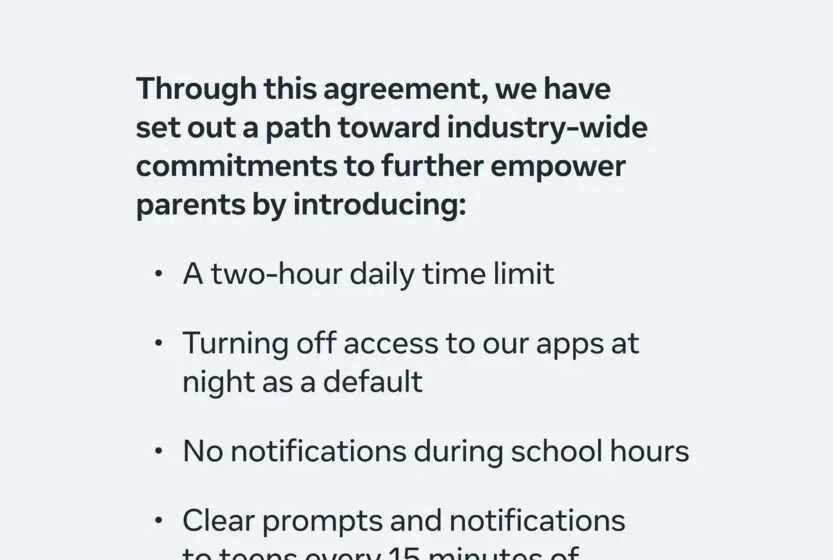
For social media marketers, who already navigate a labyrinth of internal and external operational challenges, this global shift introduces a new wave of stress and brand safety risks. Numerous countries have already implemented, passed, or actively considered legislative bans on teenage social media use. Furthermore, Meta’s landmark youth safety settlement has mandated a robust series of new safeguards across Instagram and Facebook, establishing a precedent that pressures other major networks to follow suit.
This evolving legislative and judicial framework threatens to complicate how brands reach specific audiences, publish content efficiently, and remain compliant with an ever-changing rulebook of country-specific laws. Zooming out, as global economies become increasingly interconnected, multinational brands face profound challenges in complying with disparate, cross-border policies while striving to maintain cultural relevance.
To help brands navigate this paradigm shift, industry experts have mapped out the facts regarding current and proposed social media bans, offering critical insights into how social media teams must adjust workflows and content strategies for a heavily regulated future.
The Chronology of Change: From Legislative Debates to Judicial Settlements
The movement to restrict youth access to social platforms has accelerated rapidly, transitioning from abstract policy debates into concrete legislation and binding judicial agreements.
The Rise of Global Legislation (2025–2026)
Across Europe, the Middle East, Asia-Pacific, and the Americas, governments have moved past simple advisory warnings, enacting concrete age floors and compliance mandates for tech platforms:
- United Arab Emirates (UAE): Set a strict minimum age of 15 for personal account ownership, with users aged 15 to 16 facing heavily restricted feature sets.
- Turkey & Greece: Passed or proposed parallel measures barring youth under 15 from maintaining independent accounts.
- Australia: Enacted a definitive ban preventing children under 16 from holding personal social media profiles, placing the absolute burden of enforcement on the platforms.
- Malaysia & Indonesia: Implemented tiered access models, where Malaysia restricts account registration for children under 16, and Indonesia enforces parental consent requirements alongside high-risk platform restrictions for minors.
- France: Although the country’s top court struck down an initial French youth social media ban citing freedom of expression concerns, legal experts anticipate a swift revision designed to pass constitutional muster.
The Landmark Meta Settlement
While legislative wheels turn slowly in some regions, judicial settlements have fast-tracked corporate policy changes. The recent Meta youth safety settlement forced the tech giant to institute sweeping structural changes across Instagram and Facebook. Crucially, the financial terms of the settlement incentivize Meta to push for synchronized rules across competitors like TikTok, YouTube, and Snapchat. This settlement establishes a powerful legal precedent: restrictions on reaching minors are arriving faster through court-mandated settlements than through traditional legislative channels.
Supporting Data: Consumer Sentiment and Global Legislative Models
Public support for digital safety measures remains high, driving both platform self-regulation and government mandates.
What Consumers Want
Sprout Social’s Q1 2026 Pulse Survey revealed fascinating nuances in consumer preferences regarding online safety. Rather than demanding total, draconian blockades, consumers expressed even higher support for platforms implementing robust parental consent measures and advanced age verification technology. Recognizing these preferences, major tech companies—including Meta, Snapchat, WhatsApp, and YouTube—are actively deploying family-friendly app experiences, enforcing strict time limits, and restricting sensitive content.
Global Regulatory Models at a Glance
EMEA Region
- UAE: Minors under 15 barred from personal accounts; ages 15–16 face disabled features. Duty falls on networks. (Active)
- Turkey: Under-15 accounts banned; ages 15–17 require strict parental controls. Duty falls on networks. (Passed, pending full rollout)
- United Kingdom: Under-16s face algorithmic network bans; ages 16–17 face overnight curfews and gaming platform restrictions. (Proposed)
- Greece: Under-15 personal accounts banned. (Proposed)
- Denmark: Under-15 bans under active negotiation. (Proposed)
- France: Under-15 ban struck down on free expression grounds, but revisions are expected. (Struck down/Pending revision)
APAC Region
- Australia: Under-16 personal accounts banned. Duty falls on networks. (Active)
- Indonesia: Under-13s restricted to child products; ages 13–16 require parental consent; high-risk platforms restricted to 16+. (Active)
- Malaysia: Under-16 account registration banned. Duty falls on networks. (Active)
- New Zealand: High-risk networks restricted for youth under 16. (Proposed)
United States State-Level Models
Nearly half of U.S. states have introduced age-assurance or social media restriction laws, employing distinct regulatory models:
- Age Restrictions + Parental Consent: Imposes minimum age limits with conditional parental consent pathways for older minors.
- Feed and Design Restrictions: Requires parental consent for personalized algorithmic feeds, reduces notifications, and institutes nighttime app lockouts.
- Usage and Time Limits: Imposes daily platform-specific time limits for minors.
- App-Store Verification: Shifts the enforcement burden directly onto app stores (such as Apple and Google) to verify age and secure parental consent during the download phase.
Official Responses and Industry Perspectives
As platforms scramble to comply with international laws and settlement terms, marketing leaders are speaking out about what this transition means for the future of digital commerce. Industry veterans emphasize that these changes signify the maturation of social media rather than its demise.

Sam Morgan-Smith, Head of Social at UK-based PR agency The Romans, views the environment pragmatically:
"This is an evolution, not an erosion. Social media is maturing. Compliance challenges signal legitimacy, not demise. It’s moving from the Wild West to a regulated media environment—like TV did decades ago. Rather than abandoning social, this is the moment to reimagine it."
Tiffany Sayers, co-founder of Australian agency Loft Social, echoes this sentiment regarding return on investment and strategic pivoting:
"Social still delivers ROI at every stage of the funnel. It just requires smarter systems and more intentional content now. Show leaders that ethical, compliant social is not only possible but powerful. It’s about shifting the conversation with your leaders from ‘how many likes’ to ‘how many hearts and minds.’ "
Strategic Implications for Brands and Marketers
Even brands that do not directly market to children must adapt to downstream market shifts caused by youth safety settlements and global bans. Navigating this new reality requires a fundamental overhaul of traditional social media playbooks.
1. Transitioning to Age-Aligned, Defensible Content
The era of blanket posting—or what Morgan-Smith describes as "throwing confetti"—is over. Relying solely on platform algorithms to sort and deliver content to appropriate audiences is no longer a viable strategy.
- Precision Targeting: Brands must build content that is explicitly age-aware and legally defensible.
- Rigor in Execution: According to Tiffany Sayers, brands require greater rigor when briefing creative talent, capturing first-party data, and defining campaign success metrics.
2. Upgrading Brand Safety Protocols
Compliance can no longer be treated as an afterthought or a "bolt-on" process. It must be woven directly into the daily workflow of digital teams.
- Internal Governance Frameworks: Organizations must move beyond relying exclusively on platform policies, establishing internal frameworks that include rigorous creator vetting, precise content archiving, and strict moderation protocols.
- Cross-Departmental Training: Digital compliance must extend beyond social media managers. Marketing, PR, and legal departments must receive regular updates on global legislation—such as the U.S. Children’s Online Privacy Protection Act (COPPA), the UK Online Safety Act, and Australia’s age-verification laws—to prevent accidental noncompliance.
3. The Resurgence of Real-World Immersion (IRL)
As organic digital access for younger demographics becomes restricted, smart brands are pivoting toward hybrid ecosystems that bridge digital influence with real-world experiences.
- Experiential Marketing: Agencies report a creative resurgence in micro-events, brand installations, peer-to-peer word-of-mouth campaigns, and university activations.
- Alternative Channels: Online, brands are successfully exploring gaming integrations, instant messaging channels, and youth-safe publishing platforms to maintain engagement without violating emerging regulatory frameworks.
Conclusion: Agility as the Marketer’s Superpower
The convergence of global social media bans, strict parental controls, and landmark safety settlements marks the definitive end of social media’s unregulated infancy. While compliance demands require operational adjustments, they also offer an opportunity to build deeper, more trustworthy relationships with consumers.
Navigating this complex landscape requires agility—the true superpower of modern social media marketers. By shifting focus from fleeting vanity metrics to sustainable, first-party connections and legally sound campaigns, brands can ensure they not only survive this regulatory evolution but thrive within it.
Disclaimer: The information provided in this article does not, and is not intended to, constitute formal legal advice. Readers should consult their legal counsel or attorney regarding specific legal matters and regulatory compliance.