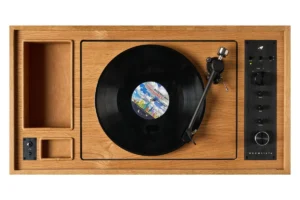
The Sonic Sanctuary: How High-Fidelity Design is Redefining Public and Private Spaces

In an era defined by digital noise and the fragmented attention spans of the streaming age, a profound counter-movement is taking root. A new spatial typology has migrated from the obscure fringes of audiophile subculture into the mainstream: the high-fidelity listening room. These are not merely spaces where music is played; they are architecturally curated environments where sound is treated as a physical, immersive, and social centerpiece.
From the subterranean haunts of Lower Manhattan to the sun-drenched penthouses of Nashville and the industrial chic districts of Rotterdam, designers are rethinking the acoustic landscape. This shift represents more than just a trend in interior design; it is a fundamental transformation in how we gather, listen, and experience the tactile reality of analog sound.
The Evolution of the Listening Room: A Chronology of Sound
The lineage of the modern listening room is rooted in the Japanese jazz kissa—small, specialized cafes that emerged in the 1950s. These venues were built on a foundation of "deep listening," where patrons gathered in near-silence to appreciate jazz records played on pristine, high-end sound systems.

- 1950s–1970s: The jazz kissa movement flourishes in post-war Japan. These spaces, often run by obsessive collectors, prioritize the purity of the signal path and the ritual of the vinyl record.
- 1980s–2000s: The rise of portable digital audio (CDs, then MP3s) leads to a decline in shared, high-fidelity environments. Music becomes a secondary, background activity, often consumed through lossy formats and earbuds.
- 2010s: A "vinyl revival" begins. The resurgence of physical media creates a demand for spaces that can reproduce the depth and dynamic range of analog recordings.
- 2020s: Post-pandemic, a shift in social habits takes hold. Younger generations, prioritizing intentional, alcohol-reduced socializing, drive the demand for "third spaces" that offer meaningful, focused experiences rather than the chaotic atmosphere of a traditional club or bar.
Supporting Data: Why We Are Tuning In
The resurgence of the listening room is not happening in a vacuum. Market trends indicate a significant pivot in consumer behavior. Data from the music industry confirms that while streaming remains dominant, the "audiophile" market—including high-end turntables, vacuum tube amplifiers, and acoustic treatment materials—has seen consistent double-digit growth over the last five years.
Sociologically, the "Sober Curious" movement and the rise of the "experience economy" have created a vacuum that traditional nightlife can no longer fill. As young adults move away from late-night, alcohol-heavy venues, they are seeking "grounding spaces." Listening rooms provide a perfect alternative: they offer the social thrill of a night out, but with the intellectual and emotional stimulation of a meditative, focused activity.
Acoustic Engineering as Interior Architecture
The success of a modern listening room lies in the seamless synthesis of technical performance and aesthetic intent. It is a common misconception that simply placing a high-end speaker in a room creates a listening room. On the contrary, the space must be engineered to prevent the degradation of sound waves.
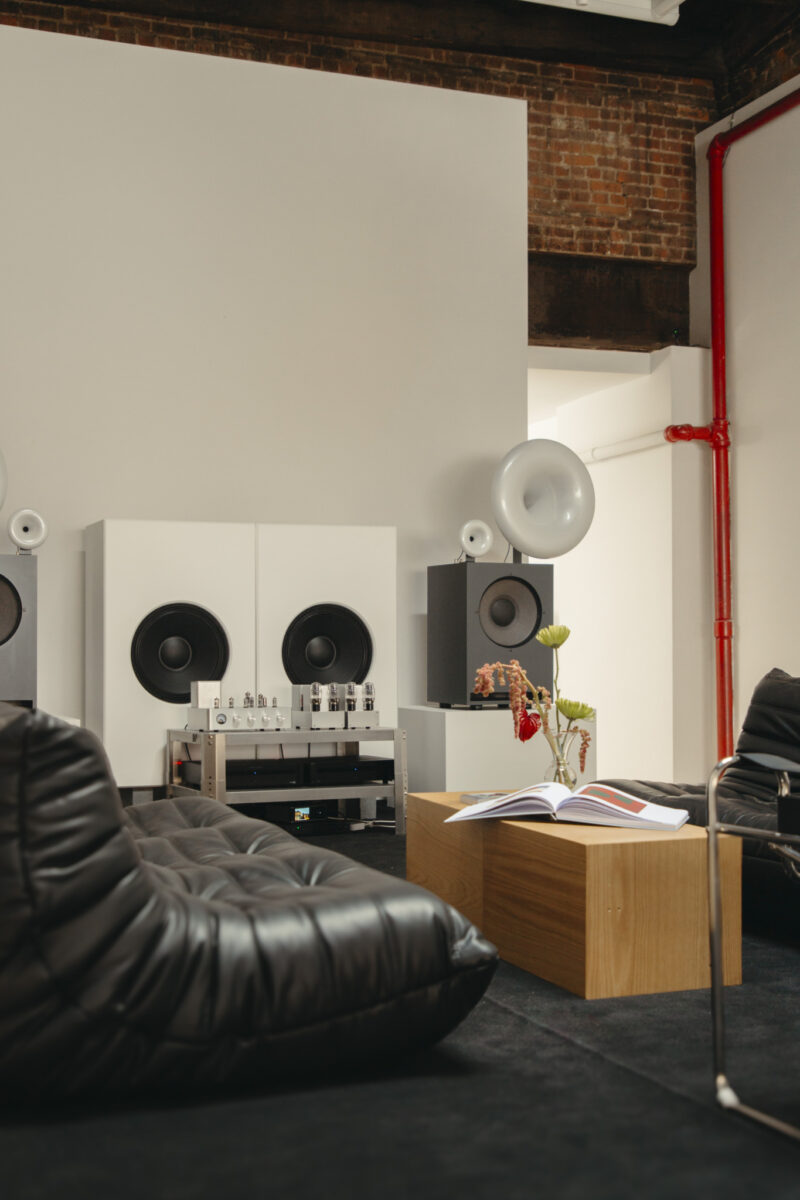
Designers are now treating "acoustic attenuation" as a primary design requirement rather than an afterthought. This involves a multi-layered approach:
- Diffusion: Utilizing geometric surfaces, such as custom woodwork or sculptural panels, to break up sound reflections and prevent standing waves.
- Absorption: Integrating hidden high-performance panels behind plaster, cork, or textile wall coverings to "muffle" unwanted ambient noise without deadening the space entirely.
- Spatial Planning: The physical layout—the placement of seating relative to the "sweet spot" of the speakers—is dictated by the physics of sound propagation.
5 Spaces Defining the Future of Sound
1. SILENT MATTERS (New York City)
Located in the heart of Lower Manhattan, SILENT MATTERS by SILENCE PLEASE is a masterclass in "quiet minimalism." The design studio behind the space has effectively created an acoustic vacuum. By integrating high-performance panels behind cream-toned plaster, they have ensured that the sonic experience is entirely isolated from the city’s kinetic chaos. The use of low-slung, tactile upholstery and oiled timber creates a cocoon-like intimacy that forces the listener to slow down.
2. Stylus (New York City)
Set to open later this year on the Lower East Side, Stylus is perhaps the most ambitious project in the current movement. O’Neill Rose Architects has partnered with an elite coalition of collaborators, including OJAS for sound engineering and artist Sabine Marcelis for sculptural elements. The space features an isolated "reception buffer" that protects the interior sanctuary from the noise of Dimes Square. It represents the "high-fidelity" future where architecture and sound are inseparable.
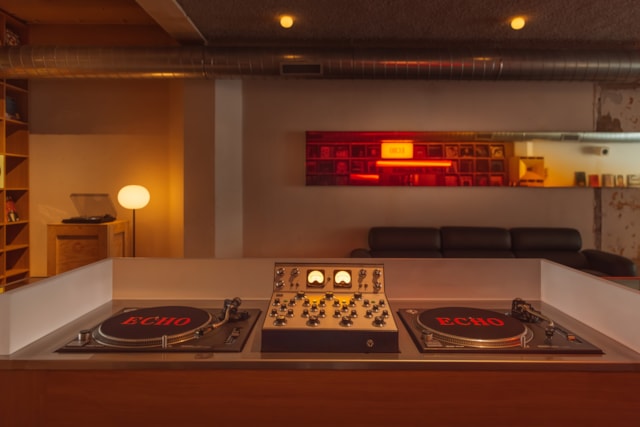
3. ECHO Listening Bar (Rotterdam)
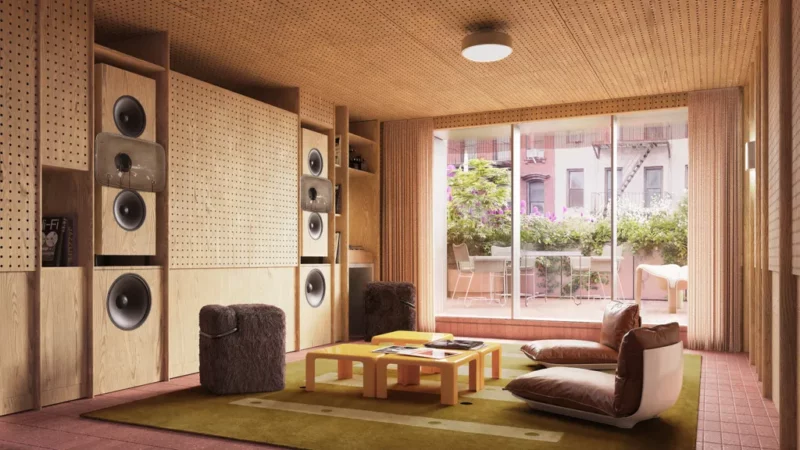
Reflecting the Dutch penchant for experimental, industrial design, ECHO utilizes raw materials—poured concrete, brushed aluminum, and cork—to achieve a stunning acoustic balance. The space is a testament to the idea that industrial aesthetics do not have to be cold. By using custom timber speaker cabinets as functional room dividers, architects Paul Cournet, Jeff Hogendijk, and Khalil Ryahi have created a space where the architecture is the instrument.
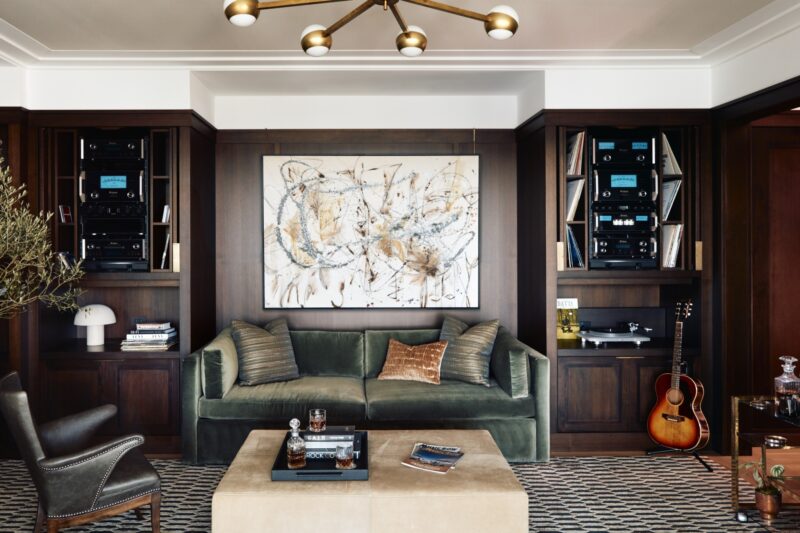
4. Music Row Penthouse (Nashville)
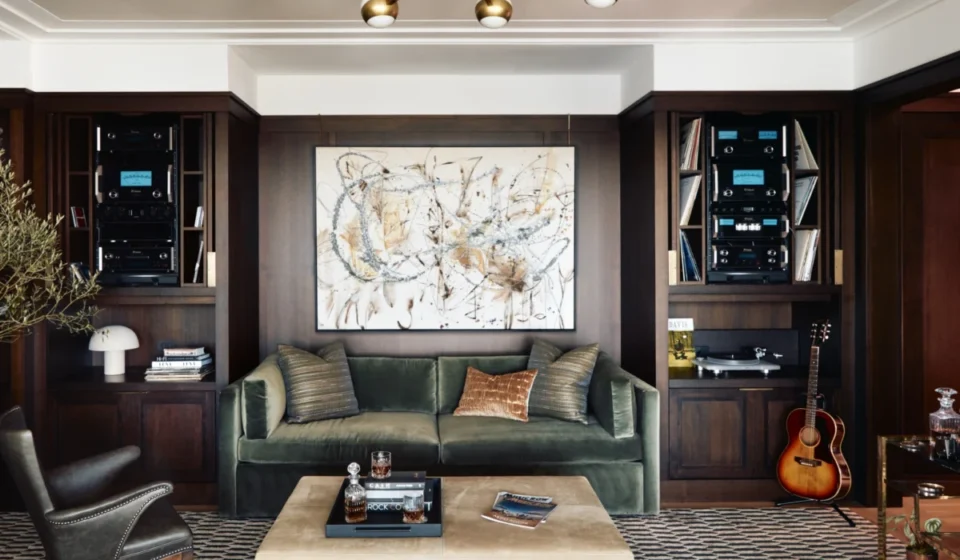
Pembrooke & Ives have successfully translated the public lounge concept into the residential sector. In this Nashville penthouse, the acoustic design is hidden in plain sight. Rich walnut paneling, micro-perforated for sound absorption, lines the walls, while bespoke silk carpets and velvet banquettes create an environment of extreme comfort. It proves that the "listening room" is becoming an essential luxury feature of modern high-end homes.
5. La Boiserie for Modern Listening (Milan)
The duo David/Nicolas has reimagined the traditional French boiserie (wood paneling) as a functional, acoustic-driven storage system. Their design demonstrates how furniture can serve as an acoustic tool. By creating a geometric, flexible shelving system that accommodates both records and advanced audio gear, they have turned the wall itself into a sound-modulating sculpture, merging Italian mid-century glamour with contemporary technical necessity.
Implications: The Blurring of Interior Categories
The rise of the high-fidelity listening room is signaling a broader shift in interior design. As acoustic attenuation becomes a priority, the design principles used in these specialized rooms are bleeding into retail, hospitality, and corporate workspaces.
"We are seeing a move away from the ‘glass box’ aesthetic of the early 2000s," notes one design consultant. "People are tired of harsh, echoing, hard-surfaced environments. They want texture, warmth, and sound control."
This shift has profound implications for how we work and live. In the office, acoustic treatment is no longer just about meeting rooms; it is about creating "zones of focus" in open-plan spaces. In retail, it is about creating a "sonic brand" that makes customers want to linger. In our homes, it is about reclaiming a space for the analog ritual of listening to an entire album, undistracted by the ping of a notification or the glare of a screen.
Conclusion: A Return to Intention
The listening room is, at its heart, an act of rebellion against the disposability of the digital age. By elevating the environment in which we listen, we are elevating the music itself. Whether in a public bar or a private penthouse, these spaces demand our time and our focus.
As we look toward the future, the integration of acoustics into the core of interior design will likely become a standard, not a luxury. We are moving toward a world where our built environment is not just visually curated, but sonically considered—a world where every room has the potential to be a sanctuary. In these spaces, we are reminded that music is not just something to be heard; it is something to be inhabited.