
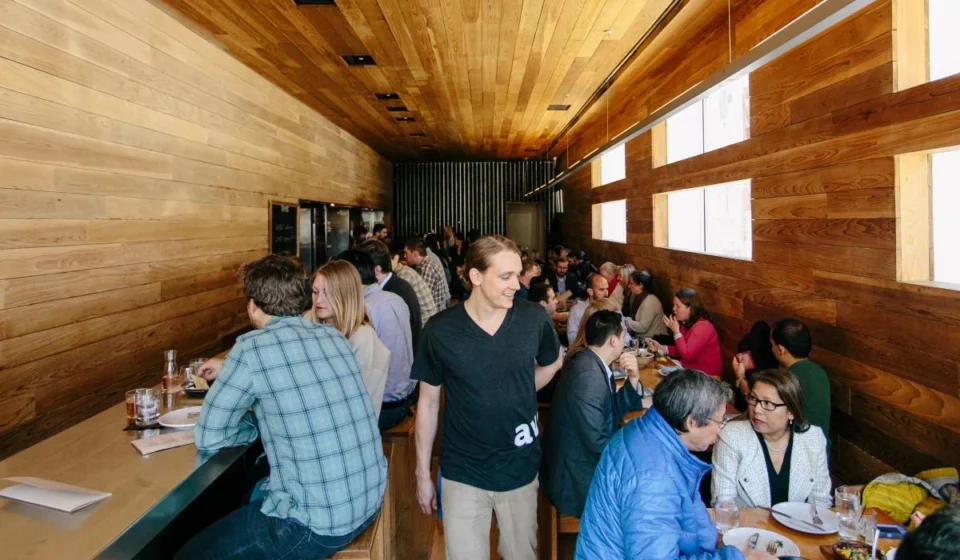
The Strategic Shift: How One Off Hospitality is Reimagining Frontline Hiring

In the high-pressure ecosystem of the modern restaurant industry, few problems are as persistent or as damaging as the “desperate hire.” It is a cycle familiar to every general manager: a shift is looming, a line cook calls out, a server quits, and the restaurant is suddenly left scrambling to fill a gap. In the ensuing panic, standards are compromised, red flags are ignored, and a new hire is rushed onto the floor—often to quit within a month, leaving the manager exactly where they started.
Karen Browne, CEO of Chicago’s powerhouse One Off Hospitality—the group behind industry icons like avec, The Publican, and Big Star—believes this cycle is not an inevitability of the business; it is a failure of system design. By applying principles from her background in large-scale human capital management to the fast-paced world of dining, Browne is proving that the secret to a stable, high-performing team is not found in a bigger sign-on bonus, but in a radical shift toward intentionality.
The Anatomy of a Hiring Failure
The root cause of restaurant turnover is rarely a lack of talent in the labor pool, but rather a lack of discipline in the recruitment process. When operators are understaffed, they tend to hire "bodies" rather than "traits."
"Desperate hiring managers will do desperate things," Browne notes. "When they’re understaffed, they’re hiring bodies. They’re not pre-screening for the successful attributes you need for the job."
This approach creates a domino effect. By prioritizing immediate availability over cultural fit and skill alignment, managers inadvertently introduce instability into their teams. When a new hire lacks the core competencies required—whether that is the composure to handle a Saturday night rush or the emotional intelligence to manage guest friction—the existing team must work harder to compensate. This leads to burnout among top performers, who eventually leave because they are tired of carrying the load for underperforming, poorly vetted peers.
A Career at the Intersection of Systems and Service
Browne’s perspective is uniquely informed by her career trajectory. Before stepping into the role of CEO at One Off Hospitality in 2019, she operated far outside the kitchen. Her experience in leading massive human-capital organizations for corporate entities gave her a vantage point that most restaurateurs lack: the ability to view the dining room as an enterprise that requires scalable, repeatable, and strategic systems.
Since joining the nine-time James Beard Award-winning group, she has acted as a bridge between the art of hospitality and the science of human resources. She argues that while the restaurant industry prides itself on being "people-first" regarding guests, it has historically been reactive rather than strategic regarding its own staff.
The Framework: A Five-Pillar Approach
Browne has formalized a framework for recruitment that emphasizes slowing down to speed up. By moving away from reactive hiring and toward a structured, intentional methodology, she has helped One Off maintain its reputation for excellence even in a volatile labor market.
1. Define Success Before the Search
The most significant error in hiring is focusing on the "open shift" rather than the "ideal candidate." Before a job is ever posted, an operator must clearly define the specific traits required for the role. Is the position a high-volume host stand requiring extreme warmth? A line position requiring mechanical precision under pressure?
"You need to really take the pill and just slow down and design a system, and then work to the system," Browne says. By defining the "success profile" of a role, managers can filter candidates based on non-negotiable attributes rather than just their ability to show up on a Friday.
2. The Death of the Inbox: Humanizing the Pipeline
In an era of digital automation, many restaurants have outsourced their recruitment to applicant tracking systems (ATS) and email chains. Browne pushes back against this, arguing that hospitality is, by definition, a human-to-human business.
If a restaurant treats its recruitment like an assembly line, it should expect the caliber of talent that treats the job like an assembly line. Browne personally engages with the candidate pipeline, picking up the phone to call applicants. This serves two purposes: it identifies talent faster than an email ever could, and it signals to the applicant that the restaurant values them as a person.
3. The Employment Proposition
Why should a candidate choose your restaurant over the one across the street? Most job postings list the "what"—hours, pay, and basic duties. Browne argues that companies must articulate the "why."
Drawing on her experience with a call-center client, where she helped reframe a mundane role as being a "superhero for a day," Browne emphasizes the need for a compelling "Employment Proposition." Whether it is a clear path to management, a robust mentorship program with industry-leading chefs, or superior schedule flexibility, the restaurant must offer a value proposition that resonates with the candidate’s personal goals.
4. Eliminating Candidate Lag
The "candidate lag"—the time between a manager calling a candidate and actually scheduling an interview—is where most high-quality talent is lost. In a busy service environment, managers often get distracted by the immediate fires of the floor, leaving candidates in a "black hole" for days.
"You’ve got to move candidates through the funnel quickly," Browne advises. In the current labor market, where talent has more options, silence is a silent killer of opportunity. A fast, responsive hiring process is a competitive advantage that signals a well-run, professional operation.
5. Onboarding: The Hidden Retention Tool
Browne’s philosophy extends beyond the signature on an offer letter. She famously maintains that the industry must "treat our employees better than how we expect them to take care of our guests."
Recruitment is effectively wasted if the onboarding process is chaotic. If a new hire is not trained properly, or if they are thrown into a shift without adequate support, the "recruitment win" becomes a "retention loss." Browne conducts regular audits of the employee experience, asking staff about their onboarding to identify where early gaps exist.
Implications for the Industry
The implications of Browne’s methodology are profound. For years, the restaurant industry has accepted high turnover as a cost of doing business—an inevitable byproduct of the "grind." However, by adopting a strategic, systemic approach to human capital, Browne is demonstrating that turnover is a metric that can be controlled.
Economic Impact
High turnover is an enormous drain on profitability. The cost of recruiting, interviewing, and training a new employee—not to mention the loss of productivity and the impact on team morale—can be staggering. By investing in a hiring system that produces higher-quality, more sustainable long-term hires, restaurants can see a direct impact on their bottom line.
Cultural Evolution
Perhaps most importantly, Browne’s approach suggests a shift in the power dynamic of the kitchen. When a restaurant is intentional about its hiring, it builds a culture of competence. High performers are attracted to environments where they are surrounded by other high performers. By "upgrading the roster" and removing chronic underperformers, managers create a space where talented employees want to stay and grow.
Conclusion
Karen Browne’s work at One Off Hospitality serves as a blueprint for the future of restaurant management. By stripping away the chaos of "desperate hiring" and replacing it with a disciplined, human-centric system, she has proven that operators have far more control over their destiny than they realize.
The path forward for the industry is not found in a magical piece of software or a new recruitment platform. It is found in the willingness to slow down, to treat candidates with the same care as guests, and to recognize that the most important part of any restaurant is not the menu—it is the people who bring it to life every single day.