The Value Paradox: How Convenience Stores are Navigating the Viral Snack Era

In the fast-paced world of convenience retail, the snack aisle has become a battlefield where high-speed digital trends collide with the grounded reality of a price-sensitive economy. As inflation remains a persistent shadow over consumer wallets, retailers like FriendShip Stores and Roadtrac are finding that the secret to survival lies in a delicate balancing act: leveraging the high-octane excitement of viral, limited-time-only (LTO) products while simultaneously offering the deep-value propositions that cash-strapped shoppers now demand.
Main Facts: The Evolution of the C-Store Snack Aisle
The modern convenience store snack category is undergoing a structural shift. Historically driven by impulse and convenience, the segment is now increasingly dictated by a "value-first" mentality. Retailers are reporting that while Gen Z and younger demographics continue to drive demand for bold, international, and social-media-famous snacks, the broader customer base is becoming increasingly selective.
Key trends shaping the 2026 landscape include:
- The "TikTok Effect": Viral sensations—such as the recent craze surrounding "Dubai chocolate"—are being used as tactical "in-and-out" items to drive foot traffic.
- The Value Shift: Customers are migrating toward larger pack sizes and multi-buy promotions (e.g., buy-two-get-one-free) to maximize the utility of every dollar spent.
- Private Label Resurgence: Consumers are showing a higher willingness to trade down from established national brands to generic or private-label alternatives.
- Strategic Distribution: For mid-sized chains, success is inextricably linked to vendor partnerships that prioritize warehouse accessibility and efficient supply chain integration.
Chronology: From Impulse to Strategic Engagement
The transformation of the snack category did not happen overnight. It is the result of several years of shifting economic pressures and digital disruption.
Pre-2023: The Era of Standardized Assortment
For years, the convenience store snack aisle was defined by core, legacy brands. Promotions were periodic, and innovation was largely incremental, focusing on new flavors of established potato chip or candy bar lines.
2023–2024: The Social Media Surge
The rise of TikTok and Instagram as discovery platforms for food products changed the game. Consumers began entering stores specifically looking for items they had seen online. Retailers were forced to pivot, moving from long-term category management to rapid-response inventory tactics. This was the birth of the "in-and-out" product lifecycle, where items gain massive, short-term popularity before fading into obscurity.
2025–2026: The Economic Tightening
As inflationary pressures persisted, the enthusiasm for "discovery" products was tempered by economic caution. While younger shoppers remained impulsive, the average consumer began scrutinizing the price-per-ounce of their favorite snacks. This forced retailers like FriendShip and Roadtrac to implement more aggressive promotional strategies, utilizing loyalty apps and bundled pricing to sustain volume in a market where transaction counts were threatened by rising costs.
Supporting Data and Market Dynamics
The current retail climate is defined by a dichotomy between the "treat yourself" shopper and the "budget optimizer."
Data from Roadtrac, which operates 25 locations in Texas, highlights a clear preference shift. "If a customer sees that maybe a bigger bag is worth more, or if they see some type of promo on the shelf, they’re more inclined to purchase those," explains Zain Sunesara, a partner at Roadtrac. This trend is particularly visible in the chips category, where unit sales are increasingly concentrated in "family" or "shareable" sizes rather than individual snack bags.
The Role of Promotions
For FriendShip Stores, operating 31 locations in Ohio, promotions are no longer just a marketing tool; they are a vital lever for category health. Natalie Goldsmith, category manager at FriendShip, notes that for product categories currently trending downward, everyday low-price (EDLP) promotions have become essential to preventing stagnation.
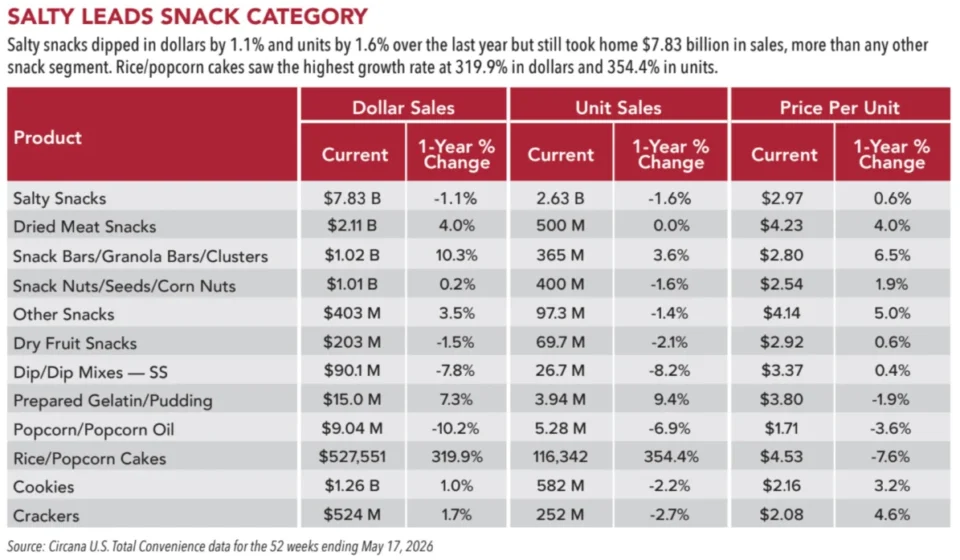
Meat snacks serve as a prime example. While standard sales were soft, the introduction of targeted promotions transformed them into a high-velocity category. This suggests that in the current economy, price sensitivity is high, but price elasticity remains—meaning shoppers are still willing to buy if the value proposition is clearly communicated at the point of sale.
Official Responses: Insights from the Front Lines
The retail leaders managing these shifts are not merely observing the changes; they are actively engineering their inventory and floor layouts to adapt.

The FriendShip Strategy: Logistics and Curation
FriendShip Stores has taken a pragmatic approach to category management. Recognizing that they do not operate their own massive distribution network, they prioritize vendor partners who can ensure seamless delivery into the wholesaler’s warehouse.
"We like to watch trends and bring in new items to see if they are items that will be in-and-out items or items that will be sticking around for a while," Goldsmith says. To mitigate risk, FriendShip often tests these viral items using shippers placed at queue lines or counters. This minimizes shelf-space commitment while maximizing visibility for impulse buyers.
Furthermore, FriendShip has leaned into the "generic vs. brand" debate. Goldsmith observes that customers are increasingly open to generic labels, viewing them as a way to maintain their snacking habits without sacrificing their budget. By partnering with vendors on loyalty app promotions, FriendShip captures data on these price-conscious behaviors, allowing them to refine their offers in real-time.
The Roadtrac Approach: Capturing Gen Z
Roadtrac, meanwhile, has doubled down on the impulsive nature of younger generations. Zain Sunesara points out that Gen Z consumers are fundamentally different in their purchasing habits compared to their predecessors.
"They do like these unique, bold flavors; they like trying them and testing them out," says Sunesara. "I feel like this new Gen Z is more impulsive buying, so if they see something that really catches their eye, they’re more inclined to try it, as compared to the other generations."
To cater to this demographic, Roadtrac has aggressively expanded its international snack selection, including a broader array of Hispanic-inspired products. These additions aren’t just about flavor; they are about cultural relevance and the "Instagrammability" of the packaging.
Implications: The Outlook for Late 2026 and Beyond
As we move toward the close of 2026, the consensus among industry leaders is one of cautious continuity. The factors that have defined the year—price consciousness, the search for value, and the rapid rise and fall of viral snack trends—are expected to persist.
The Sustainability of Viral Trends
The "in-and-out" model is expected to become the industry standard for innovation. Retailers will continue to dedicate a rotating portion of their floor space to "flavor-of-the-month" products. However, retailers must be careful not to over-index on these items. As Sunesara suggests, the "core" of the business—the stable, everyday snack staples—must be supported by strong multi-buy promotions to keep the business profitable during leaner months.
The Power of Bundling
Moving forward, bundling will likely be the primary tool for driving growth. Whether it is "buy two, get one free" or pairing a snack with a beverage, retailers are learning that the "transactional value" is now more important to the customer than the "product value." If a store can make a customer feel they have "won" a deal, the likelihood of a repeat visit increases significantly.
Supply Chain as a Competitive Advantage
For smaller and mid-sized chains, the ability to secure product will continue to be a primary differentiator. As FriendShip’s model demonstrates, the proximity of product to the wholesaler is a key factor in keeping shelves stocked with the latest trends. Retailers that can streamline their logistics and maintain close relationships with vendors will be the ones who successfully navigate the ongoing volatility.
Final Thoughts
The modern c-store snack aisle is a microcosm of the broader economy. It is a space where the excitement of a global, viral food trend meets the cold calculation of a consumer counting pennies. For retailers like FriendShip and Roadtrac, the path forward is clear: be bold with the "fun" stuff, but be rigorous with the "value" stuff. By balancing the viral with the vital, these retailers are not just surviving; they are evolving to meet the demands of a new generation of shoppers who expect both excitement and efficiency in every visit.
As the industry looks toward the next calendar year, the message is clear: the customer is in the driver’s seat, and their demand for value is non-negotiable. Those who can provide that value while keeping the shelf experience fresh and exciting will lead the market in the years to come.