The Weekly Travel Brief: Mid-Air Crises, Aviation Warnings, and Cultural Preservation Conflicts

The global travel landscape is currently navigating a period of heightened volatility. From life-threatening security incidents in the skies over the Middle East to legal battles over accessibility at world-renowned cultural institutions, the last week has highlighted the complex interplay between safety, tourism, and ethics.
This report provides an in-depth analysis of five critical stories shaping the current travel industry, examining the immediate impacts on passengers and the long-term implications for global tourism.
1. Mid-Air Crisis: FlyDubai Flight Aborts Mission Following Cockpit Altercation
The Main Facts
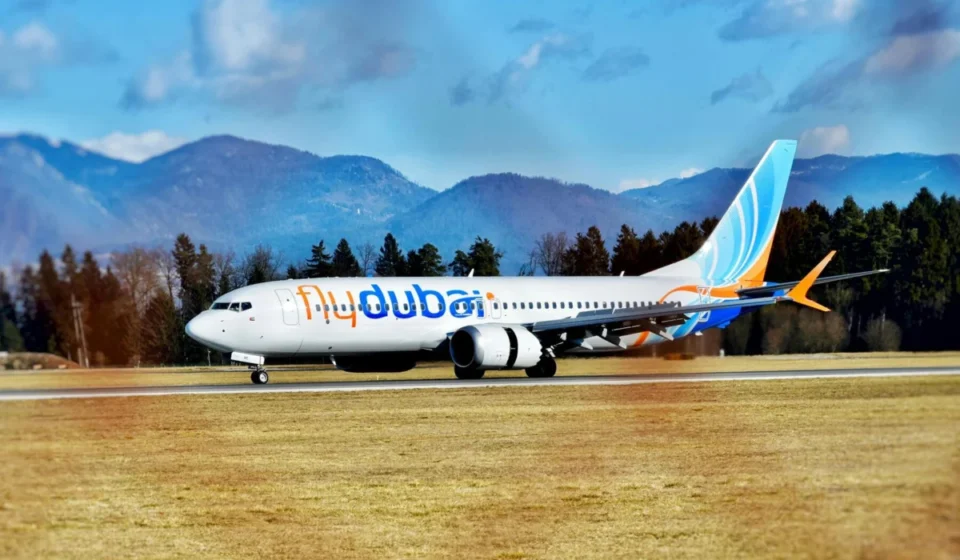
In a chilling incident that has sent shockwaves through the aviation industry, a FlyDubai passenger jet operating a route from Dubai to Israel was forced to make an emergency landing in Saudi Arabia on Wednesday. The flight, carrying approximately 170 passengers—the vast majority being Israeli citizens—descended rapidly from 33,000 feet to 17,000 feet in just 60 seconds.
Israeli Prime Minister Benjamin Netanyahu confirmed that the emergency was precipitated by a violent confrontation between the flight crew. According to reports, one pilot allegedly stabbed the other and attempted to intentionally crash the aircraft.
Chronology and Emergency Response
The situation unfolded roughly two and a half hours into the flight. Following the initial struggle and the subsequent rapid, uncontrolled descent, the aircraft sustained significant structural damage. Aviation safety experts analyzing the event noted that the plane’s rudder was largely torn away during the descent—a testament to the extreme aerodynamic forces the airframe endured.
The disaster was averted through the intervention of passengers and security personnel. Reports indicate that Israeli air marshals and trained security staff onboard, along with other crew members, managed to subdue the assailant and regain control of the flight deck. The flight was subsequently diverted to Prince Sultan bin Abdulaziz International Airport in Tabuk, Saudi Arabia, where it landed safely one hour after the descent began. Saudi authorities have since taken the suspected attacker into custody.
Implications for Aviation Security
The incident has triggered an immediate review of cockpit security protocols. While air marshals are common on high-risk routes, this event underscores the catastrophic potential of "insider threats" within the flight deck. The diversion to Saudi Arabia—a nation without formal diplomatic relations with Israel—highlights the prioritization of immediate life safety over political sensitivities in emergency aviation scenarios.
2. Regional Instability: EASA Issues Urgent Middle Eastern Airspace Warnings
Overview of EASA Directives
The European Union Aviation Safety Agency (EASA) has issued a significant update to its Conflict Zone Information Bulletins, reflecting the deteriorating security situation across the Middle East. As regional hostilities persist, the agency is recommending that commercial carriers exercise extreme caution or avoid entirely large swathes of airspace previously considered safe.
Key Advisory Updates
- Saudi Arabia: Following a surge in missile and drone activity by the Houthi movement, EASA has advised airlines to avoid Saudi Arabian airspace.
- Jordan: The agency has elevated its risk assessment for Jordan, now recommending that no commercial flights operate within the country’s airspace at any altitude, a marked shift from previous "cautionary" guidance.
- Regional Blanket Warnings: EASA has extended existing warnings for Lebanon, Iran, and Iraq through November 16. Furthermore, airspace over territorial waters belonging to Bahrain, Kuwait, Qatar, the UAE, and Oman is now subject to heightened scrutiny.
Implications for Global Transit
For the international traveler, this translates to longer flight times, increased fuel costs, and potential scheduling disruptions. As airlines reroute to bypass conflict zones, the "Great Circle" routes between Europe and Asia are becoming increasingly inefficient. These warnings also serve as a stark reminder of the fragile nature of international commercial aviation when tethered to volatile geopolitical hotspots.
3. Cultural Ethics: The British Museum and the Accessibility Debate
The Legal Challenge
The British Museum is currently embroiled in a legal battle concerning the accessibility of its high-profile exhibition of the Bayeux Tapestry. Dr. Yusuf Ali Osman, a blind visitor, has filed a challenge alleging that the museum failed to provide reasonable accommodations, thereby violating the United Kingdom’s Equality Act.
The crux of the argument centers on the museum’s failure to provide live audio-described tours for the 70-meter-long, 1,000-year-old embroidery. While the museum implemented a self-guided model, advocates for the disabled argue that such an approach is insufficient for a complex historical narrative that relies heavily on visual storytelling.

Museum Response and Data
The exhibition has been a massive commercial success, generating over £2.5 million ($3.32 million) in ticket sales. The museum has defended its initial planning by citing the extreme environmental sensitivity of the tapestry, which necessitates strict limits on light exposure and viewing time—capped at 40 minutes per visitor.
In response to the legal pressure, the museum has acknowledged the oversight and announced the development of dedicated in-person audio-described tours, as well as an app-based integration to ensure that future exhibits meet the legal and moral standards of inclusive accessibility.
4. Consumer Protection: The Younique Ventures "Abandoned" Tour Scandal
The Incident
A Maryland-based travel company, Younique Ventures, is facing intense scrutiny after a group trip to France ended in chaos earlier this summer. Over 70 women, participating in a curated group tour, reported that the company abruptly terminated the trip several days ahead of schedule. Participants were reportedly left to navigate the logistics of finding and paying for their own transportation and lodging to return home.
Promised Refunds and Financial Disputes
Despite promises from the company to reimburse travelers for the truncated itinerary and out-of-pocket expenses, many participants report that they have received nothing. Younique Ventures has cited "financial complications" and ongoing customer disputes/chargebacks as the primary reasons for the delay in processing refunds.
Broader Industry Concerns
The situation has escalated with reports that the company also postponed an upcoming Australia and Fiji tour, leaving a new wave of customers in limbo. This case serves as a cautionary tale for consumers regarding the lack of federal oversight for small-scale travel tour operators. Experts advise travelers to use credit cards for all travel bookings to ensure the protection provided by the Fair Credit Billing Act and to verify the financial health of boutique tour operators before transferring large deposits.
5. Environmental Degradation: The "Pink Cliffs" Phenomenon
Social Media vs. Preservation
In central Victoria, Australia, the "Pink Cliffs" near Heathcote have become an unlikely viral sensation. Once a site of obscure geological interest, the cliffs have been thrust into the spotlight by TikTok and Instagram, drawing thousands of visitors eager for the "perfect shot."
The Ecological Impact
Parks Victoria has issued urgent warnings as the influx of tourists has led to significant damage. Visitors are frequently crossing safety barriers and trampling across fragile, non-stabilized formations.
Ranger Peter Barrow has emphasized that these cliffs are not a natural formation in the traditional sense; they are the scarred remnants of 19th-century gold mining. The "pink" layers were exposed when miners used high-pressure water cannons to blast away the earth. Because these formations are essentially exposed, eroded soil, they are extremely susceptible to human foot traffic.
Preservation Strategy
The local government is currently balancing the surge in tourism interest with the need for site preservation. Efforts to update signage and physically reinforce barriers are underway. However, geologists like Clive Willman warn that the irony of the site is lost on many: the attraction people are flocking to see is, at its core, a monument to the environmental devastation of the Victorian Gold Rush. The site serves as a poignant reminder of the tension between modern "content creation" and the long-term conservation of delicate landscapes.
Conclusion: The New Reality of Travel
Whether it is the safety of the skies, the accessibility of our history, or the preservation of our landscapes, the travel industry is facing a transformative period. As digital connectivity drives tourism to once-hidden locations and geopolitical tensions redraw the maps of the air, the responsibility falls on both operators and travelers to prioritize safety, ethics, and sustainability. As these five stories demonstrate, the modern journey is no longer just about the destination—it is about the integrity of the path taken to get there.