
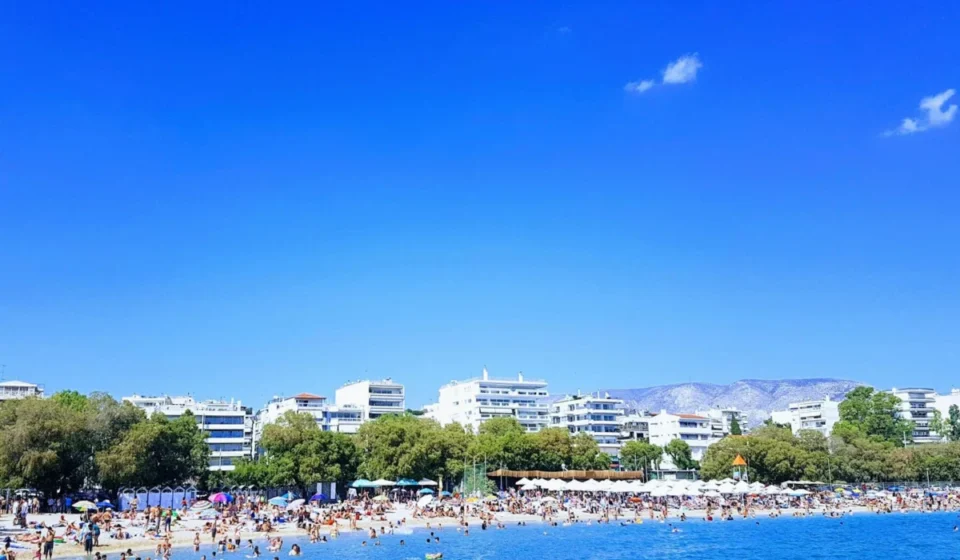

A tranquil Sunday morning on the Athenian Riviera descended into chaos and tragedy this past weekend, as a dispute over beach chairs at a popular Vouliagmeni seaside spot resulted in the death of an 82-year-old man. The incident, which has sent shockwaves through the local community and the tourism sector alike, serves as a grim culmination of escalating tensions regarding access to public spaces across Europe’s most popular vacation destinations.
The Fatal Encounter: A Chronology of Events
The incident unfolded in the upscale coastal suburb of Vouliagmeni, a region renowned for its pristine waters and exclusive beach clubs. According to reports provided by local authorities and eyewitness accounts, the victim, an 82-year-old man, arrived at the beach shortly before 10:00 a.m. on Sunday, presumably hoping to secure a prime location for his party.
The atmosphere on the beach, which had been peaceful throughout the early morning, shifted abruptly when the octogenarian began a confrontation with a 76-year-old man—a stranger with whom he had no prior relationship. What began as a verbal disagreement over the occupancy and reservation of sun loungers quickly escalated into a physical altercation.
Witnesses reported that the verbal sparring rapidly deteriorated into a scuffle. During the melee, the 76-year-old man allegedly struck the 82-year-old victim, who subsequently collapsed onto the sand. The situation became increasingly chaotic as other individuals, including a 21-year-old woman associated with the 76-year-old man’s party, became embroiled in the struggle. One witness described the scene as harrowing, noting that the shouts and screams of those involved were audible from the opposite end of the beach, drawing the attention of dozens of nearby sunbathers.
First responders were summoned to the scene immediately. Paramedics and medical personnel attempted life-saving measures, including CPR and the use of a defibrillator, in a desperate bid to stabilize the man. He was rushed to the Asklepieion Hospital in Voula, where, despite the intervention of medical staff, he was pronounced dead. Preliminary assessments suggest the man suffered a fatal heart attack, potentially triggered by the physical and emotional stress of the altercation.
Official Responses and Legal Proceedings
The Greek authorities have launched a comprehensive investigation into the incident. Following the event, police detained the 76-year-old man and the 21-year-old woman involved in the brawl.
The primary suspect, the 76-year-old man, is now facing formal charges of causing fatal bodily harm. He was scheduled to appear before a magistrate on Monday to face the allegations. While the police continue to gather testimony from bystanders who witnessed the incident, they have remained tight-lipped regarding the specific nationalities or identifying details of the individuals involved, citing the ongoing nature of the investigation.
One crucial detail emerging from witness statements suggests a potential catalyst for the violence: reports indicate that the victim may have slapped the 21-year-old woman during the height of the argument, which may have served as the turning point that caused the situation to spiral from a heated exchange into a fatal physical confrontation.
The "Sunbed Wars": A Symptom of Broader Tourism Friction
While the tragedy in Vouliagmeni is an extreme outlier, it highlights a growing, systemic issue across Europe: the "sunbed wars." For years, the practice of "towel-reserving"—where vacationers rise before dawn to stake out prime beach or pool furniture with towels or personal items—has been a source of contention.
In recent seasons, this behavior has evolved from a minor inconvenience into a flashpoint for conflict. Travelers and local residents alike have expressed frustration over the commercialization of public shorelines and the scarcity of space, leading to increased territoriality.
The issue has reached such a level of frustration that it has entered the legal sphere. In a landmark case that drew international attention, a German court ruled in favor of a traveler who had purchased an all-inclusive package at a Greek resort, only to find himself unable to access a single pool chair for the duration of his two-week stay. The court awarded the tourist €1,200 in compensation, deeming the tour package "defective." The ruling emphasized that while the hotel claimed a no-reservation policy, their failure to enforce it—and the lack of oversight by the tour operator—constituted a breach of contract.
The "Towel Movement" and the Fight for Public Access
The tragedy in Vouliagmeni cannot be viewed in isolation from the broader sociopolitical landscape in Greece. Over the past two years, the country has seen the rise of the "towel movement," a grassroots, citizen-led initiative that began on the island of Paros and has since spread across the Aegean and Ionian seas.
The movement is a direct response to the privatization of Greek beaches. Under Greek law, a significant portion of every beach—often mandated at 70%—must remain unobstructed by commercial lounge chairs, ensuring that the public can enjoy the sand without the requirement of paying a fee to a private operator. However, many beach clubs and hotels have historically pushed these boundaries, encroaching on public space with rows of paid sunbeds that effectively price out locals and budget travelers.
The "towel movement" aims to reclaim these spaces, with activists frequently protesting to ensure that public access remains a reality rather than a legal theory. The prevalence of "illegal" or unregulated sun loungers has exacerbated the competition for space, creating an environment where a dispute over a chair can turn violent.
Implications for the Future of European Tourism
The death of the 82-year-old man on the Athenian Riviera has forced a necessary, albeit painful, conversation regarding the management of popular tourist destinations. As climate change increases the intensity of summer heat, the value of a shaded, comfortable spot near the water has skyrocketed. When combined with overtourism and the rapid commercialization of public assets, the result is an environment primed for conflict.
Tourism experts and local officials are now being urged to implement stricter regulations. Potential solutions being discussed include:
- Digital Reservation Systems: Moving away from the "first-come, first-served" model to prevent early-morning confrontations.
- Enhanced Enforcement: Ensuring that beach clubs strictly adhere to the 70% public access law, thereby reducing the density of paid loungers.
- Public Awareness Campaigns: Educating tourists and locals on the etiquette of shared public spaces to de-escalate potential conflicts before they reach a breaking point.
The tragedy in Vouliagmeni stands as a sobering reminder of the human cost when leisure and entitlement collide. As authorities continue their investigation, the incident will undoubtedly leave a lasting impact on how Greece manages its most precious resource: its coastline. For now, a family is grieving, a community is in shock, and the debate over who owns the sand—and who has the right to occupy it—is more urgent than ever.