Ultimate Luxury in the Bush: Inside Villa Thandawena, South Africa’s $15 Million Safari Masterpiece Complete with a Private Helicopter

Nestled deep within the breathtaking, sun-drenched landscapes of South Africa’s KwaZulu-Natal province lies a property that redefines the pinnacle of high-end wilderness living. Known as Villa Thandawena, this sprawling 11,700-square-foot architectural marvel is more than just a home—it is an immersive sanctuary where ultra-luxury design meets raw, untamed African nature.
As the crown jewel of the exclusive Thanda Royal Residences, Villa Thandawena commands attention not only for its stunning craftsmanship and pristine location within a 40,000-acre private game reserve, but also for an inclusion that elevates it far above standard luxury real estate offerings: an Airbus H130 B4 helicopter.
Listed at $15 million through Keegan Steyn of Forbes Global Properties, this property represents an intersection of conservation, elite design, and extreme remoteness, offering a rare opportunity for a discerning buyer to claim a slice of South Africa’s most coveted wildlife territory.

Main Facts: The Anatomy of Villa Thandawena
Spanning nearly 12,000 square feet of meticulously engineered indoor and outdoor living space, Villa Thandawena is an exercise in restrained elegance. Rather than mimicking the rustic aesthetic of a traditional safari lodge, the residence embraces a contemporary, pavilion-style architectural blueprint.
Architectural Highlights and Materials
- The Structure: Designed as a series of low-slung pavilions unified beneath a sweeping, floating butterfly roof, the estate masterfully integrates natural elements—stone, glass, and structural steel—to create a seamless dialogue with the surrounding bushveld.
- Stone Cladding: Developer Pierre Delvaux utilized volcanic rock imported from the Great Rift Valley, a painstaking process that required nine full months of specialized cutting to properly clad the property’s exterior and accent walls.
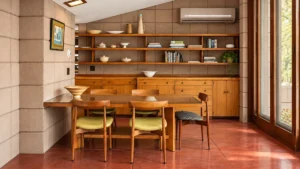
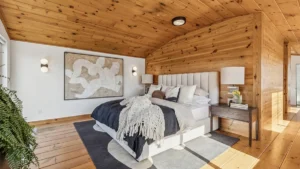
- Interior Palette: The interior design leans heavily into organic textures without tipping into cliché. Floors are finished in warm European oak, countertops gleam with refined marble, and polished brass and textured leather accents add warmth and sophistication.
- Art and Culture: The residence showcases a curated selection of artworks by both prominent South African and international creators. Architectural motifs throughout the home incorporate circular geometric patterns, serving as a subtle nod to traditional Zulu design.
Amenities and Lifestyle Spaces
- Living and Entertaining: The main living and dining pavilion is anchored by a dramatic, floor-to-ceiling bookmatched stone fireplace. Expansive glass walls slide away to reveal cinematic vistas of the rolling landscape, where giraffes and zebras frequently graze within sight of the terrace.
- Hospitality and Leisure: For the connoisseur, the villa includes a sophisticated cigar lounge and fully stocked private bar. A dedicated staff kitchen ensures discreet, high-level service.
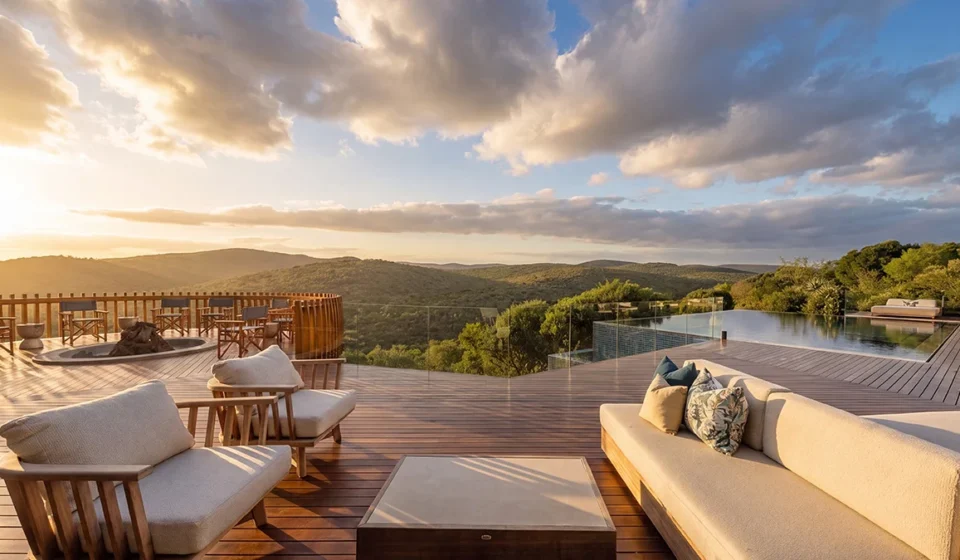
- Wellness and Outdoors: Stepping outside reveals an expansive 1,000-square-foot mosaic-tiled deck framing an infinity-edge swimming pool that seems to spill directly into the reserve. Additional wellness amenities include a fire pit for evening gatherings, an outdoor spa facility, a fully equipped outdoor gym, a dedicated yoga platform, and a private sauna.
- The Menagerie: The surrounding Thanda Safari reserve is home to Africa’s legendary "Big Five"—elephants, lions, leopards, rhinos, and buffalo—providing residents with front-row seats to some of the world’s most dynamic wildlife interactions.
Chronology: From Conservation Dream to Architectural Icon
The story of Villa Thandawena and the broader Thanda ecosystem is one of visionary land stewardship, patience, and meticulous development.
- Early 2000s — The Genesis of Thanda Safari: Swedish businessman, tech entrepreneur, and philanthropist Dan Olofsson, alongside his wife Christin, established Thanda as a premier private safari and wildlife conservation initiative. Their mission was to restore overgrazed agricultural land back to its natural state, reintroducing native wildlife and establishing a self-sustaining ecosystem.
- Mid-2000s to 2010s — Expansion into Private Ownership: Recognizing a demand for ultra-private residential ownership within protected ecosystems, the Thanda Royal Residences collection was conceptualized. Carved out of approximately 950 acres of the greater reserve, this exclusive enclave allowed a select few individuals to own freehold property within a secure wildlife sanctuary.
- 2023 — The Long Road to Completion: Construction and detailing on Villa Thandawena reached an advanced phase after years of careful planning. The sourcing of volcanic stone from the Great Rift Valley alone demanded months of precise labor, overseen by developer Pierre Delvaux.
- 2024 — Official Completion and Market Debut: Villa Thandawena was officially finalized, setting a new benchmark for residential luxury in KwaZulu-Natal. Following its completion, the property was prepared for its international market debut.
- September 2026 — The $15 Million Global Listing: The estate officially hits the open market at $15 million, represented by Keegan Steyn of Forbes Global Properties, capturing the attention of the global luxury real estate sector.
Supporting Data: By the Numbers
To truly understand the scale, exclusivity, and logistical framework of Villa Thandawena, the following data points outline its unique market positioning:

- Price: $15 million USD.
- Total Living Space: Approximately 11,700 square feet.
- Reserve Size: ~40,000 acres of privately managed game reserve.
- Residential Enclave: ~950 acres dedicated exclusively to the Thanda Royal Residences.
- Bedrooms: 5 luxurious en-suite bedrooms branching off the central pavilions.
- Outdoor Decking: ~1,000 square feet of mosaic-tiled pool terrace and entertainment space.
- Stone Sourcing Duration: 9 months dedicated purely to cutting and placing Rift Valley volcanic rock.
- Air Transit Time: 45 to 46 minutes via helicopter from King Shaka International Airport near Durban.
- Road Transit Time: Several hours by automobile from Durban’s primary international aviation hub.
Official Perspectives: Conservation, Community, and Access
The governance of the Thanda Royal Residences is as unique as its architecture. Because the homes sit inside a functioning, high-security conservation area, living here requires adherence to strict ecological and community guidelines.
The Olofsson Vision for Sustainable Luxury
When Dan and Christin Olofsson founded Thanda, their foundational ethos was rooted in the Zulu concept of Thanda, which translates to "deeply loved." The project was never intended to be a closed luxury compound, but rather an active, breathing conservation model that funds anti-poaching initiatives, habitat restoration, and local community upliftment projects.
Owners within the Thanda Royal Residences do not merely buy a vacation home; they become stewards of the land. According to the development’s operational framework, homeowners enjoy full access to professional game drives, guided bush walks, and the world-class amenities of Thanda’s established safari lodges, including high-end spa treatments and gourmet dining.

The Right of First Refusal: HOA Governance
To protect the integrity of the reserve and ensure that incoming neighbors align with the conservationist ethos of the community, strict Homeowners Association (HOA) regulations are enforced. While properties are held under full-title ownership, any owner wishing to sell their residence is legally and contractually obligated to offer the property first to existing members of the Thanda community before listing it on the open market. This ensures that the social and ecological fabric of the reserve remains undisturbed by speculative outside interests.
The Role of Aviation in Wilderness Logistics
The inclusion of an Airbus H130 B4 helicopter with the sale of Villa Thandawena is not merely an extravagant billionaire toy; it is an essential logistical asset. KwaZulu-Natal’s pristine wilderness areas offer supreme privacy precisely because of their geographical isolation. While driving from King Shaka International Airport near Durban can take several grueling hours along regional roads, the helicopter reduces transit time to a mere 45 minutes. For international ultra-high-net-worth individuals flying in by private jet, the transition from tarmac to bush is seamless, discreet, and efficient.
Implications: What Villa Thandawena Signals for African Luxury Real Estate
The listing of Villa Thandawena for $15 million carries broader implications for the global luxury real estate market and the future of conservation-linked architecture in Africa.

1. The Rise of Branded Conservation Real Estate
For decades, high-end buyers looking for trophy properties focused primarily on traditional wealth hubs—London, New York, the French Riviera, or Aspen. However, the post-pandemic wealth shift has accelerated demand for "escape assets"—properties that offer total privacy, physical security, and wellness isolation. Villa Thandawena proves that Southern Africa can compete directly with the world’s most elite island and alpine retreats by offering something money alone cannot replicate: an untouched wilderness inhabited by the Big Five right outside your floor-to-ceiling glass doors.
2. Redefining "Luxury" Through Sustainability
High-net-worth buyers are increasingly turning away from ostentatious displays of carbon-heavy opulence in favor of architecture that respects and integrates with its environment. By utilizing local volcanic stone, implementing passive cooling architectural pavilions, and supporting a functioning wildlife reserve, Villa Thandawena sets a new standard for sustainable luxury. It demonstrates that modern comfort can coexist with aggressive environmental preservation.
3. The Helicopter as Infrastructure
The bundling of an Airbus H130 B4 helicopter with a residential listing highlights an emerging trend in remote luxury real estate: aviation as mandatory infrastructure. As global elites seek out increasingly secluded, off-the-grid locations to escape geopolitical and urban pressures, properties that lack swift, private air access face a distinct market disadvantage. By neutralizing the tyranny of distance, the inclusion of the helicopter transforms Villa Thandawena from a remote outpost into a frictionless, globally connected sanctuary.

Conclusion
Villa Thandawena is far more than a five-bedroom mansion with a stunning infinity pool. It is a masterclass in contemporary wilderness architecture, a tribute to Zulu heritage, a vital contributor to South African wildlife conservation, and a hyper-exclusive sanctuary for the global elite. As it seeks its next owner on the international market, it stands as a testament to what is possible when human ambition, architectural brilliance, and the majesty of the African bush intersect.