The Art of the Slow Frame: Capturing Kinetic Narrative with the Hasselblad XPan

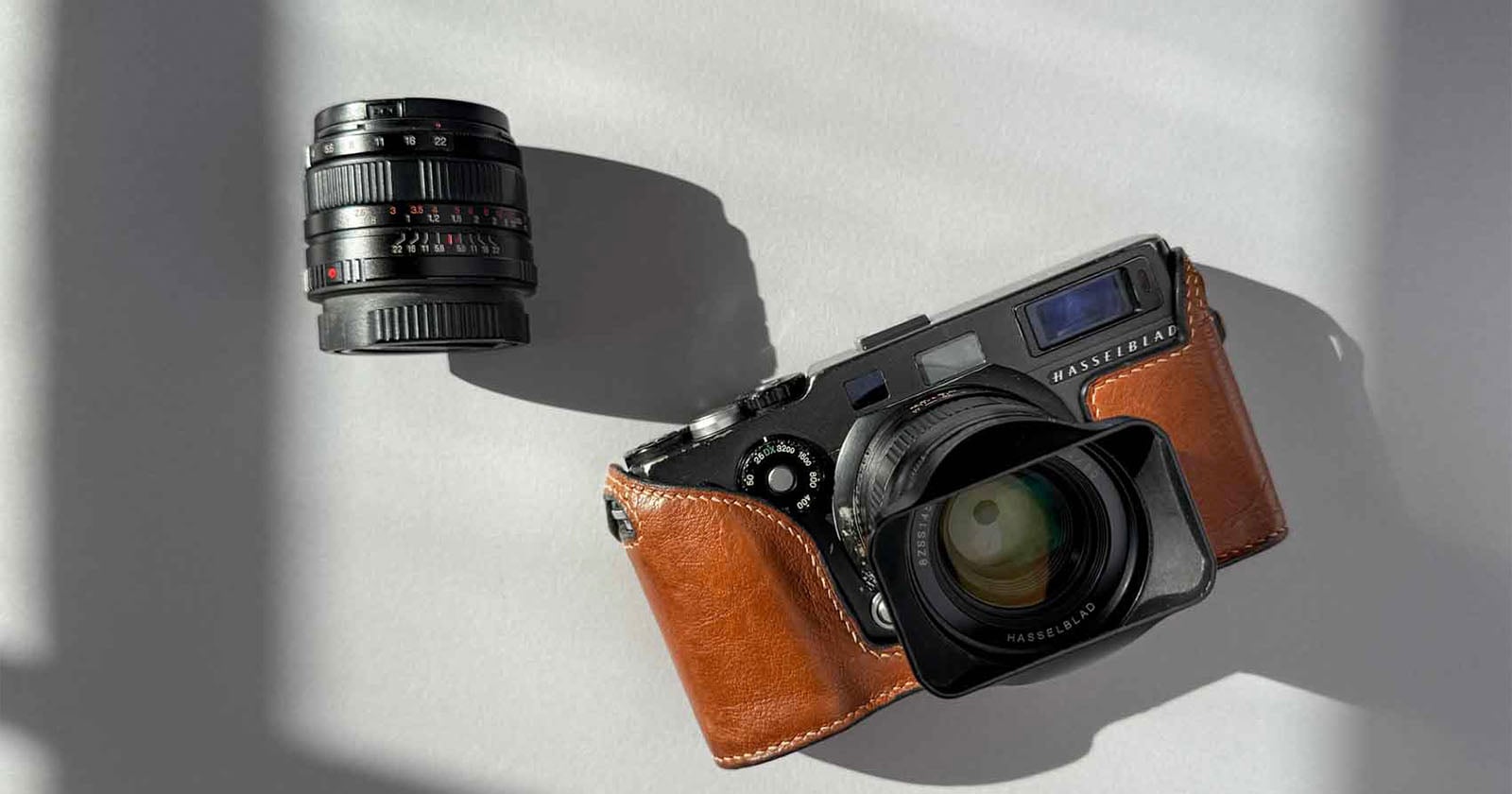
In the world of contemporary photography, where high-speed bursts and instant digital feedback have become the industry standard, a select group of artists is choosing to move in the opposite direction. Photographer Tom Kluyver recently embarked on a challenging editorial experiment: capturing a high-paced, movement-driven narrative using one of the most deliberate, mechanical tools in the history of photography—the Hasselblad XPan.
The resulting series, shot against the brutalist backdrop of London’s Barbican Centre, serves as a masterclass in how technical limitations can catalyze creative growth. By stripping away the safety net of autofocus and digital chimping, Kluyver demonstrates that a story is not defined by the volume of frames captured, but by the intentionality behind every click of the shutter.
The Genesis of a Concept: Movement and Minimalism
The project began with a fundamental question: Could a running sequence, typically the domain of high-speed digital cameras, be effectively told through the panoramic, manual-focus lens of the Hasselblad XPan?
To bring this vision to life, Kluyver collaborated with Maud, a professional sports model. The duo sought to pivot away from generic athletic imagery, aiming instead for an editorial narrative that felt authentic to her professional identity while showcasing her physical strength. The challenge was twofold: they needed to convey the high-octane energy of running while utilizing a camera system that, by its very design, demands stillness, careful composition, and significant time investment.
Editorial photography occupies a precarious space where narrative, mood, and context collide. Unlike commercial product photography, which often relies on isolated, polished portraits, editorial work thrives on sequencing—where the sum of the images creates a cohesive, cinematic experience.
Chronology of a Sunrise Shoot
The Pre-Dawn Preparation
The project was rooted in meticulous planning. Knowing that the XPan offered no room for error, Kluyver spent time scouting the Barbican Centre. He needed to understand how early-morning light interacted with the venue’s dense, geometric concrete architecture. The goal was to find specific pockets of light where he could isolate his subject against the encroaching shadows.
The Morning of the Session
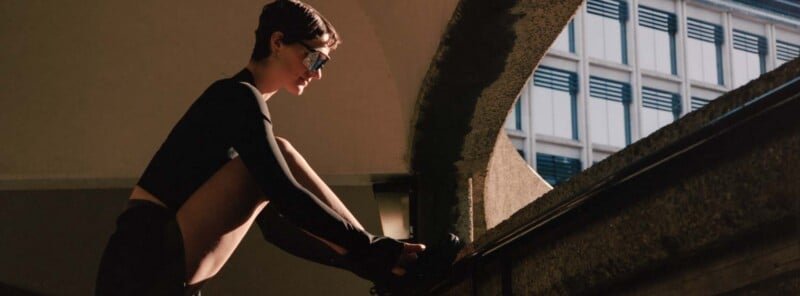
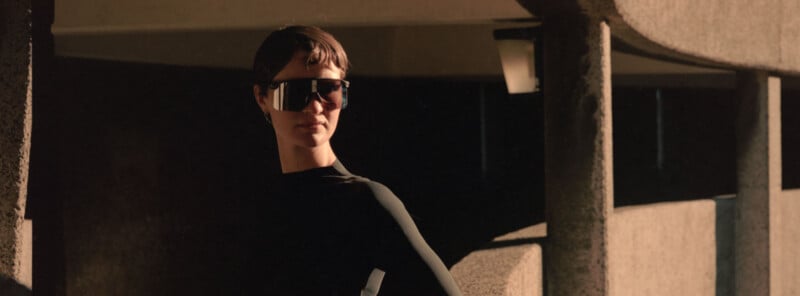
On the day of the shoot, the team arrived at 5:00 AM. The early hours were critical; as the sun climbed higher, the light shifted rapidly between the monolithic buildings. Kluyver’s approach was to place Maud in pools of light while keeping the surrounding architecture in deep shadow, effectively using the contrast to create a stage-like atmosphere.
The process was inherently collaborative. Because the XPan lacks autofocus, every frame required a synchronized effort between photographer and subject. Maud performed repeated, high-intensity movements, ensuring the focus was sharp and the posture was correct. Despite the physical strain of repetitive running, the duo maintained a rhythm that turned the shoot into a meditative, rather than chaotic, experience.
The Selection Process
Kluyver restricted himself to a single roll of Kodak Portra 400, with a faster film stock held in reserve. Every frame was an investment. Out of twenty total exposures, the final series was distilled into three core thematic pillars:
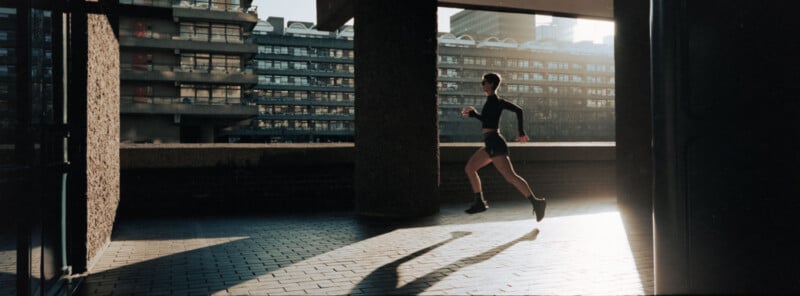
- The Contextual Wide: Capturing the scale of the environment and the subject’s place within it.
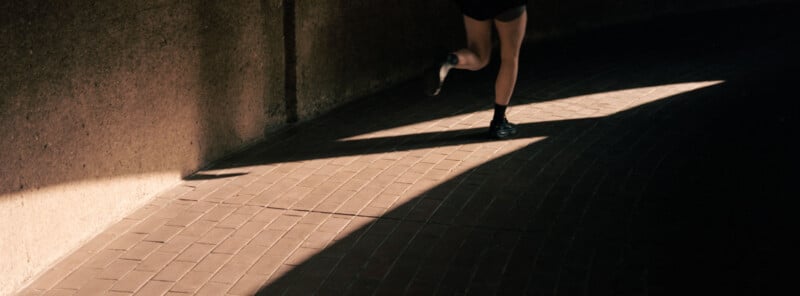
- The Mid-Distance Still: Utilizing the XPan’s panoramic frame to follow the leading lines of the architecture.
- The Intimate Close-up: Focusing on human gesture and detail, using the subject’s interaction with her sunglasses to fill the expansive horizontal frame.
Technical Specifications and Data
The technical constraints of the shoot were central to its success. By limiting the gear, Kluyver forced a heightened state of concentration.
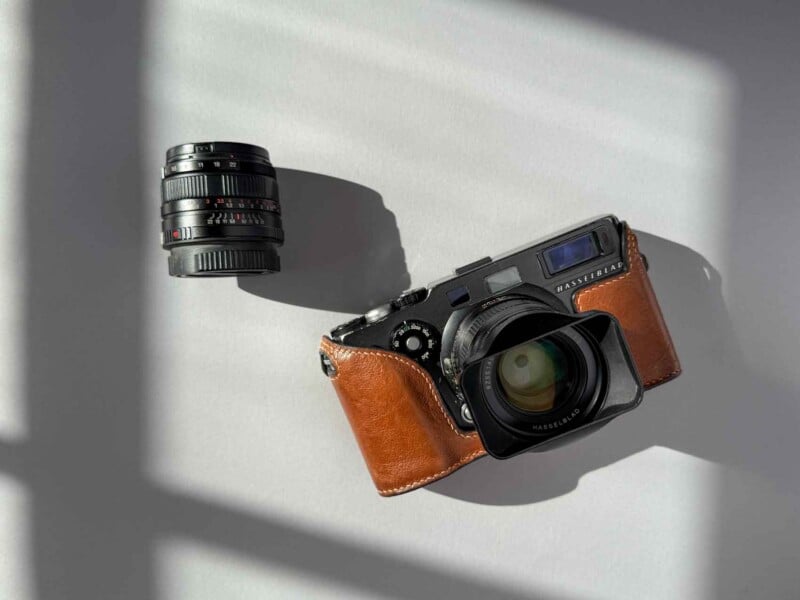
- Camera Body: Hasselblad XPan (35mm panoramic film camera).
- Optics: 45mm f/4 lens (for contextual, spatial storytelling) and 90mm f/4 lens (for isolation and detail).
- Film Stock: Kodak Portra 400.
- Metering Strategy: The XPan uses center-weighted metering. To achieve a cinematic look, Kluyver metered specifically for the highlights (bright sunlight), allowing the shadows to fall into deep, underexposed blacks. This preserved highlight detail while creating a high-contrast, moody aesthetic.
- Constraint Management: With no LCD screen to review shots, the photographer had to rely on experience and intuition. This lack of feedback served to decrease the "nerves" associated with the shoot, as the photographer eventually surrendered to the process rather than agonizing over the results.
The Philosophy of "Less is More"
The implications of this shoot extend beyond the final images; they offer a critique of the modern "more is better" mentality in photography. By committing to a slow-paced tool, Kluyver discovered that the limitations of the XPan actually enhanced his creative output.
"I was not trying to showcase gear," Kluyver noted. "I wanted the result to feel like a quiet chapter from a longer story about one person, one place, and one run at sunrise."
This approach highlights a shift in the industry toward "slow photography." When a photographer is limited to 20 or 30 frames, the act of pressing the shutter becomes a deliberate decision. Every movement, every angle, and every change in light must be justified. The project confirmed that while the XPan is not a "sports camera" by traditional definitions, its panoramic format provides a cinematic quality that is unparalleled for narrative work.
Lessons Learned and Future Implications
Reflecting on the experience, Kluyver identified several areas for personal growth. Most notably, he admitted that his adherence to the initial plan occasionally stifled spontaneity. Specifically, he noted a desire to experiment more with motion blur in future sessions, a technique that could have added a layer of kinetic energy to the already atmospheric images.
Furthermore, the shoot served as a reminder of the importance of location scouting. In complex environments like the Barbican, the movement of light is a variable that can dictate the entire success of a project. A more granular understanding of light patterns, he concluded, would have provided even more latitude for creative experimentation.
The Role of the Portfolio Shoot
The most significant implication of this work is the validation of the "personal project." Portfolio shoots are often viewed as mere business expenses or resume builders, but as demonstrated here, they are essential laboratories for growth. By testing the XPan in an environment it was never intended for, Kluyver pushed the boundaries of his own technical capabilities and narrative scope.
Conclusion
The collaboration between Tom Kluyver and Maud at the Barbican serves as a compelling reminder that the best photography often happens at the intersection of extreme preparation and total acceptance of limitations.
While digital technology continues to advance, providing photographers with near-infinite frames and perfect autofocus, the enduring appeal of the Hasselblad XPan lies in its insistence on a slower, more considered way of seeing. For Kluyver, the shoot was not about perfecting a single, fast-action moment, but about building a small, poignant narrative from several images that share a singular vision.
In an era of disposable images, this project stands as a testament to the power of the deliberate frame. It encourages photographers—regardless of their preferred format—to slow down, to trust their collaborators, and to treat every frame as an opportunity to tell a story that is, in the end, much larger than the sum of its parts.