Mother Sues Universal Orlando Resort After On-Ride Photo Captures Unconscious 9-Year-Old Son on Stardust Racers Rollercoaster

ORLANDO, Fla. — A mother in Florida has filed a formal lawsuit against Universal Orlando Resort, alleging that her nine-year-old son was severely injured after losing consciousness on one of the theme park’s premier high-speed attractions. The litigation places renewed national scrutiny on the safety protocols, G-force tolerances, and structural design of the Stardust Racers rollercoaster, located within Universal’s newest gate, Epic Universe.
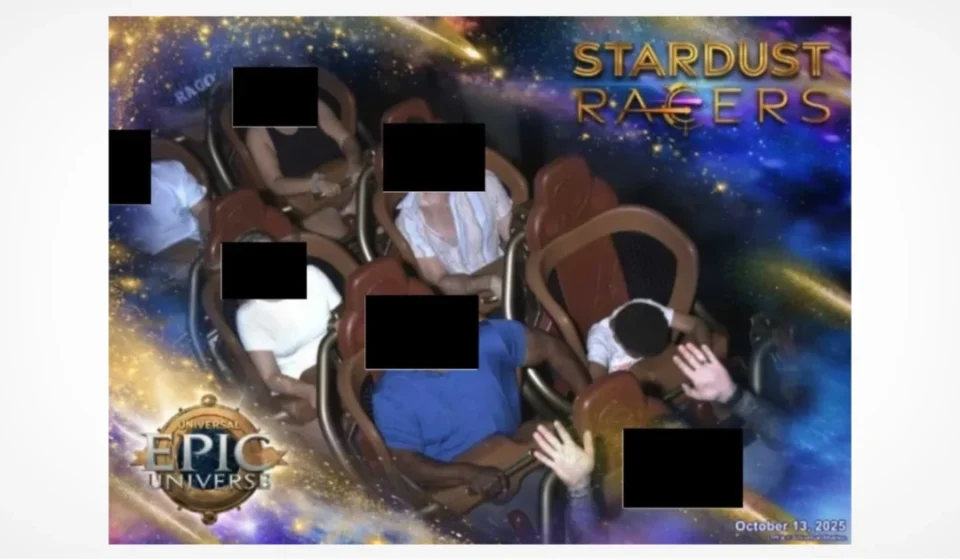
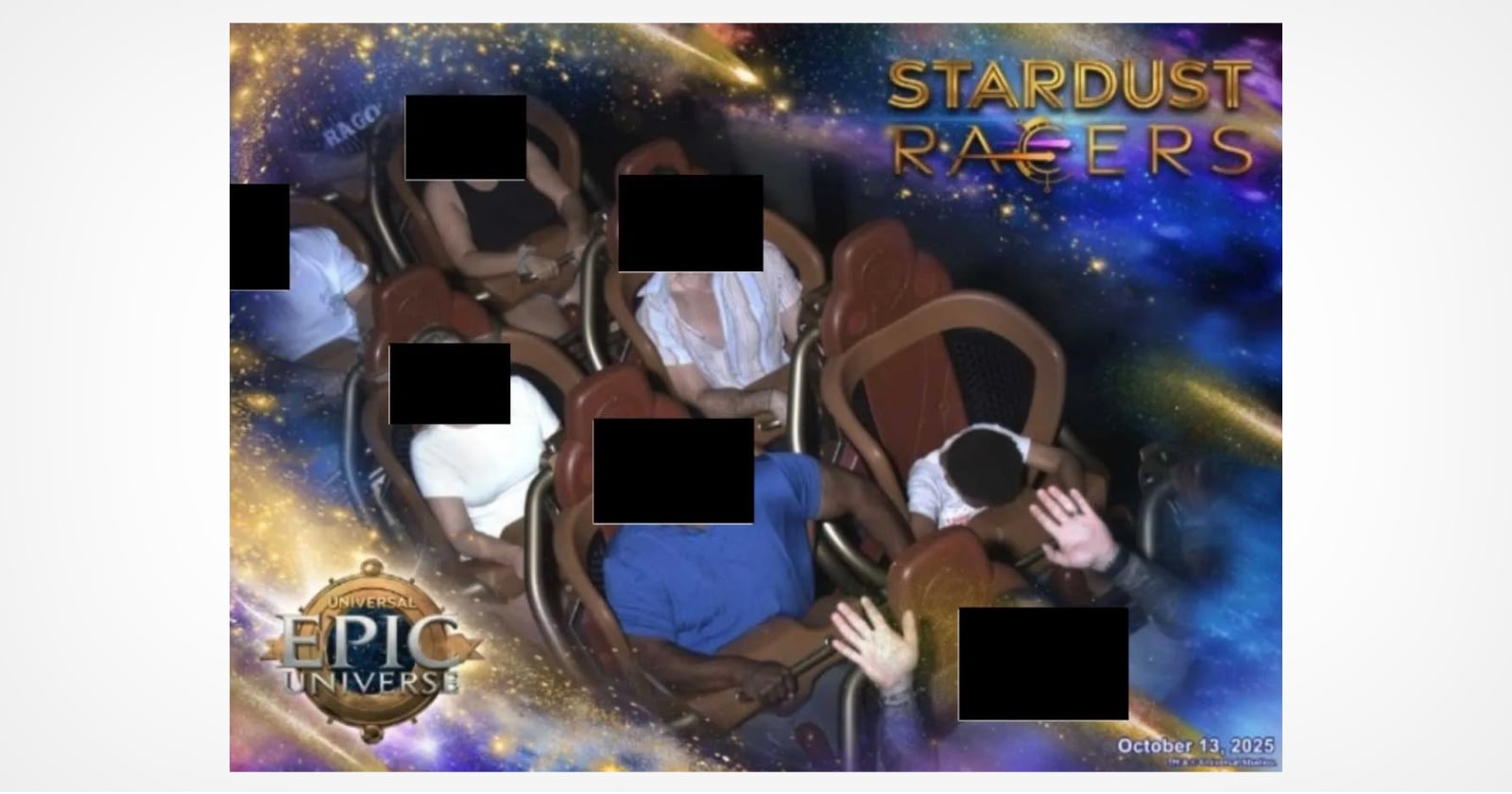
According to court filings submitted in Orlando, the lawsuit centers on a harrowing sequence of events captured not only by eyewitness accounts and medical evaluations, but allegedly by the ride’s automated onboard camera system. The resulting photograph, now entered into evidence, depicts the young boy slumped over and entirely unresponsive mid-ride—a chilling visual that has become central to the legal battle between an aggrieved family and a multi-billion-dollar entertainment conglomerate.
Main Facts of the Case
The lawsuit, officially designated as Lundy v. Universal City Development Partners, Ltd. et al., was filed in Orange County, Florida. The plaintiff, Jennifer Lundy, is seeking damages in excess of $50,000 to cover mounting medical care and treatment expenses on behalf of her son, identified in court documents by his initials, L.L.
The incident occurred on October 13, 2025, aboard the Stardust Racers rollercoaster. The dual-launch racing coaster is one of the marquee thrill attractions at Universal Epic Universe, engineered to simulate the high-speed chases of comets across the cosmos. According to Universal’s operational specifications, the ride reaches blistering top speeds of up to 62 miles per hour and sends passengers hurtling through heights of up to 133 feet, featuring intense drops, sweeping turns, and rapid accelerations that generate significant gravitational and lateral forces.
Lundy maintains that her son met all standard safety requirements for the attraction, including the mandatory 48-inch height restriction. However, the complaint alleges that the sheer intensity of the physics generated by the ride caused L.L. to lose consciousness instantly.
Once unconscious, the boy’s body reportedly went entirely limp. Without adequate head, neck, or upper-body lateral restraints to secure him within the vehicle, his head and face were violently thrown against the hard structural surfaces of the ride car.
The lawsuit explicitly claims that Stardust Racers caused L.L. to sustain severe blunt impact injuries to his head and face, alongside complex orthopedic and spinal trauma. Following the conclusion of the ride, the child required immediate medical intervention and emergency assistance, leaving him with what his legal representation describes as severe and permanent physical injuries.
Chronology of Events
To understand the trajectory of the litigation, it is necessary to examine the timeline of events stretching from the initial incident to the ongoing legal maneuvering:
- October 13, 2025: Jennifer Lundy and her nine-year-old son, L.L., visit Universal Epic Universe. While riding the Stardust Racers rollercoaster, L.L. allegedly blacks out due to extreme ride forces, suffering head, spinal, and facial trauma as his body strikes the interior of the ride vehicle. Medical assistance is rendered immediately after the ride stops.
- September 2025 (Contextual Precedent): Prior to Lundy’s formal filing, the ride experiences a fatal tragedy when 32-year-old Kevin Rodriguez Zavala loses consciousness on Stardust Racers and subsequently dies from multiple blunt impact injuries. That case is later resolved through an undisclosed settlement following an independent family-led investigation.
- August 17, 2026: Jennifer Lundy officially files her negligence and premises liability lawsuit against Universal City Development Partners, Ltd., and associated corporate entities in Florida court.
- September 18, 2026: Universal Orlando Resort’s legal counsel files an official response to the lawsuit. The theme park vehemently denies liability, instead shifting blame onto the young boy’s parents for alleged negligence and asserting that the family voluntarily assumed the inherent risks of a high-velocity thrill ride.
- Present Day: The legal battle continues to wind its way through the Florida judicial system, drawing sharp focus from consumer safety advocates, theme park enthusiasts, and legal experts alike.
Supporting Data and Evidence: The Onboard Photo
In modern theme parks, automated onboard photography is designed to capture moments of joy, terror, and exhilaration—hands thrown in the air, wind-swept hair, and wide-eyed screams. In this instance, however, the technology has transformed into a critical piece of forensic evidence.
The Stardust Racers onboard camera system snaps digital photographs of passengers at peak moments during the attraction’s high-speed maneuvers. According to the complaint filed by Lundy, the camera captured a tragic snapshot of reality: nine-year-old L.L. slumped completely sideways, eyes closed, and entirely unresponsive while the vehicle barreled down the track.
Legal analysts note that visual evidence of this nature is exceptionally rare and powerful in personal injury cases. While theme park defense attorneys routinely argue subjective witness testimony, an objective digital timestamp capturing a passenger incapacitated mid-ride provides tangible backing to the plaintiff’s claims regarding the exact moment unconsciousness occurred.
Furthermore, the lawsuit highlights the mechanical design of the ride vehicles themselves. Unlike hyper-coasters that feature over-the-shoulder restraints (OTSRs) designed to completely lock the head and upper torso into place—thereby mitigating the effects of "head-banging" and whiplash—many modern racing and launching coasters utilize lap-bar configurations that leave the upper body relatively unconstrained. Lundy’s legal team argues that this lack of upper-body and lateral head support represents a dangerous design flaw, particularly when combined with the extreme lateral and vertical G-forces generated by Stardust Racers.
Official Responses and Legal Posture
The legal chess match between Jennifer Lundy and Universal Orlando Resort reveals a stark divergence in accountability and interpretation of theme park safety contracts.
The Plaintiff’s Position
Lundy’s legal representation argues that Universal failed in its duty of care to protect patrons from foreseeable physical harm. The lawsuit frames the incident not as a freak, unpreventable medical anomaly, but as a direct result of excessive, unregulated physical forces combined with inadequate safety restraints.
Crucially, the lawsuit attempts to establish a broader systemic issue rather than treating L.L.’s trauma as an isolated event. To substantiate this claim, the filing references the tragic death of 32-year-old Kevin Rodriguez Zavala, who passed away in September 2025 after losing consciousness on the very same ride, ultimately succumbing to multiple blunt impact injuries. By linking her son’s case to Zavala’s fatal incident, Lundy’s legal team aims to prove that Universal was—or should have been—fully aware of the dangerous G-force thresholds and structural hazards inherent to Stardust Racers prior to her son’s injury.
Universal Orlando Resort’s Defense
Universal’s legal team has mounted a vigorous defense, shifting the burden of responsibility away from the resort and onto the family. In their official court response filed on September 18, Universal’s attorneys argued that Jennifer and any other supervising adults were "negligent in failing to use reasonable care for L.L.’s safety."
Furthermore, Universal invoked the doctrine of assumption of risk. The resort’s legal filing asserts that when Lundy permitted her nine-year-old son to board Stardust Racers, she "knowingly and voluntarily assumed the risks associated with… riding a thrill ride, including the potential for significant acceleration, deceleration, lateral forces, and head and body movement."
Under Florida premises liability law, theme parks routinely rely on posted warning signs at ride queues, safety disclaimers on tickets, and inherent risk doctrines to shield themselves from liability. These disclaimers typically warn guests with pre-existing medical conditions or those sensitive to rapid motion against riding. However, attorneys for injured plaintiffs argue that disclaimers do not grant amusement parks immunity against gross negligence, structural design failures, or a failure to provide adequate passenger restraints.
Broader Implications for the Theme Park Industry
The lawsuit filed by Jennifer Lundy arrives at a critical juncture for the global amusement park industry. As parks like Universal Epic Universe, Walt Disney World, and SeaWorld push the boundaries of engineering—crafting taller, faster, and more intense rollercoasters utilizing magnetic launches and complex inversions—the physiological toll on the human body is facing unprecedented scrutiny.
The Physics of High-G Thrill Rides
Rollercoasters like Stardust Racers subject the human body to rapid transitions between positive G-forces (which push riders down into their seats, draining blood from the brain and potentially causing greyout or blackouts) and negative G-forces (which lift riders out of their seats). When combined with rapid lateral banking and twists, these forces can induce what aerospace and medical researchers refer to as G-force-induced loss of consciousness (G-LOC).
While G-LOC is a well-documented phenomenon among military fighter pilots and has long been studied in aviation, its occurrence among children and everyday theme park visitors has historically been treated by the industry as rare. However, as modern coasters pack more kinetic energy into tighter footprints, incidents involving sudden syncope (fainting) or neurological stress are prompting renewed calls for medical safety reviews.
Precedent and Future Regulation
The outcome of Lundy v. Universal City Development Partners, Ltd. et al. could send shockwaves through Central Florida’s multi-billion-dollar tourism corridor and beyond.
- Insurance and Operational Costs: If courts validate the argument that ride designers must account for potential passenger unresponsiveness by incorporating more robust upper-body restraints, theme parks worldwide could face massive retrofitting expenses.
- Disclaimer Enforcement: A ruling in favor of Universal would reinforce the strength of traditional "assumption of risk" waivers, cementing the idea that ticket purchases constitute a broad release of liability. Conversely, a victory for the Lundy family could force a fundamental re-evaluation of how ride safety warnings and physical protections are regulated.
- Public Perception and Safety Transparency: With two high-profile incidents—Zavala’s fatal accident and L.L.’s severe injuries—tied to Stardust Racers within a relatively short operational window, public relations pressure on Universal Orlando remains high. Theme park operators are acutely aware that consumer trust is foundational to their business model, and continuous safety inquiries can impact ticket sales and park attendance.
As the lawsuit proceeds through the Florida court system, legal scholars, medical professionals, and theme park enthusiasts will be watching closely. For Jennifer Lundy and her son L.L., the litigation represents a quest not only for financial compensation to handle extensive medical bills, but for accountability in an industry where the pursuit of extreme thrills meets the fragility of the human body.