Echoes of 1181: Gemini North Telescope Reveals Breathtaking New Details of Historic Supernova Remnant Pa 30

Main Facts
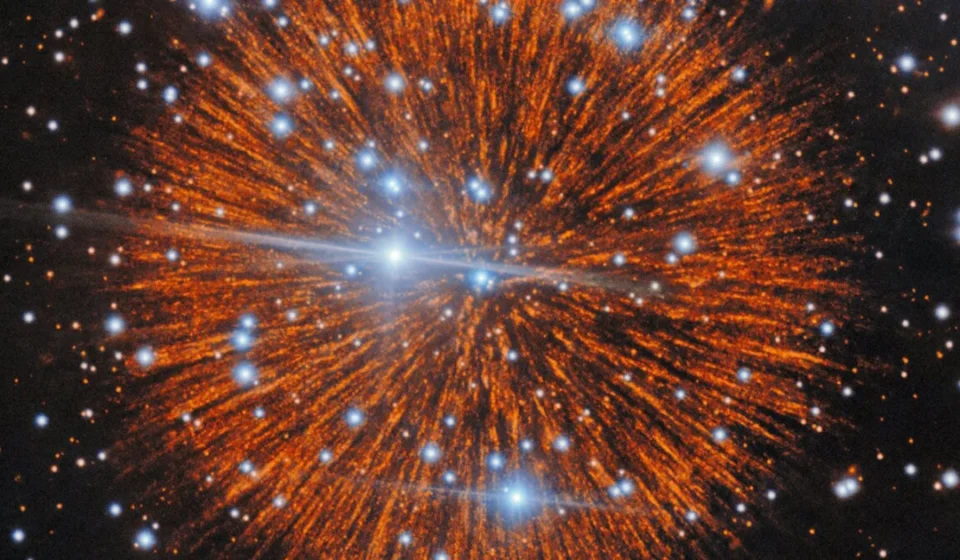
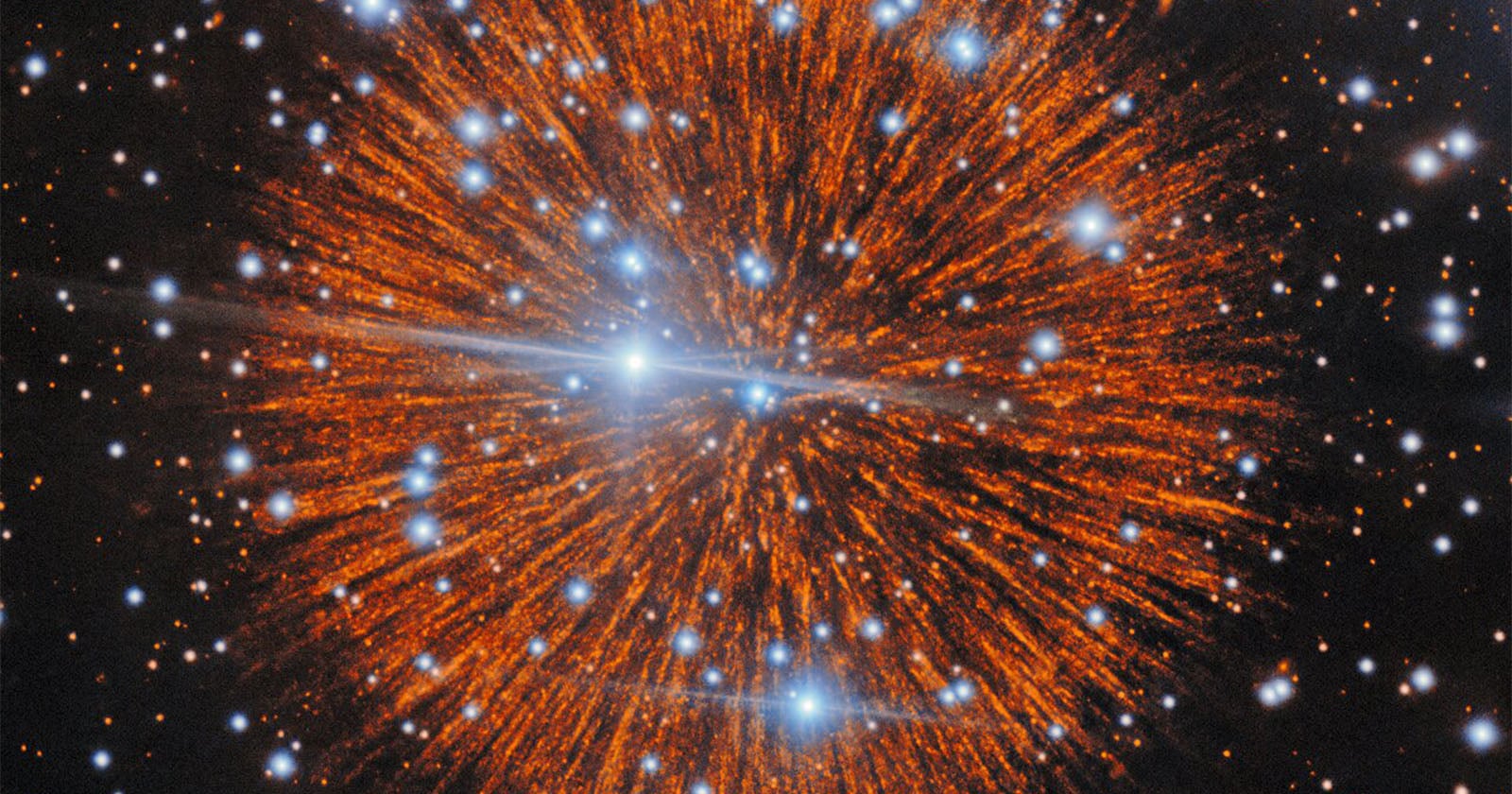
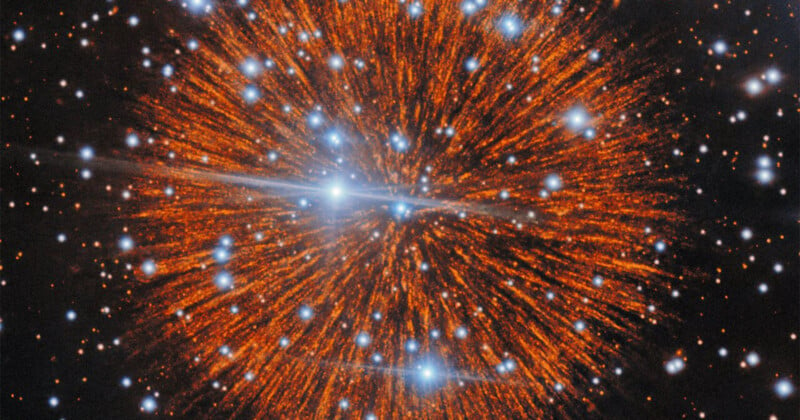
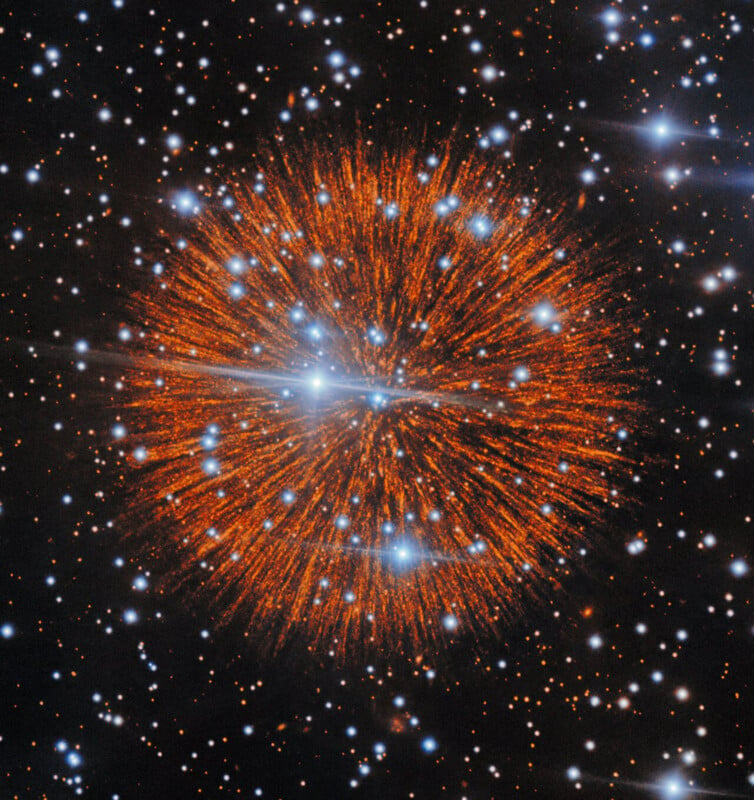
Astronomers using the Gemini North telescope in Hawaiʻi have captured a mesmerizing, high-resolution image of Pa 30, a celestial object widely believed to be the stellar ghost of SN 1181—a historic supernova witnessed by medieval skywatchers nearly a millennium ago.
The newly released photograph, obtained using the Gemini Multi-Object Spectrograph (GMOS), showcases Pa 30’s intricate, firework-like structure with unprecedented clarity. Boasting roughly ten times the resolution of previous imagery, the data reveals delicate, glowing filaments and a "knotty" morphology that is providing scientists with vital new clues regarding the chemical composition, expansion dynamics, and ancient aftermath of one of the Milky Way’s most unusual stellar explosions.
Published in The Astrophysical Journal on October 6, 2026, the breakthrough research was led by a team of astrophysicists including Tim Cunningham, Ilaria Caiazzo, John C. Raymond, and Scott J. Kenyon. According to the National Science Foundation’s (NSF) NOIRLab, Pa 30 stands as the sole known remnant of a rare Type Iax supernova in our galaxy—an incomplete, low-energy explosion that leaves a surviving, scorching-hot zombie star at its absolute center.
Chronology: From Medieval Stargazers to Citizen Science
The saga of Pa 30 bridges the gap between ancient human history and modern space exploration, spanning a timeline of more than 840 years:
- August 4–6, 1181 (The Observation): Human chroniclers across multiple cultures—specifically in China, Japan, and the Arab world—record the sudden appearance of a "guest star" burning brightly in the constellation Cassiopeia. Historical texts document that the stellar visitor remained visible to the unaided eye for an astonishing 185 days. Long before the invention of the telescope, these medieval astronomers meticulously documented an event that would puzzle generations to come.
- 2013 (The Discovery): Despite the meticulous historical records, the physical remains of SN 1181 remained hidden for centuries. It was not until 2013 that amateur American astronomer Dana Patchick discovered the nebula while participating in a citizen science program. Sifting through archival data from NASA’s Wide-field Infrared Survey Explorer (WISE), Patchick identified the planetary nebula—cataloged as Pa 30 (the 30th discovery by Patchick).
- Post-2013 (Initial Follow-ups): Following its discovery, professional astronomers quickly trained ground-based facilities, including the NSF Kitt Peak National Observatory, onto Pa 30. Initial measurements of its expansion velocity and estimated age strongly correlated with the historical timeline of SN 1181, elevating the nebula to the leading candidate for the medieval supernova’s remnant.
- October 2026 (The Gemini Breakthrough): Utilizing the advanced capabilities of the Gemini North telescope, researchers capture a vastly improved portrait of Pa 30. Published alongside a comprehensive study in The Astrophysical Journal, this new data illuminates the fine details of the remnant’s filamentary expansion and confirms its unique Type Iax classification.
Supporting Data and Astrophysical Characteristics
Pa 30 defies nearly all the standard rules governing supernova remnants, making it a goldmine for stellar physicists:
- Resolution and Structure: The Gemini GMOS instrument delivered a leap in visual fidelity, improving the resolution of Pa 30’s filamentary network by an order of magnitude. The imagery exposes distinct "knots" embedded within the expanding ejecta. NSF researchers note that these irregularities suggest thermal or density variations in the surrounding interstellar medium (the circumstellar medium) that actively shaped the debris as it rushed outward from the core.
- The Central Star: At the heart of Pa 30 lies an extraordinarily extreme star. It boasts a surface temperature reaching a scorching 200,000° Celsius (360,000° Fahrenheit). Furthermore, this remnant star propels ferocious stellar winds outward at speeds approaching 16,000 kilometers (10,000 miles) per second.
- Perfect Centering: In almost every known supernova remnant, the surviving compact object or neutron star is displaced from the geometric center of the expanding gas due to asymmetrical explosion forces or "kicks." Pa 30 breaks this rule entirely; its central star is positioned almost perfectly at the center of the spherical nebula.
- Type Iax Classification: The combination of a surviving, hyper-hot central star, rapid stellar winds, and symmetric geometry confirms that SN 1181 was a Type Iax supernova. Unlike standard Type Ia supernovae—which are catastrophic thermonuclear explosions that utterly obliterate the progenitor white dwarf star—Type Iax events are "failed" or lower-energy explosions. They eject only a fraction of the star’s mass, leaving behind a battered but surviving zombie star. To date, Pa 30 is the only confirmed remnant of this class residing within the Milky Way.
Official Responses and Perspectives
The synergy between historical documentation and bleeding-edge astronomical hardware has drawn high praise from the scientific community.
The National Science Foundation emphasized the profound nature of the collaboration, noting how ancient human curiosity directly informs contemporary astrophysics. "Thanks to observations people made in 1181, long before the advent of even rudimentary telescopes, scientists today are learning more about the Universe, its history, and how it changes," the NSF stated in an overview of the findings. "It’s scientific cooperation across nearly a millennium."
Lead author Tim Cunningham and his colleagues (including co-authors Ilaria Caiazzo, John C. Raymond, and Scott J. Kenyon from institutions such as the Center for Astrophysics | Harvard & Smithsonian) highlighted that mapping the density knots within the nebula is critical to understanding how asymmetrical forces interact with uniform expansions over hundreds of years. The research team’s paper, titled "Detection of Knots in the Type Iax Supernova Remnant Pa 30," lays the groundwork for future spectroscopic studies using next-generation observatories.
Implications for Modern Astronomy
The implications of the Pa 30 observations extend far beyond a single pretty picture of a glowing nebula. By studying the only known Milky Way remnant of a Type Iax supernova, astronomers gain a rare window into a poorly understood death mechanism of white dwarf stars.
Type Iax supernovae are suspected to be significant contributors to the chemical enrichment of the galaxy, yet observing them in distant galaxies often lacks the spatial resolution required to map their inner mechanics. Having a local, nearby laboratory like Pa 30—located within our own galactic backyard and tied to a precise chronological timestamp from the year 1181—allows scientists to test theoretical models of thermonuclear combustion, flame propagation, and circumstellar interaction with unmatched precision.
Ultimately, the story of Pa 30 and SN 1181 stands as a testament to the enduring value of observation. It demonstrates a seamless continuum of human inquiry: medieval scribes looking up in awe at an unfamiliar light in Cassiopeia, a 21st-century citizen scientist sorting through infrared space data, and modern astronomers wielding giant telescopes atop Maunakea to decode the violent, beautiful history of our cosmos.