
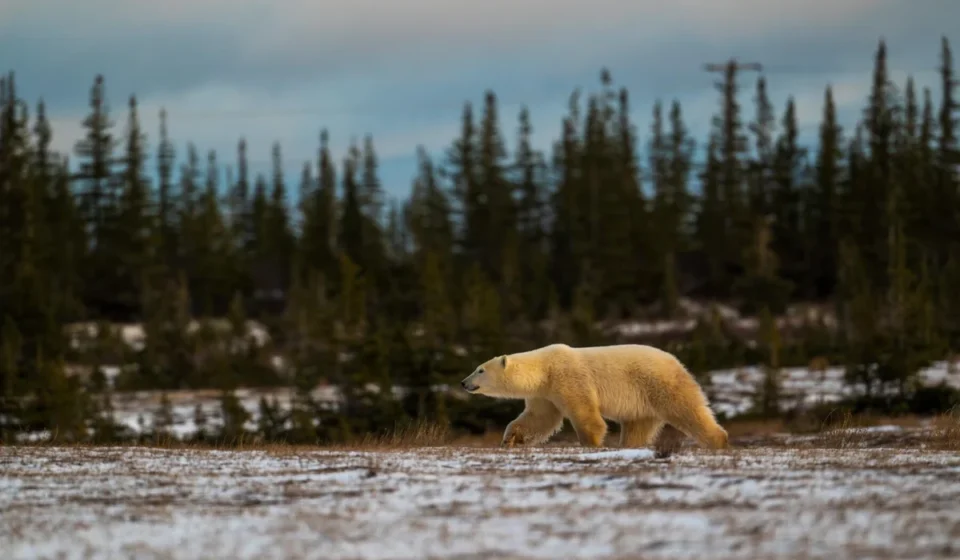

In the sub-Arctic reaches of Northern Manitoba, where the horizon dissolves into a seamless expanse of tundra and ice, the small town of Churchill finds itself at the center of a delicate, high-stakes coexistence. Known globally as the "Polar Bear Capital of the World," Churchill is not merely a tourist destination; it is a geographic bottleneck. Each autumn, as the waters of the Hudson Bay begin their seasonal transformation into pack ice, hundreds of polar bears migrate toward the shoreline, waiting for the frozen platform they require to hunt their primary prey: the ringed seal.
While the town prides itself on this majestic biological phenomenon, the reality of living alongside the world’s largest land predator is fraught with tension. To manage this uneasy standoff, Churchill operates a facility unlike any other on the planet: the Polar Bear Holding Facility, colloquially known as the "Polar Bear Jail."
The Geography of a Standoff: Why Churchill?
The town of Churchill sits on the western edge of the Hudson Bay, a region that serves as a critical summering and fall staging ground for the Western Hudson Bay polar bear subpopulation. As global temperatures fluctuate, the ice-free season in the bay has lengthened, forcing bears to spend more time on land.
During these months, the bears exist in a state of "walking hibernation." They are fasting, conserving energy, and waiting for the bay to freeze. However, the presence of human infrastructure—garbage, food storage, and curious tourists—acts as a siren song for bears driven by metabolic desperation. When a bear ventures too close to the human perimeter, it poses a lethal risk to itself and the town’s inhabitants.
Chronology of a Conflict: From Migration to Incarceration
The cycle of the "jail" follows the seasonal rhythm of the Arctic.
The Arrival (Late October – November)
As the temperatures plummet, the bears congregate near the Churchill Wildlife Management Area. This is the period of highest risk. As the bears traverse the coastline, the town enters a heightened state of alert. Local protocols are well-rehearsed: residents are encouraged to keep their car doors unlocked to serve as emergency sanctuaries for pedestrians caught in the path of a wandering bear.
The Breach
When a bear enters the "human zone"—typically defined by the town limits—the local Bear Alert Program is activated. Conservation officers monitor the perimeter, often using non-lethal deterrents like cracker shells, rubber bullets, or sirens to haze the animal back toward the wild.
The Detention
If a bear proves "sub-adult" or particularly stubborn, or if it has become habituated to human food sources, it is captured. This is usually done via a tranquilizer dart or a large, baited culvert trap. Once captured, the bear is processed and transported to the Holding Facility.
The Release (Late December – January)
The incarceration is temporary. Once the Hudson Bay is sufficiently frozen, allowing the bears to safely traverse the ice to their hunting grounds, the detainees are released. Often, they are airlifted by helicopter to remote areas further north to ensure they do not immediately return to the town’s periphery.
The Facility: Inside the "Polar Bear Jail"
Located in a converted former military hangar, the Polar Bear Holding Facility is a stark, utilitarian structure. It is not a zoo, nor is it a sanctuary; it is a sterile, temporary detention center designed to minimize human interaction and prevent the animal from becoming a "problem bear."

The facility features roughly 28 individual cells. The conditions are intentionally austere. To ensure the bears do not associate human presence with food, they are rarely fed while in custody. They are provided with water, but the goal is to keep them lethargic and disinterested in their captors. By maintaining a negative environment, the facility aims to discourage the bears from returning to the town once they are released.
Supporting Data: The Impact of a Changing Climate
The necessity of the jail is inextricably linked to climate data. According to the International Union for Conservation of Nature (IUCN), the Western Hudson Bay subpopulation has faced significant challenges due to the shortening of the ice season.
- Ice-Free Duration: The ice-free period in the Hudson Bay has increased by approximately three weeks since the 1980s.
- Body Condition: Studies conducted by researchers in the region show a correlation between longer land-stays and lower body mass in females, which directly impacts reproductive success.
- Human-Bear Encounters: Data from Manitoba’s Department of Natural Resources and Northern Development indicates that, on average, the jail processes between 10 and 30 bears per season, depending on the severity of the freeze-up.
Official Responses and Conservation Strategy
The Government of Manitoba manages the facility in partnership with local community organizations. The official stance is one of "coexistence through management."
"The goal isn’t just to keep the people safe," says a spokesperson for the regional conservation department. "It is to keep the bears alive. If a bear becomes a nuisance and loses its fear of humans, it eventually becomes a threat that must be euthanized. The jail provides an alternative to lethal management. It is a time-out that saves lives on both sides of the fence."
Conservationists argue that the facility is a symptomatic solution to a systemic problem. While it effectively prevents immediate casualties, it does not address the underlying issue of habitat loss. The "jail" is a stopgap, a way to mitigate the friction between a species losing its natural hunting grounds and a community striving to preserve its way of life.
The Ethical Implications: A Necessary Evil?
The existence of the facility raises profound ethical questions. Critics often point to the stress that confinement causes for a wild animal. However, the prevailing sentiment in Churchill is that the alternative—shooting "problem" bears—is far worse.
The program also highlights the unique role of the "Polar Bear Patrol." These individuals are the first line of defense, patrolling the streets at night, monitoring cameras, and coordinating with the RCMP to ensure that the intersection of human and ursine life remains a tragedy-free zone.
The Future of Churchill’s Arctic Guardianship
As the Arctic continues to warm, the reliance on the Polar Bear Holding Facility is expected to persist, if not increase. The facility has become a point of pride for the town, serving as a testament to the idea that humans and apex predators can share a landscape if there is enough political will and scientific foresight.
Visitors to Churchill today often come to see the bears in the wild, but they leave with a deeper appreciation for the complex, institutionalized effort required to keep that wildness safe. The "jail" remains a stark reminder that in the high-stakes world of the Arctic, survival is a collaborative, and occasionally restrictive, endeavor.
In the final analysis, Churchill’s experiment in coexistence offers a blueprint for other regions struggling with wildlife conflict. By prioritizing non-lethal intervention and investing in infrastructure that separates species rather than merely destroying them, the town has carved out a precarious, yet successful, existence at the edge of the world. As long as the ice continues to form—however late it may be—the doors of the jail will remain open, waiting to provide a sanctuary for the ghosts of the tundra.