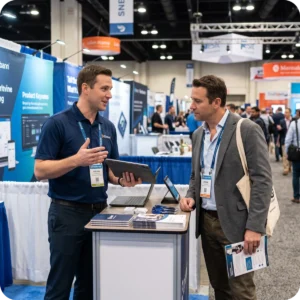

The Shift to Regional: Why Smaller Events Are Becoming the Industry’s Secret Weapon

In the current economic climate, the "bigger is better" philosophy that has long dominated the meetings and events industry is undergoing a radical transformation. As inflation persists, travel costs remain volatile, and corporate budgets tighten, organizers are finding that the traditional mega-conference—the sprawling, multi-day national convention—is facing an existential reckoning.
According to the latest State of Associations report from ASAE, the industry is seeing a persistent decline in attendance, particularly among international participants. For many organizations, the solution isn’t just to cut costs; it is to pivot toward a regionalized strategy. Far from being a retreat, this shift is increasingly viewed by experts as a strategic evolution that offers deeper engagement, stronger ROI for sponsors, and a more intimate, meaningful experience for attendees.
The Economic Drivers of Change
The math behind the move to regional events is stark. With airfare prices surging over 20% in recent months and the costs of car rentals, lodging, and dining following similar upward trajectories, the financial barrier to entry for a national event has never been higher.
When associations analyze their balance sheets, the impact is undeniable. The ASAE report highlights that nearly 41% of associations surveyed experienced a dip in attendance in 2026. For those organizations reporting financial decline, nearly 69% pointed directly to meetings revenue as a primary contributor.
"What we’re seeing is cost-driven shifts," explains Amy Hissrich, ASAE’s vice president of international affairs. "Associations are evaluating a broad mix of strategies to best serve their communities in a changing environment. The business case is now inextricably aligned with a need to serve members where they are, rather than asking them to bear the high cost of cross-country travel."
Chronology of an Industry Pivot
The transition toward regionalization did not happen overnight. It is the result of several distinct phases of market pressure:
- 2020–2022 (The Forced Pivot): The pandemic necessitated a total departure from in-person gatherings, pushing the industry into a forced experiment with virtual and remote engagement.
- 2023–2024 (The Hybrid Struggle): As in-person events returned, many organizations attempted a "national-first" hybrid model, which often failed to capture the energy of physical attendance or the convenience of virtual access.
- 2025–2026 (The Strategic Realignment): Facing "event fatigue" and rising travel expenses, associations began analyzing data that suggested members were less willing to commit to long-haul travel but remained hungry for professional networking. This led to the rise of the regional roadshow and the hub-and-spoke model.
Supporting Data: Why Regional Works
The argument for regionalization is supported by more than just anecdotal evidence. Strategic event designer Adrian Segar notes that the inefficiencies inherent in massive conferences are often the very things that drive attendees away.
In a massive convention center, a keynote address can create a passive, broadcast-style experience that offers little room for genuine dialogue. Segar points out that in a room of 5,000, a person might be sitting three seats away from their ideal mentor or business partner, yet they have no way to facilitate a meaningful connection.
By shrinking the scale to a regional level—perhaps hosting 100 to 200 attendees—the dynamic shifts. These smaller, targeted gatherings allow for:
- Localized Content: Programming can focus on regional regulatory issues, specific geographic market trends, or local workforce challenges that a national keynote would ignore.
- Reduced Friction: Lower travel costs and shorter time commitments increase the likelihood of participation from mid-level professionals who might not have the budget approval for a national trip.
- Enhanced Networking: In an intimate setting, organic conversation is easier to facilitate. Attendees are more likely to engage with one another when the environment feels like a community rather than a crowd.
Official Responses and Strategic Shifts
Not all organizations are abandoning the national stage entirely, but they are diversifying their approach. The Vision Expo, for example, made headlines by consolidating its two annual events into a single, high-impact show. This was a direct response to member feedback suggesting that "too many big events" were causing burnout and diluting the value of each gathering.
However, Hissrich notes that for most, the path forward is a hybrid of strategies. "Each format has distinct strengths," she says. "The lesson is that associations are no longer relying on a one-size-fits-all model. They are utilizing regional events to maintain touchpoints, while potentially reserving the national stage for flagship moments or annual industry milestones."

The Technological Catalyst: Wireless Mobility
As organizations shift to regional and roadshow formats, the logistics of execution have become a primary challenge. Setting up complex registration desks and badge-printing stations in five different cities requires a level of agility that older, tethered technology cannot provide.
This is where innovations like EventMobi’s BadgeON™ Check-in & Badge Printing Solution are becoming essential. By removing the need for power cables and heavy, immobile hardware, the technology allows planners to turn almost any space—a hotel lobby, a coworking space, or a regional office—into a professional check-in hub.
For the modern, agile association, the ability to deploy, set up, and tear down in hours rather than days is not just a convenience; it is a prerequisite for a successful regional strategy.
Implications: Don’t Just "Shrink" the National Event
Perhaps the most significant warning from industry experts is this: Do not simply take a national conference and scale it down. A common mistake is to try to replicate the exact structure of a 5,000-person event for 200 people. This often leads to a lackluster atmosphere and a failure to capitalize on the intimacy that smaller groups provide.
"If you are going to go regional, you have to change the playbook," says Segar. "You don’t need the same keynote structure. You don’t need the same expo hall layout."
Instead, Segar advocates for participant-led sessions where the agenda is shaped by the attendees themselves. This "unconference" style of planning ensures that the content is hyper-relevant to the people in the room. He also suggests using techniques like the "human spectrogram," where participants are asked to stand in different parts of the room based on their professional interests or geographical location. This visual, interactive method forces attendees to recognize who is in the room with them, turning strangers into professional peers within minutes.
The Future of Engagement: The Hub-and-Spoke Model
For organizations that still want the gravitas of a national event but the accessibility of a regional one, the "hub-and-spoke" model is emerging as the gold standard. In this format, a central event is live-streamed to multiple regional hubs.
The key difference, however, is that these hubs are not just passive viewing parties. They are active, facilitated sessions where attendees discuss the content as it happens. This allows for local "pods" to debate, analyze, and build upon the national content, creating an experience that is actually more immersive than sitting in the back row of a massive ballroom.
Conclusion: A New Era for Professional Meetings
The economic pressures of 2026 are forcing a long-overdue rethink of how professionals gather. While the "big event" will always have a place in the association calendar, it is no longer the only way to deliver value.
By embracing regionalization, organizations are finding they can be more agile, more cost-effective, and—most importantly—more connected to their members. The move to smaller, more intimate gatherings is not a sign of a shrinking industry; it is a sign of an industry that is learning to prioritize quality of connection over quantity of attendance.
For the event planners and association leaders willing to adapt, the current economic moment is not just a hurdle—it is an opportunity to design the future of human interaction.
Related posts: