From Milk Crates to Masterpieces: How LTU’s Design Students Redefined Circular Luxury

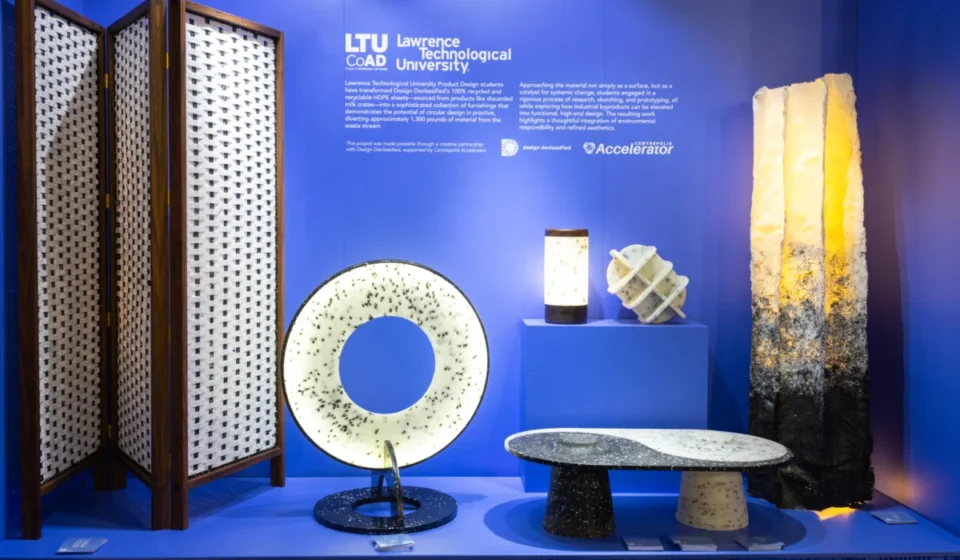
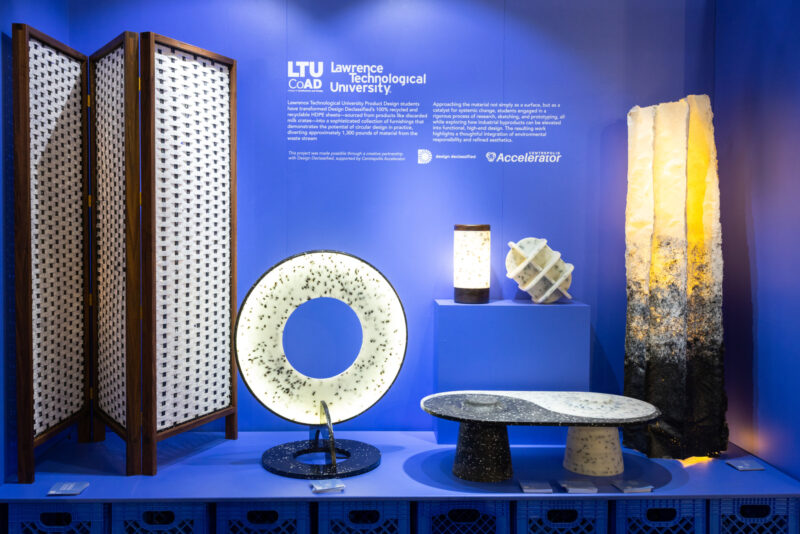
At the intersection of environmental stewardship and high-end aesthetics, a quiet revolution is taking place in the studios of Lawrence Technological University (LTU). What began as a classroom experiment in Southfield, Michigan, has culminated in a prestigious accolade on the global stage: the “Best of Schools” award at the WANTED Schools Showcase, held during this year’s International Contemporary Furniture Fair (ICFF).
By transforming 1,300 pounds of post-consumer high-density polyethylene (HDPE)—the humble material behind discarded milk crates—into a sophisticated collection of furniture and lighting, a group of six sophomore Product Design students has challenged the industry’s long-standing perceptions of recycled materials.
The Genesis: A Classroom-to-Gallery Trajectory
The project originated within the “Sustainable Systems” course, a curriculum designed by adjunct professor Erika Cross to bridge the gap between theoretical environmentalism and tangible, market-ready manufacturing. Unlike typical university exhibition entries, which are often curated from a diverse array of departments and degree levels, the LTU showcase was the result of a single undergraduate cohort working under a unified creative constraint.
The project was not a solitary endeavor. It functioned as a tripartite collaboration between LTU students, the Michigan-based manufacturer Design Declassified, and the Centrepolis Accelerator. This partnership provided students with access to industrial-grade recycled materials and the mentorship necessary to scale their designs from prototypes to exhibition-worthy pieces.
The six students behind this collection—Ashgen Boyer, Dante Cerroni, Lourdes Davish, Sofia Eddy, Delanie Shorten, and Ryan Sukhraj—were tasked with a singular objective: to strip away the “recycled” label and allow the material to dictate its own structural and aesthetic destiny.
Chronology of a Circular Breakthrough
The path from raw waste to the ICFF floor was marked by rigorous experimentation and iterative failures. The semester began with a deep-dive analysis of HDPE. While most manufacturers view recycled plastic as a temperamental or low-grade substitute for virgin materials, the LTU students approached it as a medium with unique geological potential.
Phase 1: Material Investigation (Early Semester)
The students spent the first several weeks understanding the thermal and physical properties of the recycled HDPE sheets. They explored how the material behaved under CNC routing, heat-forming, and mechanical joining. This phase was crucial for identifying the limitations of the plastic, such as its thermal expansion and its distinct, speckled aesthetic.
Phase 2: Design and Iteration (Mid-Semester)
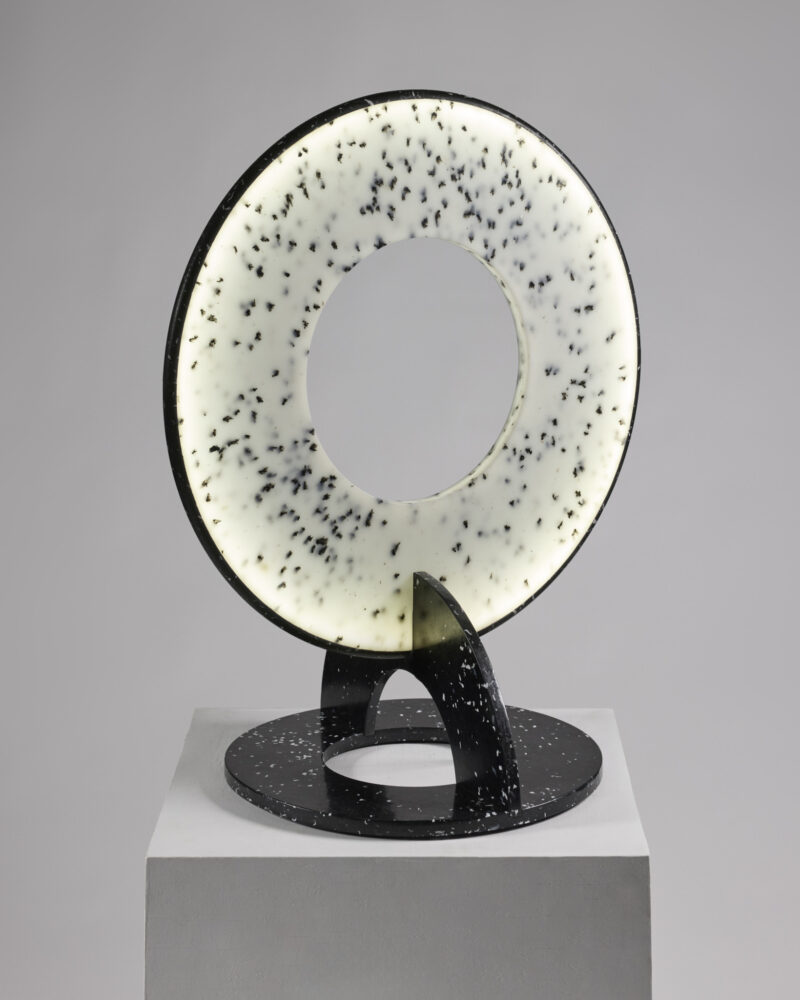
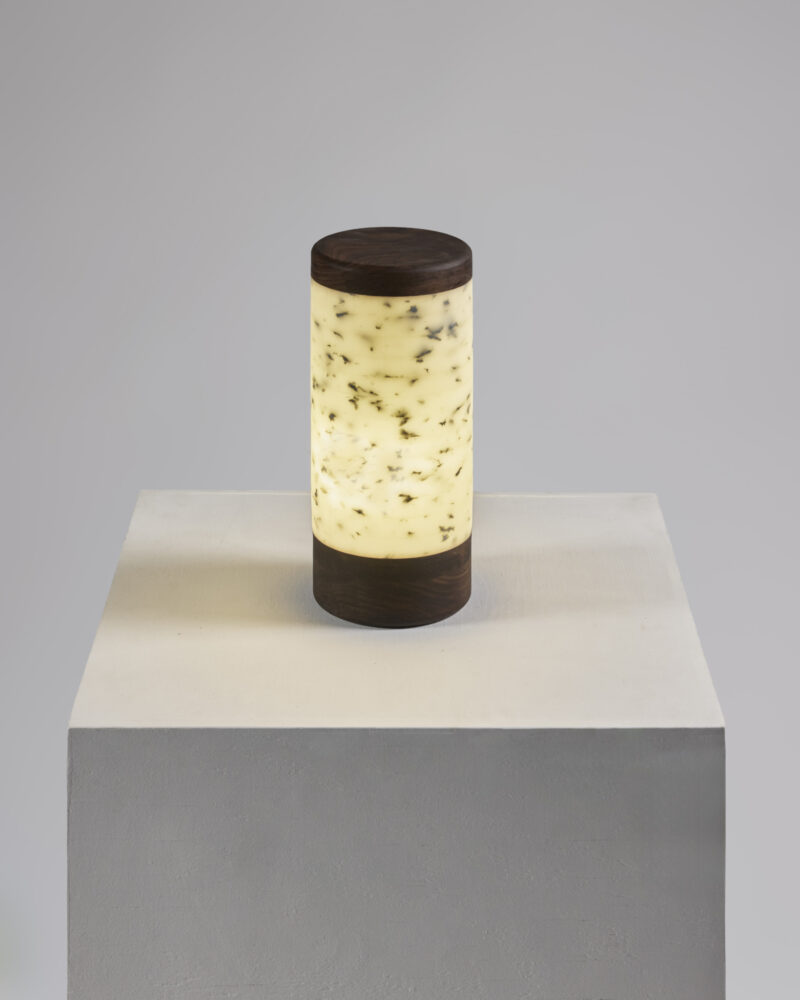
The students diverged in their applications while adhering to the common material language. Dante Cerroni conceptualized the Loop Lamp, focusing on the material’s ability to diffuse light. Simultaneously, Lourdes Davish began experimenting with the byproduct of her peers’ work—waste shavings from the CNC router. By melting these remnants into translucent, veneer-like sheets, she created the Fade Floor Lamp, which featured an intricate black-to-white gradient achieved through careful layering and heat-fusing.
Phase 3: Technical Refinement (Late Semester)
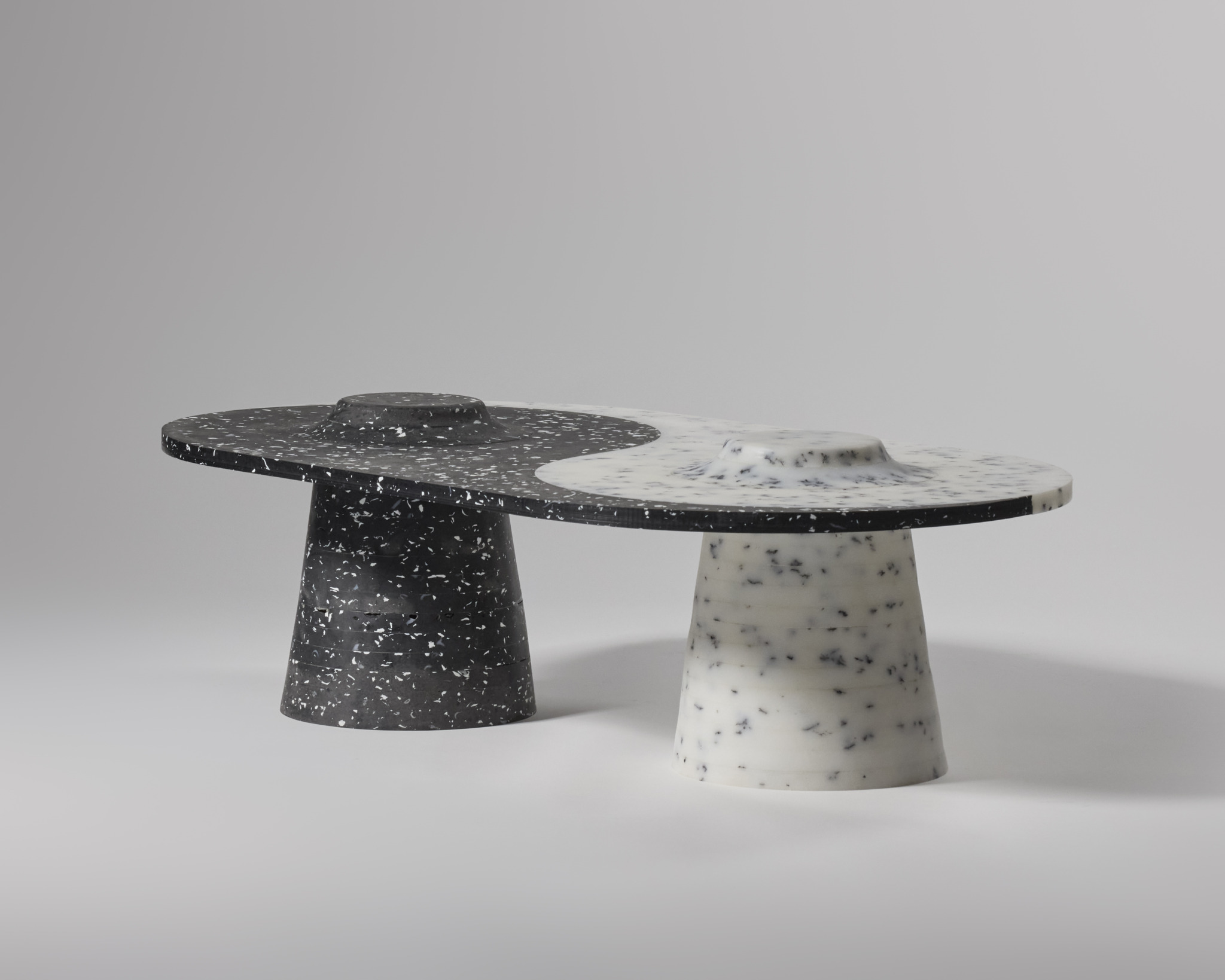
Sofia Eddy’s work during this period was a masterclass in structural innovation. She experimented with “kerf-cutting”—a technique typically used in woodworking—on the rigid HDPE to create an expandable coffee table base. The result was a structure that retained enough latent flexibility to accommodate varying tabletop sizes, proving that rigid, recycled waste could be engineered for kinetic functionality.
Phase 4: The WANTED Showcase (ICFF)
The final products were transported to the WANTED Schools Showcase at ICFF, where they were arranged to demonstrate both individual creativity and collective cohesion. The installation captivated judges not only for its visual impact but for the professional rigor with which the undergraduates presented their process, research, and technical documentation.
Supporting Data: The Impact of Circularity
The environmental significance of the project is as compelling as its design merit. By utilizing 1,300 pounds of diverted plastic, the project provides a tangible metric for the “circular economy.” This is not merely an exercise in waste reduction; it is a demonstration of material life-cycle extension.
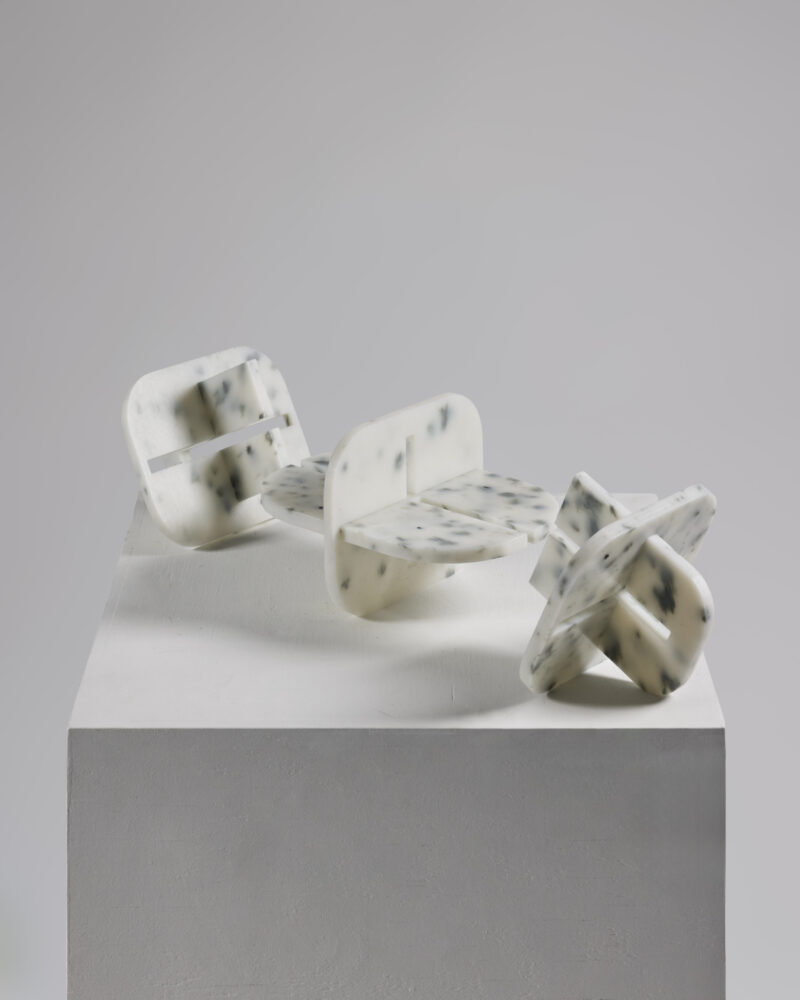
The choice of HDPE was strategic. As one of the most common plastics in the waste stream, its ubiquity is often its downfall, leading to it being overlooked as a “luxury” medium. However, the students demonstrated that through high-level craftsmanship—such as the stitching techniques used by Davish or the interlocking puzzle geometry of Ryan Sukhraj’s Cloud Puzzle—the material can be elevated.
The following breakdown highlights the primary design outputs of the cohort:
- Dante Cerroni: The Loop Lamp, exploring illumination and negative space.
- Lourdes Davish: The Fade Floor Lamp and Phoji Room Divider, focusing on material layering and light filtration.
- Delanie Shorten: The Nested Coffee Table, emphasizing modularity and clean, minimalist form.
- Ryan Sukhraj: The Cloud Puzzle, a study in organic form and structural stability.
- Sofia Eddy: The Expandable Coffee Table, utilizing advanced kerf-cut geometry.
Official Responses and Pedagogical Philosophy
For professor Erika Cross, the success of the exhibition lies in the students’ refusal to treat their material as a limitation. “The real exercise was proving that recycled materials can achieve a high level of luxury and craft,” says Cross. “Ultimately, the goal was to design pieces so aesthetically compelling and structurally thoughtful that they stand on their own merits first, with their sustainable origin story as a beautiful secondary discovery.”
The faculty’s approach emphasizes that the “Sustainable Systems” course is not merely an environmental science module, but a design laboratory. By forcing students to work with a single material, Cross created a controlled environment where the variables were the students’ unique methodologies rather than the materials themselves.
“Unlike most School Showcase booths, which feature curated collections of work pulled from across entire design programs, ours was a collection produced solely by undergraduate students within this single course,” Cross noted. This singular focus allowed for a level of consistency that set the LTU exhibit apart from more fragmented academic displays.
Implications for the Future of Design Education
The recognition of LTU’s work at ICFF serves as a validation of a modern pedagogical shift: the move toward “industry-integrated learning.” The partnership with Design Declassified and the Centrepolis Accelerator underscores a growing trend in higher education where the studio classroom functions as an incubator for real-world manufacturing challenges.
Closing the Gap
The project bridges the historic divide between the academic studio and the commercial factory floor. Students were not just designing for a grade; they were designing for a real-world audience, navigating the constraints of manufacturing, shipping, and professional presentation.
Redefining Sustainable Luxury
Perhaps the most significant implication of the LTU collection is the reframing of what constitutes “luxury.” Traditionally, luxury in furniture design has been synonymous with virgin materials—rare woods, metals, and imported textiles. The LTU students have signaled a shift in the zeitgeist, suggesting that in the 21st century, true luxury is defined by intellectual rigor, innovative processing, and the ethical provenance of materials.
A Template for Success
For other design programs, the LTU model offers a blueprint for success. By focusing on deep-dive material research, fostering industrial partnerships, and encouraging students to treat sustainability as a design challenge rather than a moral constraint, universities can produce graduates who are not just designers, but systems thinkers.
As the industry continues to grapple with the climate crisis, the work of these six students offers a hopeful, tangible glimpse into the future. By seeing potential where others saw trash, the LTU team has not only earned a trophy; they have helped rewrite the manual for modern product design.
To learn more about the Lawrence Technological University Product Design program and to follow the ongoing work of the College of Architecture and Design, visit their official website or check out their latest projects on Instagram.