The Pulse of Digital Reputation: Why Real-Time Brand Monitoring is Your Ultimate Strategic Asset

In an era where the narrative of a brand is no longer dictated by press releases but by the unpredictable, lightning-fast velocity of social media algorithms, traditional brand management is failing. Today, the conversation surrounding a company evolves on its own timeline, often beyond the reach of corporate influence. For businesses, brand mentions have transitioned from simple vanity metrics into high-stakes signals that require immediate, intelligent action to prevent catastrophic reputation damage.
![What is brand monitoring and why is it important? [+ tools]](https://media.sproutsocial.com/uploads/2026/06/NewsWhip-product-tour-1024x564.png)
As consumer sentiment shifts in real-time across the vast digital landscape, relying on passive, historical data is akin to driving a car by looking exclusively at the rearview mirror. To maintain market share and consumer trust, brands must transition toward a proactive, intelligence-driven framework that treats digital conversations not as noise, but as actionable data.
The Evolution of Brand Monitoring: From Passive Tracking to Predictive Intelligence
Brand monitoring has moved far beyond the basic act of counting mentions. It is the practice of tracking digital footprints across the entire online ecosystem—spanning social media, news outlets, forums, blogs, and podcasts.
![What is brand monitoring and why is it important? [+ tools]](https://brandfolder.sproutsocial.com/VXTUTVL1/at/hww8qgzc7c994hp6h5frjt/pup-q2-2026_ui_ai_trellis-expansion_simplified.png)
While simple social media monitoring tools provide a narrow view of brand performance, comprehensive brand monitoring software captures the "full-stack" conversation. This evolution allows brands to close the gap between an emerging audience reaction and their corporate response. In the modern market, the ultimate competitive advantage is the ability to forecast trends, identify shifting engagement patterns, and address consumer needs before they fully manifest. By leveraging predictive intelligence, companies can now anticipate a crisis before it erupts, transforming a potential PR nightmare into a showcase of responsive, brand-aligned communication.
![What is brand monitoring and why is it important? [+ tools]](https://media.sproutsocial.com/uploads/2025/04/mention-dashboard-1-1024x637-1.jpg)
The Anatomy of a Modern Brand Crisis
To understand the necessity of modern monitoring, one must examine the lifecycle of a digital crisis. Unlike the crises of the pre-internet era, modern reputation threats are decentralized and exponential.
![What is brand monitoring and why is it important? [+ tools]](https://media.sproutsocial.com/uploads/2025/04/webmention@2x-UWGADG6D.png)
1. The Genesis: The Untagged Mention
A crisis rarely begins with a direct complaint to a customer support handle. It often starts as an untagged, honest, and sometimes frustrated discussion on a forum like Reddit or a niche industry blog. Because these mentions lack a direct tag, brands using legacy tools often miss these early warnings entirely.
![What is brand monitoring and why is it important? [+ tools]](https://media.sproutsocial.com/uploads/2025/04/productdashboard-20150313072154718.png)
2. The Acceleration: Algorithmic Amplification
Once a piece of content—whether it is a negative product review or a misinterpreted executive statement—gains traction, network algorithms take over. As engagement increases, the platform’s algorithm promotes the content to wider audiences, regardless of the brand’s intent or desire for the conversation to stay contained.
![What is brand monitoring and why is it important? [+ tools]](https://media.sproutsocial.com/uploads/2025/04/set-up-google-alert.png)
3. The Impact: Erosion of Sentiment
As the content spreads, public perception shifts. What began as a single user experience becomes a generalized narrative about the brand’s quality or ethics. Without real-time intervention, this sentiment becomes the "truth" in the minds of the consumer base.
![What is brand monitoring and why is it important? [+ tools]](https://media.sproutsocial.com/uploads/2026/06/Brand-24-dashboard-1024x733.png)
4. The Response: The Need for Speed
The final stage is the brand’s reaction. Data suggests that the window for effective crisis mitigation has shrunk to a matter of hours, if not minutes. Brands that rely on manual reporting or weekly summaries are effectively neutralized by their own lack of velocity.
![What is brand monitoring and why is it important? [+ tools]](https://cdn.airops.com/rails/active_storage/blobs/proxy/eyJfcmFpbHMiOnsiZGF0YSI6OTIyMzEzLCJwdXIiOiJibG9iX2lkIn19--cfab3c202300c3a905f939804c32438188ccb4e4/https---www.hootsuite.com-%3Fsrsltid=AfmBOoouV0zAsBPI_n_8sfp9jiW_hz7uGVz-naM-yMnlm8g2xTfKcnOR_1755199063.png)
Why Brand Monitoring is a Business Criticality
Investing in brand monitoring is not merely a task for the PR department; it is a fundamental requirement for business strategy. The implications of a robust monitoring program are far-reaching:
![What is brand monitoring and why is it important? [+ tools]](https://media.sproutsocial.com/uploads/2026/06/Sprinkr-dashboard-1024x643.png)
- Proactive Reputation Management: By catching negative sentiment at the point of origin, companies can control the narrative, offering constructive solutions before the story snowballs into a viral phenomenon.
- Competitive Intelligence: Monitoring is a two-way street. By tracking the mentions and market reactions of competitors, businesses can identify market gaps, analyze what resonates with their own audience, and iterate on their product roadmaps accordingly.
- Unlocking Customer Feedback: The most valuable, "unvarnished" product feedback often happens in places where customers don’t expect a brand representative to be listening. Monitoring allows teams to harvest this data to refine user experiences.
- Identifying Advocates: Every brand has "super-fans." Identifying these organic advocates early allows for the development of user-generated content partnerships that amplify the brand’s voice far more effectively than paid advertising.
- SEO and Authority Building: Frequently, media outlets and bloggers mention a brand without providing a backlink. A monitoring program flags these opportunities, allowing SEO teams to reach out and convert high-value text mentions into authoritative backlinks.
Core Elements of a World-Class Monitoring Strategy
A successful brand monitoring program is built on three pillars: Reactive monitoring (responding to issues), Proactive monitoring (tracking trends), and Predictive monitoring (forecasting future engagement).
![What is brand monitoring and why is it important? [+ tools]](https://cdn.airops.com/rails/active_storage/blobs/proxy/eyJfcmFpbHMiOnsiZGF0YSI6OTIyMzE2LCJwdXIiOiJibG9iX2lkIn19--8b77fc6415d7f1eb4015130506f42a6ca3b5a457/https---www.cision.com-_1755199373.png)
Where to Focus Your Efforts
To build a comprehensive digital footprint, teams must look beyond the "big three" social platforms. Visibility must include:
![What is brand monitoring and why is it important? [+ tools]](https://cdn.airops.com/rails/active_storage/blobs/proxy/eyJfcmFpbHMiOnsiZGF0YSI6OTIyMzE3LCJwdXIiOiJibG9iX2lkIn19--ed26f7c6853c0d2e3d57c3c5f614efd86755b95c/https---awario.com-_1755199400.png)
- Digital News & Media: Tracking how traditional journalism frames your brand.
- Discussion Forums: Platforms like Reddit, Quora, and industry-specific message boards.
- Emerging Social Networks: Staying ahead of the curve by monitoring newer platforms where early adopters and influencers gather.
- Consumer Review Sites: Understanding the impact of transactional sentiment on purchasing decisions.
Integrating AI: From Collection to Action
Artificial Intelligence is the engine that makes high-volume monitoring possible. By integrating AI, teams can shift their workload from data collection to strategic action. AI tools can automatically filter out irrelevant noise, flag urgent sentiment shifts, and summarize thousands of conversations into digestible, analyst-quality briefs.
![What is brand monitoring and why is it important? [+ tools]](https://media.sproutsocial.com/uploads/2026/06/YouScan-1024x591.png)
A Comparative Look at Top-Tier Monitoring Solutions
The market for brand monitoring software is diverse, ranging from free basic alert tools to enterprise-grade, AI-driven suites.
![What is brand monitoring and why is it important? [+ tools]](https://media.sproutsocial.com/uploads/2024/08/Sprout-Social-query-builder.png)
Sprout Social: The Unified Intelligence Solution
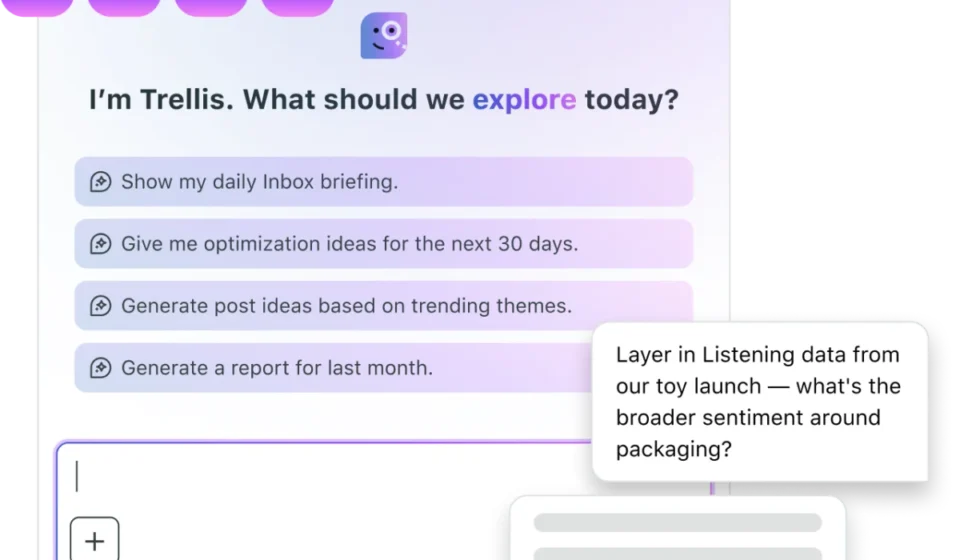
Sprout Social distinguishes itself as a comprehensive Social Intelligence solution. Its integration with NewsWhip provides a massive advantage, allowing teams to track real-time news and social signals to predict which stories will drive attention up to 24 hours in advance. With the "Trellis Monitoring Agent," Sprout delivers automated, conversational briefs that help teams discern between a minor blip and a true threat.
Mention and Brand24
These platforms excel at bridging the gap between social listening and media monitoring. Their strength lies in granular sentiment analysis, allowing for precise tracking across blogs, forums, and social channels. They are ideal for mid-to-large organizations that require a balanced approach to media coverage and social engagement.
Sprinklr and Cision
For the enterprise level, Sprinklr offers a "Unified-CXM" approach, managing customer experiences across 30+ channels. Cision, conversely, remains the gold standard for PR professionals, expertly connecting brand health to earned media intelligence.
Google Alerts and Basic Tools
For small businesses or startups, Google Alerts remains a foundational, free tool. While it lacks the predictive depth of enterprise solutions, it provides the essential baseline for monitoring brand name mentions across the web.
Setting Up Your Brand Monitoring Workflow: A Step-by-Step Guide
To maximize the value of your monitoring investment, follow this structured approach to configuration:
Phase 1: Establish the Baseline
Start by building a "Brand Health" topic query. Include common misspellings, product nicknames, and industry-specific terminology. Use keyword grouping to filter out unrelated chatter (e.g., if your brand is "Apple," you must exclude "fruit" or "farming" related keywords).
Phase 2: Crisis Architecture
Create a dedicated crisis dashboard. This should include specific negative terms—such as "failure," "outage," "scam," or "lawsuit"—combined with your brand name. Configure real-time alerts so that your team is notified the moment a spike in these specific combinations is detected.
Phase 3: Campaign Analysis
When launching a new campaign, set up specific listening templates to monitor the sentiment shift in real-time. By comparing pre-campaign sentiment with post-launch volume, you gain an immediate understanding of whether your messaging is resonating or falling flat.
Phase 4: Predictive Integration
If using a predictive tool like NewsWhip, configure alerts based on "Velocity." Velocity measures the speed at which a story is gaining traction. By setting an alert for high-velocity mentions, you ensure you are alerted not just to what is happening, but to what is about to happen.
Implications for the Future of Brand Management
The future of brand management is undeniably predictive. As AI models become more sophisticated, the ability to "see around corners" will become the primary differentiator between brands that thrive in a crisis and those that fold.
In conclusion, brand monitoring is no longer a peripheral task—it is the central nervous system of modern marketing and communications. By investing in the right tools and fostering a culture of proactive listening, brands can stop reacting to the world around them and start actively shaping the conversations that define their future. As digital landscapes continue to evolve, the brands that win will be those that listen the best, understand the fastest, and act with the most precision.