
Philadelphia is globally recognized as the "Birthplace of America," a moniker earned through the seismic events of 1776, when the Declaration of Independence was debated and signed within the hallowed halls of the Pennsylvania State House. As the United States approaches its semiquincentennial, the city is once again the focal point of national attention. However, beneath the polished veneer of the Liberty Bell and the foundational myths of the American experiment lies a more complex, profound, and often suppressed reality: an incredibly rich Black heritage that was instrumental in the forging of the nation.
To truly understand Philadelphia is to confront the stories, landmarks, and hidden truths that have long been excluded from the standard founding narrative. A growing movement of historical reclamation is currently anchored by "The Black Journey," a specialized tour company that invites visitors to walk the streets of Old City and beyond to witness history through a different lens.
The Architect of Memory: The Black Journey
Founded in 2019 by Philadelphia native and lawyer Raina Yancey, The Black Journey was born from a desire to bridge the gap between textbook history and the lived reality of Black ancestors. Yancey, whose mother served as a ranger at Independence National Historical Park, grew up immersed in the city’s complex narratives, eventually launching the company to ensure that the contributions of Black Philadelphians were no longer relegated to the margins.

The company’s flagship offering, The Original Black History Tour, is led by Mijuel K. Johnson, a historian and political science graduate of La Salle University. Johnson’s approach is not merely academic; it is a blend of scholarly rigor, raw storytelling, and poignant humor. Over the course of a two-hour walking tour, Johnson guides participants through the cobblestone streets of Old City, transforming historic markers into sites of active remembrance.
Chronology of a Legacy: Key Sites and Historical Context
The history of Black Philadelphia is not a static chapter; it is a layered chronology that predates the revolution and extends into the modern era.
The Foundation: Mother Bethel AME Church
Located in the heart of Society Hill—once the vibrant, beating center of Black culture within the historic 7th Ward—stands the Mother Bethel AME Church. Founded in 1794 by the Reverend Richard Allen, this site holds the distinction of being the oldest parcel of land continuously owned by Black people in the United States. Today, the church is a National Historic Landmark, serving as a testament to the resilience of the Black community. The basement crypt holds the remains of Rev. Allen, who died in 1831, marking it as a pilgrimage site for those seeking to honor the institutional strength of the early Black Church.

The Gathering: Washington Square (Congo Square)
Just a few blocks away, Washington Square offers a sobering look at the 18th-century landscape. Once known as Congo Square, it served as a vital, albeit complicated, gathering place for both free and enslaved people. It was a site of cultural survival, where enslaved Africans celebrated the traditions of their homelands. Historical records indicate that vendors would sell "pepper pot stew"—a rich, spicy blend of meat and vegetables that remains a staple of the city’s culinary history. However, the square also served as a potter’s field, a final resting place for the nameless enslaved, the free Black poor, and those who perished during the catastrophic yellow fever epidemic of 1793.
The Crucible: Independence Hall and the Fugitive Slave Act
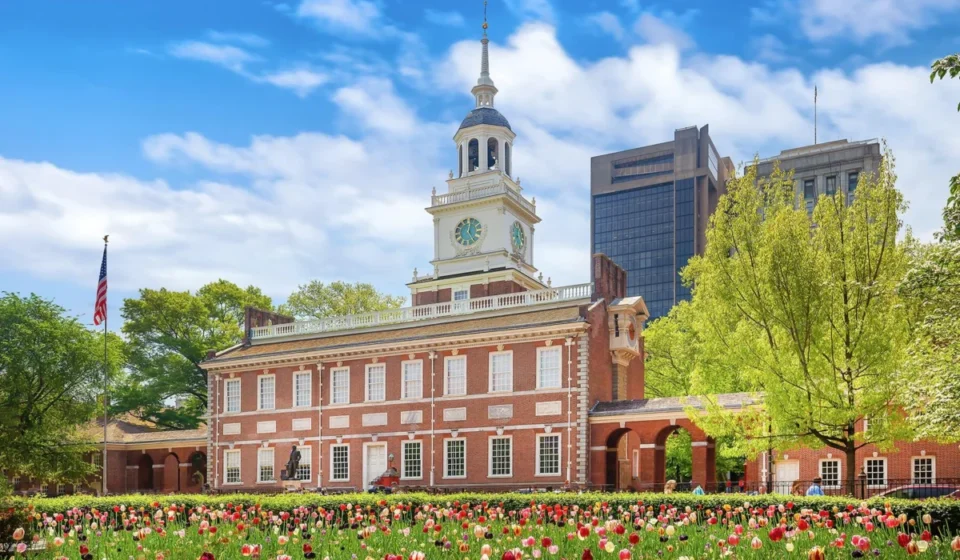
While tourists flock to Independence Hall to admire the birthplace of American democracy, the tour highlights a darker truth: the second floor of the building once functioned as a courtroom. Following the passage of the Fugitive Slave Act of 1850—an aggressive expansion of the 1793 law—this space became a theater of tragedy where recaptured enslaved people were put on trial. In the very building where liberty was proclaimed, the legal apparatus of the state was used to return individuals to chains.
Implications: The Struggle for Historical Truth
The narrative of Philadelphia is currently undergoing a legal and social re-evaluation. A prominent example of this tension is found at the President’s House site, where foundations from George Washington’s executive residence remain. For years, open-air exhibits detailed the story of Ona Judge, a woman enslaved by the Washingtons who successfully escaped to New Hampshire in the 1790s.

Official Responses and Legal Battles
The site has become the center of a heated dispute regarding the scope of historical storytelling. Following the removal of several interpretive panels by federal authorities, the City of Philadelphia initiated legal action to restore them. On June 18, 2026, an appeals court ruled that the city lacks the authority to dictate the nature of exhibits on federal land. This decision has sparked a national conversation about who owns the narrative of American history—the federal government or the local communities tasked with preserving the memory of those who lived there.
Beyond the Center: Germantown’s Underground Railroad
To fully grasp the scope of the Black experience in the region, a journey to Germantown, approximately 20 minutes from Old City, is essential. This area is home to the Johnson House Historic Site, a critical node on the Underground Railroad. Owned by the Johnson family, a group of anti-slavery Quakers, the house served as a sanctuary for those fleeing bondage. Notable abolitionists, including William Still and, it is believed, Harriet Tubman, utilized the site to coordinate escapes. Guides at the house point specifically to the third-floor attic—a claustrophobic, dark space where the weight of freedom was measured in breaths and silence.
Nearby, the Germantown Mennonite Meetinghouse marks the site of the first written anti-slavery petition in the New World, drafted in 1688. Directly across the street, the Wyck house, with its historic rose garden, offers a peaceful, fragrant contrast to the intensity of the surrounding historical sites, rounding out a comprehensive educational experience.

Supporting Data: Integrating Black History into the Visitor Experience
For travelers planning a visit, the city provides several institutional touchpoints to deepen their understanding:
- Museum of the American Revolution: Currently featuring The Declaration’s Journey, the museum provides context on how the American Revolution sparked movements worldwide. Crucially, it highlights the lives of individuals like William Lee (Washington’s enslaved valet) and Phillis Wheatley (the first published female Black poet in America).
- The Penn Museum: This institution is currently pivoting toward a more inclusive anthropology, exemplified by its Native North American Gallery. Created in partnership with eight Indigenous consulting curators, it presents over 250 artifacts that challenge the traditional, settler-centric view of American archaeology.
- Culinary History: Restaurants such as Elwood in Fishtown are actively working to preserve the palate of the past. Chef Adam Diltz specializes in modern interpretations of colonial-era staples like pepper pot soup, turtle soup, and catfish with cornmeal waffles, offering a sensory connection to the culinary contributions of Black and colonial populations.
Conclusion: A City in Reflection
As Philadelphia prepares for the semiquincentennial, the challenge lies in balancing the celebration of national origins with the necessity of acknowledging the marginalized voices that made the nation possible. Through initiatives like The Black Journey and the ongoing efforts of local museums, the city is slowly, deliberately, and effectively broadening the aperture of its history.
Whether one is exploring the crypts of Mother Bethel, standing in the shadows of the attic in the Johnson House, or dining on the flavors of the colonial past at an intimate Fishtown bistro, the visitor to Philadelphia today is invited to participate in a more complete, and ultimately more honest, American story. The birthplace of the nation is finally beginning to tell the full truth of its upbringing, ensuring that the legacy of all its citizens is preserved for the next 250 years.