
Introduction: The Flame, the Layers, and the Lore
In the pantheon of classic modern bar culture, few libations command attention quite like the B-52. Served traditionally in a tall shot glass and frequently ignited before consumption, this striking layered drink is as much a piece of performance art as it is a cocktail. Boasting a rich, tri-colored stratification of deep coffee liqueur, velvety Irish cream, and bright citrus-orange liqueur, the B-52 has remained a staple of upscale lounges, college campus bars, and celebratory gatherings for nearly half a century.
While the modern landscape of spirits is flooded with trendy mixology creations, complex tiki concoctions, and hyper-minimalist craft cocktails, the enduring popularity of the B-52 speaks to the timeless appeal of visual spectacle combined with balanced, decadent flavors. But beyond the dancing blue and orange flames that often crown its surface lies a fascinating history rooted in 1970s Canadian hospitality, musical fandom, and a frequent case of mistaken identity regarding its namesake.
Main Facts: Anatomy of a Classic Layered Shooter
To understand the B-52 shot, one must examine its distinct formulation, which relies entirely on the precise physics of density and specific gravity. Unlike shaken or stirred cocktails, a layered shooter depends on the varying sugar content and alcohol by volume (ABV) of its components to stack neatly atop one another without bleeding together.
The Core Trio of Ingredients
- Coffee Liqueur (Base Layer): Traditionally anchored by Kahlúa, this bottom tier provides a heavy, viscous foundation with deep notes of roasted Arabica coffee and sweet sugarcane rum. Because coffee liqueurs generally possess a higher sugar density and lower ABV compared to the upper layers, they naturally settle at the bottom of the glass.
- Irish Cream Liqueur (Middle Layer): Bailey’s Irish Cream forms the creamy, neutral buffer in the center. Its dairy base introduces a smooth, silky texture that tempers the robust bitterness of the coffee liqueur while adding subtle hints of cocoa and vanilla.
- Grand Marnier (Top Layer): The crown jewel of the recipe, Grand Marnier is an orange-flavored cognac liqueur. It rests delicately on the very top due to its lower relative density compared to the heavy cream layer. Crucially, Grand Marnier’s alcohol content (around 40% ABV) makes it an ideal candidate for ignition, allowing bartenders to set the shot on fire safely before serving.
Serving Mechanics and Presentation
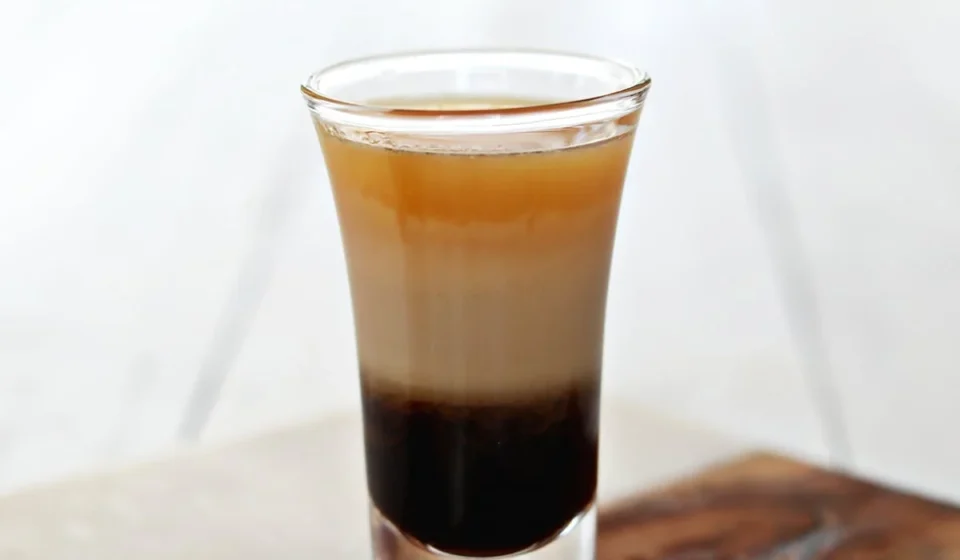
The standard vessel for a B-52 is a tall, narrow shot glass, which maximizes the visual impact of the three distinct horizontal bands: black-brown at the base, opaque tan in the middle, and amber-gold on top. When ordered "on fire," the top layer of Grand Marnier is carefully ignited using a candle lighter or kitchen torch. This creates a brief, dramatic blue flame that warms the glass and releases the aromatic orange essential oils of the cognac liqueur, offering an immersive sensory experience before the drink is swiftly consumed.

Chronology: The Birth of a Legend in the Canadian Rockies
The origin of the B-52 shot traces back to the late 1970s, an era defined by disco, bold fashion, and experimental cocktail culture.
1977: The Banff Springs Hotel
According to cocktail historians and beverage lore, the recipe was conceived in 1977 by bartender Peter Fich, who was working at the prestigious Banff Springs Hotel located in the heart of the picturesque Banff National Park in Alberta, Canada. The hotel, renowned for its historic Scottish-baronial architecture and luxurious alpine atmosphere, served as an unexpected incubator for a drink that would eventually conquer global nightlife.
Musical Inspiration
Fich was not inspired by military aviation, nor was he referencing the iconic Cold War-era Boeing B-52 Stratofortress bomber, despite popular misconceptions. Instead, he was an avid fan of The B-52’s, the pioneering American new wave band formed in Athens, Georgia, in 1976. Known for their eccentric fashion, high-energy party anthems like "Rock Lobster," and lead singer Kate Pierson’s iconic beehive hairdo, the band had captured the cultural zeitgeist of the late ’70s. Fich decided to honor his musical heroes by naming his newly engineered layered creation after them.
(Note on historical trivia: While the band itself derived its name from southern slang for exaggerated beehive hairstyles—which closely resembled the nose cones of the military aircraft—the cocktail was named strictly in tribute to the musicians, creating a clever three-degree separation of nomenclature).

Global Expansion
Throughout the 1980s and 1990s, as international tourism surged and resort bartending standards spread across borders, the B-52 transcended its Canadian Rockies origins. It found a permanent home on cocktail menus worldwide, evolving from a regional novelty into a universally recognized standard of international mixology.
Supporting Data and Variations: The B-52 Family Tree
The enduring success of the original B-52 has spawned an entire family of derivative shots, often referred to numerically or geographically by substituting various liqueurs into the foundational layering technique.
Popular Spin-Offs
- The B-53: Substitutes the Grand Marnier with sambuca or vodka, shifting the flavor profile toward anise or increasing the overall kick.
- The B-54: Swaps the orange liqueur for Amaretto, introducing a rich almond undertone.
- The B-55: Replaces the Grand Marnier with absinthe, creating an intensely herbal and high-proof variation.
- The B-57: Features a lineup of black sambuca, Irish cream, and peppermint schnapps.
Comparative Profile of Related Party Shots
To understand where the B-52 sits in modern bar culture, it is helpful to look at its peers in the "party shot" category:
- Kamikaze Shot: Vodka, triple sec, and lime juice—a sharp, shaken, and refreshing citrus shooter.
- Lemon Drop Shot: Vodka, fresh lemon juice, and simple syrup, served with a sugar-rimmed lemon wedge.
- Green Tea Shot: Irish whiskey, peach schnapps, sour mix, and a splash of lemon-lime soda (despite the name, it contains no actual tea).
- Mexican Candy Shot: Tequila, watermelon schnapps, and hot sauce, offering a spicy-sweet flavor profile.
- Scooby Snack Shot: Coconut rum, melon liqueur, pineapple juice, and whipped cream, blended for a tropical, sweet taste.
- Flaming Dr. Pepper: Amaretto and high-proof rum dropped into a glass of beer, mimicking the distinct flavor of the popular soda.
Official Responses and Industry Perspectives
Professional mixologists and beverage directors often hold a nuanced view of the B-52. While craft cocktail purists who focus on artisanal ice, house-made tinctures, and hyper-local spirits occasionally dismiss sweet layered shots as relics of a bygone, gimmick-heavy era, many high-end bartenders recognize the enduring brilliance of the drink’s mechanics.

"Layering a drink like the B-52 is a masterclass in balance and density," notes veteran beverage consultant Marcus Vance. "It requires a steady hand, an understanding of specific gravities, and precise pours. When executed correctly, it delivers a harmonious blend of coffee, cream, and citrus that simply works. The flame is pure theater, and in the hospitality industry, theater sells."
Furthermore, culinary historians emphasize the importance of preserving classic cocktail lore. The story of Peter Fich crafting the drink at the Banff Springs Hotel highlights the localized, grassroots nature of cocktail innovation, proving that iconic recipes do not always emerge from high-end metropolitan laboratories in New York or London, but frequently spring from resort bartenders experimenting behind mountain-hotel bars.
Implications: Safety, Enjoyment, and the Future of Flaming Cocktails
As the B-52 approaches its fifth decade of existence, its cultural footprint remains secure, though modern consumption comes with heightened awareness regarding safety and responsible drinking.
The Safety Protocol of Flaming Drinks
The inclusion of an open flame in cocktail presentation has always carried inherent risks. In recent years, strict venue regulations and liability concerns have led some contemporary bars to phase out flaming shots entirely or modify how they are served. Bartenders emphasize critical safety measures for those attempting a B-52 at home:

- Check the ABV: Only the topmost layer (such as Grand Marnier or higher-proof spirits) will sustain a flame. Never attempt to ignite a lower-proof layer directly.
- Extinguish Before Drinking: It is vital to blow out the flame before consuming the shot. Ingesting a lit beverage can cause severe burns to the lips, mouth, and esophagus.
- Thermal Expansion: Glassware can become intensely hot when exposed to open flame. Utilizing proper, thick-walled shot glasses and handling them with care prevents thermal shock or accidental drops.
Cultural Longevity
Despite changing palate preferences toward lower-sugar drinks and craft spirits, the B-52 retains a nostalgic, indestructible charm. Whether ordered to celebrate a milestone birthday, enjoyed during a ski trip in the Canadian Rockies, or ignited on a busy Friday night in a crowded downtown pub, the B-52 remains a testament to the enduring power of good flavor, clever branding, and a little bit of fire.