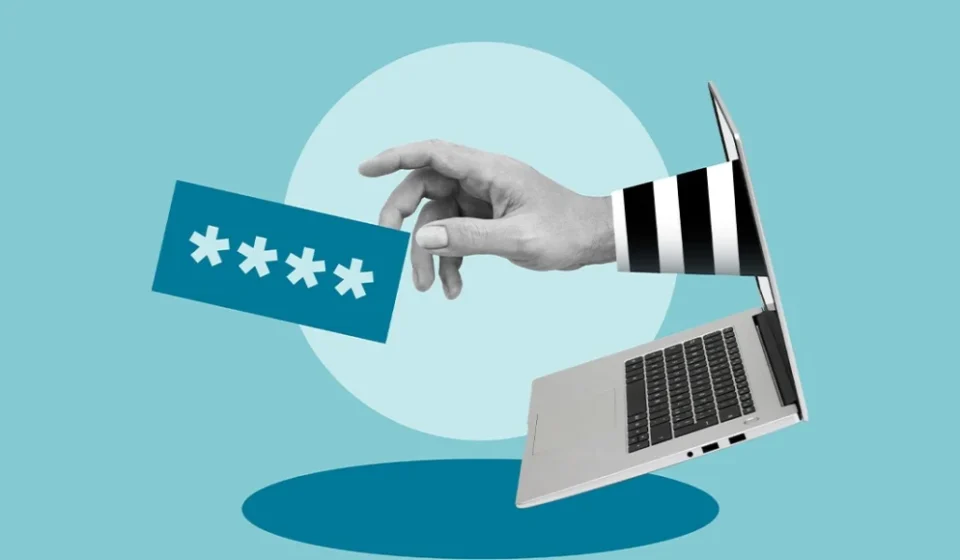
The Digital Perimeter: Why Cybersecurity Must Be Your Top Travel Priority

Business travel has long been a complex logistical puzzle. Between juggling flight itineraries, hotel bookings, client presentation decks, and the inevitable exhaustion of transit, the modern professional is often stretched thin. For decades, the "pre-flight checklist" focused on tangible essentials: a valid passport, a reliable laptop charger, and a crisp suit. However, in an era defined by hyper-connectivity and sophisticated cyber-espionage, a new, invisible item must take center stage on that checklist: digital security.
As the lines between our personal and professional lives continue to blur, the devices we carry have become portable vaults containing our most sensitive corporate secrets. Yet, every time a business traveler connects to a hotel Wi-Fi network or plugs their smartphone into a public charging port at an airport, they are essentially walking through a minefield of potential digital threats.
The New Threat Landscape: Understanding the Risks
The transition to a mobile-first workforce has created a lucrative landscape for cybercriminals. Attackers recognize that business travelers are often distracted, fatigued, and operating in unfamiliar, less-secure environments. This combination of human error and technological vulnerability provides the perfect storm for data theft.
The CaptiveCrunch Campaign
The urgency of this issue was brought into sharp relief at the end of July, when Microsoft’s threat intelligence teams issued a stark warning regarding a sophisticated campaign dubbed "CaptiveCrunch." Attributed to the threat actor known as Midnight Blizzard, this campaign specifically targeted the Wi-Fi infrastructure of high-traffic locations, including luxury hotels, international conference centers, and executive transit hubs.
CaptiveCrunch operates by compromising the infrastructure that governs "captive portals"—those landing pages that require users to accept terms or enter a room number before granting internet access. By manipulating these portals, attackers can present users with highly convincing, malicious verification prompts. Instead of simply connecting to the internet, the traveler is prompted to "update their browser" or "install a security certificate." Once these malicious payloads are executed, the attackers gain the ability to deliver malware and harvest sensitive corporate credentials, effectively granting them a back-door into the victim’s employer network.
Chronology of Escalating Digital Threats
The evolution of travel-related cybercrime has followed a clear, accelerating trajectory over the last decade.
- 2015–2018: The Era of "Evil Twins." Early threats focused on "Evil Twin" Wi-Fi networks, where attackers would broadcast a network name identical to a legitimate hotel Wi-Fi to intercept unencrypted traffic.
- 2019–2021: The Rise of Remote Access Attacks. As the pandemic necessitated a shift to remote work, hackers pivoted from intercepting traffic to targeting the VPNs and remote desktop protocols (RDP) that employees used to connect to their corporate headquarters from hotels and home offices.
- 2022–2023: The "Juice Jacking" Awareness Phase. Public awareness grew regarding "juice jacking," a technique where attackers modify public USB charging stations to extract data from devices or inject malware, leading to official warnings from the FBI and various state attorneys general.
- 2024–Present: Sophisticated Social Engineering and Infrastructure Attacks. We are now in a phase where attackers are not just targeting the user, but the infrastructure itself. The CaptiveCrunch campaign represents a shift toward compromising the "gatekeepers" of public connectivity, making it significantly harder for the average user to discern between a legitimate security prompt and a trap.
Supporting Data and Industry Vulnerabilities
The numbers underscore the gravity of the situation. According to recent industry reports, nearly 60% of business travelers admit to using public Wi-Fi to access sensitive company files without utilizing a VPN. Furthermore, research into mobile security indicates that over 40% of corporate devices are currently running outdated operating systems, leaving them susceptible to known vulnerabilities that could be exploited in seconds by a nearby attacker.
The vulnerability is compounded by the "BYOD" (Bring Your Own Device) culture. When an employee uses their personal smartphone for both checking personal emails and responding to corporate Slack messages, the security posture of the entire company is only as strong as the most insecure app on that individual’s phone.
Official Responses and Expert Guidance
Government agencies and cybersecurity firms are unified in their recommendation: Assume all public infrastructure is compromised.
The FBI’s position on public charging stations remains clear: avoid them at all costs. The risk of hardware-level exploitation via a USB port is high enough that the bureau recommends using personal wall adapters and power banks to ensure a "clean" power source.
Microsoft, in its documentation regarding the CaptiveCrunch campaign, emphasized that organizations must move beyond perimeter security. "The reliance on traditional defenses is no longer sufficient," a Microsoft security analyst noted in their briefing. "Companies must implement ‘Zero Trust’ architectures, where every connection—regardless of its origin—is verified, authenticated, and encrypted."
Practical Implications for the Modern Traveler
To mitigate these risks without paralyzing the ability to conduct business, travelers should adopt a "Defense in Depth" strategy.
1. The Death of Public Wi-Fi
Treat every hotel, airport, and coffee shop network as a "zero-trust" environment. The best defense is to avoid them entirely. Cellular data remains the gold standard for security. For international travelers, the adoption of eSIM technology has been a game-changer, allowing for the rapid deployment of local, secure cellular data plans without the need to swap physical SIM cards. If you must use public Wi-Fi, a high-quality, reputable VPN is mandatory—but remember that a VPN is not a shield against the malicious "update" prompts seen in campaigns like CaptiveCrunch.
2. Radical Skepticism of Prompts
We have been conditioned to obey "update" notifications. This conditioning is now our greatest weakness. If a Wi-Fi portal asks you to download a security tool, install a browser plugin, or update a certificate, close the window and disconnect immediately. Legitimate network providers will never require you to install software to access their internet service.
3. Pre-Departure Hygiene
Security starts at home. Before you step out the door:
- Update Everything: Ensure your OS, firmware, and core applications are fully patched.
- Back Up Data: Use cloud-based storage or encrypted physical drives to ensure that if a device is stolen, the data is not lost.
- Remote Wiping: Enable "Find My" or equivalent remote-wipe features. Being able to wipe a lost laptop remotely is the difference between a minor inconvenience and a catastrophic data breach.
4. Authentication Modernization
Move away from SMS-based two-factor authentication (2FA). SMS is susceptible to "SIM swapping" attacks, where hackers redirect your text messages to their own devices. Transition to hardware security keys or phishing-resistant passkeys. Ensure that your authentication apps are synced and accessible at your destination—there is nothing worse than being locked out of your corporate email because your 2FA token requires a cell signal you don’t have.
5. Data Minimalism
The most effective way to prevent a data breach is to ensure the data isn’t there in the first place. Before leaving for a trip, audit the files on your devices. Do you need your company’s entire historical client database on your laptop, or just the presentation for the upcoming meeting? Adopt a policy of "data minimalism," keeping only what is strictly necessary for the duration of the trip.
Conclusion: A Culture of Vigilance
The landscape of business travel has fundamentally shifted. While the convenience of a hotel lounge or an airport coffee shop is undeniable, the hidden costs of lax digital hygiene have never been higher. Cybersecurity is no longer an "IT problem" to be solved by the help desk upon your return; it is a fundamental aspect of professional responsibility.
By maintaining a healthy sense of skepticism, updating your systems proactively, and embracing secure connectivity alternatives, you can navigate the modern world of business travel with confidence. As cybercriminals become more adept at manipulating the infrastructure of our daily lives, our greatest asset remains the most powerful tool in our arsenal: the human brain, tuned to recognize that in the digital age, nothing should be taken at face value.