Beyond the Horizon: Exploring the World Through Literature When Travel Isn’t an Option

In an era defined by global connectivity, the act of traveling has become more accessible than ever. Yet, for many, the decision to visit a specific destination is increasingly fraught with ethical, political, and logistical considerations. Whether it is the stifling impact of overtourism on fragile local ecosystems, the personal safety risks inherent in conflict zones, or the moral quandaries surrounding tourism in regions governed by oppressive regimes, travelers are frequently finding reasons to stay home.
However, the human impulse to explore—to understand cultures, histories, and the daily rhythms of lives far from our own—remains undiminished. When a destination is unreachable, or perhaps ethically ill-advised to visit, literature offers a profound alternative. By turning to the pages of fiction and non-fiction, we can engage with the soul of a place without leaving a footprint. This curated literary guide invites you to traverse the globe through the eyes of those who have truly belonged to these landscapes, offering a bridge to understanding when physical travel is not the answer.
The Weight of Presence: Why We Choose the Page Over the Passport
Travelers often underestimate the burden they place on the destinations they visit. From the housing crises in Barcelona to the ecological toll of cruise ships in Antarctica, the modern tourist footprint is heavy. Furthermore, for those living under Level 4 “Do Not Travel” advisories, physical exploration is simply not a viable option.
Books act as a transportive vessel, allowing for a deep, contemplative engagement with a culture. Unlike the fleeting interaction of a vacation, literature allows the reader to sit with the complexities of a society. As we explore the following seven destinations, we look at how authors have captured the essence of their homes, providing a nuanced perspective that no guidebook or social media post could ever replicate.
1. Bali, Indonesia: Beyond the Digital Nomad Myth
Bali has long been painted as an idyllic tropical paradise—a haven for yoga retreats, influencers, and digital nomads. Yet, beneath this carefully curated exterior lies a complex society rooted in strict caste systems and deep-seated traditions.
The Literary Lens
Indonesian author and poet Oka Rusmini provides a necessary corrective to the popular narrative with her 2000 novel, Tarian Bumi (Earth Dance). In a brief but poignant 162 pages, Rusmini chronicles the lives of four generations of Balinese women. The narrative peels back the layers of island life, revealing the struggles of women bound by tradition and the rigid social hierarchies that remain invisible to the casual tourist. By reading Earth Dance, travelers can move past the beaches and into the heart of a culture that is as challenging as it is beautiful.
2. Venice, Italy: The Enigma of the Lagoon
Venice is perhaps the world’s most romanticized city, yet it is also a city under siege by its own popularity. The strain of mass tourism has forced residents to navigate an environment increasingly designed for visitors rather than locals.
The Literary Lens
To understand the true character of Venice, one must consult the late Welsh author Jan Morris. Her seminal work, Venice, first published in the 1960s and revised extensively, is far more than a travelogue. It is an intimate portrait of a city and its lagoon, written by someone who understood its heartbeat.
For those who prefer a narrative journey, the mystery novels of American author Donna Leon offer a different perspective. Her long-running series featuring Commissario Guido Brunetti provides a window into the Venetian psyche, set against the backdrop of a city that feels both ancient and fleeting. Both authors, having lived in Venice, offer a love letter to the city that is best appreciated from a distance, allowing the reader to cherish the destination without contributing to its physical degradation.
3. Barcelona, Spain: A History of Urban Transformation
Barcelona has become the poster child for the modern struggle against overtourism. As locals push back against the influx of short-term visitors, the city remains a site of immense historical and architectural significance.
The Literary Lens
Spanish novelist Eduardo Mendoza masterfully captures the evolution of the Catalan capital in City of Wonders. Set between the two World Fairs of 1888 and 1929, the novel tracks the transformation of a rural boy into a powerful criminal figure, mirroring the rapid, often chaotic development of the city itself. By grounding the narrative in real-world urban history, Mendoza offers readers a deeper understanding of the socio-political forces that have shaped modern Barcelona, providing context for the current tensions between the city’s residents and its transient population.

4. Antarctica: The Unforgiving Frontier
A century ago, Antarctica was the final frontier—a place of death, discovery, and unimaginable hardship. Today, the continent faces a different kind of challenge: the rise of luxury expedition tourism.
The Chronology of Exploration
In the early 20th century, explorers like Captain Robert Falcon Scott ventured into the white void, often at the cost of their lives. Apsley Cherry-Garrard’s The Worst Journey in the World is a harrowing account of the 1910-1913 Terra Nova expedition.
Cherry-Garrard, a survivor who eventually recovered the bodies of his fallen companions, writes with a clarity that strips away the romanticism often associated with polar travel. His account serves as a somber reminder that Antarctica is an inherently uninhabitable, punishing environment. As modern travelers flock to the continent in record numbers, this book reminds us that the poles are not mere tourist playgrounds, but regions that demand immense respect and caution.
5. Mexico City, Mexico: Gentrification and Identity
Mexico City is currently a flashpoint for global discussions on gentrification. As the city sees an influx of foreign residents, long-term locals are facing rising living costs and the dilution of neighborhood identities.
The Literary Lens
José Emilio Pacheco’s 1981 novella, Las Batallas en el Desierto (Battles in the Desert), is a vital text for understanding this shift. The story is set in post-WWII Mexico City, specifically in the Colonia Roma neighborhood—an area currently experiencing a surge in popularity among expats. The novella captures a pivotal moment of cultural friction: the struggle between traditional Mexican values and the encroaching influence of American consumerism. It is a coming-of-age story that resonates today, reflecting the anxiety of a city in the midst of a profound identity crisis.
6. Iran: Humanizing the Narrative
Western perceptions of Iran are frequently distorted by political headlines and state-sanctioned propaganda. For those who wish to understand the human reality of the country—particularly the struggle for women’s rights—literature provides a vital, alternative viewpoint.
The Literary Lens
Marjane Satrapi’s graphic novel Persepolis is an essential work for any global citizen. Through powerful, minimalist black-and-white illustrations, Satrapi chronicles her childhood in Tehran during and after the Islamic Revolution. By focusing on the personal rather than the political, Satrapi humanizes a nation often reduced to a single, hostile narrative. The work serves as a reminder that the struggle for equality is universal, and that understanding the people of a country is far more important than visiting its landmarks.
7. Afghanistan: Resistance and Reality
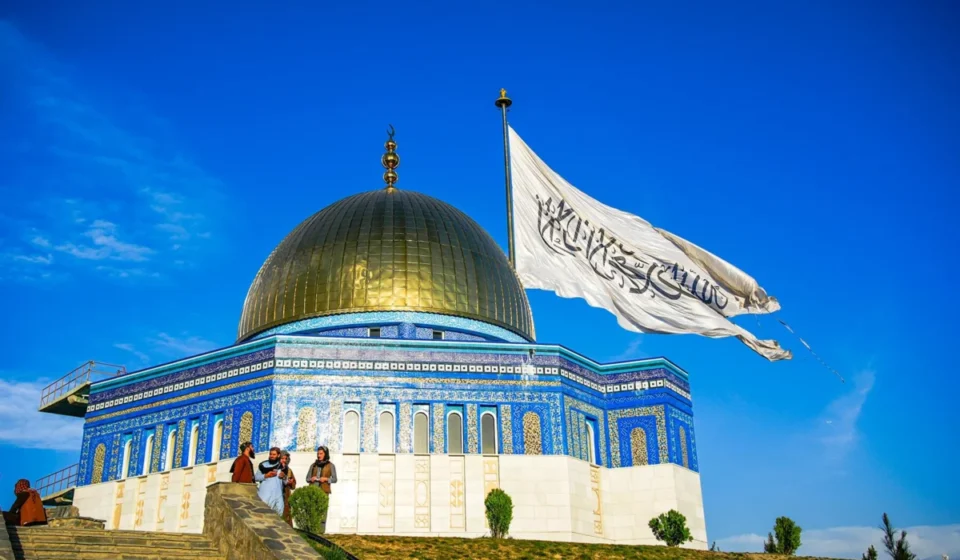
In the last few years, Afghanistan has seen a rise in "dark tourism," with influencers promoting trips to a country currently ruled by a regime that has effectively erased women from public life.
The Human Toll
Homeira Qaderi’s memoir, Dancing in the Mosque: An Afghan Mother’s Letter to Her Son, provides a stark, necessary counter-narrative to the "whitewashed" tourism currently being marketed. Qaderi recounts her life under Soviet occupation and Taliban rule, describing the quiet, dangerous acts of rebellion—such as teaching girls to read and dance—that define the human spirit under oppression.
The current humanitarian crisis in Afghanistan is undeniable. While photographers like Daniel Malikyar document the country’s stunning landscapes, it is crucial for potential travelers to recognize that tourism in the current climate is often used to legitimize a dictatorial regime. When the safety and rights of the local population are under such severe threat, the most respectful way to engage with Afghanistan is to read the stories of its people, bearing witness to their resilience from afar.
Conclusion: The Ethical Traveler’s Library
The decision to stay home is not a rejection of the world, but a deepening of one’s engagement with it. By curating a "literary itinerary," travelers can bypass the physical, financial, and ethical barriers that define modern tourism. Whether it is the streets of Barcelona or the frozen wastes of Antarctica, the power of the written word remains the most effective tool we have for expanding our horizons without causing harm. In an age of over-consumption, sometimes the most profound way to visit a place is to simply open a book.