Canon EOS R8 Mark II Review: A Bold Redesign Meets Pro-Grade Features in an Entry-Level Full-Frame Body

By Staff Reviewers
When Canon introduced the original EOS R8 in early 2023, it immediately captured the market’s attention by packing the powerhouse capabilities of the higher-end EOS R6 Mark II into a more compact, affordable chassis. It quickly cemented itself as one of the finest full-frame mirrorless cameras for beginners and budget-conscious enthusiasts alike.

Now, the successor has arrived. Priced at $1,899, the Canon EOS R8 Mark II retains the core imaging DNA of its predecessor while introducing critical hardware upgrades—most notably, in-body image stabilization (IBIS) and a dedicated autofocus joystick. Yet, it is its radically polarizing, angular aesthetic that has the photography world talking. Blending retro 1980s styling with modern mirrorless technology, the R8 Mark II is designed to turn heads. But beneath the striking exterior lies a deeply capable hybrid camera that refuses to feel like a compromise.

Main Facts: What’s New in the Canon EOS R8 Mark II?
The EOS R8 Mark II arrives as a substantial evolutionary step for Canon’s entry-to-mid-tier full-frame lineup. While it borrows the 24.2-megapixel full-frame sensor from the original R8 and the R6 Mark II, it addresses nearly every major hardware limitation of the first-generation model.
- In-Body Image Stabilization (IBIS): The most significant upgrade. The R8 Mark II adds full sensor-shift stabilization, drastically improving handheld performance in low-light and video scenarios.
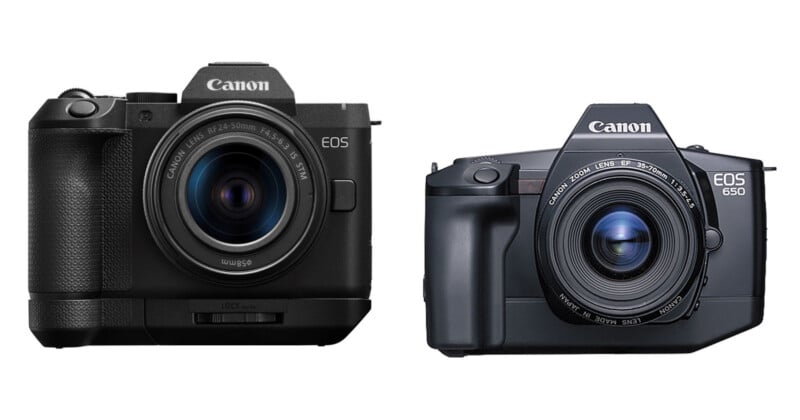
- Radical Redesign: Moving away from Canon’s smooth, curved styling, the R8 Mark II adopts a squared-off, angular chassis reminiscent of classic 1980s film slrs like the Canon T80 and EOS 650.
- Dedicated AF Joystick: Catering directly to enthusiast feedback, Canon has included an autofocus selector joystick—a feature missing from the original R8.
- Enhanced Buffer and Speed: While retaining the 40 frames-per-second electronic shutter speed, the buffer has been expanded to capture roughly 30% more RAW files and 60% more JPEGs.
- Advanced Video Suite: The camera supports oversampled 4K video recording up to 60p without a crop, alongside 1080p slow-motion capture at 180 fps with audio.
- Pricing: Launching at an MSRP of $1,899 body-only, sitting directly above the discounted first-generation R8 ($1,349).
Chronology of the Development and Release
The path from the first-generation EOS R8 to the Mark II reflects Canon’s iterative strategy of bringing pro-level features down to accessible price points.
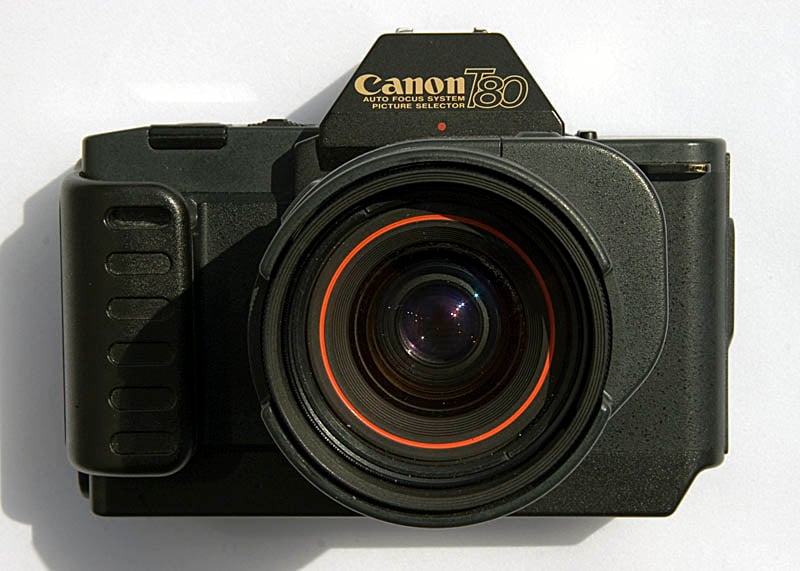
- Early 2023: Canon launches the original EOS R8. While lauded for its image quality and processing power, reviewers note the omission of IBIS and an AF joystick as necessary trade-offs to hit a lightweight form factor and aggressive price point.
- Late 2025/Early 2026: Rumors and leaks begin circulating online regarding a radically styled Canon camera. Early internet discourse focuses heavily on leaked body designs, with many expressing skepticism over the sharp, retro-industrial aesthetic.
- September 2026: Canon officially announces the EOS R8 Mark II alongside a $99.99 optional ergonomic extension grip. Pre-production units are handed to reviewers, showcasing a fully realized feature set that defies early online criticism.
- Late 2026: The camera hits retail shelves, entering a fiercely competitive market alongside refreshed offerings from Nikon, Sony, and Panasonic.
Supporting Data and Technical Specifications
To understand how the R8 Mark II performs in the field, it helps to examine the hard numbers and hardware specifications.
Physical Dimensions and Handling
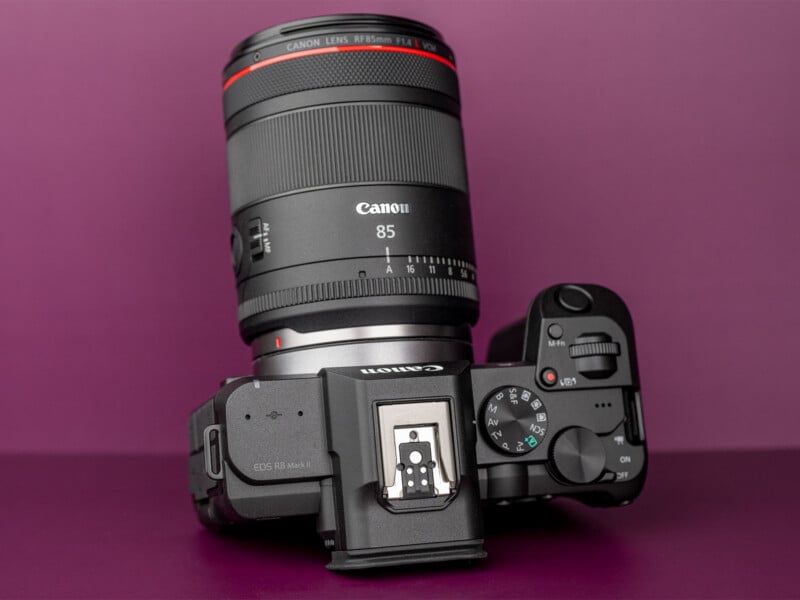
- Dimensions: 131.4 x 90 x 79.7 mm (5.17 x 3.54 x 3.13 inches)
- Weight: 546 grams (1.2 pounds with battery and card), compared to the original R8’s 461 grams.
- Display & EVF: Retains the 2.36-million-dot electronic viewfinder (EVF) and the 3-inch vari-angle touch display with 1.62 million dots.
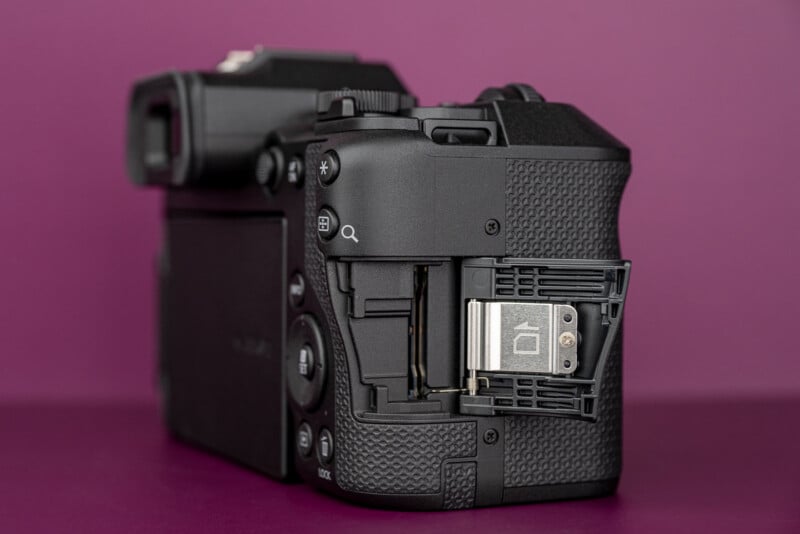
- Media: Single UHS-II SD card slot, relocated to the side of the camera body for easier access when mounted on tripods or used with the optional extension grip.
Imaging and Performance Metrics
- Sensor: 24.2-megapixel full-frame CMOS sensor.
- Shutter: Electronic First-Curtain Shutter (EFCS) paired with a fully electronic shutter capable of 40 fps continuous shooting. (Note: No fully mechanical shutter is present).
- ISO Range: Standard sensitivity up to 102,400, maintaining clean, manageable grain patterns through ISO 3200.
- Autofocus: Dual Pixel CMOS AF II providing 100% frame coverage, enhanced with AI-powered subject recognition for people, animals, and vehicles.
Design and Handling: A Polarizing Retro Revival
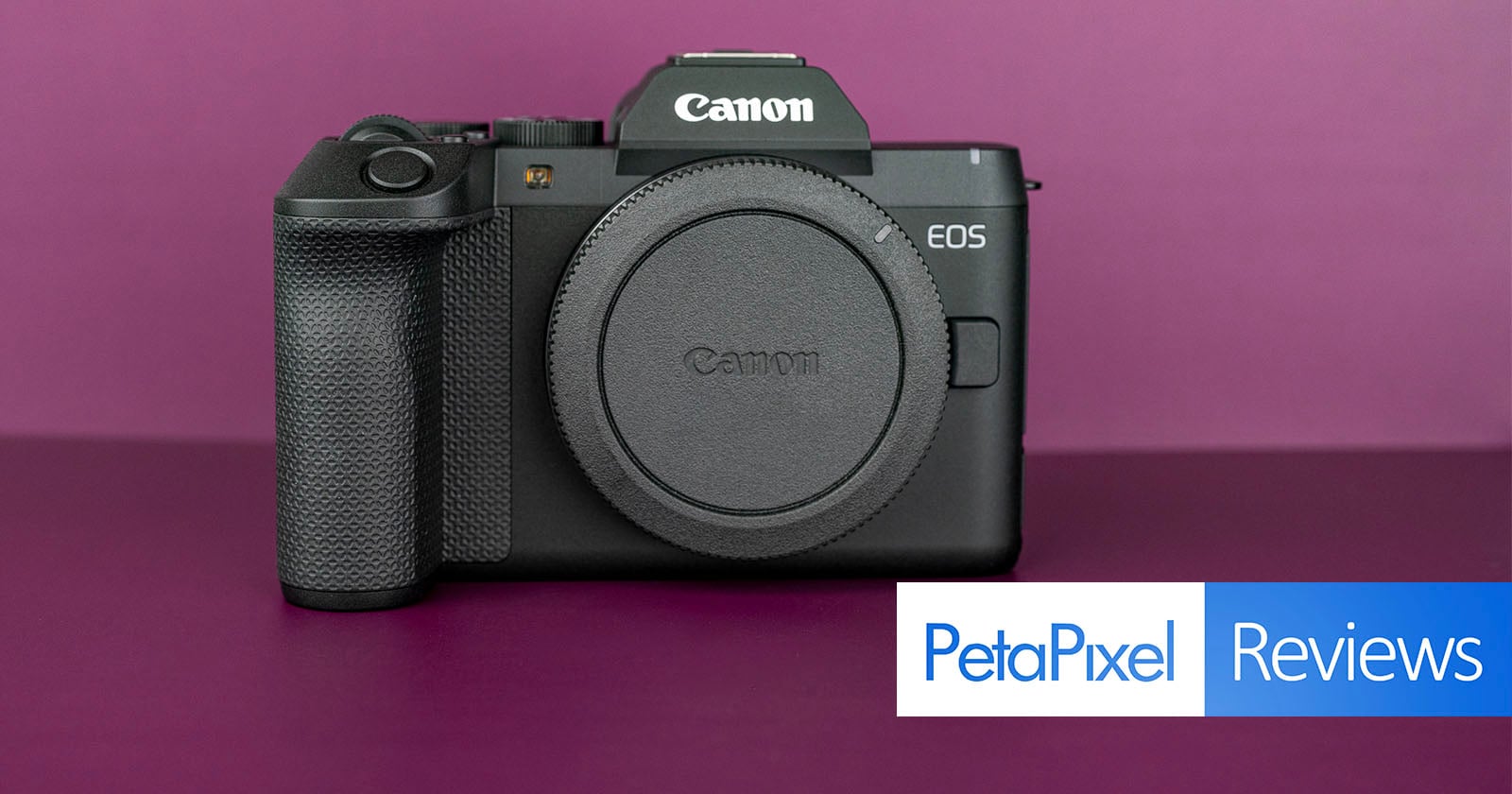
Nothing about the Canon EOS R8 Mark II will spark more debate than its appearance. Traditional digital camera design over the past decade has favored ergonomic, rounded contours designed to melt into the hand. Canon has shattered this convention with the R8 Mark II.
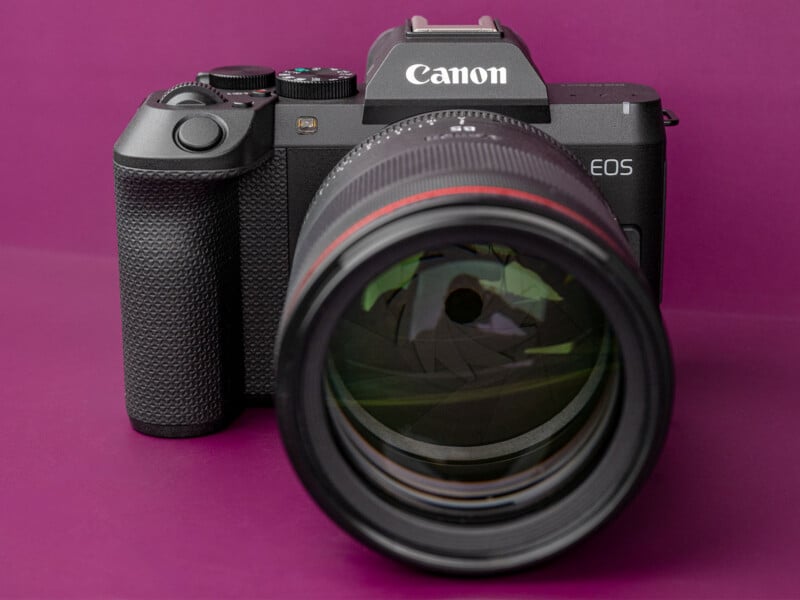
The camera features a remarkably square, angular body with a prominent viewfinder prism hump—a distinct nod to vintage film cameras like the 1985 Canon T80 and the historic 1987 EOS 650. When paired with the newly released $99.99 optional extension grip, the historical resemblance is striking.
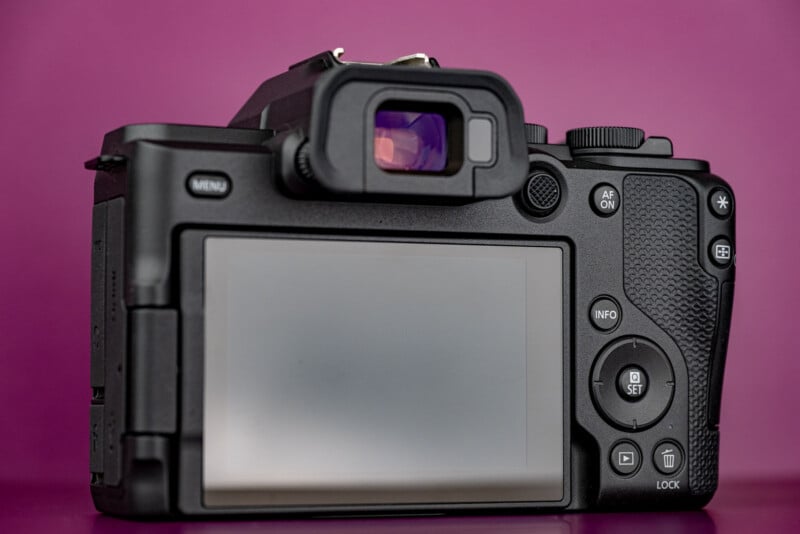
While leaked images generated a wave of negative online commentary prior to launch, hands-on experience paints a very different picture. The industrial aesthetic looks remarkably premium in person, signaling that Canon is willing to take bold aesthetic risks. More importantly, the practical handling is exceptional. The inclusion of an AF joystick rectifies the single greatest ergonomic grievance leveled against the original R8. Furthermore, the power switch now doubles as the stills/video mode selector, streamlining top-deck controls.
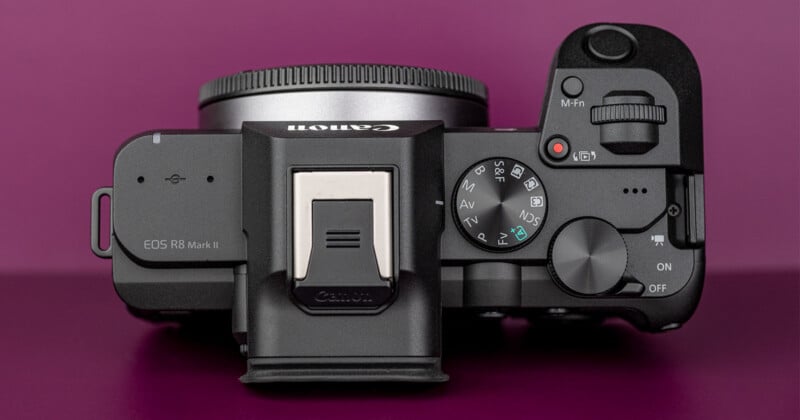
Though the camera has gained a modest amount of weight—tipping the scales at 546 grams compared to its predecessor’s 461 grams—the addition of internal hardware justifies every single gram.
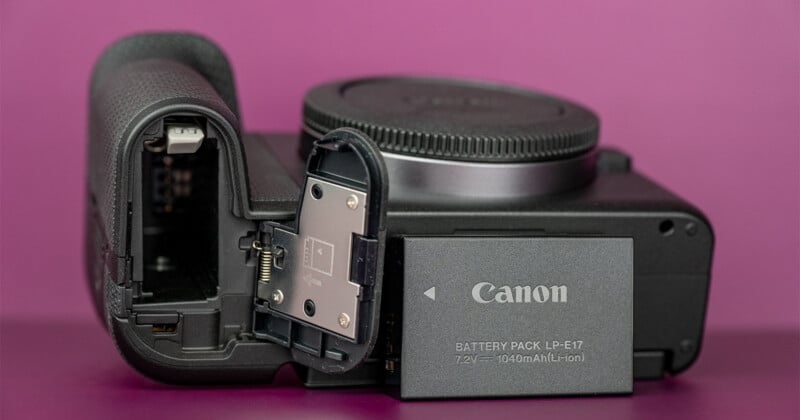
Image Quality and Field Performance
Operating on a pre-production unit running firmware 1.00, formal pixel-peeping is reserved for later retail evaluations. However, because the R8 Mark II shares its fundamental 24.2-megapixel full-frame sensor with the trusted R6 Mark II, its baseline performance is well-documented and entirely predictable—in the best possible way.
Stills and Dynamic Range
At base ISO 100, the R8 Mark II delivers crisp, highly detailed RAW files boasting rich color science and robust dynamic range. While it lacks a mechanical shutter, its Electronic First-Curtain Shutter (EFCS) successfully sidesteps the severe dynamic range penalties typically associated with purely electronic shutters in standard shooting conditions.
At higher sensitivities, the sensor continues to impress. Grain at ISO 3200 is fine, organic, and pleasantly consistent, functioning more like classic film grain than distracting digital noise. For creators who prefer shooting JPEGs straight out of the camera, Canon has integrated 16 customizable Color Filters—including Negative Filmtone and Positive Filmtone—offering quick, stylized looks without the need for post-processing.

Autofocus and Speed
Equipped with Canon’s legendary Dual Pixel CMOS AF II system, the R8 Mark II offers infallible tracking performance. Subject detection algorithms lock onto eyes, faces, vehicles, and wildlife effortlessly across 100% of the frame.

Combined with a blazing 40 fps electronic shutter mode and Pre-Continuous Shooting capabilities, action and wildlife photographers have a tremendous amount of speed at their fingertips. The expanded buffer capacity—allowing for roughly 30% more RAW files before slowing down—ensures you miss fewer peak moments.

Video Capabilities: A Robust Hybrid Contender
The video market at this price point is intensely competitive, but the R8 Mark II holds its ground by offering professional-grade tools to burgeoning videographers.

Thanks to relatively quick sensor readout speeds, rolling shutter artifacts are kept well under control. Videographers can capture oversampled 4K footage at up to 60 frames per second completely uncropped. For slow-motion enthusiasts, the camera drops down to 1080p at a staggering 180 fps, complete with simultaneous audio recording.
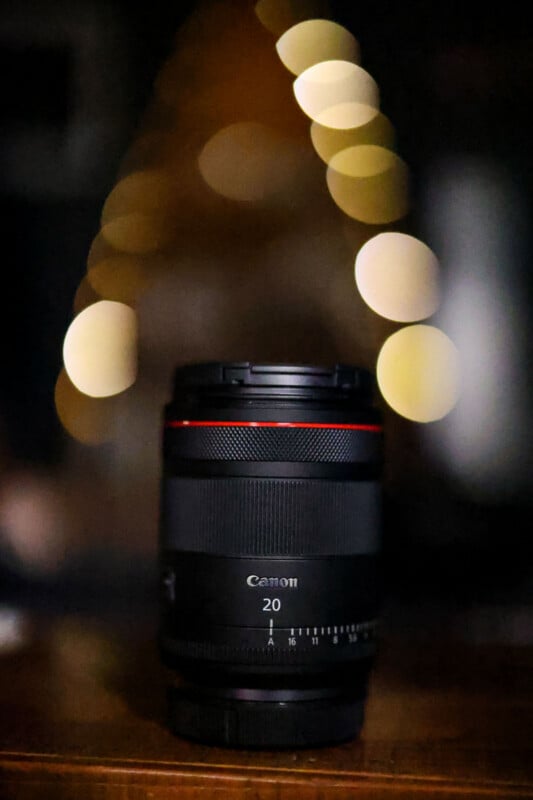
The addition of In-Body Image Stabilization (IBIS) completely transforms the R8 Mark II as a handheld video platform. Paired with Canon’s dynamic digital stabilization modes, creators can achieve remarkably stable handheld shots—though it does introduce a slight crop factor to smooth out edge wobbles. Professional color grading is also fully supported via the flat C-Log 3 profile.

However, the video implementation is not entirely without flaws. Once recording begins, the active histogram temporarily disappears, complicating accurate exposure metering in fluctuating light. Additionally, Canon’s marketed "Cinema View" feature merely crops the footage into a 2.35:1 aspect ratio—a task easily performed in post-production—and frustratingly disables compatibility with Log profiles.
Implications for the Market and Competitors
The Canon EOS R8 Mark II occupies a fascinating middle ground in the camera ecosystem. It does not cannibalize the higher-end EOS R6 Mark III, deliberately omitting high-resolution sensors and mechanical shutters to preserve tiered product positioning. Yet, it avoids feeling compromised. It is an approachable, user-friendly tool that provides enough headroom to grow alongside an amateur photographer over years of skill development.

Nevertheless, buyers entering this price bracket face stiff competition:

- Nikon Z5 II: Currently retailing aggressively around $1,596, the Z5 II offers a similarly compelling blend of professional controls and full-frame affordability.
- Sony a7 IV: Frequently discounted to around $2,000, Sony’s veteran hybrid features a higher-resolution 33-megapixel sensor and an extensive native lens ecosystem.
- Panasonic Lumix S5 II: At $1,900, the S5 II remains a primary choice for hybrid creators prioritizing advanced video-centric toolsets.
Official Verdict: Should You Buy It?
For existing owners of the original EOS R8, the decision to upgrade depends heavily on how much you value In-Body Image Stabilization and the physical AF joystick. For new buyers looking to enter the Canon full-frame ecosystem, the EOS R8 Mark II at $1,899 is a resounding recommendation.

Despite a divisive retro exterior, the camera’s internal performance is utterly uncontroversial. It is powerful, ergonomically refined, exceptionally fast, and equipped with the stabilization and autofocus tools that modern hybrid creators demand. The Canon EOS R8 Mark II proves that taking creative design risks doesn’t have to come at the expense of practical utility.
Related posts: