
Bridging the Gap: Why Higher Education and Academic Institutions Need Specialized Event Registration Infrastructure

GLOBAL REPORT — Managing academic symposia, university continuing education programs, and professional certification workshops has long presented a unique set of operational headaches for event planners. While generic event registration software excels at managing straightforward corporate webinars or simple ticketed gatherings, it routinely stumbles when deployed within educational ecosystems.
According to the State of Continuing Education 2025 report published by UPCEA, demand for workforce-aligned education, corporate training, and employer partnerships is climbing at an unprecedented rate. Institutions across the globe—from large state university systems and K-12 school districts to specialized academic societies and credentialing boards—are rapidly expanding their professional development footprints.
Yet, as these academic programs grow in scope and frequency, the administrative burden on event organizers is intensifying. Generic tools, designed primarily to collect names and credit card details, lack the architectural nuance required to handle multi-tiered academic pricing, credit tracking, abstract submissions, and diverse audience segmentation.
The Anatomy of Complexity: Core Challenges in Educational Event Management
Educational events are inherently multifaceted. Unlike commercial events where a single ticket grants universal access, an academic conference or professional development program must juggle distinct constituencies simultaneously.

1. Audience Segmentation and Differential Access
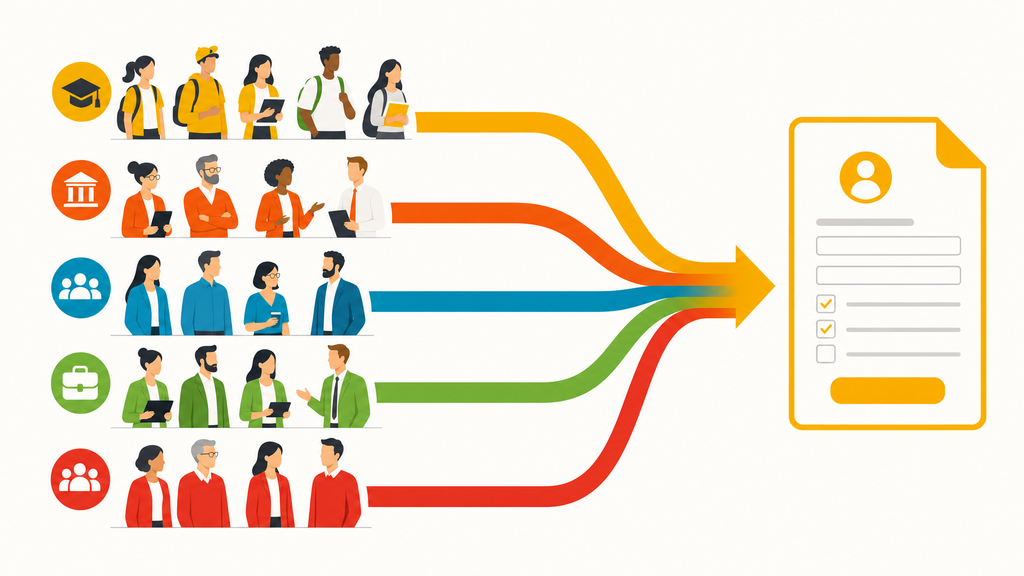
A standard educational gathering often caters to a diverse mix of undergraduate students, graduate researchers, tenured faculty, industry practitioners, and international delegates. Each group operates under completely different financial parameters. Faculty members may receive institutional subsidies, students often qualify for heavy discounts, and external corporate partners pay standard or premium rates.
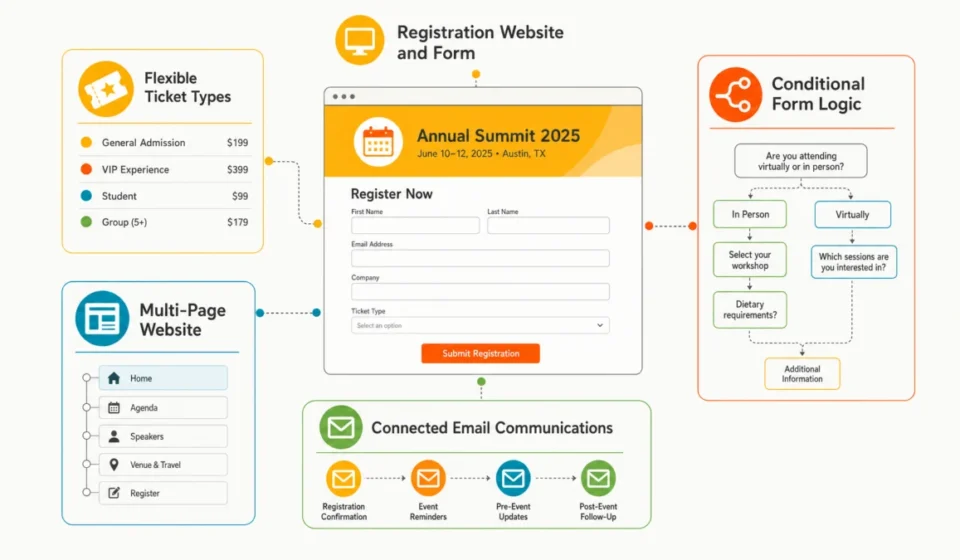
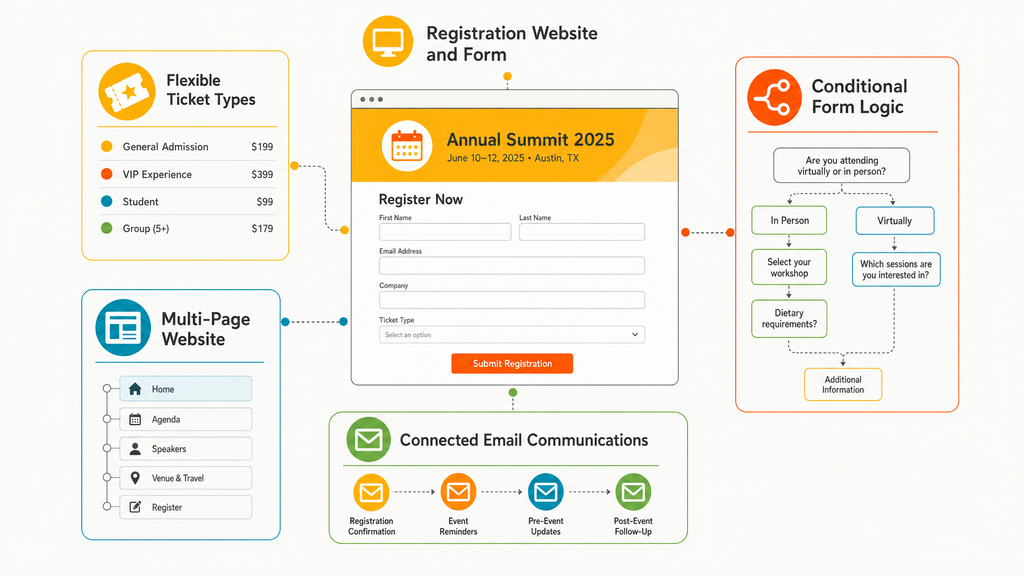
Executing this within a single registration framework requires sophisticated conditional logic and invisible ticket tiers. Without advanced platform architecture, organizers are forced to either publish overwhelming, bloated forms that display every pricing option to every visitor or manually manage dozens of separate registration channels.
2. Continuing Education Units (CEUs) and Credential Tracking
For continuing education departments and certification bodies, registration is only the beginning of a compliance lifecycle. Events offering Professional Development Units (PDUs) or CEUs demand session-level data capture. Planners must track precisely which workshops or breakout panels an attendee selects, ensuring that downstream reporting accurately reflects credit eligibility for state boards or professional associations.
3. Dual Workflows: Abstract Submissions and Speaker Management
Academic conferences rarely follow a linear registration path. They rely on parallel workflows where researchers, scholars, and industry experts submit abstracts, undergo peer review, and subsequently register as presenters. Managing this interplay—where speakers require distinct deadlines, validation processes, and registration codes separate from general attendees—creates administrative bottlenecks when forced into basic event tools.
Chronology of an Evolving Market: From Paper Forms to AI-Driven Concierges
To understand the current state of educational event technology, it is helpful to look at how institutions have managed registration over the past two decades.
- Early 2000s (The Legacy Era): Universities relied on fragmented web forms built by internal IT departments, coupled with manual database entry and paper check-in sheets. Session tracking was managed via physical sign-up clipboards outside lecture halls.
- 2010s (The Generic SaaS Boom): As cloud-based event software matured, educational institutions adopted off-the-shelf ticketing platforms. While these tools streamlined credit card processing, they struggled with academic program density, leading to widespread workarounds like custom-coded spreadsheets and disconnected email marketing lists.
- Present Day (The Specialized & AI Integration Era): Modern platforms are beginning to bridge the gap by incorporating multi-page website builders, native abstract management, and artificial intelligence. Innovations such as AI registration concierges—which automatically detect an international attendee’s native language and respond in kind—are replacing the need for fully translated, costly multi-language websites. Furthermore, modern platforms now tie registration data directly to mobile event apps, digital badge printing, and onsite check-in kiosks, virtually eliminating manual data reconciliation.
Supporting Data and Industry Insights
The operational strain on educational planners is heavily documented by sector analytics:
- Growing Demand: UPCEA data emphasizes that lifelong learning and workforce-aligned education are top strategic priorities for higher education institutions seeking to diversify revenue streams.
- Conversion Friction: Studies in digital UX show that a lack of clear, upfront program transparency causes an average drop-off rate of 35% among academic registrants who cannot easily evaluate multi-track schedules prior to checkout.
- Data Integrity: Organizations utilizing unified registration-to-app ecosystems report a 50% reduction in onsite check-in bottlenecks compared to those stitching together separate tools for registration, abstract management, and email communications.
Official Perspectives and Expert Recommendations
Industry technologists and association leaders stress that choosing the right infrastructure requires moving past superficial feature lists.
"Educational events are essentially mini-ecosystems," notes a leading event technology strategist. "You aren’t just selling a seat in a room; you are managing a complex web of compliance data, academic credentials, and institutional privileges. If your software cannot dynamically adapt its questions based on who is logging in, your team will spend hundreds of hours manually auditing spreadsheets."
When evaluating platforms, experts recommend putting software vendors through rigorous scenario testing based on real-world academic workflows:
- Can the platform hide faculty and student discount tiers behind secure access codes while keeping the public registration portal clean?
- Does the system support session-level reporting required for professional certification audits?
- How smoothly do abstract submission portals integrate with the final attendee database?
Mission-driven and education-adjacent organizations—including nonprofits and research institutes—face remarkably similar hurdles, frequently turning to flexible registration frameworks to maintain engagement across wide geographic and demographic spans.
Implications for the Future of Academic and Professional Learning
As universities and professional societies continue to position themselves as hubs for lifelong learning, the operational expectations of attendees will only rise. Professionals attending multi-day certificate programs or international research symposia expect seamless, consumer-grade digital experiences backed by rigorous academic record-keeping.
Strategic Takeaways for Planners:
- Prioritize Form Flexibility: Ensure your chosen software features robust conditional logic to tailor the registration experience to each unique audience segment.
- Demand Native Session Handling: Look for platforms that capture session preferences directly during registration to streamline continuing education credit tracking.
- Unify the Tech Stack: Eliminate data silos by choosing software where registration data flows effortlessly into event apps, email communication hubs, and onsite badge printing systems.
By investing in specialized event registration software built explicitly for the nuances of education, institutions can alleviate administrative fatigue, protect data integrity, and focus on what matters most: delivering high-impact learning experiences.