
For nearly a century, the sleepy industrial town of Lawrenceburg, Indiana, has quietly served as the beating heart of American whiskey production. Nestled along the banks of the Ohio River, a massive, sprawling distillery complex has operated through the roaring twenties, the despair of Prohibition, corporate buyouts, and the modern craft distilling boom. For generations, this facility—known post-Prohibition as Seagram’s, transitioning through several corporate iterations, and ultimately becoming MGP Ingredients in 2011—has been the silent engine behind some of the most celebrated bourbon and rye brands in the United States.
Yet, for all its immense output, the average consumer rarely saw the name "MGP" on a bottle. Instead, the Lawrenceburg plant operated largely in the shadows, supplying liquid gold to famous names like Bulleit, Four Roses (prior to the revival of their own Lawrenceburg distillery in the early 2000s), Templeton, and George Dickel. While MGP did launch some in-house labels over the past decade, the corporate strategy was historically defined by contract distilling and bulk sourcing.
That era of quiet anonymity is officially over. In a landmark move that signals a profound shift in marketing transparency and brand identity, MGP is finally stepping out of the shadows. The company has announced the release of its inaugural flagship bourbon bearing the MGP name: MGP Chapter One: Out of the Shadows. Alongside this historic bottling, the distillery is expanding its celebrated Remus portfolio with two new offerings, including the first-ever rye whiskey to wear the Remus banner.
As the American whiskey market navigates a cooling period characterized by shifting consumer demands and fluctuating sales, MGP’s decision to plant its flag directly in the consumer-facing spotlight marks a pivotal new chapter for one of the industry’s most influential production powerhouses.
Main Facts: The Historic Shift at Lawrenceburg
The headline development is as simple as it is monumental: MGP is releasing a premier straight bourbon under its own corporate moniker for the first time in its modern history.
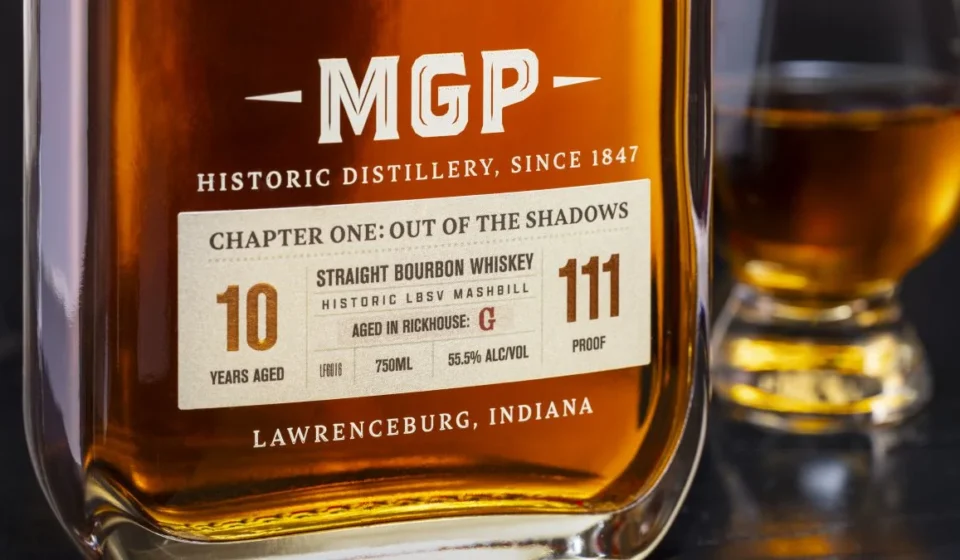
Titled MGP Chapter One: Out of the Shadows, this inaugural release is a 10-year-old straight bourbon whiskey bottled at 111 proof (55.5% ABV). Crafted by master distiller Ian Stirsman, the expression is a carefully curated blend of barrels drawn exclusively from the distillery’s legendary Rickhouse G. The liquid utilizes the facility’s historic LBSV mashbill, composed of 60 percent corn, 36 percent rye, and 4 percent malted barley—a high-rye recipe that has long lent MGP’s bourbons their signature spicy backbone.
Tasting notes provided by the distillery paint a picture of a complex, mature whiskey. The nose yields inviting aromas of rich butterscotch, burnt sugar, molasses, and dark cherry. On the palate, those notes evolve into a robust tapestry of cherry cola, ripe raspberries, dark chocolate, sassafras, and aged leather, backed by the warming structural depth expected from a decade-old Indiana whiskey.
Priced accessibly at a suggested retail price of $70 per bottle, Out of the Shadows is designed not as an ultra-exclusive, unicorn-priced collector’s item, but as a deliberate introduction of the MGP brand directly to whiskey enthusiasts.
In tandem with this release, MGP is fortifying its proprietary Ross & Squibb brand portfolio with two new additions under the Remus name:
- Remus Repeal Reserve Rye Whiskey: Representing a major milestone for the distillery, this is the first-ever rye whiskey to carry the Remus name. Crafted from MGP’s iconic 95 percent rye grain mashbill—the very same recipe that put American craft rye on the map for countless independent brands—this expression is a blend of distillate from 2015 and 2016, bottled at 111 proof.
- Remus Repeal Reserve Series X: A sweeping testament to the distillery’s blending prowess, Series X combines three different mashbills distilled across a decade, spanning from 2008 to 2017. Also blended by Stirsman, it is bottled at 107 proof.
Both Remus expressions carry a suggested retail price of $80 and are rolling out to markets nationwide alongside the flagship MGP release.
Chronology: A Century of Distilling Excellence in Lawrenceburg
To truly understand the weight of MGP stepping out of the shadows, one must trace the timeline of the Lawrenceburg facility, which has been a cornerstone of American spirits production for nearly one hundred years.
The Pre-War and Seagram’s Era (1930s–2000s)
Following the repeal of Prohibition in 1933, the Lawrenceburg distillery was established and eventually grew into a colossal operation under the stewardship of Joseph E. Seagram & Sons. For decades, Seagram’s Lawrenceburg facility was one of the largest beverage alcohol distilleries in North America. It churned out massive quantities of whiskey, gin, and neutral grain spirits. During the mid-to-late 20th century, as American tastes shifted away from aged whiskey toward clear spirits like vodka and gin, the Lawrenceburg plant adapted, serving as a massive industrial workhorse.
The Craft Boom and the Rise of "Sourced" Whiskey (2000s–2010s)
When the craft distilling movement began to gain serious momentum in the late 2000s, hundreds of new startup brands emerged across the United States. However, opening a distillery, laying down barrels, and waiting four to twelve years for the whiskey to mature is an exceptionally capital-intensive endeavor.
Enter Lawrenceburg. Long before these craft brands had their own aged stock, they turned to the massive Indiana distillery—then operating under different corporate owners—to purchase mature, high-quality bourbon and rye. Brands would buy this pre-aged liquid, bring it back to their home states, bottle it under creative, heritage-inspired backstories, and sell it to consumers.
In 2011, Midwest Grain Products (MGP) officially acquired the Lawrenceburg facility, formalizing its role as the premier contract distiller and bulk whiskey supplier in the United States. For years, mentioning "MGP" in enthusiast circles was often met with whispers. Some brands embraced their Indiana roots, while others guarded the source of their whiskey as a proprietary trade secret, occasionally weaving elaborate, fictional tales about hidden family recipes or secret rickhouses.
Portfolio Expansion and Corporate Evolution (2021–Present)
As the American whiskey market matured, MGP began expanding its footprint beyond purely business-to-business contract distilling. In 2021, MGP made a massive strategic acquisition by purchasing Luxco, a prominent Missouri-based drinks company. This multi-million-dollar deal added established distilleries and brands to MGP’s roster, including Limestone Branch Distillery, Yellowstone Bourbon, and the ultra-premium Blood Oath series.

Furthermore, MGP established the Ross & Squibb Distillery brand identity for its Lawrenceburg operations, introducing crowd-favorite lines like Remus Bourbon and Rossville Union Rye.
However, the journey has not been without hurdles. Over the past year, MGP has reported notable financial headwinds, including significant declines in whiskey sales and temporary production pauses. These cutbacks reflect a broader cooling trend in the American whiskey market, where rapid post-pandemic expansion has met a temporary plateau in demand, leading to an oversupply of bulk-contracted whiskey. It is precisely against this backdrop of market recalibration that MGP has chosen to launch its most transparent and direct consumer-facing brand to date.
Supporting Data: The Economics of Sourcing and Market Shifts
The decision by MGP to launch Chapter One: Out of the Shadows is supported by fascinating shifts in consumer behavior, manufacturing metrics, and market economics.
- The Scale of Lawrenceburg: The MGP distillery in Lawrenceburg is a sprawling industrial campus housing dozens of multi-story brick rickhouses. At peak capacity, it has stored hundreds of thousands of barrels of maturing spirit simultaneously, making it one of the largest single repositories of aging American whiskey in the world.
- Mashbill Dominance: MGP’s recipes—most notably the 60% corn / 36% rye / 4% malted barley bourbon mashbill and the 95% rye / 5% malted barley rye mashbill—have served as the foundational flavor profiles for dozens of award-winning independent whiskey brands over the last fifteen years.
- Pricing Strategy: By positioning its flagship 10-year-old single-origin release at $70, MGP is undercutting many of the sourced brands that bottle similar-aged MGP distillate and sell it to consumers at price points ranging from $90 to well over $150. This pricing strategy leverages the company’s sheer economies of scale to offer exceptional value.
- Market Cooling and Strategic Pivots: Recent financial reports from MGP Ingredients highlight a downturn in contract-distilled whiskey sales and a necessary scaling back of production runs across various facilities. When the B2B (business-to-business) demand contracts, pivoting toward high-margin, high-visibility branded products (D2C and direct-to-consumer marketing) is a classic corporate hedge to maintain revenue streams and brand equity.
Official Responses: What Leadership is Saying
The transition from a behind-the-scenes manufacturing titan to an open, consumer-facing brand required a deliberate philosophical change at the executive level. Company leadership has been vocal about reclaiming the narrative of the Lawrenceburg facility.
In an official statement accompanying the launch, MGP President and CEO Julie Francis emphasized the immense equity the company has quietly built over decades:
"The MGP name has built incredible equity over generations because of the quality of the products we make and the people behind them. We’ve been making whiskey and spirits that others have proudly put their names on for decades. Bringing the MGP name back to the distillery and launching MGP Chapter One: Out of the Shadows is an exciting opportunity to share that story directly with consumers."
Master Distiller Ian Stirsman, who engineered the blend for Chapter One as well as the new Remus expressions, focused on the sensory and historical elements of the liquid:
"When looking at Rickhouse G and evaluating barrels for this inaugural release, our goal was to showcase the distinct character that Lawrenceburg has produced for generations. The LBSV mashbill gives us a rich, spicy, yet deeply sweet foundation. Blending these 10-year-old barrels allowed us to capture the very essence of what makes this distillery legendary, presenting it in a way that honors our history while looking boldly toward the future."
Implications: What This Means for the Future of American Whiskey
The launch of MGP Chapter One: Out of the Shadows and the expansion of the Remus rye line carry profound implications for the broader American whiskey landscape, touching upon transparency, brand equity, and market evolution.
1. The Death of the "Sourced Whiskey" Stigma
For years, the whiskey industry labored under an unnecessary cloak of secrecy. Sourced whiskey was frequently treated as a dirty word by marketing departments terrified that consumers would reject a bottle if they discovered the liquid wasn’t distilled on-site by a romanticized local artisan.
Today, that stigma is largely dead. Consumers are vastly more educated, sophisticated, and appreciative of the transparent truth: distilling great whiskey is a craft, but blending and aging are equally noble master arts. By boldly stamping the MGP name on a bottle of its own whiskey, the company is validating contract distilling and sourcing out in the open. It sends a message that excellence in whiskey-making is about the liquid in the glass, the hands that crafted it, and the warehouses where it slumbered—not about deceptive marketing narratives.
2. A New Competitive Landscape for Premium Bourbon
By entering the retail market directly with a 10-year-old, 111-proof bourbon priced at $70, MGP is entering a fiercely competitive segment dominated by legacy Kentucky distillers and successful craft upstarts. However, MGP holds a distinct structural advantage: age-stated stock. While many craft distilleries struggle to release whiskey aged past four to six years, MGP possesses deep architectural reserves of fully matured, decade-old whiskey. This allows them to immediately compete at the highest tiers of quality and maturity without waiting a decade for new barrels to come of age.
3. Adapting to Market Realities
As the whiskey boom levels off from its hyper-growth phase of the late 2010s, distilleries must find new avenues for profitability. The slowdown in bulk contract sales forced MGP to evaluate how it captures value from its massive inventories. Launching high-profile, direct-to-consumer flagship brands allows MGP to capture retail margins rather than relying solely on wholesale B2B volumes. If Chapter One resonates with consumers—and early critical reviews suggest it will—it could pave the way for permanent core-lineage releases bearing the MGP name year-round.
Conclusion
For nearly a century, the sprawling brick complexes of Lawrenceburg, Indiana, have been the unsung heroes of the American whiskey renaissance. Countless enthusiasts have raised glasses filled with MGP distillate while remaining completely unaware of its origins.
With the debut of MGP Chapter One: Out of the Shadows, the veil has finally been lifted. By honoring its heritage, embracing total transparency, and putting its own name proudly on the label, MGP is no longer just the engine room of American whiskey—it is taking center stage. For whiskey drinkers looking for world-class, mature bourbon and rye backed by authentic distilling pedigree, the shadows are gone, and a bright new era has begun.