Comments Off on Inside the Crucible: A Retrospective Journey Into Nikon’s 1966 Masterclass in Lens Craftsmanship
Main Facts
In an era defined by computer-aided design, advanced digital ray-tracing, and hyper-precise automated molding, modern camera lenses are technological marvels. They deliver clinical sharpness, zero-distortion profiles, and optical consistency that previous generations of photographers could only dream of. Yet, a palpable nostalgia endures for the character, warmth, and organic imperfections of vintage glass.
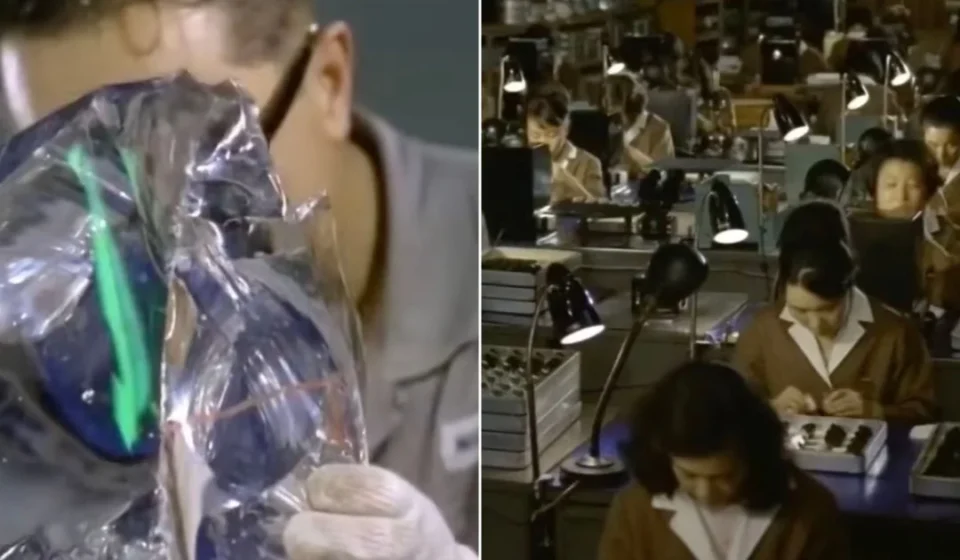
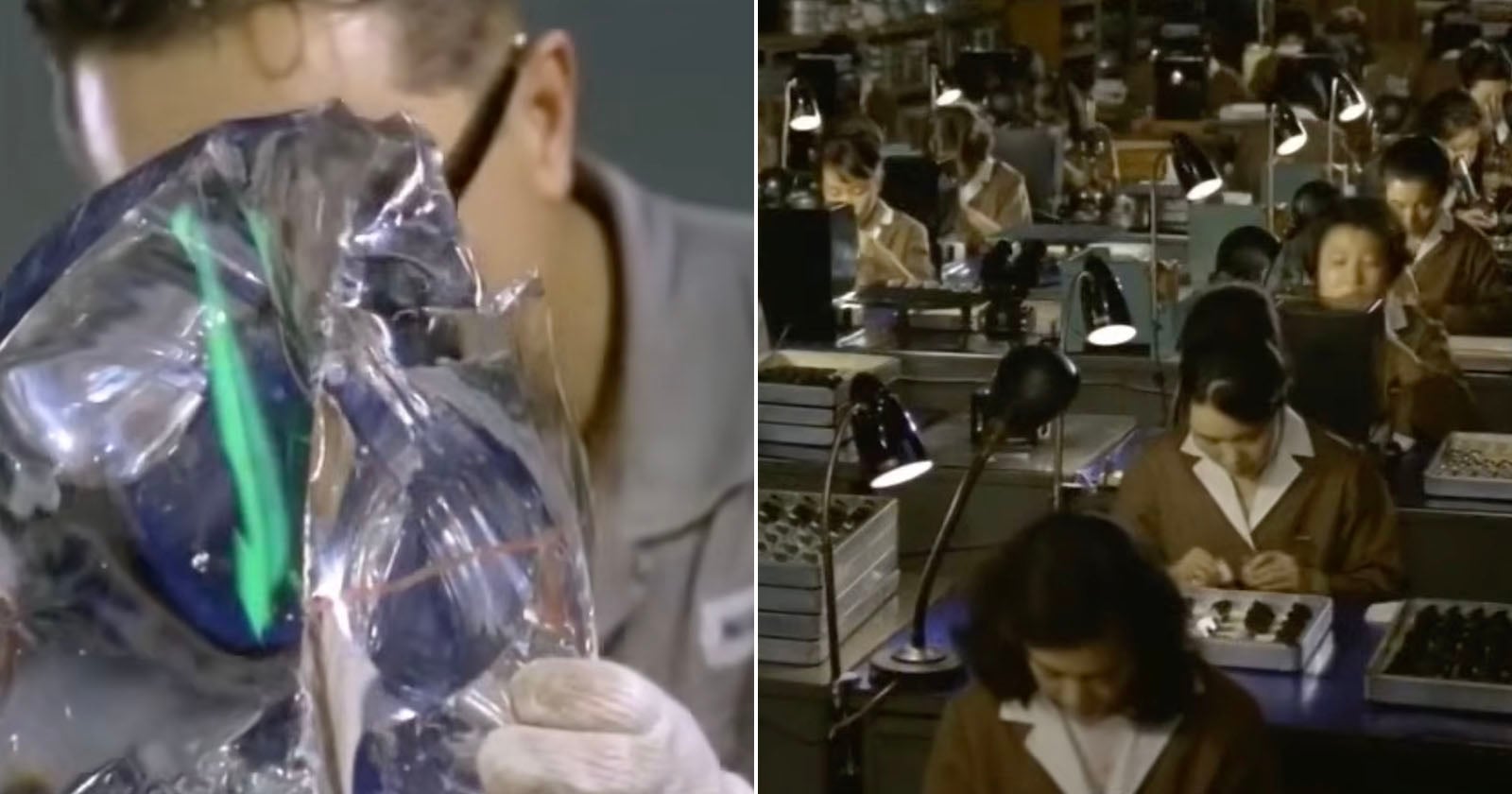
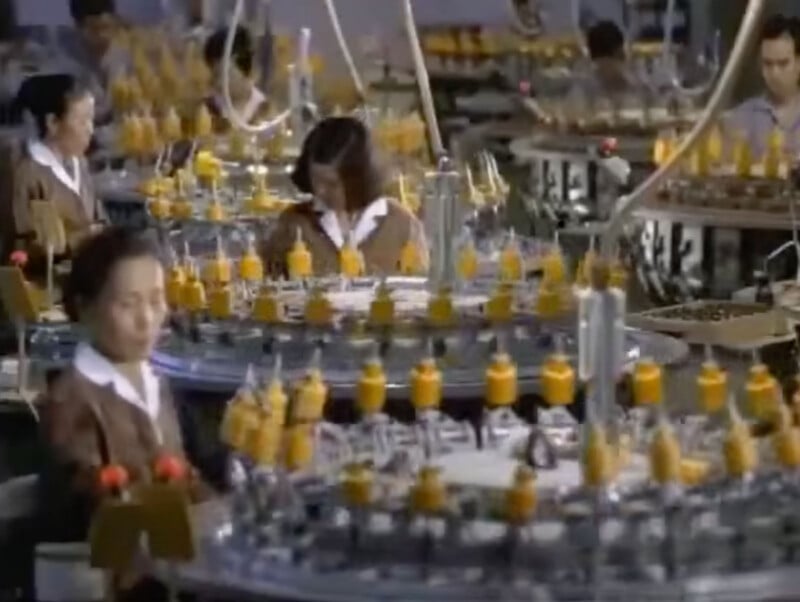
A newly resurfaced historical document—a classic 1966 manufacturing video produced by Tokyo Cinema in collaboration with Nikon (operating at the time under its original corporate banner, Nippon Kogaku Kogyo)—offers a fascinating window into a bygone era of optical engineering. Titled The Eye of Science, the award-winning documentary captures the meticulous, labor-intensive, and often hazardous realities of mid-century lens and camera production.
The short film, which earned the Japan Industrial Film Contest Encouragement Award in 1967, highlights a stark contrast with today’s automated cleanrooms. In 1966, creating a camera lens was as much a metallurgical and sculptural art form as it was a science. Workers relied on raw silica sand, superheated industrial furnaces, handheld tools, and human intuition to craft optical glass from scratch.
While the fundamental physics of refracting light through precisely shaped glass remain unchanged, the methodology has undergone a total industrial revolution. Today, automated robots handle extreme thermal processes, and digital sensors measure tolerances down to nanometers. Yet, as contemporary cinematographers and analog purists continue to seek out 60-year-old Nikon glass for its distinct flares, low-contrast warmth, and soulful rendering, the 1966 documentary serves as a timely reminder that perfection is not always the ultimate goal in visual storytelling.
Chronology: The Evolution of Optical Engineering at Nikon
To understand the magnitude of the processes shown in The Eye of Science, it is helpful to trace the timeline of optical manufacturing from its mid-century roots to the modern digital age.
1917 (The Foundation): Nippon Kogaku Kogyo (Japan Optical Industries Co., Ltd.) is established through the merger of three leading Japanese optical companies. The firm initially focuses on manufacturing binoculars, microscopes, and other precision measuring instruments, laying the groundwork for world-class glass production.
Post-WWII Expansion: Leveraging its accumulated optical expertise, the company pivots heavily toward photographic lenses and cameras, eventually introducing the iconic Nikon rangefinder series and, later, the legendary Nikon F single-lens reflex (SLR) system.
1966 (The Documentary Era): Nippon Kogaku Kogyo partners with Tokyo Cinema to produce The Eye of Science. This milestone year captures the zenith of traditional, hands-on optical craftsmanship, where raw chemical compounds are melted, broken, pressed, and hand-polished within high-heat factory environments.
Late 20th Century (The Digital Shift): As computer technology matures, optical design shifts away from empirical trial-and-error toward advanced computer-aided design (CAD) software. Aspherical molding techniques and automated grinding machinery begin to replace manual polishing stations.
21st Century (The AI and Nano-Coating Era): Modern lens production relies on extreme digital simulations, proprietary Nano Crystal and Arneo coatings to eliminate ghosting and flare, and automated assembly lines that guarantee absolute mechanical precision across millions of identical units.
Present Day (The Vintage Renaissance): Ironically, as modern lenses become clinically flawless, a counter-movement emerges. Photographers and filmmakers increasingly covet vintage 1960s and 1970s lenses, utilizing adapters and cinema housings to capture the organic flares and artistic imperfections of the past.
Supporting Data: The Anatomy of 1960s Lens Manufacturing
The 1966 documentary provides rare quantitative and qualitative insights into the sheer scale and difficulty of mid-century optical manufacturing. Breaking down the processes reveals just how monumental a task it was to produce a single camera lens six decades ago.
Raw Material and Thermal Processing
Unlike modern optical companies that often source pre-cast glass blanks from specialized chemical conglomerates, Nikon’s 1960s workflow encompassed in-house glass creation.
The Recipe: Engineers combined high-grade silica sand with over a dozen secondary chemical materials to achieve specific refractive indexes and dispersion properties.
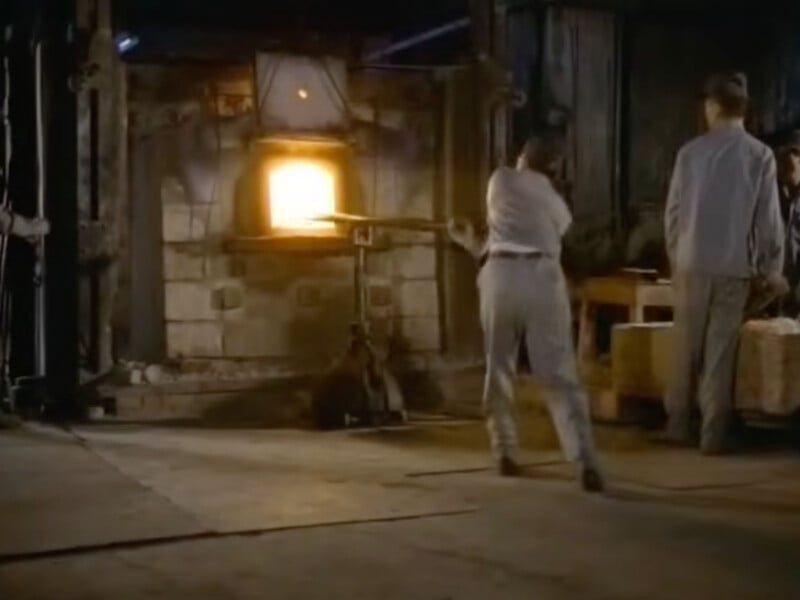
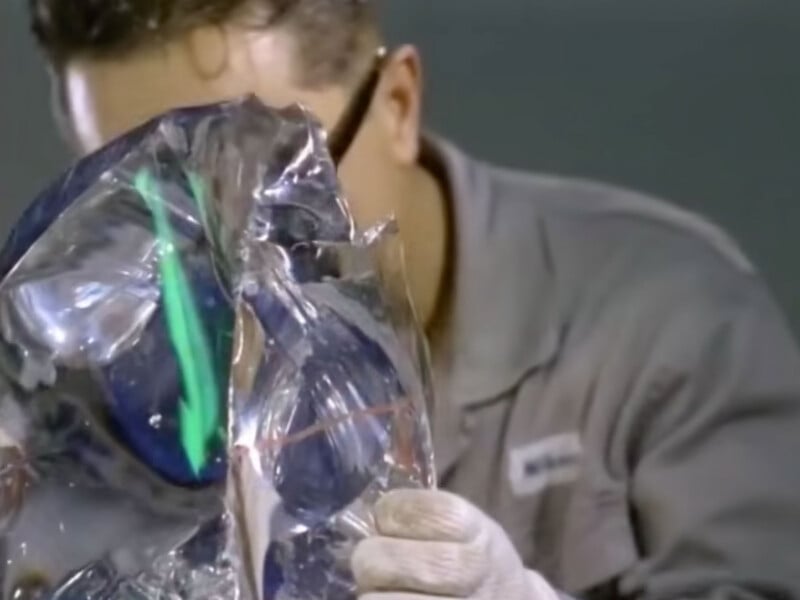
The Crucible: Batches were superheated inside massive industrial crucibles until molten. Workers in protective gear used long metal tools to manage the molten mass, extracting glowing chunks of raw optical glass once the material cooled enough to be handled.
Manual Shaping: Large blocks were broken down and subjected to secondary superheating before being fed into mechanical presses that roughly shaped the glass into optical blanks.
Precision Grinding and Polishing
Once the glass was pressed into rough lens elements, it entered the finishing stage, where human skill dictated the final optical quality.
Micrometer Tolerances: Workers polished and finished lens elements by hand or on semi-automated rotating laps, achieving surface precision down to just a couple of micrometers (one-thousandth of a millimeter). A microscopic deviation could ruin the focal plane entirely.
Barrel Integration: The finished glass elements were painstakingly hand-assembled into metal lens barrels. This stage demanded extreme cleanliness and spatial accuracy; even a microscopic speck of dust or a fraction-of-a-millimeter misalignment of an internal element could severely degrade image sharpness and contrast.
Camera Body Assembly
The Eye of Science does not stop at optics; it also pulls back the curtain on camera body production, specifically showcasing the assembly of the Nikon F and Nikon F Photomic T cameras.
Part Count: Each camera body required the careful integration of over 1,000 individual mechanical parts, ranging from tiny screws and springs to complex shutter mechanisms and prisms.
Longevity Metric: A testament to this analog build quality is the survival rate of these cameras. Many Nikon F bodies manufactured in the 1960s remain fully operational today, functioning reliably in the hands of modern film photography enthusiasts.
Official Perspectives and Industry Insights
Reflecting on archival footage like The Eye of Science offers historians, engineers, and modern creators a chance to evaluate how far the industry has come—and what might have been lost along the way.
Industry experts note that while modern lenses are objectively superior in terms of modulation transfer function (MTF) charts, resolution, and edge-to-edge sharpness, they can sometimes lack personality.
"Sometimes imperfection is what makes a lens the perfect choice," notes optical historians reviewing the documentary. "Modern lens design has all but eliminated chromatic aberrations, veiling glare, and barrel distortion. Yet, it is precisely those optical anomalies that give vintage cinema glass its emotional resonance and visual poetry."
Furthermore, modern conservationists and analog camera technicians emphasize the sustainability of mid-century engineering. While a digital camera manufactured in the mid-2020s relies heavily on proprietary software, complex printed circuit boards, and integrated microchips that will inevitably become obsolete or unrepairable within a couple of decades, a purely mechanical 1966 Nikon F or manual-focus lens can theoretically be serviced, repaired, and kept alive indefinitely by a skilled watchmaker or camera technician. The contrast between the disposable nature of modern consumer electronics and the heirloom durability of 1960s Japanese engineering grows starker with each passing year.
Implications: The Enduring Legacy of Vintage Glass in a Digital World
The rediscovery of Tokyo Cinema and Nikon’s 1966 documentary carries several profound implications for contemporary photography, cinematography, and manufacturing culture.
1. The Cinematographic Craze for Vintage Character
The high-end commercial and cinematic markets have driven a massive economic boom for vintage glass. Lenses produced by Nikon, Canon, Leica, and Cooke in the mid-20th century are routinely "re-housed"—stripped of their original photo mounts and fitted into modern cinema gear with standardized gear rings and PL mounts. Cinematographers are willing to pay top dollar for these lenses because they render human skin tones with a softer, more organic transition and produce unpredictable, artistic lens flares when pointed toward a light source. The 1966 video explains why these lenses behave this way: they were born from an era where multi-layer anti-reflective coatings were in their infancy, and hand-polished elements interacted with light in ways that computer algorithms could never intentionally replicate.
2. The Shift from Craft to Automation
The documentary highlights the transition point of modern industry. In 1966, human hands were essential at nearly every tier of production—from hauling molten glass out of industrial furnaces to dropping individual shims into mechanical camera bodies. Today, human involvement in high-end manufacturing is largely supervisory. While this shift has democratized photography by making incredibly sharp, affordable lenses accessible to the masses, it has distanced the user from the physical craft of the tool.
3. Reflections on Technological Longevity
As we look ahead to the future of imaging technology, the archival footage raises a poignant question about digital obsolescence. Can we realistically imagine photographers in the year 2086 enthusiastically shooting with consumer digital cameras built in 2026? Given the rapid degradation of lithium-ion batteries, the obsolescence of digital data storage formats, and the fragility of modern microprocessors, it is highly unlikely. In contrast, the mechanical clockwork of a 1960s SLR and the inert stability of optical glass represent a peak of human engineering that was built to outlast its creators.
Ultimately, The Eye of Science is much more than a nostalgic corporate promotional film. It is a historical record of human ingenuity, patience, and dedication to the craft of seeing—proving that whether shaped by a 1960s artisan with a metal rod or calculated by a 2020s supercomputer, the pursuit of capturing light remains one of humanity’s most captivating endeavors.