
Have you ever found yourself navigating an endless labyrinth of moving walkways, security checkpoints, and shuttle buses just to reach your departure gate? If so, you have likely experienced the sheer scale of the modern aviation hub. Today’s commercial airports have evolved far beyond simple runways and waiting areas; they are massive, self-sustaining ecosystems that often cover an area equivalent to a small city or a dense urban neighborhood.
With over 40,000 airports and airstrips globally—led by the United States’ impressive network of over 19,000 facilities—the aviation sector is a testament to human engineering and logistical ambition. However, not all airports are built to the same scale. While smaller regional hubs prioritize efficiency and localized connectivity, the world’s largest airports are designed to manage the colossal task of moving millions of international passengers annually.
This article explores the titans of the tarmac: the airports that command the most significant land footprints on Earth and the implications of their gargantuan size.
The Scale of Connectivity: Main Facts and Metrics
The definition of "largest" can be subjective. While some define size by passenger throughput, others focus on the physical land footprint—the total area including runways, terminal buildings, maintenance hangars, and vast swaths of undeveloped land reserved for future growth.
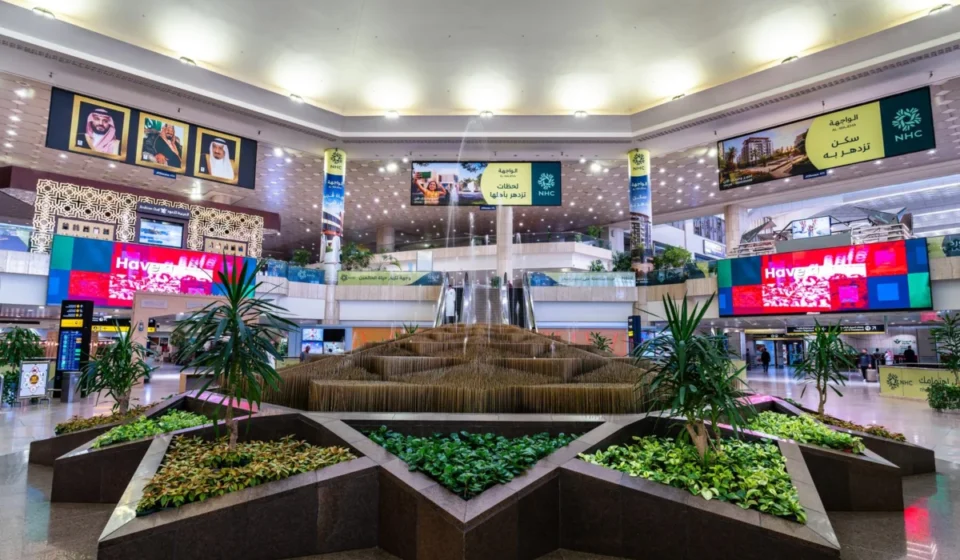
When looking at physical square mileage, the global leader is Saudi Arabia’s King Fahd International Airport (DMM). Covering an staggering 300 square miles, it is roughly the size of New York City. Despite its vastness, DMM serves approximately 13.7 million passengers annually, a modest figure compared to high-traffic powerhouses like Atlanta’s Hartsfield-Jackson, which handles over 100 million passengers on a much smaller footprint.
This dichotomy highlights a critical reality in aviation: land area is often a strategic hedge against future demand rather than a direct reflection of current congestion. Airports like DMM, Denver International, and Beijing Daxing maintain vast reserves of land, ensuring they can scale their operations for decades to come without the constraints of urban encroachment.
Chronology of Expansion: How We Reached These Heights
The evolution of these massive airports reflects the broader history of global travel.
- 1974: The DFW Benchmark. When Dallas-Fort Worth International Airport (DFW) became operational, it set the standard for what a modern "mega-hub" could be. Spanning 26.9 square miles, it served as a blueprint for future American airport development.
- 1998: Kuala Lumpur’s Emergence. As Southeast Asia became a vital node in global trade and tourism, the opening of Kuala Lumpur International Airport (KLIA) introduced a new standard of scale for the region, covering 38 square miles.
- 2019: The New Wave. The late 2010s saw a paradigm shift. Both Istanbul Airport (IST) and Beijing Daxing International (PKX) opened their doors, representing the pinnacle of modern architecture and capacity. Istanbul’s modular design and Beijing’s "starfish" terminal signaled that the future of aviation is defined by high-tech efficiency and massive, integrated passenger experiences.
Supporting Data: A Global Top 10 by Land Area
To understand the scope of these facilities, one must look at the data regarding their physical footprint and passenger volume.
| Airport | Location | Size (Sq. Miles) |
|---|---|---|
| King Fahd International | Saudi Arabia | 300 |
| Denver International | Colorado, USA | 53 |
| Kuala Lumpur International | Malaysia | 38 |
| Istanbul Airport | Turkey | 29.5 |
| Dallas-Fort Worth International | Texas, USA | 26.9 |
| Orlando International | Florida, USA | 18.1 |
| Washington Dulles International | Virginia, USA | 18 |
| Beijing Daxing International | China | 18 |
| Houston George Bush Intercontinental | Texas, USA | 17.2 |
| Shanghai Pudong International | China | 15.4 |
Analyzing the Leaders
- Denver International (DEN): While significantly smaller than the Saudi giant, Denver remains a titan. With 172 gates and 300 lane miles of roads, it serves as the primary gateway to the American West, processing over 82 million passengers in 2025.
- Istanbul Airport (IST): Currently Europe’s busiest, Istanbul is designed for growth. While it currently serves 84 million passengers, its infrastructure is built to scale up to 200 million, making it a critical bridge between Europe and Asia.
- Beijing Daxing (PKX): A $11 billion engineering marvel, this airport is designed to alleviate the pressure on Beijing’s legacy hubs. Its single-building "starfish" terminal is the largest of its kind in the world, capable of handling 72 million passengers now, with a projected ceiling of 100 million.
Official Perspectives: Managing the Megalith
The management of these mega-airports is a complex balancing act between government policy, airline partnerships, and the passenger experience. Airport authorities often describe their facilities not just as transit points, but as "economic engines."

"The scale of our operations is not a vanity project; it is a necessity for the future of global mobility," says a spokesperson for one of the top-tier international hubs. "When you manage 20,000 acres of land, you are essentially managing a city. We have to consider energy grids, waste management, internal transit systems, and long-term sustainability goals."
In the U.S., the focus remains on modernization. With five of the world’s largest airports located domestically, the Federal Aviation Administration (FAA) emphasizes "Airport Improvement Programs" (AIP) to ensure that these large land footprints remain optimized. For facilities like Orlando and Houston, the challenge lies in the "last mile"—ensuring that the massive physical size does not result in an unbearable journey for the passenger from the parking lot to the boarding gate.
Implications: The Challenges of Gigantism
The move toward larger airports brings both significant advantages and unique challenges.
1. Passenger Experience and "Terminal Fatigue"
The primary drawback of vast airports is the distance. Massive terminals require complex internal transit systems—automated people movers, sky-trains, and high-speed shuttles. While these systems are necessary, they add to the time and stress of travel. Airports that integrate lounges, shopping, and museums—like Istanbul’s terminal—attempt to mitigate this by turning the wait into an experience, but the physical reality of the walk remains.
2. Economic and Environmental Impact
Airports of this scale are massive consumers of energy and land. Many are now pivoting toward "Green Airport" initiatives. Beijing Daxing, for example, utilizes advanced solar energy systems and waste-water recycling. However, the sheer footprint of these airports often displaces local ecosystems and requires massive infrastructure investments in road and rail connectivity.
3. Resilience and Future-Proofing
The COVID-19 pandemic taught the aviation industry the importance of flexibility. Airports that had modular designs, like Istanbul and Beijing, were better equipped to shut down and reopen specific sectors of their facilities without paralyzing the entire operation. Furthermore, having a large, undeveloped land bank—as seen at King Fahd International—allows these hubs to adapt to future technologies, such as drone cargo ports or hydrogen-powered aircraft refueling stations, which require specialized infrastructure.
Conclusion: The Horizon of Aviation
The world’s largest airports are more than just transit hubs; they are symbols of global ambition. As passenger numbers continue to climb—with major hubs already seeing record-breaking throughput in 2025 and 2026—the importance of these expansive facilities will only grow.
Whether it is the desert expanses of Saudi Arabia or the high-tech terminals of China and the United States, these airports represent the front line of global connectivity. They require constant innovation, immense capital, and a commitment to logistics that would baffle a traveler from even 50 years ago. As we look toward the future, the goal of these mega-hubs remains clear: to shrink the world, one square mile at a time, making global travel as seamless as possible despite the enormous distances involved.
As travelers, our role is to prepare for the scale of these giants. The next time you walk through the vast halls of a mega-airport, remember: you are standing in a facility designed not just for the traveler of today, but for the millions who will follow in the decades to come.