The Great Homogenization: Why America’s Cities Are Losing Their Soul—and How to Find It Again

From the sun-drenched boulevards of Los Angeles to the mountain-shadowed streets of Denver and the humid, neon-lit corridors of Miami, a quiet, uniform tide is washing over the American landscape. For the modern traveler, the thrill of discovery is increasingly giving way to a sense of déjà vu. We are witnessing a rapid, nationwide standardization of the "urban experience," where the specific flavor of a city is being systematically replaced by a curated, replicable aesthetic.
For years, many of us treated domestic travel as a mere placeholder—a bridge between the "real" trips to international destinations. We saved our vacation days for 14-day treks through Europe or Asia, while using domestic travel to check cities off a bucket list. But as the frequency of domestic travel has outpaced international exploration, a jarring reality has emerged: the cities we visit are starting to look, eat, and shop exactly alike.
The Chronology of Conformity: From Main Street to "Luxury Casual"
To understand how we reached this point, we must look at the evolution of the American cityscape. Historically, urban development was defined by geography and local industry. The "Main Street" vernacular architecture that defined the mid-century era was a response to the specific materials and social needs of a region.
However, the post-lockdown era accelerated a new, aggressive phase of assimilation. The timeline of this transformation is marked by three distinct shifts:
- The Rise of the Digital Aesthetic: As social media became the primary driver of tourism, businesses began to prioritize "instagrammability" over authentic atmosphere. This led to the proliferation of the "luxury casual" aesthetic—a design language of exposed brick, minimalist signage, and high-contrast lighting that appears in every trendy district from Brooklyn to Austin.
- The Digital Infrastructure Shift: The move toward QR-code menus and contactless, app-driven ordering replaced the tactile, human experience of dining. While functional, these tools created a sterile, standardized barrier between the visitor and the local culture.
- The Corporate Consolidation: Private equity-backed groups have begun a silent, systematic acquisition of beloved local establishments. These businesses are often scaled, polished, and stripped of the eccentricities that made them unique, then rolled out as "concept" chains across multiple metropolitan markets.
Supporting Data: The Cost of the "Same"
The phenomenon of urban sameness is not merely anecdotal; it is a byproduct of economic pressures and shifting real estate dynamics. According to urban planning studies, the primary driver of this trend is the "gentrification cycle." When investment floods into an underdeveloped neighborhood, it brings with it an immediate rise in commercial rents.
The data on small business survival is sobering:
- Rent Pressure: In areas undergoing rapid development, commercial rents often increase by 30% to 50% within a five-year window.
- The "Chainification" Effect: As independent owners are pushed out, the commercial real estate market is increasingly dominated by national or regional restaurant groups that have the capital to absorb these costs.
- The Homogenization Index: Research indicates that the variety of unique, independent retail storefronts in major U.S. cities has declined by approximately 22% since 2015, replaced by either luxury boutiques or national chain concepts that replicate a familiar "vibe."
The Implications: Is Resistance Futile?
The implications of this shift are profound for both residents and visitors. When every city offers the same version of "cool"—the same cold-brew coffee, the same exposed-ceiling industrial decor, and the same curated artisan goods—the cultural cachet that draws people to a city in the first place is erased.
For residents, this leads to displacement. Homeowners may see their property values rise, but renters are frequently forced out, pushing the creative and working-class populations to the fringes of the city. For the traveler, the implication is a loss of agency. We are no longer "discovering" cities; we are consuming a pre-packaged, algorithmically optimized experience that feels designed to satisfy a search query rather than a human curiosity.
Resistance in the Wild: Where the Local Still Thrives
Despite this trend toward mass homogenization, there are pockets of resistance. These are not necessarily places that reject development, but rather places that have successfully integrated the modern with the authentic.

1. Estes Park, Colorado: Resisting the Corporate Slither
Estes Park serves as a masterclass in maintaining local character. While many mountain towns have fallen prey to large-scale luxury hotel chains, Estes Park has preserved its identity by focusing on human-scale engagement. Places like Coffee on the Rocks offer more than just a beverage; they offer a connection. When a local artisan sells hand-molded clay pins, the transaction is not merely commercial—it is a point of contact between the visitor and the soul of the community.
2. Nashville’s 12South: The Hybrid Model
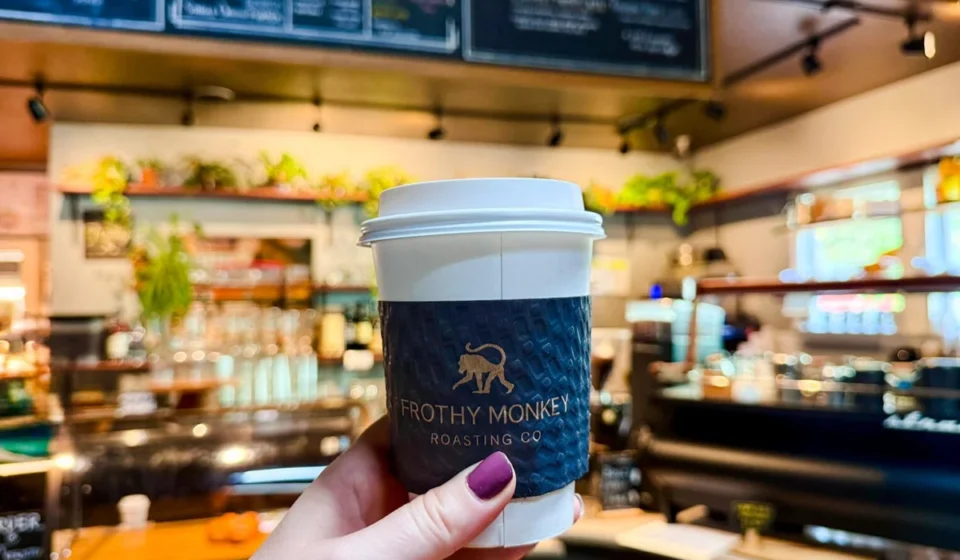
Nashville’s 12South district presents a controversial but effective model for the future of urban retail. It manages to hold space for national brands—like Lululemon or Madewell—alongside deeply rooted local institutions like White’s Mercantile and Frothy Monkey. By nesting these stores within the area’s original, traditional architecture, the neighborhood creates a walkable promenade that feels distinctly "Nashville" even while incorporating the familiar comforts of national retailers.
3. Burbank’s Magnolia Boulevard: The Institutional Anchor
In the shadow of Hollywood, Burbank’s Magnolia Boulevard maintains a fierce dedication to the independent spirit. Institutions like Audrey K and Romancing the Bean prove that a neighborhood can sustain itself on local loyalty rather than tourist-trap trends. The presence of a long-standing local favorite like Porto’s Bakery—where the line remains a daily ritual—acts as a cultural anchor, grounding the neighborhood in a history that transcends the fleeting trends of social media.
The Future of Travel: Shifting the Mindset
The ultimate souvenir of the modern traveler is no longer a physical object, but the knowledge of how to look past the surface. If we accept that the center of the American city is becoming standardized, our responsibility is to develop a "traveler’s intuition" that seeks the margins.
This requires a change in pace. The most authentic experiences are rarely found on a curated Instagram feed or at the top of a generic "Top 10" list. They are found in the neighborhoods that are slightly too far from the city center, in the shops that have been managed by the same family for decades, and in the conversations that happen when we put our phones away.
As I recently discovered in my own hometown of Sioux Falls, even places with deep roots are not immune to the pull of the "Steel District" aesthetic. The challenge for these cities is to grow without sacrificing the specific qualities that made them home. For the traveler, the goal is similar: to find that elusive "local" dividend that once required a passport to experience.
We must stop treating our cities as interchangeable playgrounds and start treating them as living, breathing ecosystems. By supporting independent businesses, patronizing locally-owned venues, and choosing to walk the blocks between the "must-see" destinations, we can slow the tide of homogenization. Authenticity is not a finite resource that has been spent; it has simply shifted. It is now hidden in the places the algorithms haven’t yet reached, waiting for the traveler who is willing to take the long way around.
In the end, travel is not about checking boxes or collecting experiences that look like everyone else’s. It is about the friction of the new, the surprise of the local, and the, at times, difficult, beautiful, and authentic act of being present. If we travel with intention, we can ensure that the map of America doesn’t just become one long, indistinguishable street.