
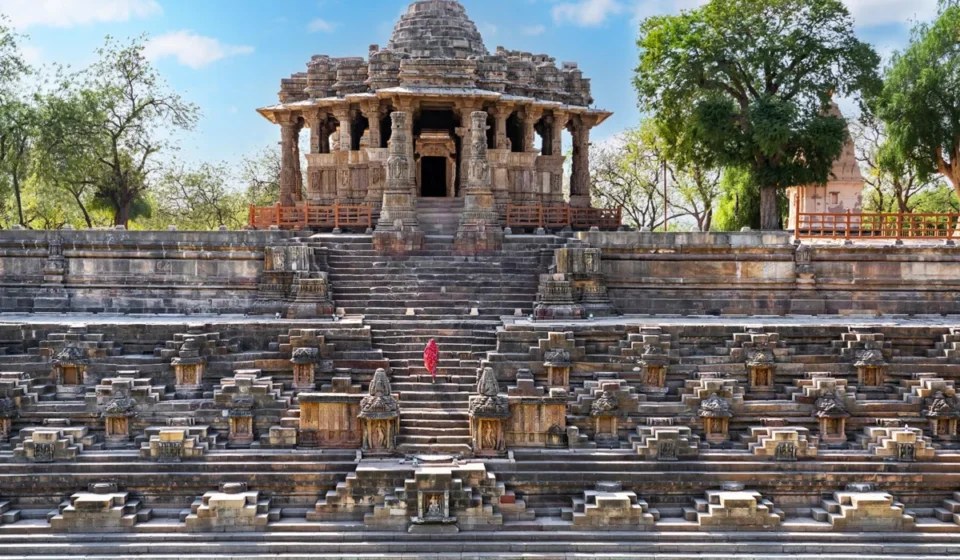
The Subterranean Renaissance: How India’s Ancient Stepwells are Resurrecting a Parched Nation

Long before the hum of air conditioning units became the soundtrack of Indian summers, the subcontinent’s ancestors solved the dual challenges of extreme heat and water scarcity by looking downward. Instead of building toward the heavens, they carved intricate, multi-storied cathedrals into the earth. Today, as India stares down the barrel of an unprecedented water crisis, these architectural marvels—once relegated to the footnotes of history—are being exhumed, cleaned, and restored to their original purpose: providing life-sustaining water to a thirsty population.
The Architectural Marvel: More Than Just a Well
While the architectural narrative of India is often dominated by the ivory marble of the Taj Mahal or the sandstone majesty of the Red Fort, the country’s baolis, baoris, vavs, and jhalras represent a more profound feat of engineering. A stepwell is not merely a hole in the ground; it is a sophisticated, subterranean structure consisting of a flight of steps leading down to a deep reservoir.
These structures were designed to solve the fluctuations of the monsoon cycle. As the water table retreated during the parched summer months, the depth of the well ensured that communities could continue to access water regardless of the season. At their peak, these structures functioned as more than mere reservoirs; they were vital social hubs, pilgrimage resting points, and sanctuaries of cool air in a sweltering landscape. Descending into a stepwell, one experiences a drop in temperature that feels miraculous—a natural cooling system powered by the thermal mass of the surrounding earth and the evaporation of the water below.
Chronology: A 4,000-Year-Old Legacy
The history of the Indian stepwell is as deep as the structures themselves.
The Dawn of Hydraulic Engineering (c. 2500 BCE)
The roots of this tradition can be traced back to the Indus Valley Civilization. Archaeological excavations at Dholavira, in present-day Gujarat, have revealed highly sophisticated water management systems, including massive reservoirs and stepped channels that predate the more decorative wells of the medieval period by thousands of years. These ancient engineers understood the necessity of harvesting every drop of monsoon rainfall in an arid environment.
The Golden Age of Construction (6th–19th Century CE)
The elaborate, multi-storied stepwells that define the genre today emerged during the medieval period. This era saw a synthesis of Hindu and Islamic architectural styles, with artisans decorating the stone walls with intricate carvings of deities, dancers, and geometric patterns. During the height of the Mughal Empire and the preceding regional dynasties, these wells became symbols of civic duty and royal patronage. A king or a wealthy merchant who commissioned a stepwell was seen as a benefactor of the highest order, providing for the collective health of the community.
The Colonial Disregard (19th–20th Century CE)
With the advent of the British Raj and the introduction of motorized pumps and piped water infrastructure, the stepwells began a long decline. Viewed as archaic and prone to stagnation, many were neglected, filled with urban debris, or simply forgotten as the population shifted toward modern plumbing. For decades, they were treated as eyesores rather than assets.
Supporting Data: The Looming Water Crisis
The necessity of this revival is underscored by sobering statistics. India is currently home to nearly 18 percent of the world’s population, yet it possesses only 4 percent of the world’s freshwater resources.
The situation is rapidly approaching a tipping point. According to the NITI Aayog (a public policy think tank of the Government of India), the country is undergoing its worst water crisis in history. Reports indicate that:
- Groundwater Depletion: Over 60 percent of India’s irrigation and 85 percent of its drinking water requirements are met by groundwater, which is being extracted at an unsustainable rate.
- "Day Zero" Threats: Several states, including those in the northern and western belts, are approaching "Day Zero"—a threshold where municipal water supplies will effectively run dry.
- Climate Variability: Unpredictable monsoon patterns, exacerbated by climate change, have rendered traditional surface-level water storage systems less reliable, making the deep-earth storage capacity of stepwells a strategic necessity.
Official Responses and Restoration Efforts
The tide is finally turning. The Archaeological Survey of India (ASI), alongside international conservation bodies like the World Monuments Fund and the Aga Khan Trust for Culture, has begun a concerted effort to rehabilitate these structures.
The restoration is not purely aesthetic. The goal is to return these wells to their role as functioning water-harvesting systems. By clearing the silt and debris of the last century, conservationists are finding that many of these wells are still connected to their original aquifers.
"We are not just restoring monuments; we are reviving a lost technology of climate resilience," says an official from the Aga Khan Trust for Culture. "When you restore a stepwell, you are creating a localized, community-managed water source that is immune to the volatility of the national grid."
Government initiatives have also begun to integrate these ancient wells into modern urban planning. In cities like Delhi and Ahmedabad, municipal authorities are exploring ways to channel urban runoff into restored stepwells, effectively using them as giant subterranean recharge pits to replenish the depleted water table.
Implications: A Sustainable Future Rooted in the Past
The revival of the stepwell represents a shift in how India views its developmental future. For too long, "modernization" meant the rejection of traditional knowledge in favor of western-style, energy-intensive infrastructure. The modern water crisis has proven that this path is not only unsustainable but dangerous.
Reconnecting with Traditional Wisdom
The implication of this movement is a broader recognition of "vernacular engineering." The stepwell is a testament to the fact that ancient societies were often more adept at living in harmony with their environment than we are today. By decentralizing water storage, communities can reduce their reliance on large-scale dams and long-distance water pipelines, which are energy-intensive and ecologically damaging.
Economic and Social Impact
Beyond the water benefits, the restoration of stepwells has a positive impact on local tourism and urban pride. As travelers seek out these hidden gems, local economies benefit from increased foot traffic. Furthermore, when a neighborhood takes ownership of its local baoli, it fosters a sense of community responsibility for water management—a critical shift needed to combat the national water crisis.
The Path Forward
As we look toward the future, the integration of ancient design with modern hydrology will be essential. This does not mean we should return to the 18th century, but rather that we should adopt a "hybrid" approach. We can utilize modern filtration systems and sensor-based water monitoring while relying on the structural integrity and cooling capabilities of the ancient stone reservoirs.
Conclusion: Lessons from the Deep
The stepwells of India serve as a poignant metaphor for the country’s current state. They are reminders that the solutions to our most modern problems are often buried right beneath our feet. As the mercury rises and the wells run dry, India is rediscovering that the wisdom of the past is not a relic to be studied, but a tool to be utilized.
These structures were built to endure for centuries, surviving droughts, wars, and political upheaval. Now, they are standing ready to serve again. By breathing life back into these subterranean chambers, India is not just preserving its heritage—it is securing its future. The renaissance of the baoli is a testament to human ingenuity and a reminder that, when it comes to the climate crisis, sometimes the most innovative way forward is to look back.