Chasing the Solstice: The Architecture of Light and the Phenomenon of Manhattanhenge

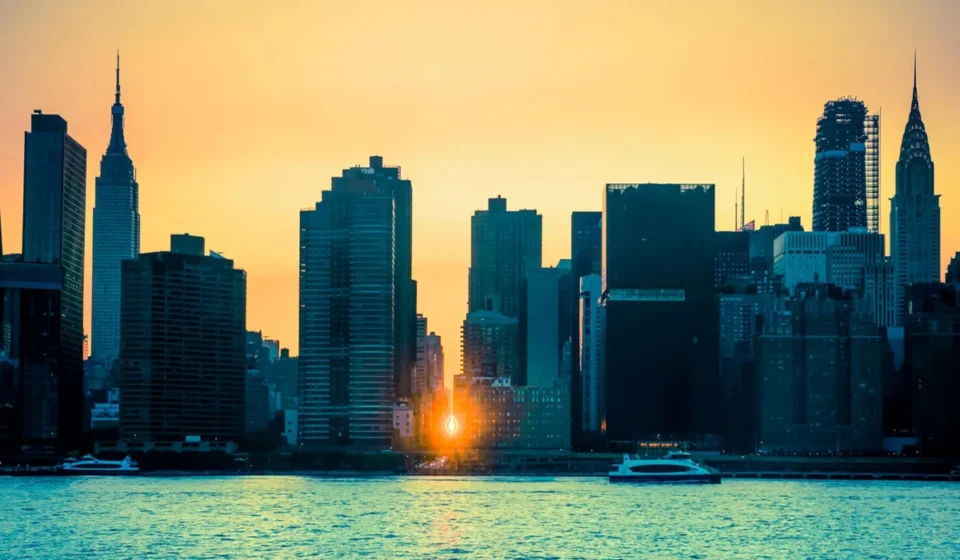
For a few fleeting moments each year, the relentless concrete geometry of New York City softens, surrendered to the warm, amber glow of a celestial event that feels more like an ancient ritual than a modern metropolitan occurrence. Known as "Manhattanhenge," this alignment—where the setting sun perfectly bisects the east-west grid of Manhattan’s streets—has transformed from a niche astronomical curiosity into one of the most anticipated cultural touchstones of the New York summer.
As the sun dips below the horizon, it aligns with the island’s street canyons, casting a brilliant, golden light that illuminates the facades of skyscrapers and creates a visual spectacle that bridges the gap between natural wonder and urban design.
The Mechanics of the Alignment: A Modern Stonehenge
The term "Manhattanhenge" was coined by the renowned astrophysicist Neil deGrasse Tyson, director of the Hayden Planetarium at the American Museum of Natural History. Drawing a direct parallel to the Neolithic monument in Wiltshire, England, where the sun aligns with the stones during the summer and winter solstices, Tyson observed that New York City’s unique urban layout—a rigid grid dictated by the Commissioners’ Plan of 1811—serves as a giant, human-made instrument for tracking solar movement.
Because Manhattan’s grid is rotated approximately 29 degrees clockwise from true east-west, the sunset does not align with the streets on the equinoxes. Instead, it occurs twice in late May and twice in mid-July. During these windows, the sun sets at an azimuth that matches the orientation of the cross streets, creating a "full sun" effect where the entire solar disk rests squarely on the horizon, framed by the steel and glass monoliths of the city.
Chronology of the Spectacle: When to Watch
The phenomenon is not a singular event but a predictable window of time. Typically, the "full sun" alignment occurs in late May (often around May 29th or 30th) and again in mid-July (typically July 12th or 13th). In the days preceding these dates, observers can catch a "half sun" alignment, where only the top half of the solar disk is visible above the horizon as it touches the grid.
For the seasoned observer, the timing is critical. Because the Earth’s rotation and the sun’s path vary slightly year by year, astronomers provide precise schedules for the "full" and "half" sun displays. The event lasts only a few minutes—the "golden hour" pushed to its absolute limit—as the sun descends behind the New Jersey skyline, turning the avenues into glowing corridors of light.
The Urban Experience: Battling the Elements and the Crowds
Witnessing Manhattanhenge is an exercise in both patience and participation. As the sun begins its descent, the streets—particularly wide thoroughfares like 14th, 23rd, 34th, 42nd, and 57th Streets—begin to fill with photographers, tourists, and locals.
The atmosphere is often described as electric. Traffic, usually the bane of existence for any New Yorker, is temporarily suspended in the collective consciousness of the crowd. Pedestrians spill into the bike lanes and center lines, cameras raised, all fixated on the western horizon.
"It is a moment where the city pauses," notes one observer who spent hours securing a vantage point on 42nd Street earlier this summer. "You’re standing in the middle of a bustling, noisy, sometimes aggressive metropolis, but for three minutes, everyone is looking in the same direction, breathing the same air, and waiting for the same light. It’s the closest New York gets to a secular religious experience."
However, the experience is not without its challenges. The humidity of a New York July, the relentless noise of sirens, and the sheer density of the crowd require a level of dedication. Successful viewing often depends on finding an elevated position or a long, unobstructed stretch of street. Landmarks like the Chrysler Building or the Empire State Building often serve as iconic frames for the sun, making these specific intersections the most densely packed.

Supporting Data: The Science of the Grid
To understand why Manhattanhenge occurs, one must look at the grid itself. The 1811 Commissioners’ Plan sought to maximize efficiency and development in a growing city. By overlaying a rigid grid onto the irregular geography of the island, city planners inadvertently created a series of "canyons."
In architectural terms, these canyons act as light-collecting vessels. When the sun aligns, the reflective properties of the glass-curtain walls that dominate the modern Manhattan skyline amplify the sunset. The light bounces between the buildings, creating a "glow" that permeates the entire streetscape. This is a classic example of urban morphology—the study of how the physical structure of a city influences the experiences of those within it.
Official Responses and Public Safety
As the popularity of the event has surged, so too has the involvement of local authorities. The New York City Department of Transportation (DOT) and the New York Police Department (NYPD) have become increasingly involved in managing the crowds that gather at major intersections.
While there are no official "viewing permits," the sheer volume of people flooding the streets poses legitimate safety concerns. In recent years, public service announcements have encouraged viewers to stay on sidewalks where possible and to be mindful of traffic, which remains active during the event.
Astronomical institutions, including the Hayden Planetarium, frequently release educational materials alongside the event dates to remind the public that while the visual is breathtaking, the primary goal of the grid was commerce and transportation, not astronomy. The fact that these two functions align so perfectly is, in the words of Tyson, "a beautiful accident of urban planning."
Implications: The Intersection of Culture and Nature
The rise of Manhattanhenge as a major social event highlights a significant shift in how city dwellers interact with their environment. In a world that is increasingly digitized, the hunger for tangible, natural experiences is profound. Manhattanhenge serves as a reminder that even in the most engineered environments on Earth, the laws of physics and the movements of the cosmos remain the ultimate architects.
Furthermore, the phenomenon has spawned a cottage industry of photography and social media trends. Every July, platforms like Instagram and TikTok are flooded with thousands of images of the sunset, each capturing the same sun but through the lens of different architectural perspectives. This mass documentation has turned a fleeting, local event into a global representation of New York City’s identity—a city that is as much about the light as it is about the hustle.
Conclusion: A Ritual for the Modern Age
Manhattanhenge is more than just a photo opportunity; it is a manifestation of the city’s unique character. It requires the viewer to stand in the middle of the chaos, to look down the long, industrial stretch of a cross-town avenue, and to see something ancient and awe-inspiring.
As we look toward the future of urban development, the phenomenon serves as a poignant reminder of the importance of sightlines and public space. The ability to see the horizon in a city that is constantly building upward is a luxury, and the annual alignment of the sun with the grid reminds us that New York is, and always will be, a place where the human-made and the natural worlds collide.
Whether you are a seasoned New Yorker or a first-time visitor, the experience of watching the sun set between the steel towers is one that redefines the city. It transforms the urban landscape from a place of cold stone and steel into a gallery of light—if only for a few minutes, twice a year. As the light fades and the city lights flicker on, the crowd disperses, leaving behind the memory of a city briefly, and brilliantly, illuminated.