Comments Off on The Hidden Logistics Crisis: How Lean Nonprofit Teams Are Reinventing Event Registration and Maximizing Mission Revenue
GLOBAL REPORT — Across the non-governmental and nonprofit sectors, organizations are facing an unprecedented operational bottleneck. While the public often envisions charities as grassroots operations focused solely on field campaigns or community outreach, the administrative reality behind the scenes reveals a different picture: nonprofits routinely run some of the most logistically complex, multi-tiered events in the modern economy.
A single annual fundraising gala can involve a staggering mix of corporate tables, volunteer registrations, multi-tiered sponsor packages, complimentary tickets for board members and major stakeholders, silent auction platforms, and live donation add-ons. Yet, this high-stakes logistical puzzle is typically managed by a skeletal team of just two or three individuals who are simultaneously juggling the organization’s day-to-day advocacy, operations, and community programs.
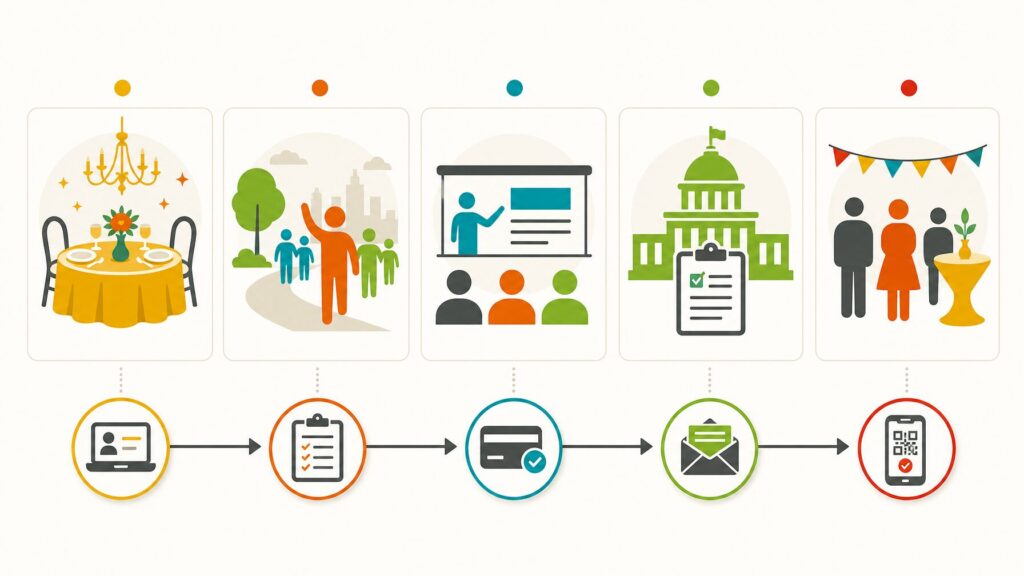
When organizations scale their programming to include a multi-event calendar—incorporating fundraising dinners, awareness walks, educational workshops, and advocacy days—the administrative burden of managing registrations manually reaches a breaking point. Industry analysts point to a critical pivot happening across the sector: investing in specialized, nonprofit-tailored event registration software is no longer a luxury; it is a financial and operational imperative that directly dictates how much funding ultimately supports the mission.
Main Facts: The Anatomy of Nonprofit Event Stress
The core dilemma facing nonprofit event organizers boils down to a profound mismatch between commercial ticketing software and the nuanced requirements of mission-driven events. Standard, off-the-shelf ticketing tools are built primarily for high-volume concerts, sports matches, or corporate conferences. They assume a single currency of exchange: a buyer purchases a ticket, receives a QR code, and attends.
By contrast, nonprofit events operate in an ecosystem of varied relationships. Attendees are rarely just "ticket buyers." They are donors, volunteers, corporate partners, board members, beneficiaries, and advocates.
Furthermore, the financial margins of nonprofit events are razor-thin. When a standard commercial ticketing platform extracts steep per-ticket transaction fees alongside processing costs, it directly erodes the philanthropic capital raised for the cause. For an organization striving to maximize every dollar for community impact, these hidden fees represent an unacceptable drain on resources.
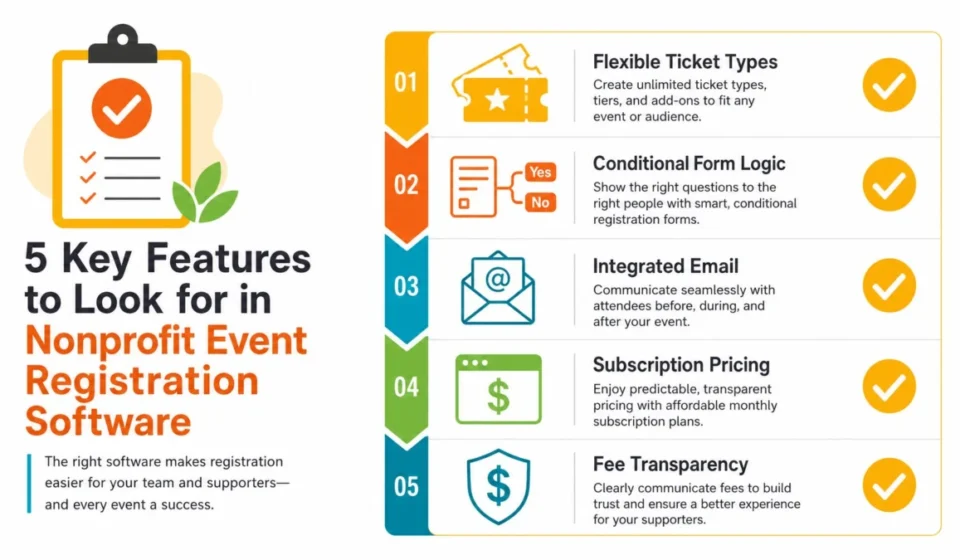
Industry leaders are increasingly emphasizing that the right registration infrastructure must achieve two goals simultaneously: drastically reduce administrative hours through smart automation, and preserve revenue via transparent, budget-conscious pricing models.
Chronology: The Evolution of Nonprofit Event Management
To understand how the sector arrived at this technological crossroads, it is helpful to trace the evolution of event administration within nonprofits over the past two decades:
The Paper and Spreadsheet Era (Early 2000s): Nonprofits relied heavily on physical mail-in RSVPs, manual checkbooks, and basic desktop spreadsheets. Data reconciliation was agonizingly slow, prone to human error, and required massive amounts of staff time.
The First-Generation Commercial Wave (2010s): As cloud computing expanded, organizations adopted generic event-ticketing tools. While this eliminated paper clutter, it created a new set of headaches. Teams had to run multiple disconnected forms for volunteers, donors, and general attendees, leading to fragmented data silos.
The Integrated Solution Era (Present Day): Today, nonprofits are demanding unified platforms that bridge registration, custom form logic, donor data collection, automated email workflows, and onsite check-in tools. The focus has shifted from mere digitization to total operational efficiency and financial transparency.
Supporting Data and Unique Industry Challenges
A closer look at the data surrounding nonprofit administration reveals why the choice of software carries such high stakes. Lean event teams are often responsible for executing multiple complex events annually while fighting against strict budget constraints.
1. Complex Attendee Taxonomies and Hidden Pricing Tiers
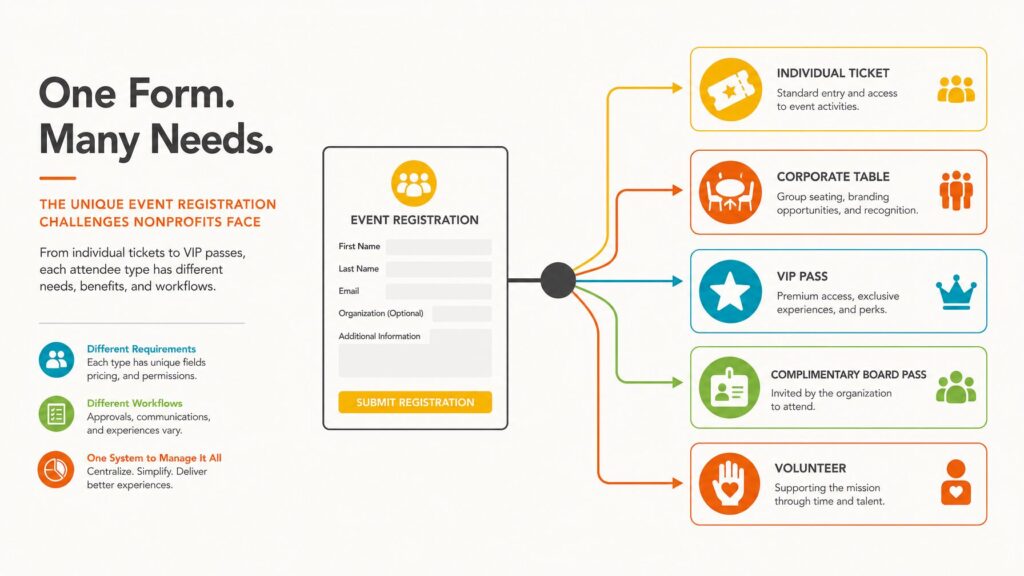
Nonprofit events rarely feature a uniform price point. A gala dinner requires a sophisticated matrix of individual tickets, corporate tables, VIP experiences, and complimentary board passes.
Crucially, many of these tiers must remain hidden from the general public. A corporate table package or a complimentary pass for a major benefactor should not clutter the public-facing registration page. Advanced platforms solve this via promo codes that dynamically unlock hidden ticket categories, sparing staff from building dozens of separate forms.
2. The Dual-Track Volunteer Challenge
Many community-centric events—such as awareness walks and charity runs—require simultaneous registration for both attendees and volunteers. Volunteers often sign up for specific roles, safety shifts, or operational responsibilities. When software forces volunteers through a completely separate process, it fragments the data and doubles the administrative workload. Unified systems that capture both profiles in a single database are proving vital.
3. Donor Recognition and Stewardship Data
For high-end cultivation events, registration is the first step in donor stewardship. Systems must capture contribution preferences, seating constraints, and recognition names for printed programs and post-event acknowledgments. Without robust custom fields and structured data exports, development teams spend countless hours cross-referencing spreadsheets before and after the event.
Official Perspectives and Industry Insights
As technology providers adapt to these sector-specific pressures, platform developers are sounding a clear note: transparency and user-friendly automation are paramount.
"Nonprofit event teams do more with less than almost any other type of organization," notes a spokesperson for EventMobi, a leading provider in the event technology space. "The right nonprofit event management software reduces the administrative burden of managing complex, multi-audience events, freeing up the team’s time for the work that matters most. For nonprofits evaluating platforms, prioritize total cost transparency, multi-event subscription value, and operational efficiency over bloated feature lists."
Industry analysts echo this sentiment, emphasizing that software selection must be driven by a holistic view of total cost ownership. Beyond upfront subscription fees, organizations must scrutinize transaction fees, payment gateway compatibility, and onboarding support. For instance, platforms offering nonprofit-friendly pricing models—such as waiving per-ticket registration fees—ensure that fundraising dollars remain directed toward programmatic goals rather than software overhead.
Implications for the Future of Mission-Driven Organizations
The implications of adopting modern, specialized registration software extend far beyond saving a few hours on a Tuesday afternoon.
First, staff burnout and retention improve significantly. When administrative friction is removed, nonprofit employees and volunteers are shielded from repetitive data reconciliation tasks and pre-event panic. This allows them to focus on high-value engagement, sponsor relations, and mission execution.
Second, donor relationships are strengthened. When a platform seamlessly integrates registration data with onsite check-in, badge printing, and post-event email workflows, attendees experience a polished, professional interaction that reflects well on the organization. Furthermore, clean data collection ensures that donors are correctly recognized, leading to higher long-term retention and increased philanthropic giving.
Finally, financial resilience is reinforced. By eliminating predatory per-ticket fees and leveraging multi-event subscription pricing, nonprofits can scale their event calendars—running everything from massive annual galas to intimate donor dinners—without linear increases in software costs.
As the nonprofit sector continues to navigate economic uncertainties and rising community demands, upgrading technological infrastructure is no longer just about keeping up with the times. It is a strategic necessity to protect revenue, empower small teams, and ultimately drive deeper, lasting impact in the communities they serve.