
In the volatile landscape of modern casual dining, where consumer confidence fluctuates with every inflation report and interest rate hike, BJ’s Restaurants, Inc. has carved out a compelling narrative of resilience. Under the leadership of CEO Lyle Tick, the brand has moved beyond the "reactionary" mode that defined the post-pandemic recovery, pivoting instead toward a methodical, long-term operational and cultural transformation.
By prioritizing the "social splurge" over the quick-fix convenience market, BJ’s has managed to deliver eight consecutive quarters of growth, proving that when consumers are forced to tighten their belts, they remain willing to pay for experiences that offer genuine value.
The Consumer Dynamic: Navigating the "Social Splurge"
To understand the current success of BJ’s, one must first understand how Lyle Tick categorizes the modern diner. While many industry analysts interpret recent data as a sign of widespread consumer distress, Tick views the situation through a more nuanced lens of prioritization. He divides transactions into two distinct buckets: "durable" and "disposable."
"Disposable transactions" represent the routine, utilitarian visits—a standard weekday lunch or a quick dinner on the way home. These are the first expenses consumers cut when budgets are stretched. In contrast, "durable transactions" are what Tick calls the "social splurge space." These are the deliberate outings—family dinners, gatherings with friends, or celebrations—where the consumer is not merely buying a meal, but an experience.
"Whether it’s the weekly or a couple of times a month, I’m going out with friends or family, it’s an experience-based thing," Tick explained during the Barclays Annual Global Consumer Staples Conference. "And I think people protect those things. That’s where we compete. That’s where we do well."

This strategic focus on the social occasion has allowed BJ’s to remain insulated from the broader downturn affecting quick-service and lower-tier casual dining chains. By positioning itself as a venue where consumers feel their discretionary spending is "worth it," BJ’s has successfully captured the wallet share of diners who have become increasingly selective.
Chronology of a Turnaround: The Path to Eight Quarters of Growth
The current momentum at BJ’s is not the result of a single "silver bullet," but rather a two-year marathon of foundation-setting that has finally reached a period of accelerated payoff.
Phase 1: Operational Stabilization (2022–2023)
When Tick assumed the role of CEO in June 2023—after a successful tenure as President and Chief Concept Officer—he inherited a brand that was ready for a refinement of its core principles. The initial phase of the turnaround focused on "pillar fixes." This meant looking at the basics: how food moves from the kitchen to the table, how labor is scheduled, and how the guest is greeted.
Phase 2: Menu Engineering and Value Platforms (2023–2024)
With operations stabilized, the brand turned its attention to the menu. Recognizing that they could not afford to falter on their foundational products, BJ’s initiated a systematic upgrade of their pizza, burger, and chicken sandwich categories. By elevating the quality of these core items, the company ensured that customers were receiving a premium experience, which in turn justified higher price points and strengthened brand loyalty.
Phase 3: The Data-Driven Present (2024–2025)
Today, BJ’s is leveraging advanced AI-driven labor modeling—an "activity-based" approach that ensures the right number of staff are on the floor during peak hours. This has optimized throughput, increased restaurant-level cash flow, and created the capacity for the company to explore new store growth while maintaining a focus on unit-level economics.
Supporting Data: By the Numbers
The evidence for this strategy is found in the company’s recent financial disclosures, which reflect a brand operating at the top of its game:
- Same-Store Sales and Traffic: In Q2, BJ’s posted same-store sales growth of 6.5 percent, bolstered by a significant 8.3 percent jump in traffic. This marks the eighth consecutive quarter of growth in both metrics.
- Holiday Performance: During Mother’s Day and Father’s Day, sales spiked by 8 percent and 3 percent year-over-year, respectively.
- Operational Milestones: More than 80 individual locations shattered their own daily or weekly sales records in recent months.
- Financial Health: Over the past few years, the brand has added $500,000 to its average-unit volume (AUV), increased restaurant-level cash flow by approximately $220,000, and expanded margins by 240 basis points.
These figures represent a broad-based success, as the growth was evenly distributed across geographies, dayparts, and sales channels. It suggests that the "social splurge" thesis is holding up regardless of regional economic pressures.
Official Responses: Insights from the C-Suite
Lyle Tick and his team emphasize that their strategy is rooted in "brand equity." When asked about the impact of GLP-1 weight-loss drugs on the restaurant industry—a frequent topic of concern among investors—Tick dismissed the idea that health trends would kill the indulgent dining experience.
"I remember hearing a Delta chef talk about how he puts healthy things on the menu, and everybody still orders the steak and potatoes," Tick said. "What people say and what they do can be a little different. I think our occasion—that social splurge occasion—is a little insulated."
CFO Todd Wilson echoes this sentiment, noting that the company’s current trajectory has sparked healthy internal discussions regarding new store development. While the brand is currently focused on opening two stores this year, they are aggressively negotiating leases and scouting sites. "The proof points are over the last eight quarters of same-store sales growth, traffic growth, and margin expansion," Wilson said. "We’re building the pipeline."
Implications for the Future: A Holistic Evolution
As BJ’s looks toward the next 18 months, the company is not resting on its laurels. The leadership team is in the midst of a "total experience" overhaul. This includes:
- Menu Innovation: Having already upgraded pizza, burgers, and chicken, the team is now turning its attention to the "Slo Roast" and steak categories. The goal is to touch every menu category within the next year and a half to ensure the entire offering feels cohesive and premium.
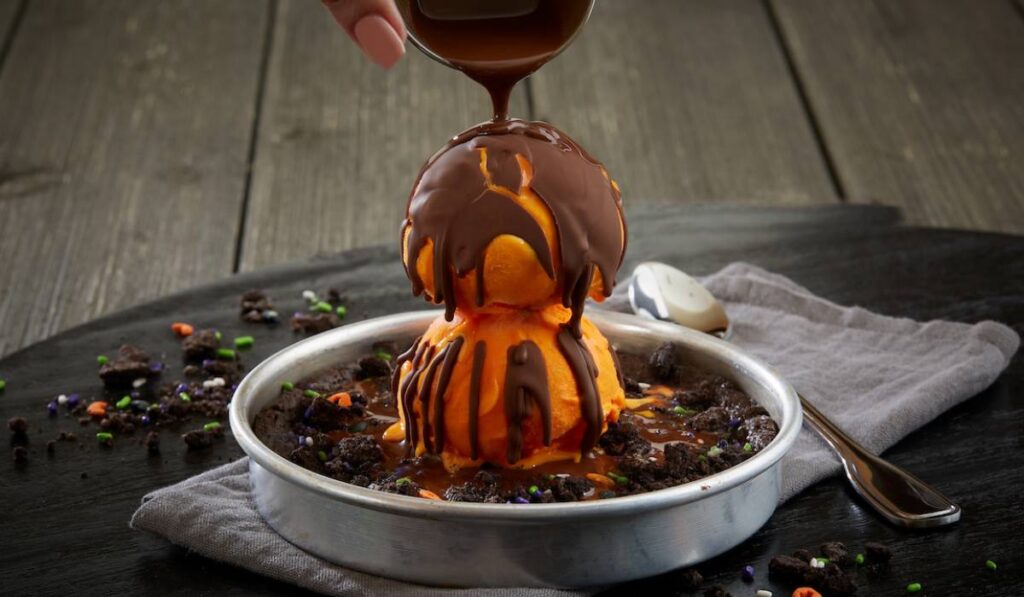
- The "Pizookie" Flywheel: The brand continues to use its signature dessert as a customer acquisition tool. By running seasonal promotions, they are successfully recruiting younger demographics—high school and college students—into the restaurant. Once they are in the building, the operational improvements ensure they have a high-quality experience, turning one-time visitors into repeat customers.
- Loyalty Refinement: BJ’s is moving away from "vanity metrics" regarding its loyalty program. Instead of simply chasing sign-ups, they are focusing on active engagement. By flipping the script—asking guests to sign up at the beginning of the meal rather than the end—the brand has seen a surge in meaningful, active members who visit more frequently.
- Physical Upgrades: The brand is preparing to roll out a new prototype store. This will involve a complete refresh of the physical environment, from the architecture and decor to the very cutlery and plateware guests use.
A Culture of Continuous Improvement
The most significant implication of the current BJ’s strategy is the institutionalization of a "constant feedback loop." By fostering a culture where General Managers and Executive Kitchen Managers are constantly analyzing the flow between the front-of-house and back-of-house, the company is ensuring that its gains are sustainable.
"We’re a restaurant company, right?" Tick says. It is a simple statement, but it underscores the core of their strategy. In an age of digital transformation, third-party delivery apps, and automated ordering kiosks, BJ’s is doubling down on the fundamentals: great food, high-energy service, and a consistent atmosphere.
As the company enters the next fiscal year, the challenge will be scaling this success without sacrificing the very operational rigor that fueled the last eight quarters. However, with a clear focus on the "social splurge" and a disciplined, long-term approach to menu and operational upgrades, BJ’s appears to be in a prime position to remain a winner in the full-service restaurant space. The "long game" is no longer just a theory—it is a proven, high-performing reality.
Related posts: