
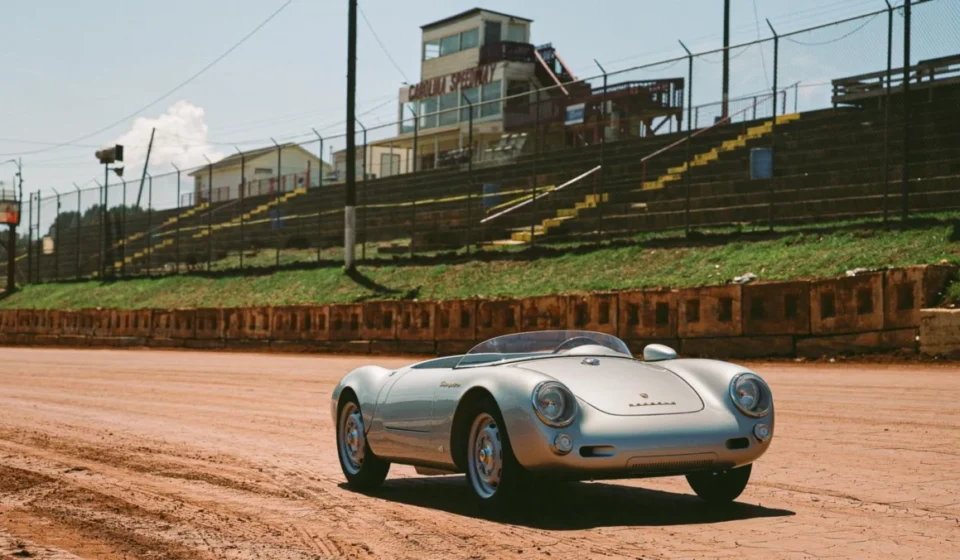
The Half-Century Legacy Shrunk to Scale: Porsche and Hedley Studios Unveil the 550 J

The Porsche 550 Spyder is more than a car; it is a cultural totem. To the automotive purist, it is the “Giant Killer” of the 1950s, a mid-engine masterpiece that redefined what a small-displacement roadster could achieve on the high-speed banking of Le Mans and the treacherous mountain passes of the Carrera Panamericana. To the cinephile, it is the tragic, silver-skinned companion of James Dean—the “Little Bastard” that cemented its status in the American subconscious forever.
Now, 75 years after its debut, Porsche is revisiting this legendary silhouette. However, the German manufacturer has chosen a path less traveled: instead of a full-scale continuation model, they have partnered with U.K.-based Hedley Studios to create the 550 J—an 80%-scale, fully drivable, electric-powered homage to the original.
The Genesis of the 550 J: A Masterclass in Precision
The 550 J, where the “J” stands for “Junior,” is not a toy. It is a precision-engineered instrument of nostalgia. Developed in collaboration with Hedley Studios, a firm renowned for its hyper-accurate, small-scale recreations of automotive icons like the Bugatti Type 35 and the Ferrari Testa Rossa, the 550 J represents the intersection of fine art and high-performance engineering.
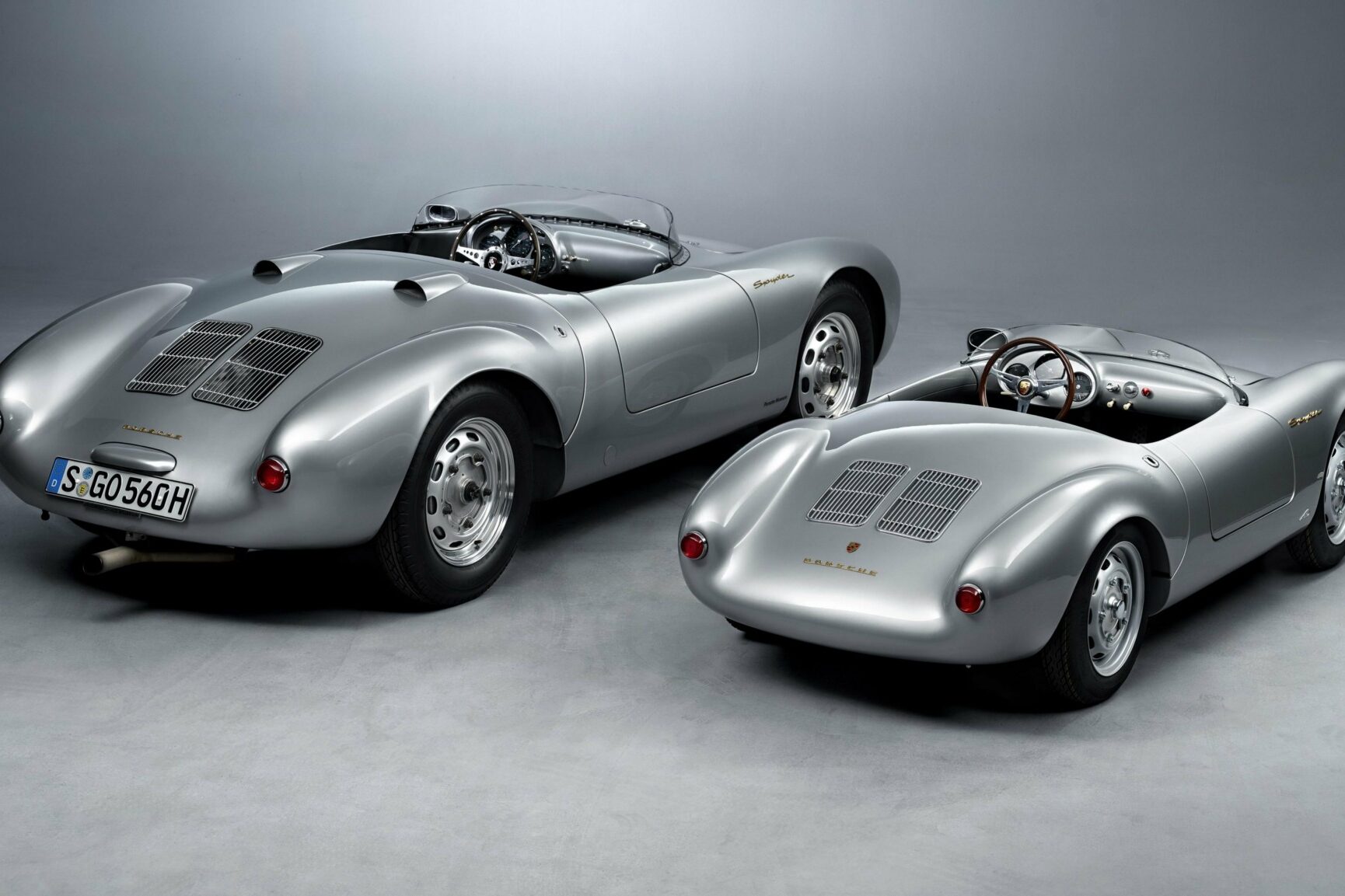
To achieve an authentic experience, Hedley Studios engaged in a rigorous research and development phase. The team utilized high-fidelity 3D scanning of original 550 Spyder chassis and spent months combing through the Porsche historical archives. Every curve of the aluminum-esque bodywork and every toggle on the dashboard has been meticulously reconstructed. The final vehicle is composed of over 1,300 individual components, each finished to a standard that rivals the production line in Stuttgart.
Chronology: From Racing Circuits to Collector’s Garages
To understand why the 550 J matters, one must look at the timeline of the original 550 Spyder.
- 1953: The Porsche 550 is introduced at the Paris Auto Show. Engineered by Dr. Ernst Fuhrmann, the car featured the legendary Type 547 “four-cam” boxer engine, making it a force to be reckoned with despite its small size.
- 1954: The 550 solidifies its reputation at the Carrera Panamericana, where it outpaced cars with significantly larger engines, earning its nickname as a “Giant Killer.”
- 1955: James Dean, the rising Hollywood star, purchases a 550 Spyder, intending to race it at Salinas. His untimely death in the car later that year turns the model into an enduring, albeit melancholic, icon of pop culture.
- 1956: The 550 A, a refined version, continues to dominate global endurance racing, including a class win at the Targa Florio.
- 2028 (Present Day): Porsche commemorates the 75th anniversary of its racing pedigree by releasing the 550 J, an homage that bridges the gap between classic design and modern electric mobility.
Technical Specifications: Electrons Meet Legacy
While the original 550 relied on the mechanical symphony of a four-cylinder boxer engine, the 550 J looks toward the future. It is a strictly electric vehicle, designed for enthusiasts who appreciate the tactile sensation of driving.

The entry-level configuration features an 8 kW (approximately 11 hp) electric motor, capable of propelling the lightweight frame to a top speed of 40 mph. For those seeking a more spirited experience, Hedley Studios offers an "RS Package." This upgrade doubles both the battery capacity and the power output, resulting in 16 kW (21 hp) and a top speed of 50 mph.
While these figures might seem modest compared to the current Porsche lineup, it is important to note the power-to-weight ratio. The 550 J is an 80%-scale vehicle, making it significantly lighter than a modern production car. The sensation of speed in an open-top, low-slung roadster at 50 mph is visceral, offering a driving experience that feels far faster than the speedometer suggests. Crucially, the vehicle is not street-legal; it is designed for private tracks, estates, and exhibition, ensuring that its usage remains a specialized, exclusive activity.
Customization: The "Paint-to-Sample" Philosophy
Porsche is famous for its nearly infinite customization options, and the 550 J is no exception. Hedley Studios has imported the Porsche “Paint-to-Sample” philosophy into the creation of these replicas. Customers can select from an exhaustive palette of historic Porsche colors, as well as modern hues.

The interior is equally bespoke. Buyers can choose from various premium leathers and faux suede materials, mimicking the materials found in period-correct racers. Further exterior customization includes the addition of historic racing liveries, complete with period-accurate racing numbers and decals. If a client desires a truly unique machine, the "Bespoke" program allows for deeper architectural changes, ensuring that no two 550 Js need ever look the same.
Official Perspectives: A Collaboration of Craft
The partnership between Porsche and Hedley Studios is rooted in a shared commitment to craftsmanship. For Hedley, the challenge was to maintain the “soul” of the original car while scaling it down.
“Our goal was never to build a toy,” a spokesperson for Hedley Studios noted. “We wanted to build a car that feels exactly like a 550 should, just at a scale that opens up new possibilities for enjoyment.”

For Porsche, the project serves as a bridge between their storied past and their electric future. By utilizing the 550 J to celebrate their 75th anniversary, the company acknowledges its roots while demonstrating that the spirit of the brand—precision, driver engagement, and elegant design—is not tied to a specific powertrain, but to the driving experience itself.
Market Implications and Rarity
The 550 J is not a mass-market production car. Production is strictly limited to 250 units worldwide, ensuring its status as a collector’s item from the moment it leaves the studio. With a starting price reported by Top Gear at approximately £69,500 ($93,000 USD), the car occupies a space in the market usually reserved for high-end luxury goods and investment-grade automotive memorabilia.
The implications of this release are significant. It signals a shift in how legacy manufacturers engage with their history. Rather than simply placing cars in museums, brands like Porsche are finding ways to bring historical designs back to life in formats that are accessible and functional. The 550 J provides the owner with a tangible piece of Porsche history that can be used, maintained, and driven, rather than merely stared at behind a velvet rope.

Conclusion: The Joy of the Drive
Ultimately, the 550 J is an exercise in joy. In an automotive landscape increasingly dominated by autonomous systems and screens, the 550 J offers a return to basics: a steering wheel, pedals, a seat, and the open air. It captures the essence of the 1950s racing spirit—a time when drivers were physically connected to the machines they piloted.
As we look toward an increasingly electrified future, the 550 J serves as a reminder that the thrill of driving isn’t always about having the highest horsepower or the fastest lap time. Sometimes, it is about the heritage of the design, the quality of the build, and the simple, unadulterated pleasure of steering a legendary machine through a corner. For the 250 individuals lucky enough to secure a build slot, the 550 J will be more than a car; it will be a rolling piece of history, proving that even when you shrink the scale, the spirit of Porsche remains larger than life.
For those interested in exploring the technical specifications or initiating a build, more information can be found at 550j.com.