
Memory is rarely a static archive; it is an active, often volatile, process of reclamation. In her latest body of work, Kenyan-born artist Wangari Mathenge transforms the act of looking backward into a dynamic exercise of gathering, reconstructing, and interrogating the sediment of history. Her latest solo exhibition, Re-membering, currently on view at the prestigious Lévy Gorvy Dayan gallery in New York, marks a significant milestone in her career, bridging the gap between two-dimensional portraiture and immersive, sculptural installation.
Through five new paintings and her debut public sculptural works, Mathenge invites viewers to navigate the complexities of identity, colonial legacy, and the fluidity of cultural inheritance. The exhibition, which runs through October 24, 2026, serves as a profound meditation on the "torn and new" landscapes of history.
Main Facts: A Convergence of Mediums
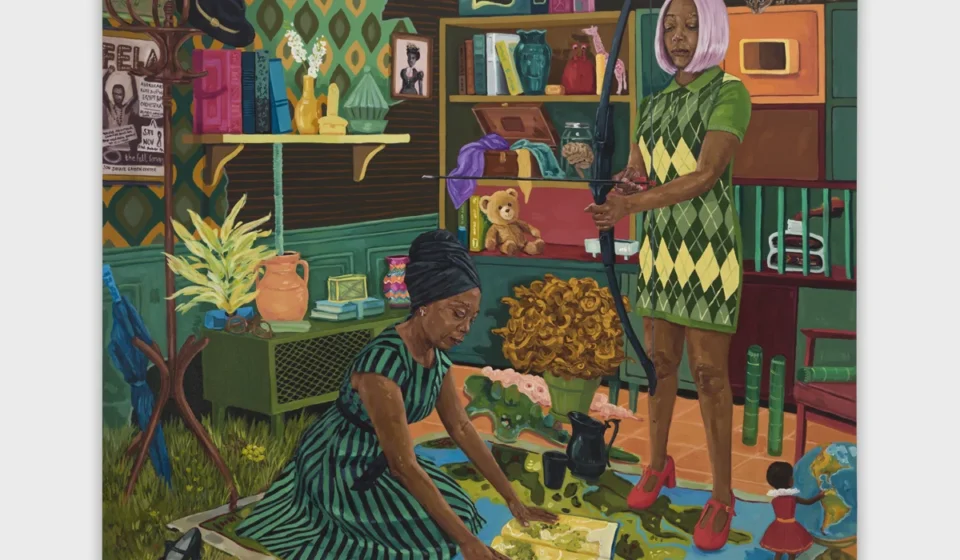
Re-membering is not merely a display of artistic prowess; it is an intellectual investigation. The exhibition features five large-scale paintings that continue Mathenge’s signature exploration of domestic interiors. These spaces, set in the evocative aesthetic of the 1960s, act as theaters for her subjects—women who serve as avatars for the artist herself.
In these paintings, the domestic sphere is reclaimed. The vibrant, patterned walls and eclectic arrangements of books, toys, and personal relics are not merely decorative; they are markers of a post-colonial domesticity that is still in the process of defining itself.
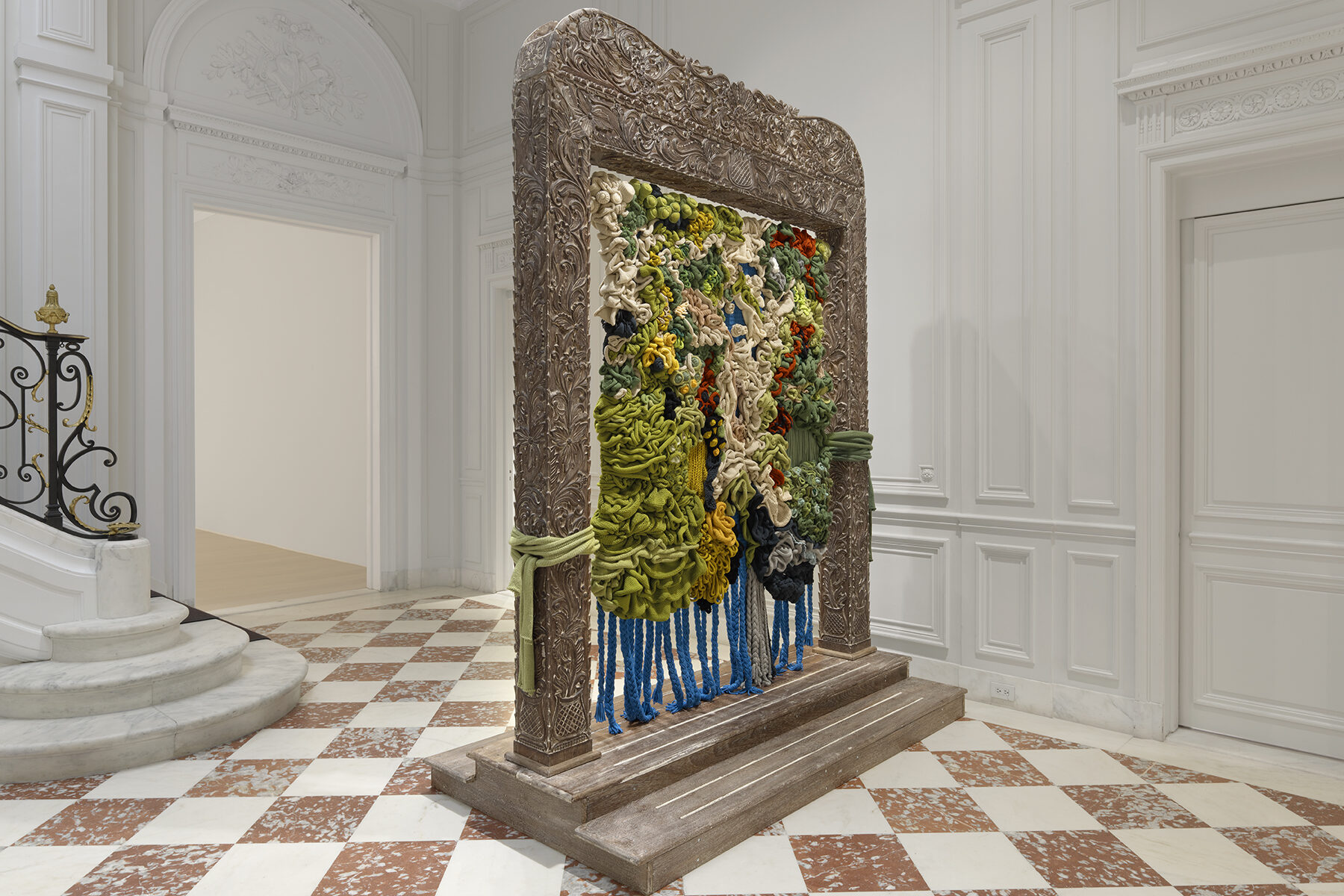
The exhibition’s most striking evolution, however, is the introduction of sculpture. By moving beyond the canvas, Mathenge literally gives weight to the abstract concept of "remembering"—a pun she employs to describe the literal re-assembly of fragmented histories.
Chronology: The Intellectual Roots of "Re-membering"
To understand the depth of Mathenge’s work, one must look to the historical framework that birthed it. The title and the underlying philosophical inquiry of the exhibition are drawn from Ngũgĩ wa Thiong’o’s seminal 2009 book, Something Torn and New: An African Renaissance.
- 1900–1963: This period serves as the primary research base for Mathenge. By analyzing Kenyan colonial literature and material culture from the turn of the century to the year of Kenya’s independence from British rule, the artist began to deconstruct how her own identity was synthesized from these disparate, often traumatic, sources.
- 2024: Mathenge begins the development of the Re-membering series, shifting her focus from passive historical contemplation to active, material reconstruction.
- September 2026: Re-membering officially opens at Lévy Gorvy Dayan in New York, presenting the culmination of two years of archival research and collaborative making.
Supporting Data: The Anatomy of the Works
Mathenge’s shift into three-dimensional space is defined by two major sculptural pieces that prioritize collaborative craftsmanship over individual authorship.
Re-membering VIII (Before Us, After Us, Ever Changing)
This installation acts as a bridge between the physical and the ephemeral. It features:

- The Doorframe: A hand-carved wooden structure commissioned from artisans in Malindi, Kenya. Its aesthetic is rooted in the iconic, ornate architecture of Lamu Old Town, a symbol of historical Swahili craftsmanship.
- The Textile: A densely layered macramé piece created with the assistance of Mathenge’s own family and wider community. By involving others in the physical creation of the work, Mathenge emphasizes that memory is a communal project rather than a solitary one.
Re-membering IX (The Shape of Inheritance)
In this work, the focus shifts to the body. Using a dress form as the foundation, Mathenge creates a sculptural garment that acts as a physical history lesson:
- Gikuyu Influence: The base silhouette references traditional Gikuyu attire.
- Colonial Contradiction: The piece integrates Victorian-era elements, such as the bustle and train, creating a jarring but poetic hybridity that reflects the forced synthesis of cultures during the colonial period.
- Community Participation: As with her other sculptural works, the knitting process was a collaborative effort, reinforcing the idea that cultural inheritance is not a fixed relic but a living, changing fabric.
Official Responses and Artistic Intent
Mathenge has been vocal about the necessity of moving beyond simple historical critique. For her, the exhibition is an act of agency. "Re-membering signifies not merely the act of recall, but the active gathering and reassembly of what has been fragmented: cultural memory, inherited forms, histories, and ways of seeing," Mathenge stated in an exhibition press release.
By choosing to use her own community and family in the production of her sculptures, she is effectively "re-membering" the people into the history. She rejects the notion that history is something that simply happens to a subject; rather, she posits that the subject has the power to curate the artifacts of the past to create a more authentic present.
The gallery’s decision to showcase these works signifies a broader shift in the contemporary art world toward prioritizing voices that challenge Eurocentric historical narratives. By placing these works in the heart of New York’s art district, Lévy Gorvy Dayan provides a platform for a necessary conversation regarding the global legacies of colonial rule and the resilience of the cultures that survived them.

Implications: A New Era for Historical Representation
The implications of Re-membering extend far beyond the white walls of the gallery.
1. The Domestic as Political
Mathenge’s insistence on using the domestic interior as her primary setting challenges the idea that "political" art must exist in the public square. By filling a 1960s kitchen or living room with historical markers, she suggests that the most profound battles over identity are fought within the home, in the objects we choose to keep, and the traditions we choose to pass down.
2. Collaboration as Methodology
By involving local Kenyan artisans and her own family in the construction of her sculptures, Mathenge effectively democratizes the artistic process. This approach serves as a critique of the "lone genius" model of Western art, proposing instead that collective memory requires collective creation.
3. Materiality as Documentation
The use of wood, thread, and textile serves as a form of non-written documentation. While colonial history books were written by those in power, Mathenge’s work suggests that history can be recorded through the material culture of the everyday. The carvings on a door and the knots in a piece of macramé become the new, alternative archives of a post-colonial era.

4. The Fluidity of Identity
Perhaps the most significant takeaway from the exhibition is the rejection of a fixed, "authentic" identity. By blending Gikuyu traditions with Victorian influences, Mathenge is not suggesting that one is "better" or more "pure" than the other. Instead, she presents a vision of the future where the hybridity born from trauma can be re-knit into something functional, beautiful, and uniquely one’s own.
Conclusion
Wangari Mathenge’s Re-membering is a triumph of conceptual and visual coherence. It is an invitation to the viewer to participate in the messy, difficult, and ultimately rewarding work of piecing together the past. As the exhibition remains on view through October 24, 2026, it stands as a testament to the fact that history is not just a destination to be reached, but a material to be shaped.
Whether through the layered narratives of her paintings or the structural complexity of her textile sculptures, Mathenge asks us to consider what we carry forward. In the end, Re-membering reminds us that what has been lost is not necessarily gone forever; it is merely waiting for us to find the right way to put the pieces back together.
Exhibition Details:
- Artist: Wangari Mathenge
- Exhibition Re-membering
- Location: Lévy Gorvy Dayan, 19 E. 64th St., New York City
- Dates: On view through October 24, 2026