Engineering the Impossible: How the Honda Center Mastered the Complexity of D23

In the world of event management, there is a distinct difference between hosting a concert and orchestrating a multi-day, high-stakes global spectacle. The Honda Center in Anaheim recently shattered its own operational records, proving that even amidst a massive, billion-dollar facility transformation, it can serve as a premier destination for the world’s most demanding productions.
The successful execution of D23: The Ultimate Disney Fan Event in 2024 served as a watershed moment for the venue. As the centerpiece of the burgeoning OC Vibe entertainment district, the Honda Center faced a gauntlet of logistical hurdles: 20 days of continuous production, a record-breaking rigging footprint, and the constant, vibrating backdrop of ongoing construction. The result was not merely an event; it was a masterclass in operational resilience and strategic partnership.
The Magnitude of the Challenge: Main Facts
When Disney sought a venue to host its trio of massive showcases—the Disney Entertainment Showcase, the Disney Experiences Showcase, and the prestigious Disney Legends Award Ceremony—they required more than just square footage. They needed a partner capable of handling the technical intensity of a global media event.
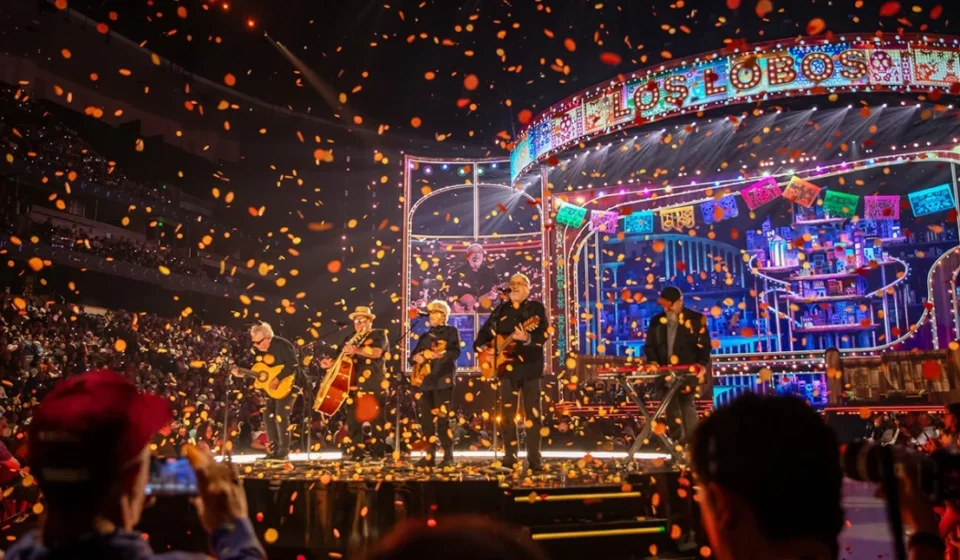
The statistics surrounding the event are staggering. The production footprint was the largest in the history of the Honda Center, requiring over 250,000 pounds of steel rigging to suspend lighting, audio, and visual arrays. To transport the necessary equipment, 42 production trucks were deployed, creating a logistics puzzle that required surgical precision to load and unload without disrupting the ongoing daily operations of the arena.
Perhaps most impressive is the context: this was achieved while the Honda Center was mid-transformation as part of a $1 billion capital project. While the arena continued its evolution, the special events team had to maintain a “business as usual” atmosphere for thousands of attendees, all while coordinating with city officials and private contractors.
A 20-Day Odyssey: The Chronology of Execution
The complexity of D23 was not confined to the event days themselves; it was a 20-day lifecycle that required total synchronization between the venue’s internal departments and Disney’s global production crews.
Phase 1: The Load-In and Infrastructure Setup (Days 1–7)
The initial week was defined by high-intensity technical installation. With 250,000 pounds of rigging, the structural integrity and ceiling capacity of the Honda Center were tested. During this phase, the culinary and operations teams also had to pivot to support the production crew—not just the event guests. This meant managing shift-work catering for hundreds of technicians and support staff, ensuring that the “back of house” was as well-fed and supported as the “front of house.”
Phase 2: Rehearsals and Refinement (Days 8–14)
As the set designs came to life, the venue became a living, breathing laboratory. The team, led by Katie Pederson, vice president of special events for OC Vibe, employed a continuous improvement loop. Every evening, the leadership team conducted debriefs to analyze guest flow, security bottlenecks, and facility usage. If a specific area of the concourse became congested during a rehearsal, the layout was adjusted for the next day. This agility proved that the venue was not just a static container, but an active participant in the production’s success.

Phase 3: The Showcase and Load-Out (Days 15–20)
The final phase saw the arena at full capacity. With the eyes of the global Disney fan community fixed on the stage, the Honda Center managed the high-profile security requirements, VIP talent arrivals, and the massive influx of fans. The transition from the final ceremony to the load-out was handled with the same discipline, clearing the floor to allow for the resumption of standard arena operations and upcoming hockey season preparations.
Infrastructure and Support: Supporting Data
The success of D23 was underpinned by a robust framework of human and physical capital. The collaboration between the city of Anaheim, Disney, and the OC Vibe special events team created a unified command structure.
- Logistical Footprint: 42 production trucks.
- Structural Load: 250,000+ pounds of rigged equipment.
- Duration: 20 consecutive days of dedicated production.
- Security Coordination: Integrated partnerships with the Anaheim Police Department and Anaheim Fire & Rescue.
- Operational Scope: Simultaneous management of construction zones and high-traffic event zones.
These data points illustrate a venue that has matured beyond its original purpose as a sports arena, evolving into a sophisticated hub for conventions that have outgrown traditional conference center footprints.
The Voice of Experience: Official Perspectives
Katie Pederson, the architect of this operational success, views the D23 event as the ultimate litmus test for the future of the OC Vibe district.
"Supporting those three showcase events was an ambitious undertaking," Pederson notes. "We did all of this while the Honda Center was undergoing a $1 billion transformation. Having an experienced in-house team that understands how to operate through complexity was critical."
Pederson emphasizes that the success wasn’t merely about the scale of the rigging or the number of trucks; it was about the human element. "Our events, operations, culinary, and guest experience team members stayed in lockstep with our clients at Disney. We plan well in advance, anticipate challenges, and make real-time adjustments. That ability to listen, adapt, and improve throughout an event is a real strength of our in-house team."
Regarding the partnership with the city and local safety agencies, Pederson highlights the necessity of integration. "Managing those two dynamics—active construction and high-profile crowds—required close coordination among venue, construction, and public safety teams. We didn’t just meet the requirements; we anticipated the complexities."
The Strategic Horizon: Implications for the Future
The implications of the Honda Center’s success are significant for the meetings and events industry. We are currently witnessing a shift where the "traditional" convention center is no longer the only viable option for massive, high-production events.
The Rise of the Walkable Destination
With the OC Vibe district set to be largely completed by the end of 2028, the Honda Center is positioning itself as part of an integrated, walkable destination. This represents a departure from the "isolated venue" model. Instead, planners can now look to Anaheim to offer a cohesive experience that includes hotels, dining, and public spaces, all within the same district as the arena.
The Olympic Benchmark
The 2028 Olympics serve as the next major horizon for the facility. Hosting the volleyball portion of the Games will require an even higher level of international coordination and operational precision. The success of D23 provides the team with a validated playbook. They have proven they can manage global-scale media, intense security, and complex construction simultaneously.
Rethinking Event Design
Pederson suggests that planners should stop viewing scale as a barrier to quality. "Whether you’re hosting thousands of guests or a much smaller corporate gathering, the strongest events start with understanding the purpose of the experience and anticipating the guest journey from beginning to end."
The takeaway for meeting planners is clear: the modern venue is a collaborator. By leveraging in-house culinary services, integrated security, and flexible floor plans, planners can create experiences that are far more immersive than what was possible a decade ago.
Conclusion: A New Standard for Large-Scale Events
The Honda Center’s handling of D23 stands as a testament to the fact that physical limitations—like ongoing construction—are secondary to the capabilities of a highly trained, communicative, and agile team. By successfully integrating the complex requirements of Disney with the logistical reality of a $1 billion renovation, the venue has set a new benchmark for excellence.
As the OC Vibe district continues to take shape, it promises to redefine the "Anaheim model," offering a blueprint for how cities can blend professional sports, large-scale entertainment, and corporate gatherings into a single, seamless destination. For the meeting and events industry, the message is clear: the impossible is merely a matter of planning, partnership, and the relentless pursuit of an improved guest experience. The Honda Center has not just opened its doors to the future; it is helping build it.